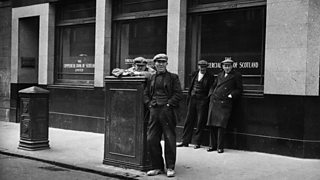
 In the late 1940s, my father and his friend (both aged 14) were sitting in a pub in Glasgow. Two middle-aged drunk men were sat at the bar; they were well known local gang leaders from the notorious thirties. One of the men turned to other: “I dare you to stick this glass in my face,” he said in a fading act of bravado. “No, I dare you to stick it in my face,” replied his sparring partner. So the first man did. Blood burst from his face and the stools went over. But instead of going at each other, they left together to seek out the nearest hospital (Try reading No Mean City for more on Glasgow in the 30s).
Pubs used to be (still are?) notorious for churning out drink-fuelled violence, which often took place in queues – a queue at the chip shop or taxi rank with a ‘you pushing in mate’, or ‘you looking at my missus’, etc. But pubs have long been the social hub for the working classes that didn’t just involve fighting or getting so pissed you start dancing with a table. As I have written before, when featuring Daniel Sluman’s poem Barmaid, my friend married the barmaid in our local and many of my lifelong friendships were forged there. The pub was divided into three parts – the bar, the smoke, and lounge. The bar was where all the older men went after work, and where they would take their girlfriends or wives at the weekend. The lounge was for families. Then there was the smoke, where at one end the oldies gathered (we called it the death end), then the other end where we were – a panoptican of faces spread round the pool table. There were very few women. In fact there wasn’t even a women’s toilet for many of the first years I went. They would have to go round to the smoke or lounge; this meant going outside, which in the wet cold winters was not an attractive option.
Sadly, pubs are in decline. I don’t really put it down to the smoking ban, it was more a result in the rise in property prices, the financial crash in 2008 resulting in the heavy debt of the pubcos who sold the pubs on. Ironically, they are often turned into residential dwellings, with only 10% remaining as pubs. At the current rate of closure (around 30 a week), there will be no more pubs by the middle of the century.
 But let’s forget about the pubs’ demise for now and engage in a bit of nostalgia with Julia Webb’s funny and riotous poem, Friday Night King’s Head. This is a pub you would love to go to, if only to be a fly on the wall. “Some girl is pulling another girl’s hair and screaming, and some other girls are in the loo skinning up, and Andy is trying to force his way into the Ladies with his watery eyes, wet lips and flat cap.” Pubs are more than their insides, especially in the summer, when people spill out into the car park, the garden or the wall. “there’s a row going on outside, a Cortina is revving its engine, and someone is laughing, it sounds like a tree full of monkeys, but when you go outside it’s just the usual crowd sitting on the wall around the tree smoking.” (more…)
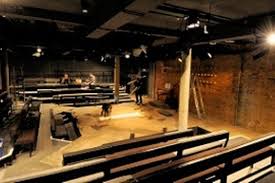 Theatre is often tarred with the same brush as poetry; that it is elitist, not for the masses, etc.. Some of which may be true, but outside of the honeypot of the West End, in fringe and regional theatre, much of what goes on is done with an inclusive face. Pioneers such as Joan Littlewood, who was called the doyen of working class theatre, conceived such ideas of
  This spirit of inclusiveness in theatre, is brought into focus with Anthony Anaxagorou’s poem, This Thing Moves. The poem is part of his residency at the Bush Theatre, and is an homage to its history. “This things moves /all the way into the arms of a theatre/far out west. 1972 raised above a pub,/makeshift and ordinary/it was never supposed to last/it was never supposed to work/adversity filled its seats way before people did.” It is theatres like The Bush that grow because of their independence and creative strategy of being different. Anthony’s poem really reflects this success.
 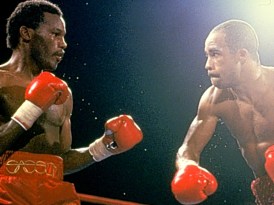 Honeyghan then? What a win!” Lloyd Honeyghan, a rank outsider had gone to America and beat Don Curry who was considered the best pound-for-pound fighter at that time, winning the WBA belt (credit to Honeyghan thereafter as he refused to fight the mandated challenger Volbrecht from South Africa, because of apartheid; dubbed ‘Moneyghan’ at the time because he had put $5,000 on himself to beat Curry, he said, “I would not fight Volbrecht for a million pounds – either here or in South Africa. How could I look at myself in the mirror each morning or face my own people on the streets if I agreed?” Top man).
 You get a real sense of this commentary in Chip Hamer’s two poems, Going Forward and Pressure. Chip takes us right into the ring, putting us on our back foot straight away: “There’s a fine art/To boxing on the retreat,/Not everyone can throw punches/Going backwards.//There’s a real skill, you see, /In getting any power /Into the jab, /When you’re in reverse gear.” This is where one of the crafts of boxing lies, in ‘going forward’ when moving back,
  Proletarian Poetry