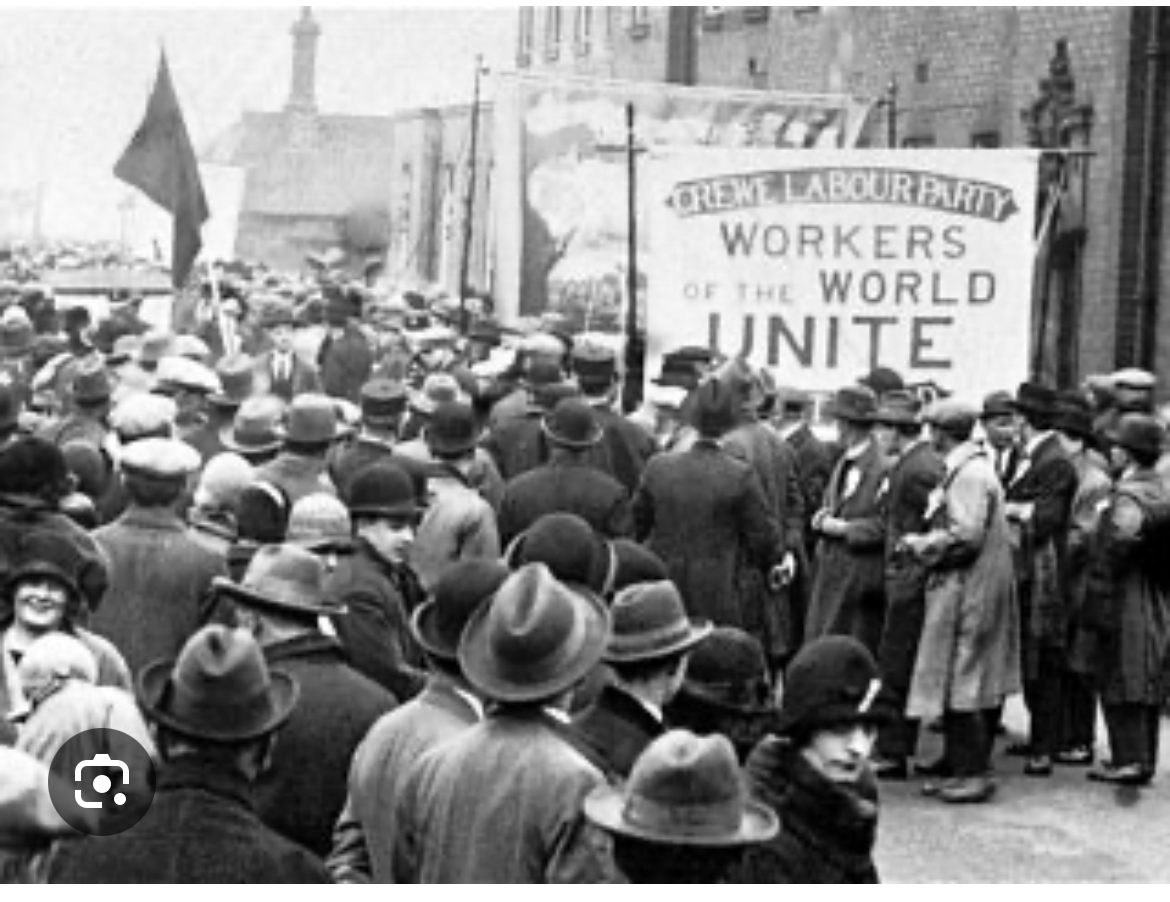
Culture Matters invites poems for a special poetry anthology marking the 100th anniversary of the 1926 General Strike. The collection, 100 Years of Solidarity, will celebrate and memorialise the voices and experiences of working class people, past and present, through poems that remember, and uphold the labour movement’s enduring values of solidarity and collective action.
Consider submitting one or two original, unpublished poems that speak to themes such as:
Trade union life, strikes, picket lines, and industrial action
Acts of solidarity and working-class resilience
Historical reflections from the last century
Inspiration drawn from labour movement history or contemporary struggles
The hopes, anger, humour, and humanity of people organising for justice
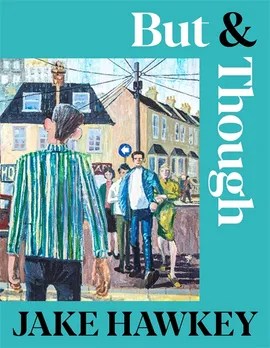
If working class was a currency in poetry, it wouldn’t be worth very much. For the past few years there has been a slow degradation of the working class experience; trailing behind novels, memoirs, plays, and photography. A catalogue of poetry books published in 2023 found class, along with work, a very minor subject in the minds of poets today. So it was a welcome surprise to review Jake Hawkey’s But & Though, published by Pan Macmillan.
Hawkey’s life began in the Thamesmead / Woolwich / Plumstead area of London, where if you were into football Charlton would be your team. Looking through the Table of Contents the titles indicate the environment we are about to inhabit. Poems such as ‘Fake Ransom Note’, ‘Dad’s still in a coma so I’m sent’, ‘Working Class Boy in a Shower Cap, and ‘Juliet Says to the Nurse the City is a Bruise’ all colour a life in three acts. From childhood to adulthood, this is no ordinary life in any sense of a germ free adolescence. If you’ve read Katriona O’Sullivan’s memoir Poor, you will know what I mean. The title is another clue, as But & Though is the language of addiction with all of its excuses, delaying tactics and unkept promises.
The first line of the book is, ‘I remember’, which is a poignant summation of something you would rather forget, for the opening poems are an elegy to his mother’s alcoholism and absence through the drink,
I was just a boy when mum was drunk every night & I thought that meant she did not love me. The unloved still rents the rooms of my body.
and then the memories of his father’s coma:
When they run their final tests, they pour water into his ear like a closing plea of the sea to wake him
In ‘Wrappers’ his younger brother deals with his father’s death by not leaving the flat and ordering Maccy D’s breakfast each day. The family is a freeze frame from the death. They stay home, where ‘the game shows of Saturday fend off the silence/ only deliveries open the door to sunlight.’
Jake Hawkey
But there is love and tenderness within lines of the poems. ‘there’s Dad’s/ old phone with your number/ stored as both Boozy & Woozy/ Despite being dizzy he still/ loved and loves you.’ Similarly in ‘London & Sons’, Hawkey displays humorous word games in talking about his friends, ‘o emperors! / you are only / caesar salads.’
But make no mistake there is a permeating darkness in past memories and setting of family life following his father’s death. The narrator is central to the family sticking together, whether a child or not – the difference in age between mother and son shrinks and is upturned. So the child grows up before their time, missing many of the rites of passage other friends of his age go through.
Signals of poverty and fucked up priorities, are evident in a number of poems. Addressing his mother in ‘Sticks not Twigs’, small Ronnie/ doesn’t have money for football boots/ or training subs this week – / you don’t mind though, if there’s/ booze in the fridge, cigarettes in the house.’ Each family member has to play by these unwritten rules, and they should never share them to anybody outside the family circle.
What is the residue, the echo that such dysfunction has in the long term? Both physical and mental, we are exposed to the reality of a mother who tells her son that ‘I smoked and drank with you, with them in the womb.’ The possibility for the children of ‘Foetal alcohol spectrum disorder.’ The boy seeks out memories as a way to cope, ‘in exile I miss home, / the way Nanny P sweeps / through the TV guide / licking excess ink from her thumb.’
The second section is a bildungsroman of the boy becoming a man before his time. ‘In Boy Asking a Question’,
‘the boy asks what a boy asks which is never what a man looking back would ask but only what a boy would ask & that’s okay.’
Within a single poem you see the boy mature, and question whether his father will be in heaven. Religion is a smoke alarm and his father being accepted by God as a good person, is what the boy wants to know. Are there still fires, even when he has gone.
There are some fizzing prose poems. In ‘Brahms & Liszt’ Hawkey further shows his role as family mediator between his sister, (‘who has come home ‘completely gazeboed from the clubhouse’) and his mother who wants to ‘tear off her head’.
Time and again, the ‘remembering’ (sometimes arising out of therapy) sits starkly in the present tense when describing the normality of dysfunction, and Hawkey’s insight here is heart breaking. ‘you forget the individual bombs, bullets or duds of a war stuck on a loop, where the truth is not the first casualty, it’s one’s reverence for the truth.’
Within this teenage passage, Hawkey writes a paean to his sister J (The Girl Who Grew Up to Drive Ambulances), which marries their lost childhood with her job as a paramedic.
‘These are you lights now flashing blue over streets where you kicked footballs where your mother drove you to school’
Ending playfully with a ribbing from her ambulance colleague who affectionately describes the origin of the word ‘silly’ which once meant holy, but came to mean righteous, to mean silly, to mean noble, innocent, harmless, helpless, ignorant, childish, goofy ‘absolute goof ball like you! she says’
The final Act of the book is both reflective through maturity, and forward looking to the possibility of starting a family of his own.
The title poem ‘But & Though’ evokes the friendship between his two sisters, ‘where ‘there’s never any news so they make their own’. Then, in the ironically titled ‘Happy Hour’ where the weight of letting go of someone you love, is for a long time all that he learned.
But there is much light shone in a number of poems, which ‘The Present’ is a standout example. It is the first ‘Jesus’s birthday’ where his mother isn’t slurring by 3pm but the wounds of her past are evident in her wheelchair. Hawkey, now a teacher references a student’s poem where a ‘briefcase left on a tube [is] finding a new life within the lost & found, department’ and as a poet brilliantly matches a Paul Gascoigne (Gazza) goal against Scotland with an act of Jesus on the cross, once more bringing Religion into the collection like a shadow, or reference point.
His mother is now nearing her end, as a granddaughter signals a different present tense, one where memories are not wounds but ones you cherish through the simple acts of creativity that a child can aspire to. Not something unachievable, but something both mundane and marvellous, as a life should be.
‘my love, somewhere in the world a poet is sitting down to write; a pastry sous chef is rubbing sleep from an eye; one lover is inking a hymn to another just because it’s a Tuesday.’
I hesitate to name the collection a debut, not only because it brings connotations of the noble amateur, but because Hawkey has written a book about working class life that is worthy of any collection in a poet’s oeuvre.
There may be fewer portrayals of the working class in poetry than there once was, or ought to be, but like the closing passages of But & Though, this book brings hope that the canon is still alive, if not more than a little scarred from its past.
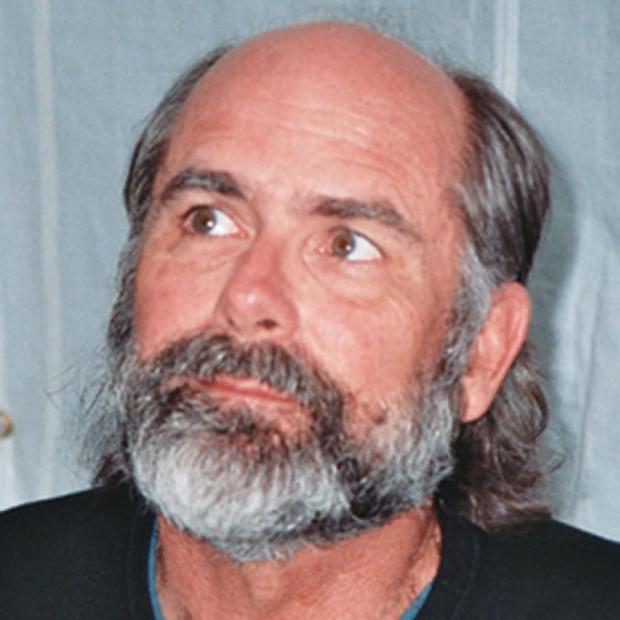
The poet Fred Voss, who has died at the age of 72, was one of the great American writers of manual labour. He went beyond the poet as witness in a journalistic sense, for he lived what he wrote and he wrote more than three thousand poems.
Fred was born in Los Angeles in 1952. Initially he thought he would go into academia. On passing a Bachelor of Arts degree in English he was offered a place on a Ph.D. program at the prestigious University of California, Los Angeles. But he turned it down to begin work as a machinist, which he carried on doing for the rest of his life.
He turned to poetry as a way of documenting the lives of his fellow workers who work for the ‘man’, the ‘machine’, the ‘system’; machinists who may be making engine parts for fighter planes that drop bombs in Iraq or Afghanistan. His workmates came from across the Americas and his poetry exhibits that microcosm of working class life, which you rarely find in other peoples’ poetry, besides Martin Hayes and his portrayals of London couriers and controllers.
Fred published numerous collections. His first, Goodstone was published here in the UK by the ever astute Neil Astley’s Bloodaxe Books in 1991, in which Voss did a reading tour of the UK. His poetry had arisen out of the South Californian poetry of Charles Bukowski. But it was Professor John Osborne from Hull in the UK, who first published a hundred poems of Voss in the influential Bête Noire magazine which ran for ten years between 1985-1995. Goodstone was the touchstone of the more than three thousand poems Voss wrote over the next 35 years. Goodstone was the name Voss derived from the companies he had worked as a machinist. The poems, like the many that followed, told of the day-to-day struggles of men and women working in machine shops and factories of Southern California from the late 80s onwards.
In the introduction to Robots Have No Bones (two years into the first Trump presidency I wrote:
“Fred Voss’s poems situate us in the workplace, and by doing so, show us the humanity and diversity of those who work there – ones who both support or hate Trump, but as one want, at a minimum to support their family, not have to struggle and work long hours to do just that.” Sadly, nothing has changed, and we are now at the beginning of another Trump presidency.
Fred was very generous with his poetry, offering me two poems in the early days of Proletarian Poetry back in 2015. Then more recently in an academic paper I wrote about his work, and that of his good friend Martin Hayes, on the Poetics of Precarious Work for the journal English (forthcoming in 2025). He was over the moon about his poetry being analysed for the precarity of the job, given his initial interest in the academic life, and it is so sad he didn’t get to see the published copy.
Two poems illustrate the lives of his fellow workers and Fred’s deep empathy and love for them. In ‘Los Angeles’ (see below), many of the workers wear crosses, believe in God, go to church on Sundays, but because of the environment in which they live, through poverty, violence, and low wages, are close to breakdown, close to ending their life. This is also seen in the poem ‘Grease Spots’, as a worker hopes the US Air Force will make a ‘grease spot’ of the Iraqis in response to the Twin Towers crashes. Voss wonders conversely, if their own government has made a grease spot of them, because the workers are barely able to feed their children and may never be able to retire.
I have a feeling that Fred wasn’t given deserved recognition by the mainstream poetry community in the US; there is no record of him on either the Poetry Foundation’s website nor the American Academy of Poets, and yet there is a Wikipedia page of his life.
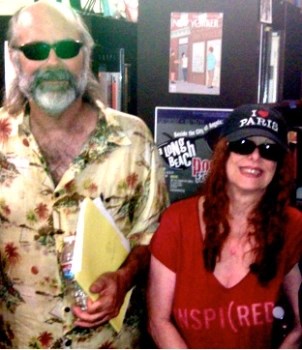
Fred is a great loss both as a beautiful human being and a poet who exposed the daily struggle facing workers in the precarious waters of late stage capitalism. Our thoughts and love go to his dear partner Joan Jobe Smith.
Los Angeles’ by Fred Voss
In Los Angeles I have seen men in factories with big crucifixes on their chests crucifixes exchanged for guns needles leaps out of 10th story windows crucifixes big and heavy swinging on the massive hairy chests of these men crucifixes exchanged for bottles that had these men face down on floors or in alleys bottles or needles that took their women their families their souls I have seen men in factories without one trace of shame wearing big shiny crucifixes on their chests men this close to picking up a knife and ruining their lives this close to blood they could never wash off their hands men from gangs from prisons from tiny rooms where the devil pulled up a chair next to them men who’ve earned their crucifixes.[i]
[i] Fred Voss, Hammers and Hearts of the Gods (Hexham: Bloodaxe Books, 2009), p. 37.
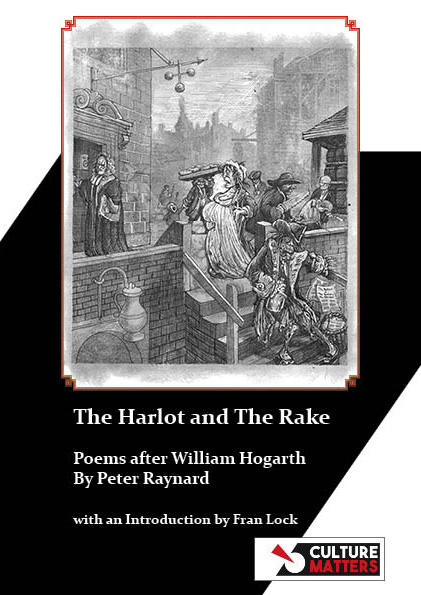
I’m delighted that my pamphlet, an heroic crown of sonnets after William Hogarth’s prints, is published today by Culture Matters. It comes with a wonderful introduction by Fran Lock, and cover art by the Guardian’s Martin Rowson.
You can purchase a copy for £7.50 (plus £1.50 P&P, UK) at
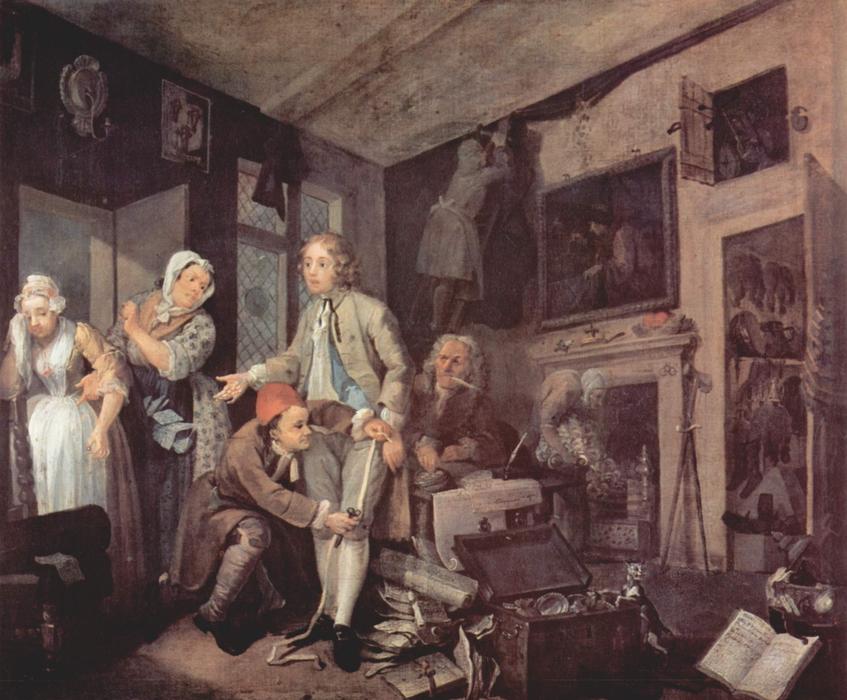
Peter Raynard’s heroic crown of sonnets after William Hogarth’s (1697–1764) of A Harlot’s Progress (1731) and A Rake’s Progress (1733) run the same gamut of moral and social concerns but bring a contemporary socialist sensibility to bear on the interconnected fates of Tom Rakewell and Moll Hackabout. Raynard uses the connected but very different downfalls of Tom and Moll to interrogate the complexities of ‘choice’, the notion of complicity and the limits of our sympathy.
The Heir
A rich Father dies, so a son’s life as heir begins. Vanity’s the sling which Tom will throw family chains from: his Father, a staid suit of a man battened down by the clamp of God’s utility
mother weeping, wife with child warming inside her. He will leave enough to oil their grief, but says there is no need to pray. With old money, time does shun less miserly ways ending troughs of emotion
such wealth held: when men lay idle no-one need read King James’ bible. New clothes fit both size and stead with enough silver to sail a ship. London ho! with its trade winds blown by slave labour. God well knows
the streets men of off-note graze on. All benighted in the Capital’s treasures of sin but not be sinned
“What Hogarth etched and engraved, Raynard successfully recreates in verse. The comparisons of life in Britain today are there to be made.” (Owen Gallagher)
“The tone Raynard manages to hit with his quite ravishing language and the use of the 3rd person voice as witness carries you along like you’re on some kind of walking tour of the grubby streets of the human mind/body leaving you eager to turn the next page, the next corner, to see what has next befallen Moll or Rake.” (Martin Hayes)
Jonathan has just published a really interesting short story collection, with the wonderful title, ‘Scablands, and other stories’. Published by Salt. You can grab a copy here.
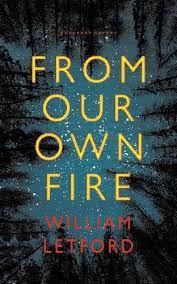
William Letford’s new poetry/prose book, forthcoming in August with Carcanet. You can get a copy of it here.
Review of ‘From Our Own Fire’, by William Letford
As a planet, we may or may not be near an apocalyptic ending. But the notion of such an event, whether triggered by contagion, nuclear war, robotic takeover, or ecological disaster, has never been more in the forefront of our minds. Art has reacted, as it should, through books like The Road, and TV series such as Black Mirror and Sweet Tooth.
Letford’s latest book ‘From Our Own Fire’ (his first in seven years), is a speculative poetic response to this contemporary terror, one that takes a very different path both in form and subject from his previous work.
The global economy is gone Good. It was just murmurations in the sky Opulent and undecipherable
The book is written as the journal of a stonemason and his working class family, the Macallums. Hybrid in form, a page of prose is followed by a linked poem throughout.
We are embedded in the family’s survivalist response to what appears an hyper-capitalist gear change by the ruling elites. A rogue robot, The Intelligence, nicknamed Andy by the family, is on the loose, casting chaotic AI on an already chaotic situation.
‘During the days Andy worked on the messages, the Baked Bean hoarders were out in force. Supermarket shelves emptied and people stepped out of their front doors like meerkats. In the middle of the madness, Joomack invited me to a tattoo party.’
In Letford’s first two Carcanet collections (Bevel in 2012, then Dirt in 2016), his ambit was the lives of the working class. The loiterers, barflies, manual workers, from the place he came from, and those of his travels. Giving voice to the working class, often with the lyricism of the Scottish dialect.
‘From Our Own Fire’, has a similar cast list, but is a much more inventive and frightening book for all that it foreshadows. It could have been overdramatic, but in Letford’s hands it is done with poignancy, humour, and beauty.
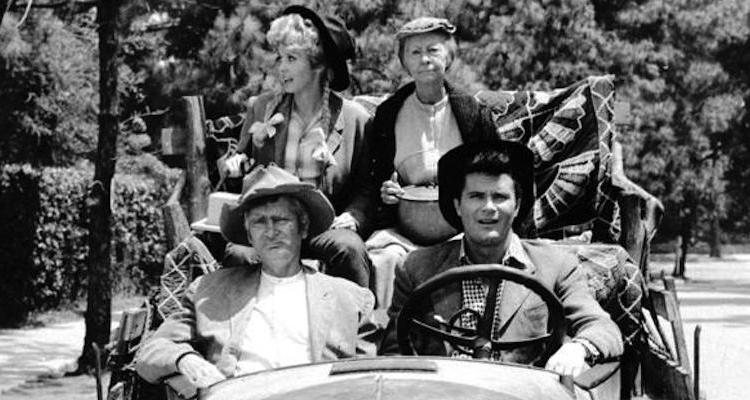
For those of you in the UK who were born in the 50s you may have seen the US TV show Beverly Hillbillies, embodied in the Clampett family, who became rich through the discovery of oil, as the lyrics of the theme tune demonstrated.
“Let me tell you a story ’bout a man named Jed: Poor mountaineer barely kept his family fed. … and then one day he was shootin’ out some food … and up from the ground came a bubblin’ crude.”
For those of us born a little later, the 1973 film Deliverance was another gateway to the life of Appalachian poor. A film about some city men who want to experience the back woods and rivers of the countryside but bump up against ‘rednecks’ (‘squeal like a pig boy’- if you know you know), and most famously where one of the men plays guitar with a young local boy on the banjo who outplays him; known as the duelling banjos scene.
For those of us born a little later, the 1973 film Deliverance was another gateway to the life of Appalachian poor. A film about some city men who want to experience the back woods and rivers of the countryside but bump up against ‘rednecks’ (‘squeal like a pig boy’- if you know you know), and most famously where one of the men plays guitar with a young local boy on the banjo who outplays him; known as the duelling banjos scene.
In these programmes and films, Appalachian people are seen as uneducated, poor and unlawful. A lot of very good Southern gothic literature comes from the region, and Savanah Alberts has written a great article, ‘Hootin’ and Hollerin’: The Portrayal of Appalachians in Popular Media, which kicks back against the negative stereotypes.
What is most striking to me now looking back, is that all the characters were white. Yet, African Americans make up 10% of Appalachia (a long spine of mountain area from central Alabama, northeast into southern Canada). For a hundred and fifty years, African American Appalachians have had to fight just to be noticed. This began when the first celebration of emancipation in America took place in the small town of Gallipolis Appalachia, on the Ohio River on September 22nd, 1863.
Crystal Wilkinson
What filled this gap in my knowledge was reading Crystal Wilkinson’s collection Perfect Black, in which she explores her identity of being poor and black in Appalachia. In the opening, aptly named poem, ‘Terrain’, she describes herself in relation to the area.
“I am plain brown bag, oak & twig, mud pies & gut-wrenching gospel in the throats of old tobacco brown men….. I toe-dive in all the rivers seeking the whole of me, scout virtual African terrain sifting through ancestral memories, but still I’m called back home through hymns sung by stout black women in large hats & flowered dresses….All roads lead me back across the waters of blood & breast milk, from ocean to river, to the lake, to the creek, to branch & stream, back to sweet rain, to the cold water in the glass I drink when I thirst to know where I belong.”
Frank X Walker
Wilkinson is part of a poetry collective known as The Affrilachian Poets. The term Affrilachia was coined by fellow poet, Frank X Walker in 1991 to address the gap in knowledge of the African American experience in Appalachia. In his own collection, Affrilachia, the poem Statues of Liberty, conveys the hard life of his mother. ‘mamma scrubbed/ rich white porcelain/ and hard wood floors/ on her hands and knees/ hid her pretty face and body/ in sack dresses/ and aunt jemima scarves/ from predators/ who assumed/ for a few extra dollars/ before Christmas/ in dark kitchen pantries/ they could/ unwrap her/ presents’
The collective has being going for over thirty years and celebrated its 25th anniversary with the anthology, Black Bone. Other poets in the collective include, Nikki Giovanni, and Bianca Spriggs, amongst others. Here is a Book Riot article on seven collections from the collective. Finally, if podcasts are your thing, there is a great series called Black in Appalachia.


 Proletarian Poetry