Today’s guest feature by Troy Cabida is an honest account of coming to terms with his bisexuality, the responses from those close to him, and how he found his way through this time. It’s a beautiful piece of writing as is his poem War Dove, the title of his debut pamphlet by Bad Betty Press. You can buy the pamphlet here.
*************************

credit: Ray Roberts, 2020
“Around the time I began coming to terms with being bisexual, the DC Extended Universe had just released its fourth film, the triumphant Wonder Woman. Coming into this film, I knew I was about to watch the best movie ever (I was right), but watching Princess Diana charge towards World War I Belgium with unconditional love and protection over innocents fuelling her every move, was a spectacle I didn’t expect to stay with me for a long time.
Upon discovering this new aspect of my sexuality, tectonic plates had started to shift within my inner circles, tremors that feel twice as hard if you’re still going through your healing stages. In the background were comments; internalised homophobia through jokes, I apparently can’t be upset about. There were side eyes. There were warnings of suffering in the afterlife.
 On the other side of the conversation, hearing phrases like “it’ll get better over time” and “everything will be okay at the right time” felt like blanket statements disregarding the shame and heartache flooding through my body. A simple overreaction, they call it. The fact that these emotions have been pent up for years, some taught from a young age, can fly so easily over people’s heads.
Some people will show how they respond to a problem. Some people will walk around eggshells, tripping over you in the process. Some will use you against yourself. Some will remain silent. Some will be a surprise. Some will become a bright light, constant and reliable.
In the midst of all of the noise, I gave myself two choices: either sink into resentment and let the tides decide how I’ll turn out, or use the tender state I’m left in, listen to my parents and practice something radical, something people may not even deserve.
And as if in a movie, Wonder Woman’s words echo in my mind: ‘it’s not about deserve. It’s about what you believe’. As in how you choose to function during a critical moment, will be a reflection of your intent, your conviction, and the person you’re choosing to grow into. Once you decide which path you want to take, the next step is knowing exactly how to do so.
 The poem I chose for this post is called “War Dove”, the title poem of my debut pamphlet. In dismantling the concept of forgiveness, the poem studies the separated pieces through weary eyes, working to prove its own cynicism wrong.”
Troy Cabida is a Filipino poet and producer based in south west London. His recent poems have appeared in harana poetry, TAYO Literary, Cha: An Asian Literary Journal, Bukambibig and MacMillan. He is a former member of the Barbican Young Poets, the Roundhouse Poetry Collective and is a current member of Liwayway Kolektibo, an arts collective providing space for UK-based Filipinx artists. His producing credits include his debut show Overture: An Evening with Troy Cabida, Poems for Boys, a night exploring masculinity through poetry and the London open mic night Poetry and Shaah. His debut pamphlet War Dove was released with Bad Betty Press in May 2020.
War Dove
I.
The tenderness that can be achieved
in firming the world’s many beatings,
in uprooting necessary truths out of yourself,
in driving yourself so far from sane and still
you are to bounce back solid.
II.
In front of the face that knows only one-sided healing,
I’ve come to know the kind of tender
that packs muscle, that doesn’t cower
even to my own desires.
In front of the face that profits from my labour
but doesn’t know how to give back,
the doves around me fought to remain.
III.
Much has been said about forgiveness
yet no one has managed to expound
the technical requirements necessary
to make the execution successful for both parties,
such as the understanding of the apology,
the need for it to be verbalised and accepted
to release the victim of their past, which can explain
why many find this a tricky action to perform,
like softening hardened honey,
crystallised and unflinching.
You can buy Troy’s pamphlet here.
 “Engaging with the general lockdown reaction on social media has shown me how different groups of people have taken it – there are those that are, rightfully panicking, tearing their hair out, thrashing, screaming at the sky, denouncing their gods; and those, like myself, who climatized well due to having experienced some form of lockdown in their life.
 had.
had. Did you ever think that there were a lot of invisible people living in lockdown before this pandemic? There are people everywhere living sad lives, and then they die quietly. I’m left with the lingering frustration that things only become an issue when they affect people en masse, or affect those with a voice.
 I try to watch the news once a day; more than that and it is really depressing. Alternatively it is infuriating, why do we need to see Royalty clapping in an obviously posed way with their children outside their front door which does not appear to be in a street where anyone else lives. When have they ever used the NHS?
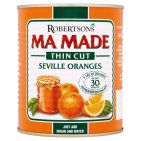 Yesterday I made marmalade, from one of those tins of prepared Seville oranges; I knew they were good because my mother used them, rather secretly as she saw it as cheating. When I was quite small I remember going, in our fathers cab, to pick blackberries in
 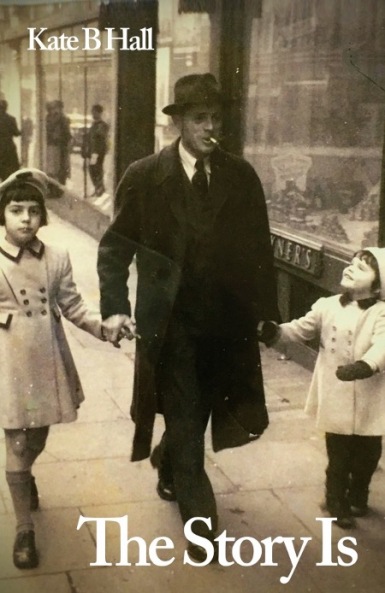 My partner and I are both of an age where a store cupboard is normal. Our parents lived through the war so there were always a few tins and packets kept for emergencies. We order our shopping delivery fortnightly and have a kind of general store. We are trying not hoard and so far have managed to get roughly what we need. When our delivery arrives it gets washed, dried and put away. Sometimes the way we talk about what is happening reminds me of my childhood when food was still rationed and my parents were not very well off. My mother was a genius at making things stretch not just food but clothes too.
 “For much of my life, I struggled with a range of symptoms which seemed to bare no correlation to one another. Chronic fatigue, an increasingly constant nausea level, violent aching without reason.
 My poem, ‘young man,’ was really one of my first explorations of this tension between distance and closeness. It felt like an act of empowerment, as I initially struggled to find work, to admit defeat. To acknowledge flaws, and to ironise them. As it turns out, to be vulnerable in life makes it far easier to be vulnerable on the page, and soon a body of work began to form around the experience of living within my own body.
 Proletarian Poetry