(This article was originally published in the OUP academic journal English: Volume 73, Issue 282, Autumn 2024)
Abstract
Since the passing of Philip Levine in 2015, no two poets have given greater voice to workers than Fred Voss and Martin Hayes. With over seventy years’ experience, they are deeply embedded in the day-to-day lives of menial/manual work, writing more than four thousand poems between them. Both are relentless in their explication of the ongoing catastrophe of precarious work: work hidden away by constrictive and alienating late capitalism, stagnant class mobility, and the predominance of a white middle class publishing industry, which largely ignores ‘work’ as a subject. I argue that being worker, witness, and writer in a disconnected worker-to-reader value chain, Voss and Hayes expose the precarity of work and the act of writing itself. This despite an unreflective publishing industry and political class, hopelessly slow in holding up a mirror to a world gripped by precarious times.
Introduction
In 1991 the poet Philip Levine published the poetry collection, ‘What Work Is.’ It won the United States National Book Award. In 1994, Levine’s next collection ‘The Simple Truth’, won the Pulitzer Prize for Poetry. The poet and critic Richard Tillinghurst said of him, ‘Since the early 1960s, Philip Levine has articulated in poetry the lives of the men and women who run the machines, punch the time clocks and work the assembly lines.‘ (Richard Tillinghurst, ‘Poems That Get Their Hands Dirty’, New York Times, 8 December 1991)
Around the time of the Nixon presidency, the poet Fred Voss forewent a PhD to go and work in a machine shop, crafting metal into shapes for aircrafts (often for combat). A decade later across the pond, the poet Martin Hayes began working as a controller in a courier business sending couriers across Greater London.
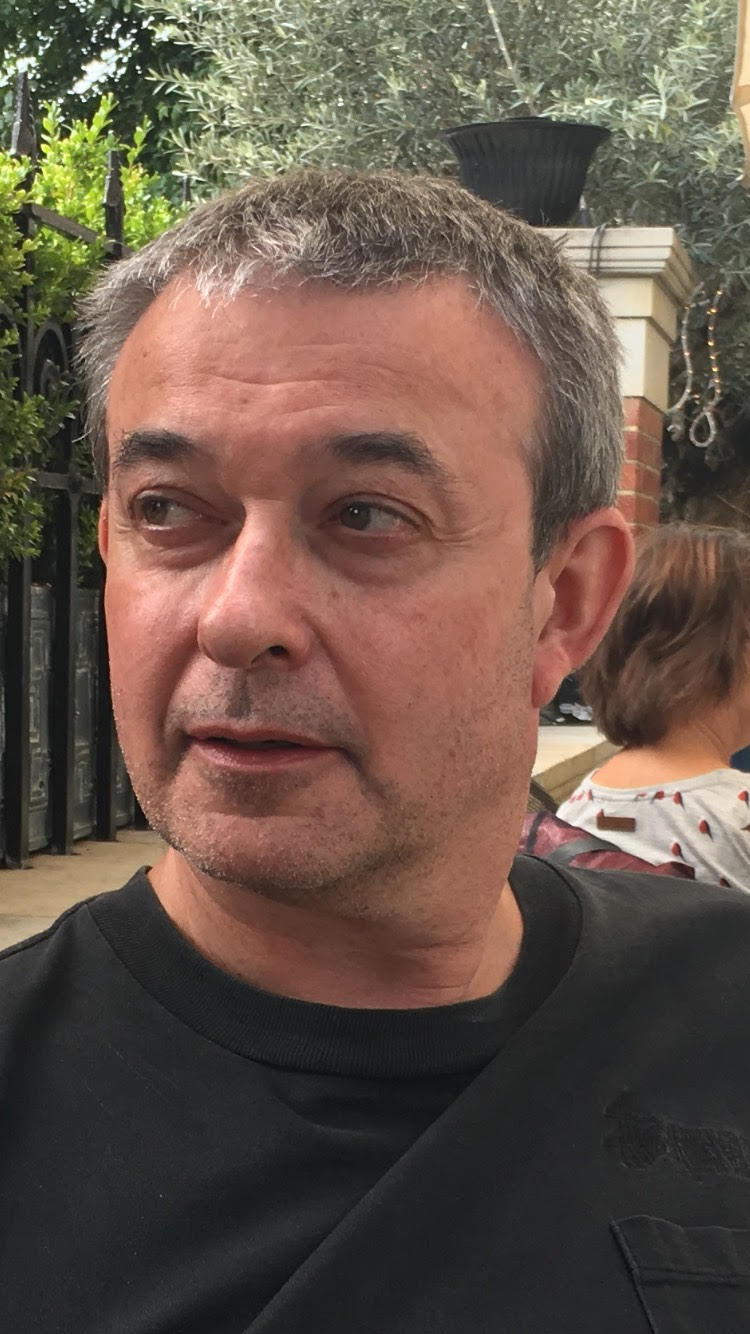
This article examines the work of Philip Levine’s heirs, Fred Voss and Martin Hayes, through their portrayals of the precarious lives of workers. Voss writes poetry about his full-time machine shop worker colleagues (who come from across the Americas), in Southern California, where the hours are long and the pay low. Hayes started writing poetry fifteen years ago, accumulating over a thousand poems about both full time controllers and their supervisors, as well as the byzantine movements of gig economy delivery drivers, whether in trucks, vans, cars, motorbikes, or bicycles. Both poets describe the bureaucratic conditions they work under, and the constant balancing act such workers have to weigh up, just to put food on the table without losing their job or their minds. Workers who have become expendable commodities bumping along the bottom of a global economy with ever decreasing safety nets, such as pension benefits or union representation.
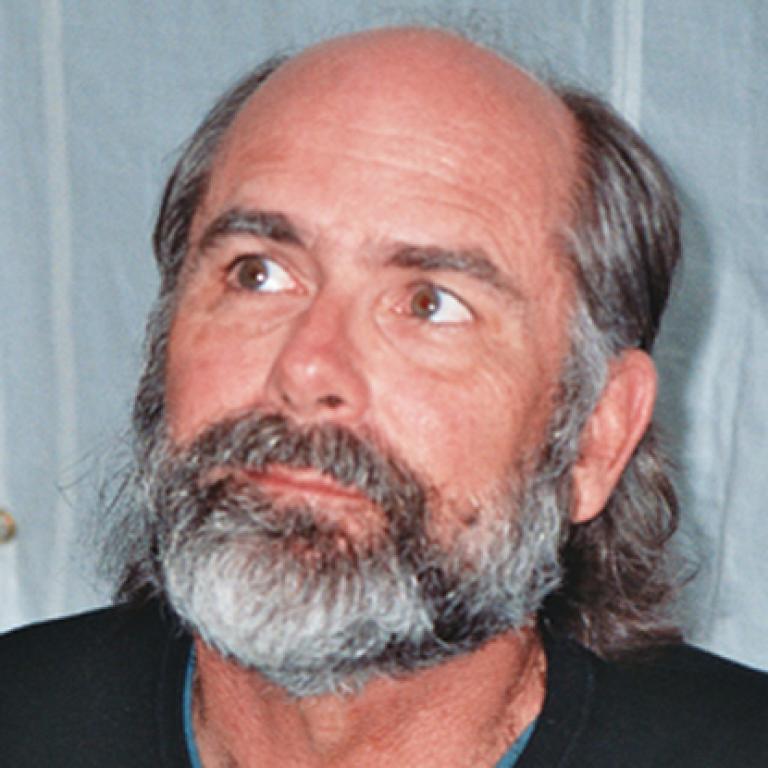
I examined a system where work is hidden away by constrictive and alienating late capitalism, stagnant class mobility, and the predominance of a white middle class publishing industry, which largely ignores ‘work’ as a subject. Besides Voss and Hayes, there are few collections of poetry whose subject is industrial or service sector work. I argue that being worker, witness, and writer in a disconnected worker-to-reader value chain, Voss and Hayes are relentless in their explication of the ongoing catastrophe of precarious work. This despite an unreflective publishing industry and political class, hopelessly slow in holding up a mirror to a world gripped by precarious times.
Writing as Witness
‘I am seeking to rescue the poor stockinger, the luddite cropper, the ‘obsolete’ hand-loom weaver, the ‘utopian’ artisan, and even the deluded follower of Joanna Southcote, from the enormous condescension of posterity.’ (E.P. Thompson, The Making of the English Working Class, 1963)
In ‘The Hatred of Poetry’, Ben Lerner argues that poetry is hated because it can never achieve universality of experience; that the micro cannot indicate the macro. This failure can relegate issues of race, gender or class to a sub-category. ‘We are captive, still, to a style of championing literature that says work by writers of colour succeeds when a white person can nevertheless relate to it — that it “transcends” its category.
As with other art forms over the centuries, poetry has responded to an array of global events Its current focus, the ongoing climate crisis (something truly universal, is conveyed in various collections, anthologies, and special editions of magazines, bringing together a constellation of eco-poetry. The idea of the Anthropocene is said to have opened new ‘possibilities for poetry’. However, as poets there is a longer tradition of bearing witness to events in order to expose injustices and catastrophes.
In regards the subject of those who lack power and wealth, there are numerous examples of the working class responding to their situation with poetry; selected cases include: the two-twenty two-syllable two-line Landay by Afghan women in response to oppression by men; the Affrilachian poets, writing about their life as African American Appalachians; the ‘ranting poets’ who started in the 80s and 90s, the most notable figures being John Cooper Clark and Atilla the Stockbroker, both of who are still gigging today, Poets on the Picket Line who read poetry to picketing workers in London; the Red Poets of Wales and beyond; the work of Migrant Labour poetry, Cry of the Poor Anthology published by the socialist co-operative, Culture Matters. A recent anthology by South Asian Women Machinists, follows their paths as they migrated from India to the UK; this involved a transformation from learning sewing skills in India and putting them into action when arriving in the UK, becoming important contributors to the British workforce. Founded in 2004 by Andy Croft, Smokestack Books has been the foremost publisher and promoter of radical working class left wing poetry in the UK. In the US, Blue Collar Review is amongst a number of online publishers focused on the working class experience.
Verbatim poetry, where a poet shapes the everyday conversation or recorded interviews of people into poetry, also falls into this bracket. John Seed utilised John Mayhew’s portrayals of London’s poor, taking out Mayhew’s own voice, to lineate the words of the costermonger, fishmonger, and multitude of traders in mid-Victorian times. The Poetic Coupling, is a poetic form devised by Karen McCarthy Wolf, in which a political text is lineated, then responded to by the poet in an accompanying line. For example, in the book The Combination, a poetic coupling of the Communist Manifesto.
‘A spectre is haunting Europe
innit though
— the spectre of communism
that loose blanket in need of tucking in
All the powers of old Europe have entered into a holy alliance to exorcise this spectre
this unholy spectre come to remove the opium and Xanax flow from the ennuiof its existents
Pope and Tsar, Metternich and Guizot, French Radicals and German police-spies.
Pope and President, Merkel Macron, autoimmune free radicals of capitalism, each playing I spy with my belittling eye
Where is the party in opposition that has not been decried as communistic by its opponents in power?
Karl saw a gap in the market before the market had been fully formed’
As an aspiring poet in her early twenties growing up in relative comfort in the United States, Carolyn Forché sent her poems to the Russian poet and critic Joseph Brodsky for comment. Brodsky had been exiled from Russia in 1972 and was now living near to Forché in Ann Arbor, Michigan. In his reply he suggested she include her philosophy in her work, and to read the Russian poet Anna Akhmatova, who chronicled the impact of Stalinism, the Second World War and the political ‘thaw’ of mid-century Russia. On reading Akhmatova she came upon the revelation that poets outside of the English speaking canon had endured great trauma, ‘and those blessed to survive, wrote their poetry not after such experiences, but in their aftermath.’ From there, Forché’s poetry became one of ‘witness’: writing into an often violent and repressive space as an ‘other’, in a more reportage or journalistic poetic. She employed her poetry and academic position to expose the corrupt politics of Latin America during the 1970s and 80s. With her colleague at Georgetown University, Duncan Wu, they traced the poetry of witness from 1500 in the poetry of Sir Thomas More (more notable for his book, Utopia) right up to the new millennium and the poetry of the late Agha Shahid Ali, who wrote about the contested history of his Kashmir homeland from exile in Amherst Massachusetts.
In portrayals of those who lack power or wealth, a problem arises when the subject lacks agency: when they are spoken for, rather than spoken as. The poet Langston Hughes in his depiction of life in Harlem during the 1920s was criticised by black intellectuals for what they perceived as negative depictions of African Americans, particularly in relation to a white readership. In a review of Hughes’ newly published Selected Poems in 1959, James Baldwin said of Hughes, ‘I am amazed all over again by his genuine gifts – and depressed that he has done so little with them.’ Baldwin’s barb was based on his belief that Hughes writes outside of his subject, rather than inside or as the subject. The ‘trick’ – he went on to say – ‘is to be within the experience and outside the poem at the same time’. Although this was complicated by the issue of race, any portrayal of the working class has to overcome the problem of either writing horror stories, of poverty, dysfunction, and violence, or fairy tales of escaping to a more ‘middle class world’, often through higher education, the Arts, or economic entrepreneurship.
The Polish American poet Czeslaw Milosz criticised a vein of poetry that divorced the poet from society. Urging a poetic that was witness to history, which in his case was the dehumanising effect of Soviet totalitarianism in Poland post-World War Two, he called it the Witness of Poetry, not ‘because we witness it, but because it witnesses us’, inferring that because of his experience in Eastern Europe’s upheavals, he is both witness and participant.
Forché uses the term ‘moral accounting’, which I feel best reflects the poetry of our subjects Fred Voss and Martin Hayes. Who, if not them, in their specific ‘private’ situation (a closed office or machine shop), is better able to write the first-hand experience of workers who are on the precipice of precarity? In Milosz’s definition, they are both witness and participant to the work: theirs is the poetry of the workers, in the form of active moral accounting. In effect they pull off Baldwin’s ‘trick’ of being both inside and outside the experience at the same time.
Besides those of Voss and Hayes, there are few collections of poetry whose subject is industrial or service sector work: notable examples in the UK include John Challis’ pamphlet on his taxi-driver father, plus his debut collection The Resurrectionists, containing poems about meat and vegetable workers in London’s Smithfield Market, Jane Commane’s Assembly Lines about the car industry her father worked in the 197os and 8os; and André Naffis-Saheli’s High Desert, which includes poems on labour unions and disputes. In the US, Martin Espada writes about the immigrant experience as well as oppression of Latin Americans by successive regimes. Anthologised many times, his poem ‘Alabanza: in Praise of Local 100’ is a tribute to the forty-three hotel and restaurant workers of the Windows on the World restaurant, who lost their lives in 9/11.
There are also few poets working in industrial and service jobs, possibly due to perceiving poetry as not a place where that form of writing is best employed, given the precarity of such an endeavour that exposes adverse working circumstances. Novels, plays, and memoirs about working class labour and life, outstrip poetry, even though they may still constitute a tiny minority of the general population of books. However, the greater likelihood is that poetry is a million miles away from the reading habits of workers, let alone any pretension toward writing about their experience. As told by our poets, the pressures of keeping things together, leaves little space for writing. This is compounded by the erosion of class-conscious readers who wish to learn from and utilise knowledge in their own area of work or activism.
Work and its Discontents
Our sleeping globe, it dreams this
one dream of expansion everlasting.
Work has changed markedly from the high tide of industrial post-Second World War economic consensus of full employment, mixed economy, and (in the United Kingdom at least) a welfare state. In the UK, cracks in this consensus of growth began with Edward Heath’s 1971 Industrial Relations Act, which constrained the power of trade unions. In the United States of America, signs of this shift were evident in Richard Nixon’s ‘workfare’ policy, intended to drive out welfare dependency by pushing people into work or training: something Tony Blair would endeavour to do some forty years later, with Labour’s New Deal policy.
The internationalisation that neoliberalism offered was cemented from 1979 onwards with the ‘his and her’ elections of Ronald Reagan and Margaret Thatcher. Class consciousness amongst workers and communities was eroded by Reagan’s restructuring of the economy and its objective of making businesses more flexible and reactive, thus weakening the bargaining power of organised labour. Thatcher’s strategy was ignited by the miners’ strike of 1984, and the will not to repeat what she saw as the folly of Heath’s submission in the 1972 miners’ strike. Both had outward-facing ideological implications: hers with the privatisation of utilities, and the Big Bang deregulation of the London Stock Exchange in 1986. Reagan’s grew into the new ‘Washington’ consensus of a neoliberal policy as a blueprint for global development, in particular indebted countries in the global South.
The foundation of late capitalism was born during this time, though the term and idea began with Ernest Mandel. Characterised by the internationalisation of capital, and directly challenging the predominance of dependency theories of colonial/imperial rule, such internationalisation saw the rise of ‘Tiger’ economies, whether East Asian or Celtic.
By the new millennium the pervasiveness of such capitalism neutralised any perception of there being an alternative economic and social model. This has led to an ongoing catastrophe of mental health crises, destruction of the global environment, and increasing bureaucracy through performance monitoring. Furthermore, this precarity stretches beyond the workplace, affecting individual health (lost workdays and pay), family formation (i.e. putting it off because of its affordability), and the decline of social cohesion (what Robert Putnam has called the bowling alone effect).
What followed therefore, is a spread of precarity into the North (as in the global North of middle and higher income countries). However, the global South’s experience of (de)/colonisation and imperialism can always be characterised as being precarious, but of a different type and level of impoverishment. As such, today’s neoliberal canvas could be described as a pointillist painting, where the paint never dries. Scattered across industries and sectors, the dripping effect of the ‘gig economy’ has reduced the worker to a single commodity, within a framework bereft of organised labour.
The Poetry of Fred Voss and Martin Hayes
Fred Voss draws on his forty year experience as a machinist in Long Beach, California portraying the lives of those who have to deal with the heat and danger of working with machinery, whereas Martin Hayes has worked in the courier industry for thirty years in London, predominantly as a controller. His poems deliver stories about logistic workers who despatch the destinations of couriers across Greater London.
The work of couriers and machinists has been undertaken for a long time. People, of course, have been sending messages immemorial. However, couriers are not sending missives such as smoke signals, fire beacons, or warnings of impending war. Rather, as Martin Hayes’ poems show, they are the lifeblood (often literally) of economies and social stability. The courier business is divided between the controllers, and the van and bike couriers. Hayes explains: the former is made up mostly of English-speaking British people, as good English is required in administering the jobs to couriers. Couriers are all self-employed gig-economy workers. Those out driving vans come from all over the world (e.g. Nigeria, Somalia, Bangladesh), but mostly from Eastern Europe, and local South/East Londoners, who have worked the vans for decades. Motorbike couriers are mostly Brazilian and East European. Hayes says he does not know a Brazilian courier who has not got two or three jobs on the go at any one time.
Machinists, those who turn metal, began in an organised manner during early industrial times in the eighteenth century, and makes up the products and services for local and global markets, including that expansive market of weapons and carriers of weapons. This is strenuous and hazardous work, and only through hard fought protections have the hazards been managed. As seen in the referenced poems below, the workers of South California are a mix of white, African American, and Latino heritage.
Both jobs would seem miles apart in terms of what they do, but if they have one thing in common, it is that the workers are not owners. The workers work for the ‘man’, the ‘machine’, the ‘system’. In the poems of Voss, full-time employees may be making engine parts for fighter planes that drop bombs in Iraq or Afghanistan. In Hayes’ poetry, a gig economy courier may be dropping off a billionaire’s watch that he left at the gym (the type of work, anthropologist David Graeber described as ‘bullshit jobs’), or equally transporting lifesaving blood to a hospital when a person has been nearly killed in a car crash. Voss’ machinists and Hayes’ controllers work as full-time employees, and like workers in other companies are in line with whatever benefits are set out in law or the company can get away from paying. Such ‘permanent’ jobs, however, are on the wane. But the couriers are self-employed gig workers, so are without health insurance, sick day pay, holidays or pensions.
The poems of Hayes and Voss consistently highlight the precarity of such positions with workers being made redundant, having no union representation, void of inflation matching pay rises, and ever tightening working conditions and performance measures, as well as the aforementioned physical dangers of machine work or travelling round London’s busy streets. Only by continuing to explicate the truth of capitalism as an ongoing catastrophe and having their poetry published more widely, can the fault lines in its structure be revealed. Truth is foundational in poetry; first-hand accounts of those who are part of the catastrophe (the place where the journalist runs out of road) are an unsealing of truth which gives added value and credence to the subject of poetry. If we think of work as an object, what is the actual effect upon us? Writing about this truth in poetry, Scruton believes ‘the answer is true when it shows how just such a thing might be part of a fulfilled human life and one in which the object may be valued for its own sake as a vehicle of meaning.’ Work gives meaning, but not always the meaning we want from life, thus Fred Voss and Martin Hayes show the object’s (i.e. work’s) negative value in their poetry.
Having written more than four thousand poems between them (Voss with +3,000, and Hayes +1,000), for the analysis underpinning this paper, I asked both poets to send me up to 30 poems each, that they felt cover the span of themes in their work. Fifty-one poems were supplied, of which twenty-two are directly referenced, forming the basis of the analysis set out below, which is divided along the following themes: poetic form, the workers, the body, management and bureaucracy, resistance and coping strategies.
Poetic Form
The shaping, spacing and relative spareness of the black typed or handwritten words on white background has been one of the basic differences between poetry and other forms of writing (besides song lyrics, though in the last instance it is argued that if you take away the music, the words die in the whiteness of the page). On the surface, many of the characteristic features of poetry are absent in the poetry of Voss and Hayes. There is no rhyme, no stanza breaks, nor detectable poetic metre, and often no capital letters or punctuation. If you look at the poem by screwing up your eyes to only see the shape of the black on white, it will seem chaotic: chopped lines with anywhere between one word and a full sentence of nouns, verbs, and pronouns. Voss has said his reason for such a bare poetic is that he doesn’t want to do anything ‘stylistically’ which might ‘get between his subject and his reader’. But on reading their poems (aloud preferably), the structure fits with the stop-start nature of the work; the lack of punctuation reflects the stark, stripped back exposé of conversations and observations.
Los Angeles by Fred Voss
In Los Angeles I have seen
men in factories with big crucifixes
on their chests
crucifixes
exchanged for guns
needles
leaps out of 10th story windows crucifixes
big
and heavy swinging on the massive hairy chests of these men crucifixes
exchanged for bottles that had these men face down on floors
or in alleys bottles
or needles that took their women their families
their souls I have seen men
in factories
without one trace of shame wearing big shiny crucifixes
on their chests men
this close
to picking up a knife
and ruining their lives this close
to blood they could never wash off their hands men
from gangs from prisons
from tiny rooms where the devil pulled up a chair
next to them men
who’ve earned
their crucifixes.
what angels do by Martin Hayes
I used to think that angels don’t exist
that they were characters made up
to make fairy tales and religion feel more magical
wedge open your heart
so they could then pour all the shit in
but Dolores changed my mind
because she is an angel
the way she takes the new recruits under her wings
teaching them how to do this how to do that
pulling them aside whenever they’ve made a mistake
looking them in the eyes
whilst explaining to them what went wrong
when every other supervisor just screams at them
thrusts their fangs into their necks
sucking the life out of them in front of everyone else
like they’re the runt of the litter
who’s way too small to become anything anyway
Dolores doesn’t do that
she will pick them up by the hand and sit with them
going over each step again and again
until the new recruit thinks that they’ve got it
has the confidence to go out into the real world
and attempt to do it all over again
as Dolores follows them out of her office
brushing a stray piece of cotton from the shoulder of her dress
smiling
already looking around for anyone else who might need her assistance
because that’s what angels do.
Theirs is a more narrative mutual poetic, rooted in radical socialist values of community and liberty. The poems are more than anecdotes and stories, for, ‘poems, even when narrative, do not resemble stories… Poems, regardless of any outcome, cross the battlefields tending the wounded, listening to the wild monologues of the triumphant or fearful.’ Hayes begins a poem by writing in prose, then breaks up the lines to countenance emphasis, a long sentence followed by a short punchy or sad one, or a series of one word lines. They also use such tools as anaphora. In the poem ‘I have seen men’, Voss repeats the eponymous term to ‘highlight the constancy of such dysfunction but also his continued close proximity to it. Whereas Hayes, in the poem, ‘5 am early-shift tube ride in’ uses the refrain ‘who are these men’ at the start of each stanza, as if he doesn’t know these somnambulant men on their way to work on near empty tubes, but leaves a twist to the final line by saying,
‘who are these voiceless men
whose people
are they
our people’
Both poets use metaphor and simile in a number of forms. Hayes employs a whole farmyard of animals, including oxen, dung beetles, moray eels, chained-up dogs. Hayes did this as a result of being reprimanded at work for writing poetry; the then Chief Executive Officer referred him to Human Resources and a letter of warning was put on his file for ‘bringing the company into disrepute’ and he was forbidden to write any more poems about his work. The company was subsequently taken over by a larger entity and he hasn’t had any problems since. Voss often refers to machine shop tools as devices that act both negatively (e.g. parts for bomber planes) and positively (why the precision of a machinist’s tools cannot be used in politics).
The use of data to describe working hours and working conditions – including the personal details of the workers, such as age, gender, or ethnicity – give a clear picture of the characters and scenes in which they carry out their precarious work.
The Workers
Given that between them, Voss and Hayes have over seventy years’ work experience in their relative sectors, it is safe to say both have seen a great deal of change. Prominent in their poetry therefore are portrayals of (mostly) men and women who have entered the workspace and workforce, and how that system has impacted on their lives. Voss writes about young and old workers in the machine shops he has worked in. In ‘The Timeless Wrench Brothers’ he compares his working life (thirteen jobs, five layoffs, forty-four years working) to that of Ismail, aged nineteen. He uses cultural references to show the age difference:
when I was Ismail’s age a transistor radio blasting The Doors’ latest hit on a towel on a beach
was hi-tech
now his fingertip on his i-phone can choose from millions of songs.
So you have a sense of time and its consequent change outside the workplace, but also how work brings workers together whilst, not knowing for how much longer.
Ismail and I both grip wrenches and hammers and dig our boots into concrete floor and drop vises
onto machine tables and laugh
in delight when a paycheck falls into our hands
Friday afternoon and know
when we see a coffin lowered into the ground that life
is short
Then there are the differences of culture and ethnicity. In Voss’ ‘What is a Hammer to the Heart of a Brother’, a hammer is shared between the Mexican workers because of their historic poverty and political history of revolution and solidarity.
the Mexican machinists hand each other their tools
with big smiles on their faces
leave their toolbox drawers open and never lock their toolboxes and sing
old socialist songs from the revolution south of the border
old mariachi love songs
Whilst, the white machinists, have turned bitter and possessive because of what individualistic capitalism has done to them. Voss further shows the alienating effect of the work. In the poem ‘Los Angeles’, many of the workers wear crosses, believe in God, go to church on Sundays, but because of the environment in which they live, through poverty, violence, and low wages, are close to breakdown, close to ending their life. This is also seen in ‘Grease Spots’, as a worker hopes the US Air Force will make a ‘grease spot’ of the Iraqis in response to the Twin Towers crashes. Voss wonders conversely, if their own government has made a grease spot of them, because the workers are barely able to feed their children and may never be able to retire.
In Hayes’ poem ‘Work’, the job never leaves the worker, not on their journey there and back, nor when at home. It is a constant, almost a threat that if you stop thinking about it, somehow you will lose everything.
without it
you are homeless
with it
you are a slave
and constantly
it reminds you of this
In ‘5 am early-shift tube ride in’ Hayes reflects an image of robots in abeyance of their master. The workers are stripped of their identity, personality: they are there simply to survive, pay housing, bills, food, kids. In ‘the men I work with’, Hayes gives an insight into the jobs couriers do, that mixes the important life-saving work of transporting blood or organ donations, through to the ‘bullshit jobs’ for the rich. It finishes with an unpunctuated answer to the question,
who are these voiceless men
whose people
are they
our people
The main group largely absent from both sectors described by Hayes and Voss is women. In his forty years, Voss says he has never seen a female working a heavy machine. In the US, women make up less than 10% of machine shop workers, a static figure for more than ten years. This is not unusual when looking across industrial labour, with similar data in construction, for example. Voss says he has ‘seen women working lighter jobs such as shipping and receiving, buffing wheels, insulation, one woman worked on a drill press. The Latino women in the LA area have a tradition of working beside the men when the work is light enough for them to do well.’
Women are more present in a number of Hayes’ poems, but even here theirs is a tale of bumping up against masculine misperceptions of their worth, and the low value of their caring role (both at work and home). In ‘what angels do’ a female supervisor becomes the angelic embodiment, in supporting other workers: ‘the way she takes the new recruits under her wing/ teaching them how to do this how to do that’. This contrasts widely from the other supervisor who‘just screams at them/ thrusts their fangs into their necks.’ When a junior female controller is reprimanded by a supervisor by ‘putting a rocket up her arse’, her mother calls in to complain, and it is then the male supervisor who is no match; for ‘a 56-year-old working mum of three/ has a spine stronger than any man’s/ but especially/ a supervisor’s.’
In Hayes’ ‘Miss Deshane Jackson’,a new worker, who has no alternative option to take the job, because of the need to pay rent and food, is a very good worker. The analogy of the machine appears (as it does in many of both poets’ work), when she is awarded a £20 Sainsbury’s voucher for employee of the month, her contribution is compared to
a bit of unleaded
pumped into the insides of the machine
can sometimes lessen the effects of rust
felt in the throat and stomach of a veteran
Finally, in Hayes’ ‘a class act’ a woman takes over as a controller, ruffling the feathers of couriers who contact their supervisors to ask what is going on.
so when it was nearing the end of the afternoon
with Stacey still on there
controlling away like a veteran
with very few issues all day
and an above average stats performance
the phone calls in from the couriers
suddenly stopped
The women have to continually ‘prove’ themselves in the masculine environment, putting extra pressure on how they work. This pressure is added to when statistically women account for a higher proportion of domestic ‘caring roles’ than men, many of whom are kept out of the job market as a result.
The Body
With the physicality of the machinists’ job, it is unsurprising that the effect on the body runs through many poems by Voss. In ‘Champions’, it is Voss’s sixty-fifth birthday, and the physical work is taking its toll. Using a boxing metaphor, he describes how the workers
gather all the strength left inside them
and get up
from their stools one more time
because that is what champions
do.
In ‘Getting a Grip’, a grip contest between two workers on a hard concrete floor, is used as a metaphor for the plight of the workers. As they watch the contest, Voss asks a series of ‘maybes’ about the contestants’ inability to keep up payments on their house because of frozen pay, or maintain their marriage because they drink too much from the pressures of the job.
maybe they can’t get a grip on their lives and keep them
from falling apart
but they can lock fists and take it out on each other and see
who wins
even though somewhere deep in all our machinist hearts we know
as the banks and the bosses and fat capitalist cats and presidents beat us down
This dehumanisation of workers is found in Hayes’ poem In ‘Foxconn Suicide Watch’ (a reference to a spate of suicides in China), Capitalism does this by taking away their rights, in this instance, it is the right of a female worker to go to the toilet freely, instead of only being allowed during lunch and two ten-minute breaks. Comparison is made with workers in China and Bangladesh thus illustrating the internationalisation of exploitation.
In both Voss’ and Hayes’ poems, the use of numbers reflects the tight structure they work under, whether it be the precision of the machinist reflected in the 1/8th to ½-inch Allen wrenches, and 5/16th to 1-and-¼-inch crescent wrenches, or their targets, working hours, or pay:
she has targets to hit
150 inbound calls a day
for 5 days solid
or else her £11.52 an hour pay
gets reduced to £9.72
as Judith crosses her legs
and holds on to her wees
not wanting to get a black mark
pressed into her forehead.
But there is also another dimension both Hayes and Voss use that takes the reader out of the office or machine shop. Again, in ‘Getting a Grip’, Voss reflects on the opposable thumb, ‘closing/ around diamond or throat creating a city or balling into fist and starting/ a war’. Here, the thumbs symbolise the dialectic process between worker and owner. Such a method places work in a wider context: a political, precarious one, where the boss has the upper hand, and the machines they make are used in war.
Management and Bureaucracy
With ‘the screams of the supervisors’, Hayes creates the sonorous atmosphere of the controllers’ office, and compares the supervisors to animals, noises compared to moos from within a herd, the beating of a silverback’s chest, or whimpering of a chained-up dog. This is a tactic of fear put upon the working process. Supervisors become moray eels, which monitor the screens like radars, checking on the performance of the controllers. Oxen make an appearance in ‘Ox confronting technology’, a satirical poem where tractors are brought in to replace them. The wily draft herd decide to apply for the job of tractor driver, but of course their bodies are not suited to such working practice. Reminiscent of the Luddites, the initial reaction was one of fear the machines would replace their jobs, which is the case with the oxen, who ‘lay in their leaky barns/ nursing headaches/ ashamed/ and redundant’.
Voss echoes this in ‘pacing our cages’, where the CEO and his managers come to the shop floor on the premise of finding out how they can make the company run more efficiently. Voss compares his fellow workers to exhibits in a zoo, as the management are more interested in sizing them up so they can rearrange their workspaces by drawing white lines on the machine shop floor. In ‘Some Day there will be Machine Shops Full of Roses’,the boss is asking Voss to increase his output by 10%. He sits across from Voss in a crisp white shirt, whilst the worker is covered in grease. The poet wonders about the bosses’ reading (has he read Marx, Homer, Sophocles, like Voss has?), making a point about the lack of cultural understanding in capitalism’s alienating process, that includes the need for Voss to write about the experience.
Throughout all of these poems about management and control, the impact of work breeds helplessness and alienation. In this post-Fordist world, instead of the end of bureaucracy, there is layer upon layer embedded within the work: indicators of productivity, sickness, standards of performance (like Investors in People) all add to the ever increasing need to be as efficient and effective as possible, without thinking of the bearing this has on the worker, and productivity itself. This idea of progress is inherently contradictive; for example, the ‘activity’ measure of growth embodied in GDP includes negative externalities, such as the production of petrol/diesel. In the UK, a measurement, which echoes the ‘social murder’ of Foxconn workers in China, comes in the elevated number of male suicides: figures available for the period 2011-15 show the difference in risk in both the lowest-skilled (44% higher risk) and skilled workers (35%), compared to managers in all roles whose risk is much lower than the average; amongst corporate managers and directors the figure is 70% lower.
The avaricious appetite of work to take over the life of the worker both neutralises politicisation (when there are no unions or workers’ councils) and radicalises, where the worker may be open to populist inventions, such as the blaming of immigrants for low pay. This then bleeds into negative attitudes toward democracy, with the voter disillusioned with mainstream politics, which ignores their concerns, succumbing to slogans such as ‘taking our country back’: in Voss’ ‘Grease Spots’ a worker has a ‘Proud to be an American’ sticker, which is ‘all he has’. Any feeling of being ‘left out’ of the conversation by the state, the machine, the man, is an open goal to populist enticements. A study of Leave voters in the UK by ethnologist Lisa McKenzie in the UK showed that working class people engaged with the debate and saw an opportunity to have their say after decades of feeling ignored by successive governments. They voted Leave, simply because they wanted a change of governance and were given the option for the first time in nearly fifty years.
Resistance and Coping Strategies
A poem each from Hayes and Voss displays the importance of humour as a coping strategy. Hayes’ ‘hearts bigger than the sun’ is a set of micro portrayals of how each worker ‘has it’ (i.e. ways of coping), whether it be Antoine’s imaginary conversations with controllers, Ashley’s booming laugh, or Javed’s spinning dance as if in his favourite Bollywood movie. In ‘Soul Washroom’ by Voss, the workers laugh at old Earl’s admission that he hasn’t ‘had a decent hard-on in years’, followed by the gallows humour of ‘I try to stay out of trouble but it keeps looking for me.’ Underlying all of this is the code of masculinity: how such talk is ‘as close as we can get to letting down our guards.’ For amongst all the troubles they share, behind the jokes, the certainty of gruelling work awaits.
This strategy of coping runs through other poems, as in Voss’ ‘Laughter Lifeboat’, whilst at the same time, there are poems of resistance and demonstrations of the unvalued. In ‘the men I work with’, Hayes says that none of the men have written great books, painted great pictures, nor composed symphonies yet ‘just by the act of living and carrying on being controllers/ help keep the world up in the sky’. Then, in ‘Ready to Go to Work’, Voss asks why politics can’t be as precise
as the calibration marks on his machine dials
nuclear test-ban treaties negotiated
as easily as he can indicate a vise parallel
on his machine table.
Through jocularity and wonder, the poets’ work adds a more humanistic value to the messenger and machinist, which puts hope in the pockets of resistance against the alienating effect of capitalism. Ultimately, the writing of poetry is also the way in which Voss and Hayes make sense of their work as a method of coping themselves.
The Reader as Witness
The reception of their poetry by fellow workers has been generally positive. Hayes has sold a number of copies to workers both in the control room and couriers themselves. However, those above him in middle management dislike it and have used it to admonish and mock him when something goes wrong, asking him if he thinks he is better than others because he’s a ‘poncey poet’. The machinists Voss works with found out about his writing when the Long Beach Newspaper featured him in 1990. Voss was so concerned about them knowing that he disguised himself in the pictures taken by the paper. However, his fellow workers found out and were delighted and honoured that he had written about them, and he has sold many copies of his various collections to them. Only one machinist was disappointed because Voss had not written about him, and one felt that writing poetry itself might somehow compromise his heterosexuality.
Whilst there is increased participation in the publishing industry, in terms of ethnicity, disability, and gender, the socio-economic category is less promising, with only 21% coming from a lower socio-economic background. Those who attended independent or fee-paying schools made up 19% of respondents to a 2022 survey of the Publishers’ Association, yet make up only 7% of the general population. When the gatekeepers do not reflect the diversity of the population, working class voices tend to be ghettoised, either by being ignored or when lucky enough to be bought up by one of the larger publishers, asked to write into the horror story or fairy tale category. This problem is compounded when, at the present time, the slow train of social mobility has come to a stop. The latest Common People report highlighted four main barriers facing working class writers: lack of confidence, and imposter syndrome; lack of peer support and industry networks; gatekeepers, influencers, and role models; and experience of inclusivity and diversity schemes. These opportunities, are out of reach for someone working in a full-time job on low pay.
There is a joke in poetry circles that goes, ‘I only got into poetry when I heard there was no money in it.’ This may apply to writers in general, where the average income from book sales currently stands at only £7,000 per annum, a 60% drop from 2006, and where the top 10% of authors earn 47% of total income. However, poetry has at least one advantage to other forms of writing – it is mostly ‘short’. Whilst a novel can claim up to 80,000 words of space, a poem of fourteen lines takes up less paper or data. This allows for a sizeable set of free ‘independent’ poetry publishing; mutuality abounds with poets setting up sites so as to publish other poets, many of which will garner thousands of views online (on independent websites, but also on Instagram and TikTok) and are a great ‘step up’ for emerging poets, as well as readers, especially those with limited resources.
In the UK, both Voss and Hayes have been published by Smokestack Books and Culture Matters, publishers with a focus on socialist and working class poetry. Voss also has three books published by one of the foremost publishers of general poetry in the UK, Neil Astley of Bloodaxe Books. In a question I posed to Astley regarding poetry and work, he said, ‘work has never figured much in submissions or books I’ve published over the years, although during the 80s and 90s we did publish a number of poets from working-class backgrounds who wrote about family members or their wider community in relation to work.’
Without publishers opening gateways so that readers meet the writer on the page, there is no witness. The reader-as-witness in our case, is critical to understanding the ongoing catastrophe of work that Hayes and Voss expose. Without the reader, there is no witness beyond the writer, so the value chain (of worker ≫≪ witness ≫≪ writer ≫publisher, ≫reader) is disconnected and the impact of the work diminished, if not neutralised, beyond the circle of class-conscious readers of poetry, which is possibly the most niche of readerships. This is not a separate continuum, and as we identify Voss and Hayes as worker, witness, and writer, they are of course readers too.
Conclusion
The belief that the late capitalism is a constant catastrophe, with the prevailing belief that the world is more likely to end than the creaking market economy, sees the latter clatter ahead without substantive political change. The poetry of Voss and Hayes is explicit proof of that ongoing catastrophe – a catastrophe with all the elements of precarity: insecure jobs based on ever stricter measures of performance, lack of due care for the mental and physical wellbeing of workers, higher costs of living unmatched by wage levels, and the blazing pall of environmental destruction hanging over the world. The poor track record of capitalism in ‘cleaning up’ after the circus continues apace, with the potential for greater levels of precarity. Voss and Hayes pull off Baldwin’s ‘trick’ of being both inside and outside the work they do and the work they write about. There is an overarching duality of despair and hope that runs through almost all of the poems, which in the hands of the poet/worker escapes the trap of horror story or fairy tale. Finally, both poets show how resourceful, inventive, comradely, workers can be, even in such an alienating reality of what maybe ‘last’ capitalism.
Voss:
and we all grab the handles to our machines
like just when we thought it was so dark there was no longer a shred of hope
it was really
the crack
of dawn.
Hayes:
this magical spirit of theirs
that keeps on pumping keeps on
laughing its magic out
even when everything else around us seems to be falling apart
designed
to try and make us give up.
Peter Raynard [Independent Researcher, Poet, Editor]

