Review

‘But & Though’ by Jake Hawkey – A Review

If working class was a currency in poetry, it wouldn’t be worth very much. For the past few years there has been a slow degradation of the working class experience; trailing behind novels, memoirs, plays, and photography. A catalogue of poetry books published in 2023 found class, along with work, a very minor subject in the minds of poets today. So it was a welcome surprise to review Jake Hawkey’s But & Though, published by Pan Macmillan.
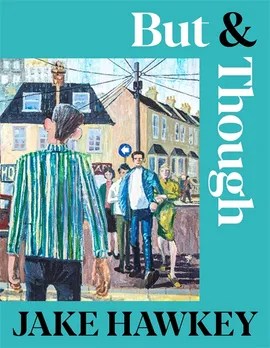
Hawkey’s life began in the Thamesmead / Woolwich / Plumstead area of London, where if you were into football Charlton would be your team. Looking through the Table of Contents the titles indicate the environment we are about to inhabit. Poems such as ‘Fake Ransom Note’, ‘Dad’s still in a coma so I’m sent’, ‘Working Class Boy in a Shower Cap, and ‘Juliet Says to the Nurse the City is a Bruise’ all colour a life in three acts. From childhood to adulthood, this is no ordinary life in any sense of a germ free adolescence. If you’ve read Katriona O’Sullivan’s memoir Poor, you will know what I mean. The title is another clue, as But & Though is the language of addiction with all of its excuses, delaying tactics and unkept promises.

The first line of the book is, ‘I remember’, which is a poignant summation of something you would rather forget, for the opening poems are an elegy to his mother’s alcoholism and absence through the drink,

I was just a boy when mum was drunk
every night & I thought that meant
she did not love me. The unloved
still rents the rooms of my body.

and then the memories of his father’s coma:

When they run their final tests,
they pour water into his ear
like a closing plea of the sea
to wake him

In ‘Wrappers’ his younger brother deals with his father’s death by not leaving the flat and ordering Maccy D’s breakfast each day. The family is a freeze frame from the death. They stay home, where ‘the game shows of Saturday fend off the silence/ only deliveries open the door to sunlight.’

Jake Hawkey

But there is love and tenderness within lines of the poems. ‘there’s Dad’s/ old phone with your number/ stored as both Boozy & Woozy/ Despite being dizzy he still/ loved and loves you.’ Similarly in ‘London & Sons’, Hawkey displays humorous word games in talking about his friends, ‘o emperors! / you are only / caesar salads.

But make no mistake there is a permeating darkness in past memories and setting of family life following his father’s death. The narrator is central to the family sticking together, whether a child or not – the difference in age between mother and son shrinks and is upturned. So the child grows up before their time, missing many of the rites of passage other friends of his age go through.

Signals of poverty and fucked up priorities, are evident in a number of poems. Addressing his mother in ‘Sticks not Twigs’, small Ronnie/ doesn’t have money for football boots/ or training subs this week – / you don’t mind though, if there’s/ booze in the fridge, cigarettes in the house.’ Each family member has to play by these unwritten rules, and they should never share them to anybody outside the family circle.

What is the residue, the echo that such dysfunction has in the long term? Both physical and mental, we are exposed to the reality of a mother who tells her son that ‘I smoked and drank with you, with them in the womb.’ The possibility for the children of ‘Foetal alcohol spectrum disorder.’ The boy seeks out memories as a way to cope, ‘in exile I miss home, / the way Nanny P sweeps / through the TV guide / licking excess ink from her thumb.’

The second section is a bildungsroman of the boy becoming a man before his time. ‘In Boy Asking a Question’,

‘the boy asks what a boy asks
which is never
what a man looking back
would ask but only
what a boy would ask
& that’s okay.’

Within a single poem you see the boy mature, and question whether his father will be in heaven. Religion is a smoke alarm and his father being accepted by God as a good person, is what the boy wants to know. Are there still fires, even when he has gone.

There are some fizzing prose poems. In ‘Brahms & Liszt’ Hawkey further shows his role as family mediator between his sister, (‘who has come home ‘completely gazeboed from the clubhouse’) and his mother who wants to ‘tear off her head’.

Time and again, the ‘remembering’ (sometimes arising out of therapy) sits starkly in the present tense when describing the normality of dysfunction, and Hawkey’s insight here is heart breaking. ‘you forget the individual bombs, bullets or duds of a war stuck on a loop, where the truth is not the first casualty, it’s one’s reverence for the truth.’

Within this teenage passage, Hawkey writes a paean to his sister J (The Girl Who Grew Up to Drive Ambulances), which marries their lost childhood with her job as a paramedic.

‘These are you lights now
flashing blue over streets
where you kicked footballs
where your mother
drove you to school’

Ending playfully with a ribbing from her ambulance colleague who affectionately describes the origin of the word ‘silly’ which once meant holy, but came to mean righteous, to mean silly, to mean noble, innocent, harmless, helpless, ignorant, childish, goofy ‘absolute goof ball like you! she says’

The final Act of the book is both reflective through maturity, and forward looking to the possibility of starting a family of his own.

The title poem ‘But & Though’ evokes the friendship between his two sisters, ‘where ‘there’s never any news so they make their own’. Then, in the ironically titled ‘Happy Hour’ where the weight of letting go of someone you love, is for a long time all that he learned.

But there is much light shone in a number of poems, which ‘The Present’ is a standout example. It is the first ‘Jesus’s birthday’ where his mother isn’t slurring by 3pm but the wounds of her past are evident in her wheelchair. Hawkey, now a teacher references a student’s poem where a ‘briefcase left on a tube [is] finding a new life within the lost & found, department’ and as a poet brilliantly matches a Paul Gascoigne (Gazza) goal against Scotland with an act of Jesus on the cross, once more bringing Religion into the collection like a shadow, or reference point.

His mother is now nearing her end, as a granddaughter signals a different present tense, one where memories are not wounds but ones you cherish through the simple acts of creativity that a child can aspire to. Not something unachievable, but something both mundane and marvellous, as a life should be.

‘my love, somewhere in the world
a poet is sitting down to write;
a pastry sous chef is rubbing
sleep from an eye; one lover
is inking a hymn to another
just because it’s a Tuesday.’

I hesitate to name the collection a debut, not only because it brings connotations of the noble amateur, but because Hawkey has written a book about working class life that is worthy of any collection in a poet’s oeuvre.

There may be fewer portrayals of the working class in poetry than there once was, or ought to be, but like the closing passages of But & Though, this book brings hope that the canon is still alive, if not more than a little scarred from its past.

Copies of But & Though can be bought here
Short Review of ‘From Our Own Fire’ by William Letford

I wrote a review for the Leicester University site, Everybody’s Reviewing run by the novelist, short story writer, poet, and all round good person, Jonathan Taylor (whose partner is the poet Maria Taylor, who previously appeared on PP).

Jonathan has just published a really interesting short story collection, with the wonderful title, ‘Scablands, and other stories’. Published by Salt. You can grab a copy here.

William Letford’s new poetry/prose book, forthcoming in August with Carcanet. You can get a copy of it here.

Review of ‘From Our Own Fire’, by William Letford

As a planet, we may or may not be near an apocalyptic ending. But the notion of such an event, whether triggered by contagion, nuclear war, robotic takeover, or ecological disaster, has never been more in the forefront of our minds. Art has reacted, as it should, through books like The Road, and TV series such as Black Mirror and Sweet Tooth.

Letford’s latest book ‘From Our Own Fire’ (his first in seven years), is a speculative poetic response to this contemporary terror, one that takes a very different path both in form and subject from his previous work.

The global economy is gone
Good. It was just
murmurations in the sky
Opulent and undecipherable

The book is written as the journal of a stonemason and his working class family, the Macallums. Hybrid in form, a page of prose is followed by a linked poem throughout.

We are embedded in the family’s survivalist response to what appears an hyper-capitalist gear change by the ruling elites. A rogue robot, The Intelligence, nicknamed Andy by the family, is on the loose, casting chaotic AI on an already chaotic situation.

‘During the days Andy worked on the messages, the Baked Bean hoarders were out in force. Supermarket shelves emptied and people stepped out of their front doors like meerkats. In the middle of the madness, Joomack invited me to a tattoo party.’

In Letford’s first two Carcanet collections (Bevel in 2012, then Dirt in 2016), his ambit was the lives of the working class. The loiterers, barflies, manual workers, from the place he came from, and those of his travels. Giving voice to the working class, often with the lyricism of the Scottish dialect.

‘From Our Own Fire’, has a similar cast list, but is a much more inventive and frightening book for all that it foreshadows. It could have been overdramatic, but in Letford’s hands it is done with poignancy, humour, and beauty.

Affrilachian Poetry: Breaking another Stereotype

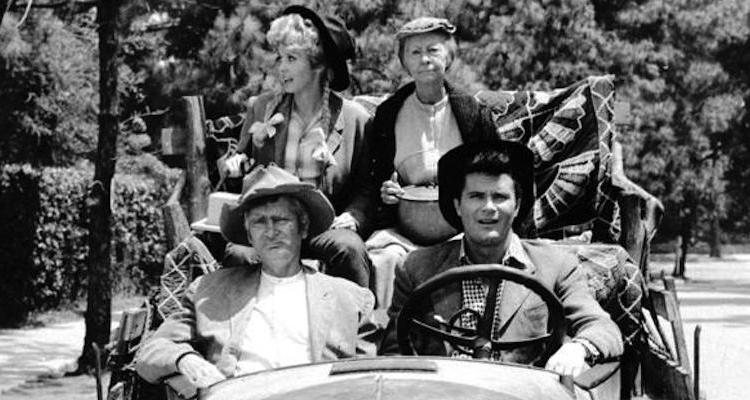
For those of you in the UK who were born in the 50s you may have seen the US TV show Beverly Hillbillies, embodied in the Clampett family, who became rich through the discovery of oil, as the lyrics of the theme tune demonstrated.

Let me tell you a story ’bout a man named Jed: Poor mountaineer barely kept his family fed. … and then one day he was shootin’ out some food … and up from the ground came a bubblin’ crude.”

For those of us born a little later, the 1973 film Deliverance was another gateway to the life of Appalachian poor. A film about some city men who want to experience the back woods and rivers of the countryside but bump up against ‘rednecks’ (‘squeal like a pig boy’- if you know you know), and most famously where one of the men plays guitar with a young local boy on the banjo who outplays him; known as the duelling banjos scene.

For those of us born a little later, the 1973 film Deliverance was another gateway to the life of Appalachian poor. A film about some city men who want to experience the back woods and rivers of the countryside but bump up against ‘rednecks’ (‘squeal like a pig boy’- if you know you know), and most famously where one of the men plays guitar with a young local boy on the banjo who outplays him; known as the duelling banjos scene.

In these programmes and films, Appalachian people are seen as uneducated, poor and unlawful. A lot of very good Southern gothic literature comes from the region, and Savanah Alberts has written a great article, ‘Hootin’ and Hollerin’: The Portrayal of Appalachians in Popular Media, which kicks back against the negative stereotypes.

What is most striking to me now looking back, is that all the characters were white. Yet, African Americans make up 10% of Appalachia (a long spine of mountain area from central Alabama, northeast into southern Canada). For a hundred and fifty years, African American Appalachians have had to fight just to be noticed. This began when the first celebration of emancipation in America took place in the small town of Gallipolis Appalachia, on the Ohio River on September 22nd, 1863.

Crystal Wilkinson

What filled this gap in my knowledge was reading Crystal Wilkinson’s collection Perfect Black, in which she explores her identity of being poor and black in Appalachia. In the opening, aptly named poem, ‘Terrain’, she describes herself in relation to the area.

“I am plain brown bag, oak & twig, mud pies & gut-wrenching gospel in the throats of old tobacco brown men….. I toe-dive in all the rivers seeking the whole of me, scout virtual African terrain sifting through ancestral memories, but still I’m called back home through hymns sung by stout black women in large hats & flowered dresses….All roads lead me back across the waters of blood & breast milk, from ocean to river, to the lake, to the creek, to branch & stream, back to sweet rain, to the cold water in the glass I drink when I thirst to know where I belong.”

Frank X Walker

Wilkinson is part of a poetry collective known as The Affrilachian Poets. The term Affrilachia was coined by fellow poet, Frank X Walker in 1991 to address the gap in knowledge of the African American experience in Appalachia. In his own collection, Affrilachia, the poem Statues of Liberty, conveys the hard life of his mother. ‘mamma scrubbed/ rich white porcelain/ and hard wood floors/ on her hands and knees/ hid her pretty face and body/ in sack dresses/ and aunt jemima scarves/ from predators/ who assumed/ for a few extra dollars/ before Christmas/ in dark kitchen pantries/ they could/ unwrap her/ presents’

The collective has being going for over thirty years and celebrated its 25th anniversary with the anthology, Black Bone. Other poets in the collective include, Nikki Giovanni, and Bianca Spriggs, amongst others. Here is a Book Riot article on seven collections from the collective. Finally, if podcasts are your thing, there is a great series called Black in Appalachia.

On Alan Morrison’s Shabbigentile (with poem, ¡Viva Barista!)

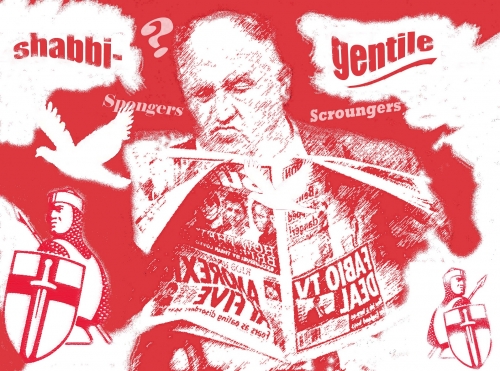
shabbigentileIn novels and films, plays even, there are state-of-the-nation portrayals aplenty; from Dickens to Jez Butterworth’s Jerusalem the rich and the poor are double acts of a political stage that is the United Kingdom. In poetry? Not so much. The Waste Land comes to mind of course, and the writing of such poets as Fran Lock, and performances by Luke Wright, tell of the political scene in different forms (historic & contemporary). So, in reading Alan Morrison’s brilliantly titled ‘Shabbigentile’ you will be bowled over by the constant stream of anger-flecked images, which properly reflect the ill-state-of-the-nation we find ourselves in today. (more…)
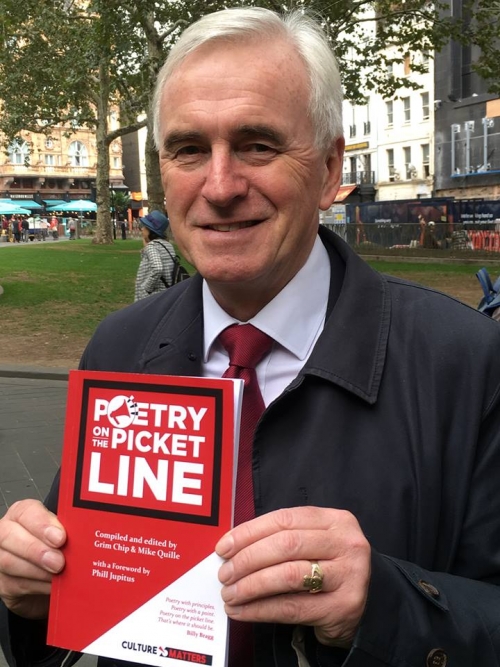
Working Class Poetry Heroes of 2018 – Poets on the Picket Line

john mcdonnellIt’s been really hot at times this year – pushing into the 30s at times back in the summer. It’s been really cold at times this year – pushing into the minuses at times in the mornings. And yet, they are there, rain or shine, supporting the workers who are having to strike in order to either get proper working conditions or a living wage that they more than deserve. The heroes of Poetry on the Picket Line (PotPL) are the likes of Chip Hamer (Grim Chip), Nadia Drews, Mark Coverdale, and Tim Wells. And their support doesn’t stretch to reading poems, they have raised vital funds for the striking workers. Proper activist poetry, making a real difference to peoples’ lives when they most need it. So after little discussion with myself of the leading contenders, Poets on the Picket Line are Proletarian Poetry’s Working Class Heroes of 2018 (and 2017 & 2016 as well). (more…)
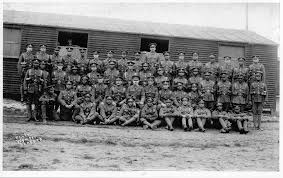
‘Unwritten’ Caribbean Poems after the First World War. Edited by Karen McCarthy Woolf, with excerpt of poem ‘Her Silent Wake’ by Malika Booker

black soldiersHistory is nothing without memory, memorials, and remembrances. And on such a day as this, the marking of the end of the First World War, there is a particular resonance to what it means today. As Hobsbawm termed it, this was the beginning of the short 20th century, which started with horrific loss of lives due to the power hungry international alliances, and ended in what at the time seemed a somewhat relative peaceful transition with the fall of the Berlin Wall. You could call it the slow death of empires. (more…)
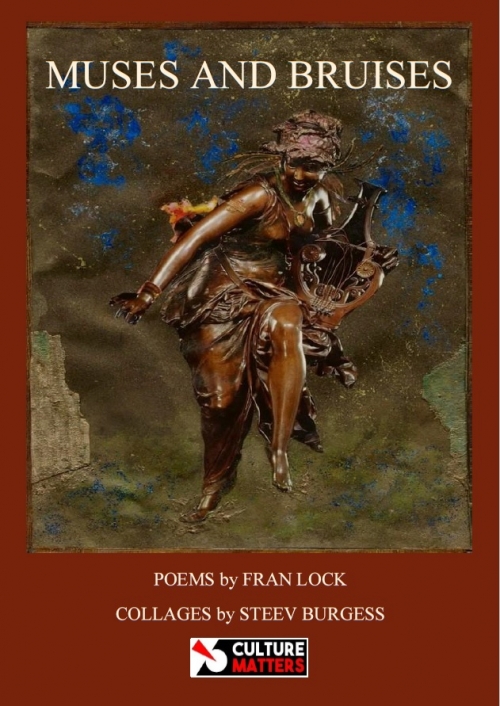
Anger in Poetry: Fran Lock’s Muses and Bruises

muses bruises imageIs there enough anger in mainstream poetry today; in the journals/magazines and collections? In the US from Audre Lorde to Claudine Rankine, Terrance Hayes to Danez Smith, there is great anger in poems about the discriminations upon which that country is founded and governed. They make it into the pages of POETRY, and sell many books. Here in the UK, I’m not so sure. We may not have the scale of discrimination as felt by the US, but black men are still killed by police here, women are discriminated, abused, and killed by men, and let us not get started on the implications of Brexit and the hatred it has stoked.

This is not meant to be a comprehensive survey of anger in UK poetry, but off the top of my shiny head, there were the Liverpool poets, the original ranters of the 1980s who came out of punk; some still going strong like Tim Wells who chronicles those times in his site Stand Up and Spit. There are others in performance poetry and spoken word (as it is known); Anthony Anaxagorou’s Outspoken Press in London, which includes a number of BAME poets, such as Sabrina Mahfouz and Raymond Antrobus. There are other BAME poets, such as Kei Miller, Malika Booker, Roger Robinson, Nick Makoha (the latter published by the wonderful Peepal Press) who have great subtlety to the anger in their poems. Tony Walsh and Salena Godden from Burning Eye Books (to name only two from that stable) who have been treading the boards with their distinct brand of anger that is often done with humour. Smokestack Books, has consistently published radical, global voices, such as Amir Darwish and Steve Ely, for many years now.

Penned in the Margins publishes the aforementioned Tim Wells, and one of my favourite poets, Melissa Lee Houghton (who recently published Cumshot in D Minor, by Offord Road Press), whose poems of sexual abuse and misogyny burn. Of course, there are other publishers whose catalogue will include poets or poems of anger, e.g. Bloodaxe and Nine Arches Press, two of my favourite publishers, as well as some of Kim Moore’s past and present poems published by Seren. Then there are the online publications, with an overt social and political stance, which include Reuben Woolley’s ‘i am not a silent poet’ and Jody Porter’s ‘Well Versed’. (apologies for any glaring omissions I’m sure I’ve made, please feel free to add to the list in the comments below). However, I do feel these are on the margins.

fran lockFran Lock, who has appeared on this site a number of times, is, along with Melissa Lee Houghton, one of those electrifying poets both on the page and the stage. Since Flatrock in 2011, to the wonderful The Mystic and the Pig Thief (Salt – which no longer publishes poetry), through to Dogtooth (Outspoken Press), and our feature collection Muses and Bruises (published by Manifesto Press) Fran has consistently shouted down those who discriminate against the working class, women in particular. As she says in her introduction to the collection: “I was told once that my writing was inauthentic because working-class women don’t think or speak that way. Bollocks. I am a working- class woman, and I do write and think and speak this way. There is no one homogeneous working-class voice, any more than there is a single monolithic working-class culture. No one has any right to set limits on the way we sound or the words we use.” The collection is complemented beautifully with collages by Steev Burgess, which “bring this to the fore,[with] a mixture of decadence and squalor; grind and grime with a lick of glitter.”
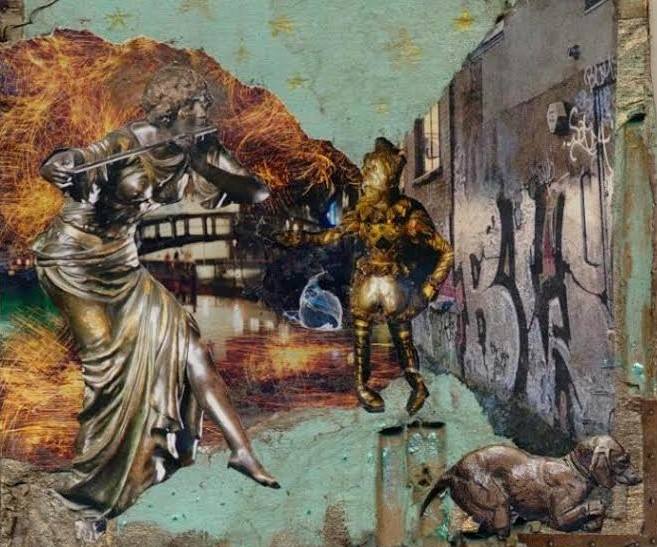
The collection is in two parts; the first is a set of poems based on the muses of the arts from Greek mythology. Here is Clio, muse of history: “My mother was a Goddess, she could charm/ bees and her cheekbones were stunning./ Her silence gathered dust like an heirloom. //I am an unquiet child./ I see things and I must tell: //That man, grinning out from under/ the redacted oblong of his eyes, crawled/ from the comic opera of the past, dragging his period costume;” Similarly in the poem, Erato (muse of love poetry), there is the question of female identity from a patriarchal expectation: “And to top it all off, I’m expected to ride on
a float, my face scraped on in a strong wind, all
tits and teeth, rigid as any a hood ornament: winged Victory, pigtailed and pinioned. Bow to the crowd
like Jackie O, glamming it up at an airport.” Fran is imagining Erato as a Connemara beauty queen who is not allowed to be seen as having any other ‘attribute’ than her physical beauty, and thus like the Greek muse, is imprisoned by it.

m&bThe second part of the collection is a wonderful grotesque imagining of a place called Rag Town and the girls who inhabit it, in particular the ubiquitous La La. In her notes on this section Fran says: “We have the right, and we deserve the space in which to be angry. I started writing the Rag Town sequence with this one thought looping endlessly in my head.” This was driven by Fran’s disillusion with what International Women’s Day has become; originally called International Working Women’s Day, the dropping of the ‘Working’ de-classed the day, so that in Fran’s words it has become divisive to raise issues of class as they relate to women’s oppression. “It’s divisive, for example, to say that white, settled, middle-class women “escape” from unlovable and undervalued domestic labour at the expense of working-class women, immigrant women, women in poverty.”
Towards the end of the collection, in the poem ‘Rag Town Girls see God’, there is almost an inverted elegy in its telling of the end of man as represented by the deity. “There he is, eyes half closed, doing the math of a difficult miracle, wrist-wearied, leaning into his swig, his pull of smoke. We assume he is God. He reminds us of a man we once knew: slender and insulted by life, mixing his blessings like strong drink, suicidally agile, tying a nimble noose the minute your back was turned.” The final poem in the collection has undoubtedly the longest and angriest title, aimed at the mainstream poetry world that ignores the ‘likes of us’: “Rag Town Girls Don’t Want to be in your Shitty Fucking Magazine/Anthology/Stable of Wanky, Middle-class Poets Anyhow.” These following lines from the poem end what is a brilliant collection masterfully complemented by the collages of Steev Burgess.

“How to fake it? How to keep it in, that jittery, impassable grief? Don’t scratch yourselves, girls. Bathe. Point your toes. Glowing in a backward light cast by everything you flee from. You like proper edges, incline a tin ear to the shrug and flutter of our debateable music. If we could only sing like you, a proficient, accredited language. But we can’t, so we won’t. La-la lit a fire instead. It ate a hole in everything.”

You can listen to Fran read two of the poems here and here. You can buy the collection published by Culture Matters/Manifesto Press here.


Fran Lock is a sometime itinerant dog whisperer and author of three poetry collections, ‘Flatrock’ (Little Episodes, 2011), ‘The Mystic and the Pig Thief’ (Salt, 2014), and ‘Dogtooth’ (Out Spoken Press, 2017). Her work has appeared in various places, most recently Communist Review, The Morning Star, POETRY, Poetry Review, and in Best British Poetry 2015. She is the winner of various competitions including the 2014 Ambit Poetry Competition, the 2015 Out Spoken Poetry Prize, and the 2016 Yeats Poetry Prize and was shortlisted for the 2017 Bread and Roses Poetry Award.


Steev Burgess has juggled his career with an interest in music and art, releasing records and holding his debut art exhibition of collage art in “Red Bologna” with the help of the Circolo Ricreativo Aurora ARCI. Taking a break from music, he concentrated his efforts on making better art and extending his writing skills by “writing proper poetry” and founding the Y Tuesday poetry club at the Three Kings in Clerkenwell. His work caught the attention of the Libertine’s John Hassall. Steev and John now have a song writing partnership with his new band John Hassall and the April Rainers, whose debut album “Wheels to Idyll” has recently been released.

(images by Steev Burgess)


The Hatred of Poetry and Social Realism, and the Love of the Poetry of Social Realism

I have just read The Hatred of Poetry by Ben Lerner. Lerner’s thesis is that poetry is hated because it can never live up to its ultimate aim of conveying the universal truth. “Poetry isn’t hard, it’s impossible.” It is impossible for a poet to translate their thoughts into a poem that achieves universality. In the words of Socrates, “Of that place beyond the heavens none of our earthly poets has yet sung, and none shall sing worthily.”

Lerner uses the cliché of the creative dream where you have some kind of enlightened idea, only to see it dissolve when you wake. “In a dream your verses can defeat time, your words can shake off the history of their usage, you can represent what can’t be represented.” But then life gets in the way, with its ‘inflexible laws and logic.” And so he concludes: “Thus, the poet is a tragic figure. The poem is always a record of failure.”

He ends the book quite cheekily and somewhat grandly with, “All I ask the haters – and I, too, am one – is that they strive to perfect their contempt, even consider bring it to bear on poems, where it will be deepened, not dispelled, and where, by creating a place for possibility and present absences – like unheard melodies, it might come to resemble love.” It is essentially that comment you got from that teacher you were sure hated you; “not good enough, try harder.”

6107310501_fec5e69ed5_z

Charity*

Putting aside my initial reaction that Lerner should maybe lower his expectations a little, I feel there are comparisons in his argument to the ideals behind social realism and portrayals of the working classes. Social Realism began as a movement of artists and photographers in the early 1900s (peaking in the 1920s & 30s); it was a counter to the idealistic and one sided bourgeois depictions of life at the end of the 19th century. It was hugely important and is one of the lesser regarded aspects of modernity. It exposed the harsh realities of working class life with endemic poverty and consequent poor health and high rates of mortality. It challenged the aesthetic in order to change the system. You could argue that the New Deal and the Welfare State were positive policy reactions to the exposure of social realism. (more…)

Poetry Books and Pamphlets

Books and Pamphlets I Have Bought and Nearly Read

I have been feeling a little overwhelmed by the number of poetry books and pamphlets out there and the pressure to keep up with them both for the site and for my own learning as a poet. At the moment I don’t really have a sense of how they fit together or what I have learned from them. So I thought the first thing to do was to make a basic list of the publications I have (although there may be others scattered around the house). This isn’t a review, it is a simple list from which I hope to get a sense of how they relate to each other in terms of style and themes. I would love to hear of books/pamphlets you might think I will be interested in reading.

telling talesThe List

Patience Agbabi, Blood Monochrome (Canongate, 2008)
Patience Agbabi, Telling Tales (Canongate, 2014)
kithRaymond Antrobus, Shapes and Disfigurements (Burning Eye, 2012)
Simon Armitage, Paper Aeroplanes (Faber, 2014)
Jo Bell, Kith (Nine Arches Press, 2015)
Jo Bell, Navigation (Moormaid Press, 2014)
Emily Berry, Dear Boy (Faber, 2013) (more…)