I am not sure how many of you will have heard of Mike Quille. For the past ten years he has been behind the publication of numerous poetry collections and anthologies of working class poetry. No other publisher supports working class left wing poetry more than Mike who is ably supported in his editorship by a network of poets such as Mike Jenkins of the Red Poets, Alan Morrison, Alan McGuire, and the inimitable Fran Lock.
However, as with many institutions and publishers, Culture Matters is finding it difficult to carry on adding to its great catalogue – costs of printing and posting have gone up as well as the general cost of living. With the recent retirement of Smokestack Books, opportunities for working class poets has been diminished further.
Culture Matters is marking its tenth anniversary this year. I was an associate editor in those early days and in 2018 Mike published my book, The Combination: a poetic couple of the Communist Manifesto. I don’t think anyone else would have published it.
So we need your help. It isn’t much but if you could buy one or more books, it will greatly advance Culture Matters ability to publish working class poetry in an arena where very few publishers are taking on such issues as poverty, politics, and social history.
If you are new to Culture Matters you may want to buy the ‘Building Jerusalem’ anthology which has extracts from all the books and pamphlets published over the last ten years.
THANK YOU FOR READING AND SUPPORRT
In solidarity, Peter Raynard – editor of Proletarian Poetry.
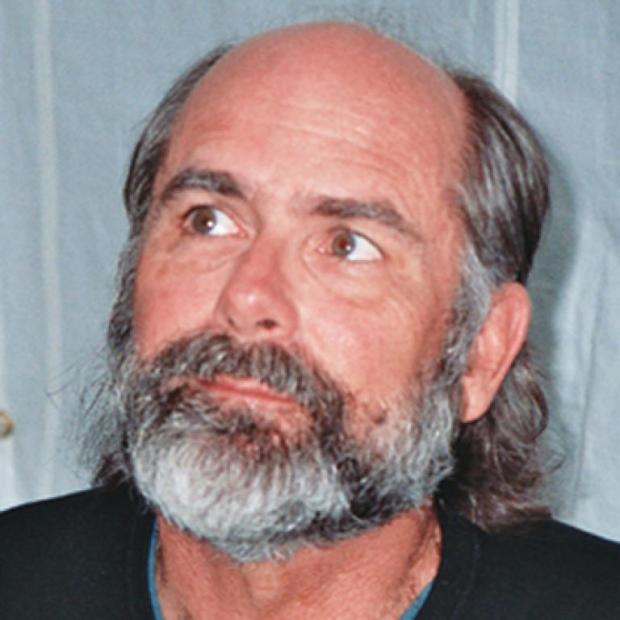
The poet Fred Voss, who has died at the age of 72, was one of the great American writers of manual labour. He went beyond the poet as witness in a journalistic sense, for he lived what he wrote and he wrote more than three thousand poems.
Fred was born in Los Angeles in 1952. Initially he thought he would go into academia. On passing a Bachelor of Arts degree in English he was offered a place on a Ph.D. program at the prestigious University of California, Los Angeles. But he turned it down to begin work as a machinist, which he carried on doing for the rest of his life.
He turned to poetry as a way of documenting the lives of his fellow workers who work for the ‘man’, the ‘machine’, the ‘system’; machinists who may be making engine parts for fighter planes that drop bombs in Iraq or Afghanistan. His workmates came from across the Americas and his poetry exhibits that microcosm of working class life, which you rarely find in other peoples’ poetry, besides Martin Hayes and his portrayals of London couriers and controllers.
Fred published numerous collections. His first, Goodstone was published here in the UK by the ever astute Neil Astley’s Bloodaxe Books in 1991, in which Voss did a reading tour of the UK. His poetry had arisen out of the South Californian poetry of Charles Bukowski. But it was Professor John Osborne from Hull in the UK, who first published a hundred poems of Voss in the influential Bête Noire magazine which ran for ten years between 1985-1995. Goodstone was the touchstone of the more than three thousand poems Voss wrote over the next 35 years. Goodstone was the name Voss derived from the companies he had worked as a machinist. The poems, like the many that followed, told of the day-to-day struggles of men and women working in machine shops and factories of Southern California from the late 80s onwards.
In the introduction to Robots Have No Bones (two years into the first Trump presidency I wrote:
“Fred Voss’s poems situate us in the workplace, and by doing so, show us the humanity and diversity of those who work there – ones who both support or hate Trump, but as one want, at a minimum to support their family, not have to struggle and work long hours to do just that.” Sadly, nothing has changed, and we are now at the beginning of another Trump presidency.
Fred was very generous with his poetry, offering me two poems in the early days of Proletarian Poetry back in 2015. Then more recently in an academic paper I wrote about his work, and that of his good friend Martin Hayes, on the Poetics of Precarious Work for the journal English (forthcoming in 2025). He was over the moon about his poetry being analysed for the precarity of the job, given his initial interest in the academic life, and it is so sad he didn’t get to see the published copy.
Two poems illustrate the lives of his fellow workers and Fred’s deep empathy and love for them. In ‘Los Angeles’ (see below), many of the workers wear crosses, believe in God, go to church on Sundays, but because of the environment in which they live, through poverty, violence, and low wages, are close to breakdown, close to ending their life. This is also seen in the poem ‘Grease Spots’, as a worker hopes the US Air Force will make a ‘grease spot’ of the Iraqis in response to the Twin Towers crashes. Voss wonders conversely, if their own government has made a grease spot of them, because the workers are barely able to feed their children and may never be able to retire.
I have a feeling that Fred wasn’t given deserved recognition by the mainstream poetry community in the US; there is no record of him on either the Poetry Foundation’s website nor the American Academy of Poets, and yet there is a Wikipedia page of his life.
Fred is a great loss both as a beautiful human being and a poet who exposed the daily struggle facing workers in the precarious waters of late stage capitalism. Our thoughts and love go to his dear partner Joan Jobe Smith.
Los Angeles’ by Fred Voss
In Los Angeles I have seen men in factories with big crucifixes on their chests crucifixes exchanged for guns needles leaps out of 10th story windows crucifixes big and heavy swinging on the massive hairy chests of these men crucifixes exchanged for bottles that had these men face down on floors or in alleys bottles or needles that took their women their families their souls I have seen men in factories without one trace of shame wearing big shiny crucifixes on their chests men this close to picking up a knife and ruining their lives this close to blood they could never wash off their hands men from gangs from prisons from tiny rooms where the devil pulled up a chair next to them men who’ve earned their crucifixes.[i]
[i] Fred Voss, Hammers and Hearts of the Gods (Hexham: Bloodaxe Books, 2009), p. 37.