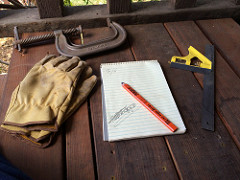
Image by Franklin Hunting*
To paraphrase an old REM song, “It’s the end of work as we know it. But I feel fine.” In the not-too-distant future, this will be the end game for politicians. Although there is a continuance of, and even in the case of President Agent Orange, a revival of the policy of creating more jobs, the reality is that under the current capitalist trajectory, there aren’t enough to go round. We are already seeing it with the rise in automation and the precariat and gig economy; people are scraping around for part-time jobs that are unsustainable economically. Politicians will have to find ways of keeping people happy (however that is defined) outside of work.
Some commentators are beginning to write about the post-work economy and how today’s politicians are wrong in their promise to create more jobs. In a provocative essay, “Fuck Work!” the historian James Livingston claims that the belief in work as a central factor of what it means to be human, “has become ridiculous, because there’s not enough work to go around, and what there is of it won’t pay the bills – unless of course you’ve landed a job as a drug dealer or a Wall Street banker, becoming a gangster either way.” Similarly, Yuvi Noah Hariri describes this situation in a more apocalyptic fashion, “The new longevity and super-human qualities are likely to be the preserve of the techno super-rich, the masters of the data universe. Meanwhile, the redundancy of labour, supplanted by efficient machines, will create an enormous “useless class”, without economic or military purpose.”
 The poem, The Earth and the Stars in the Palm of our Hand by Fred Voss, laments the state of the capitalist economy at a place he has worked for over thirty years; even though “it’s a pretty good job we have /considering how tough it is out there in so many other factories /in this era of the busted union and the beaten-down worker /but paradise? /and we walk away toward our machines ready for another 10 / hours inside tin walls /as outside perfect blue waves roll onto black sand Hawaiian / beaches /and billionaires raise martini glasses.” But in response to an ironic comment (“Another day in paradise,”) from a workmate, he asks the question: “why not a job /joyous as one of these poems I write /a job where each turn of a wrench /each ring of a hammer makes my soul sing out glad for each /drop of sweat /rolling down my back because the world has woken up and /stopped worshiping money.” Everyone needs a sense of worth, even in a mundane job, where they don’t feel exploited and undervalued. For as Fred beautifully writes, [there is] “nothing more noble /than bread on the table and a steel cutter’s grandson /reaching for the moon and men /dropping time cards into time clocks and stepping up to their /machines /like the sun /couldn’t rise /without them.” The challenge now is create a sense of this nobility both inside and outside the workplace.
This poem comes from a new pamphlet by Fred Voss published by Culture Matters & Manifesto Press, and supported by the trades union, Unite.
38 years ago Fred Voss walked into a steel mill and put on a hardhat and picked up a torch and a wrench and then a pen to write of souls sold in the job market, lives fed into time clocks, men owned and ordered like they were hardly men at all, by bosses and owners too good to shoulder a load or grab a pickaxe, as the earth is covered with concrete and the trees and tigers die. Fred Voss looks for the day when all this will be changed when women and men with dirt on their hands and gold in their souls will no longer be treated like children but given the power and respect the true makers of this world deserve. Voss has published three books of poems with Bloodaxe: Goodstone(1991), Carnegie Hall with Tin Walls (1998) and Hammers and Hearts of the Gods (2009).
The Earth and the Stars in the Palm of our Hand
“Another day in paradise,”
a machinist says to me as he drops his time card into the time
clock and the sun
rises
over the San Gabriel mountains
and we laugh
it’s a pretty good job we have
considering how tough it is out there in so many other factories
in this era of the busted union and the beaten-down worker
but paradise?
and we walk away toward our machines ready for another 10
hours inside tin walls
as outside perfect blue waves roll onto black sand Hawaiian
beaches
and billionaires raise martini glasses
sailing their yachts to Cancun
but I can’t help thinking
why not paradise
why not a job
where I feel like I did when I was 4
out in my father’s garage
joyously shaving a block of wood in his vise with his plane
as a pile of sweet-smelling wood shavings rose at my feet
and my father smiled down at me and we held
the earth and the stars in the palm of our hand
why not a job
joyous as one of these poems I write
a job where each turn of a wrench
each ring of a hammer makes my soul sing out glad for each
drop of sweat
rolling down my back because the world has woken up and
stopped worshiping money
and power and fame
and because presidents and kings and professors and popes and
Buddhas and mystics
and watch repairmen and astrophysicists and waitresses and
undertakers know
there is nothing more important than the strong grip and will of
men
carving steel
like I do
nothing more important than Jorge muscling a drill through
steel plate so he can send money
to his mother and sister living under a sacred mountain in
Honduras
nothing more noble
than bread on the table and a steel cutter’s grandson
reaching for the moon and men
dropping time cards into time clocks and stepping up to their
machines
like the sun
couldn’t rise
without them.
 Such a journey shows the continued fragility of the situation in the Balkans since its protracted war in the 1990s. In Katie Griffiths’ poem, A Lack of Minarets, she takes a journalistic eye to describe a particularly iconic moment in the war, that of Mostar and the destruction of its historic bridge. “From a distance something is wrong,/a skyline tampered with, hard edited./As the bus coils down the mountainside/into the basin of Mostar.” The city was a main route for refugees on their way to Split from Sarajevo. “This is the home of the dispossessed,/shunted like marbles from zone/to zone, who pick their way/past commandeered cars/and makeshift kiosks sprouting/at odd corners to replace/shops that once packed the town.” The city has since been rebuilt, which included restoration of the bridge to its original design. It took nearly ten years. Still, as with many wars, the return and rehabilitation of its citizens will take many more years.


 For those of us not able to do so, we are very lucky to have the likes of multi-talented Jemima Foxtrot who in a poem from her debut collection, All Damn Day, does what a lot of great poets do, allows us to dream. She takes a somewhat Manichean outlook that fits with the division we all feel in what we would like to do: “A half of me wants to exist in a tepee,/breed children who can braid hair and catch rabbits./Drink cocoa from half Coke cans twice a year/on their birthdays, the edges folded inwards/to protect their sleepy lips, cheap gloves to buffer their fingers,/precious marshmallows pronged on long mossy sticks.” However, such ‘rural and romantic poverty’ does not always fit with present circumstance, so we dream elsewhere. “If I were rich/I’d eat asparagus and egg,/in my Egyptian-cotton-coated bed, for breakfast. Bad. Ass./You’d find me in my limo, got a driver called Ricardo,/wears a nice hat. That’s that. Bad. Ass.” And in this dream we may travel to such places as Dorling suggests, but Jemima insightfully shows what lies at the heart these ‘hypocrisies’ we sit in, and how a division of one half or another can lead us all to a false sense of what it is we are after. “Capital has split my dreams in two /like a grapefruit./And I want both. And I want both.”
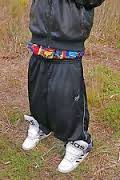 It is essential to make the reader believe there is but one type of working class person; they can be of a different age but they must look related, ideally inbred. The main type will be a saggy clothed, got a loyalty card from Sports Direct, Union Jack pale-faced male who claims he can trace his ancestors back to Neanderthal times, which in reality is just before the Second World War when his great granddad ran off with a Polish woman – but don’t talk about that obviously. Always have them accompanied by a muscle shaped dog, preferably tight-leashed, with a 70s punk rock sell-out dog collar, white drooling jaw, and a ravenous appetite for the calf-muscle of an outsider, which is basically anyone born within a mile of their ends.
 With females, try to find a young heavily made up woman in her late teens, early twenties at most, with a neck tattoo and a ciggie hanging from her botoxed lips. She must be pushing a pram, if possible with a brown skinned baby inside wailing its lungs out. Even better if she also has slightly older offspring biting at her heels.
 old medieval days, even though many of them died before the age of five and none of the adults had their own teeth; why do you think they like soup so much? Then move on to Brexit and listen to the range of opinions on this newly found independence, from ‘we can now take our country back’ to ‘we can now send them back’. Pretend to take copious notes at this point to induce a feeling they are finally being listened to.
 This sets aside the history they have lived through and the people they became because of it; a World War to monumental technological change from the TV to virtual reality. They have so many stories to tell and be told, and Beth McDonough’s eponymous poem ‘St Fergus Gran’ does just that. “Great Gran lived in weighty old pennies, dropped/from bonehard hands to my fat-cup palm/just before we’d journey west.” Like many stories, hers is one that is handed down the generations, “I never knew of her second sight/All those deaths, and how she kent/her brother lived, when the telegram said not.” Their lives weren’t a straightforward one of getting married and having children; war put pay to that. “I met the East End Glasgow lad she’d/fostered in the war, with all his tricks, his walk/to her from the west coast up to Buchan.” Here Beth tells us a little more about the poem:
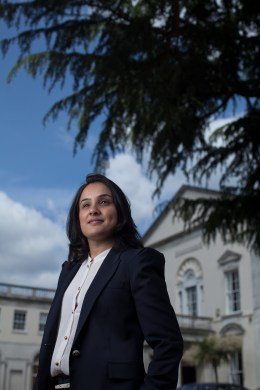 therefore have very different connotations. Our poet today, Professor Aisha K. Gill [
 In more wealthy countries people are also pressured to move. For example, because of past policies of selling off council housing,
  Nonetheless, whether a refugee who has left their country, or internally displaced person, the majority of people still call home the place they were born. Joe Horgan’s poem, “The Maps You Took With You When You Went,” tells of the place he was born, Birmingham and the situation facing many working class people during the 1980s. The irony being that many came to the city, as they did to my own home of Coventry, from Ireland and Scotland, only to see a number of their own children leave; some went back to Ireland during the Celtic Tiger bubble, whilst others dispersed to various corners of the country and abroad.
  Reuben Woolley’s poem ‘all fall down’ poignantly captures the tragedy of war, “where/children sang in cinders”. As Michael Rosen did previously in his poem, ‘
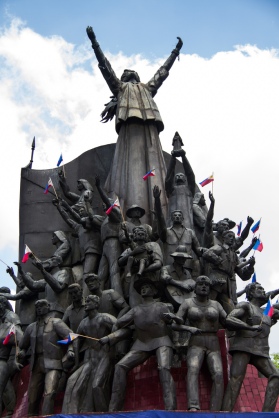 Power is ubiquitous and multi-layered. Just look at the range of power lists; from political figures, to those in the media,
  As individuals, it is quite easy for us to feel powerless and Hilda Sheehan’s poem The Speaker forcefully captures this sense through the metaphor of noise. “The Speaker//is an electric vulture//….It is/a god of dropped insects/from a carriage clock/or wasp holder/left to go on-off, on-off/riddling the town’s ears/from where it came.” This barrage of messages – part of this idea of influence, of soft power – is now at a ‘volume’ we cannot control. “Inside a speaker is Hell -/a radio of church-like/persuasion/from four walls a prison/of persecutors of/television visions/crackling away in the gutters.” It is not that easy to turn things off. But this powerless feeling of not being listened to is what brings people together; we see it with Black Lives Matter, with the Occupy movement, and the Arab Spring protests. There is both a soft and hard power that individuals can exert. One that is more than just a nudge to those in power. One that is a shout so loud it cannot be ignored.
