I have spoken before about my maternal grandmother’s final home – a high rise flat in Gateshead. My paternal grandparents lived in a tenement block in Glasgow. It was on the bottom floor, with two bedrooms, a small bathroom, kitchen, and living room. Up to ten people at a time lived there (my grandmother had ten children, five of whom died before the age of five) from the 1930s to when I first went there in the 1960s. My father left when he was 17, but at 84 still calls Glasgow home.
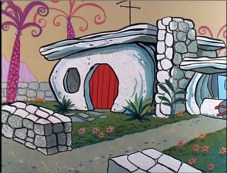 What do you think of when you think of home? Is it the history of wallpaper that reflects the changing times? The leather three-piece suite you bought off some bloke in the pub and had to drive down long country lanes to a hidden away warehouse – but was assured it was all totally legit? (I know someone who actually bought his house from someone in the pub). Was it the smell of chip fat in the kitchen as it cools back to white, a cracked window that was never fixed, the gradual wearing away of the staircase carpet?
 Lorraine Carey’s beautifully evocative poem, From Doll House Windows, is about a childhood home and the memories it still holds. “An aubergine bucket served as a toilet,/in a two foot space. Mother cursed all winter/from doll house windows where we watched/somersaulting snowflakes.” And like the poem, many of us had a pet (mine was a succession of goldfish from the fair, that usually died after two weeks), “My father brought back a storm petrel/from a trawler trip. /I homed him in a remnant of rolled up carpet -/ that matched his plumage.” But in the chaos of a young family’s house, something dark goes beyond the everyday in Lorraine’s poem; a memory of home, which will never be forgotten.
(A small note: by pure coincidence, and a reflection of how small our worlds can be, Lorraine grew up a couple of streets away from me in Coventry – who would have thought that ‘County Coundon’ could be a place of such poetic nurturing).
Lorraine Carey was born in Coventry, England and moved to Greencastle, Co. Donegal where she grew up. Her poetry has been widely published in the following: Vine Leaves, The Galway Review, Olentangy Review, Dodging the Rain, A New Ulster, Quail Bell, Live Encounters, ROPES, North West Words, Sixteen, Stanzas and Poethead and is forthcoming in Atrium and Launchpad. A past winner and runner up of The Charles Macklin Poetry Competition, she was a runner up in the 2017 Trocaire / Poetry Ireland Competition. She has contributed poetry to several anthologies and her artwork was featured as the cover image for Issue 15 of Three Drops From A Cauldron. Her debut collection From Doll House Windows – Revival Press is available from www.limerickwriterscentre.com. She now lives in Fenit, Co Kerry.
From Doll House Windows
The woodlouse dropped off the ceiling
like flaky plaster, landing on the candlewick
that failed to keep me warm in the two roomed house.
In damp darkness feeding on their own waste.
Racing rafters for the little heat in a temporary dwelling,
five minutes from Grandma’s.
An aubergine bucket served as a toilet,
in a two foot space. Mother cursed all winter
from doll house windows where we watched
somersaulting snowflakes, as evening fell.
Icicles sparkled, hung from gutters
in tapered spikes.
My father brought back a storm petrel
from a trawler trip.
I homed him in a remnant of rolled up carpet –
that matched his plumage.
Our kitchen cum every room smelt of children,
resentment, the flapping panic of his final days.
Slaters scuttled through my dreams
I tugged on my bedspread, shook them off,
disrupted my mother’s sleep as she manoeuvred
with her ghost breath sighs caught by streetlight.
She pulled the candlewick taut over her belly
the skin marked with angry tracks,
as my unborn sister stretched
in the safety of her amniotic sac.
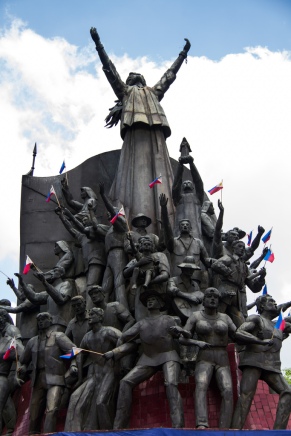 Just a short post to let you know that I have now compiled an alphabetical index of the poets (with their poems) who have appeared since the site began in September 2014. There are over 120 poems, from the great and the good of poetry, to the great and the good of poetry. I will be updating it to include a couple of lines from each poem, as well of course adding to it, as and when.
 Aged sixteen, in my first (and only) year, as an apprentice at the General Electric Company, I went round the factory and sat with various workers for half a day each, to get to know what they did. One woman’s job involved, picking up a piece of component, putting it on small press, then pulling a lever to fit it. It took her less than two seconds to do one. When she had done about five, she said to me, “that’s it, love. That’s what I do.” This left ten seconds less than four hours to spend together, in which we had a good natter, and I learned a lot that had nothing to do with her job. Of course, it is only in looking back that I realised it was my first encounter in how society is diced and sliced in terms of gender and work, with the women as the army corps and the men as corporals (charge hands), sergeants (foreman), captains (manager), etc..
 industrial febrile temperature rising across the country at that time (the poet Anna Robinson previously wrote about an aspect of this on the site, in her poems
 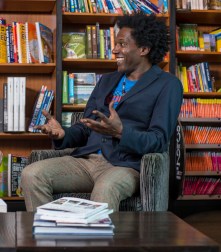 Lemn Sissay’s poem, “Spark Catchers”, is a tribute to the Matchwomen and is a physical landmark at the Olympic Park where the factory was located. The poem is also an inspiration for an upcoming musical piece composed by Hannah Kendall and performed by the UK’s first black and ethnic minority orchestra, Chineke, at the
 Ben Banyard’s poem ‘This is Not Your Beautiful Game’ nicely captures the reality and sometime excitement of such wind-blown support, “This is not Wembley or the Emirates./We’re broken cement terraces, rusting corrugated sheds,/remnants of barbed wire, crackling tannoy.” You don’t get prawn sandwiches here (not that you would want them), it’s “pies described only as ‘meat’,/cups of Bovril, instant coffee, stewed tea.” But out of such masochistic adversity, comes great strength, as well as pride. “Little boys who support our club learn early/how to handle defeat and disappointment…./We are the English dream, the proud underdog/twitching hind legs in its sleep.” It is never too late for some players’ dreams; many have risen out of the lower ranks, to play in the Premier League, like Chris Smalling, Charlie Austin, Jimmy Bullard, Troy Deeney, and Jamie Vardy. And of course not forgetting Coventry’s own Trevor Peake, who at the age of 26 was bought from Lincoln City and was part of the 1987 FA Cup winning side.
 Julia Webb’s poignant (and wonderfully titled) poem ‘because my home town has a hand between its legs’, encapsulates this precarious, exciting, and frightening time from the perspective of girls/young women, “we spend too much time in public toilets – /smoking, scratching boy’s names onto cubicle doors,/rolling clear lip gloss onto kissable lips.” We all remember hanging out on the streets, when there may have not been a youth club, and the pubs were beyond reach. “Spaces find you: the concrete slope under the road bridge,/the shadowy space beneath the walkways at the bottom of the flats.” And sadly, the vulnerability and dangers that one can be open to, “make sure your Mum’s friend never gives you a ride home alone.”
 It seems there are never ending examples still emerging; in just the past week I have read reports of alleged abuse of children at
 Catherine Graham’s poem Market Scene, Northern Town evokes this scene of bustling activity and its mix of goods: “The lidded stalls are laden with everything/from home-made cakes to hand-me-downs.” This is a tradition that is woven into daily activities: “They’ve/spilled out from early morning mass,/freshly blessed and raring to bag a bargain,/scudding across the cobbles, like shipyard workers/knocking off.” And from the food bought, you will “smell the pearl barley,/carrots, potatoes and onions, the stock bubbling/nicely in the pot.” We shouldn’t be too doom laden when it comes to the decline in markets, because they haven’t died out altogether, and I’m not sure they will. I for one would miss the market trader shouting, ‘Come ‘an ‘av a look. Pand a bowl!’
 Let’s start with a joke: “There’s a black fella, a Pakistani, and a Jew in a nightclub. What a fine example of an integrated community.” Here’s another one for ya, “Two homosexuals in the back of a van, having sex. They’re over twenty-one! What’s wrong with that?” These are the anti-stereotype jokes of
  If this site does one thing, I hope it shows that the working class are not a one dimensional, culturally barren, single type of person. Poems from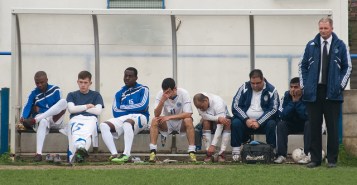
 Rishi Dastidar gives us a wonderful carousel of images of today’s modern Premier League players in his poem “We are Premier League”. The lines “We are Nando’s skin on X-box wings/We are charitable visits, making dreams come true”, shows the seeming contradictions of characters who command such wealth but still enjoy the ‘finer’ delights of chicken shops whilst visiting hospitals and schools. Many of these players themselves come from disadvantaged backgrounds, with little education (they were too good at football in their teens to worry about A levels, if not GCSEs) and travelled little. But like a lottery winner, the money can go to their head, and without proper guidance, they become: “We are court appearances in Armani suits/We are playthings of offshore corporations.” I wouldn’t go so far as to say they should be the foundation of a social mobility strategy, but neither should they be made the scapegoats of global capitalism. Many of the leading players, when retiring do a lot of good work supporting different communities. But there should be a way in which the benefits of cosmopolitanism can spread the income from globalisation more equitably; the football authorities are in a position to show leadership here, especially in these times of a resurgence in reactionary nationalism.

