Author: Peter Raynard

Guest Post: Arji Manuelpillai, ‘because it’s in the Lonely Planet top five places to visit’

Again, a comrade of Malika’s Poetry Kitchen, Arji Manuelpillai’s new pamphlet ‘Mutton Rolls’ is published by Outspoken Press. You can buy it here, it’s a banger!

Here’s Arji writing about Sri Lanka and the ethics of tourism. It comes with the poem, “because it’s in the Lonely Planet top five places to visit

********************
20200220-IMG_9172“Three years ago, Lonely Planet made Sri Lanka its number one holiday destination. Tourism exploded over night. With it, Sri Lankans across the world began to be engaged in conversations with white people about everything from beach package breaks to jungle safaris, suddenly everyone adored Sri Lanka. Who can blame them, especially if you are white. Lanka still carries around that colonial charm that means white foreigners get special perks at restaurants and bars, as well as that special British accent from my aunties and uncles.

I was on an Indian train when this poem dropped in my lap. A Californian couple in their thirties were reeling off how their time together in Sri Lanka was magical. In moments like this I do feel a slight sense of pride, mixed with a disconnection, which is topped up by a sprinkling of anger. After listening for a good 35 minutes I decided to drop in a light anecdote about mass murder, you know, to heavy the mood a bit. It went down, as you might imagine, like a lead mortar.

Screenshot 2020-04-12 at 15.03.49

image Robin Lane-Roberts*

I told them about the war and the problems for the Tamils, at which point she was surprised as she had spoken to a Sinhalese man and he had said it was the Tamils who started the war. And so, as the beautiful Indian outback flashed past the window I became more and more wound up by the self-righteous Californians ahead of me. But who was I to be annoyed? I don’t live there, it isn’t my home and they were only being honest. I did what any poet would do, say very little and write a poem which they would probably never read.

One thing really stood out that day, was when the gentleman adorned in shorts too short for his knees said ‘well, at the end of the day how were we meant to know.’ It made me feel sick to think of this lack of willingness to learn or become part of a solution. It also made me reflect on my own ignorance. In today’s climate, responsible tourism goes way beyond putting your rubbish in the dustbin. Travelling, for me, has become a moral and ethical minefield, asking us to not only question and research, but also to make sure we spend our money in the correct places. These days, it’s important to know where the county stands politically, learn the customs, measure the carbon footprint and perhaps even take a few language lessons. As our Great British Empire begins to disappear into the abyss, we find ourselves in an important position of fading power. How will we British respond? How will we deal with this change in dynamics? How will we accept our history and still create positivity in our future?

Countries are constantly chased by their histories. Every international closet is rammed full of persecution and war and often there isn’t that much we can do about it. However, now, in this time of free information, in this era of limitless online data, perhaps it is time for us all to learn more about the countries we visit. Perhaps our guidebooks have to go beyond the tourist sites and closer to the real people with real lives. Perhaps this is something we can all do to make sure we are supporting the grassroots organisations, fighting for positive change across the world.”

Arji Manuelpillai is a poet, performer and creative facilitator based in London. For over 15 years Arji has worked with community arts projects nationally and internationally. Recently, his poetry has been published by magazines including Prole, Cannon’s Mouth, Strix, Perverse, The Rialto and The Lighthouse Journal. He has also been shortlisted for the 2019 Oxford Brookes Prize, The BAME Burning Eye pamphlet prize 2018, The Robert Graves Prize 2018, and The Live Canon Prize 2017. Arji is a member of Wayne Holloway Smith’s poetry group, Malika’s Poetry Kitchen and London Stanza. His debut pamphlet is called Mutton Rolls and is published with Outspoken Press.

*(More info on Robin Lane-Roberts’ artwork and animation can be viewed here)

because it’s in the Lonely Planet top five places to visit

she is telling me how he asked her   at sunset   as the sun licked the sea red   and the birds punched shrapnel in the sky   she suspected something as he disappeared   just as their song sang from the beach hut   how he knelt into a sandy dune   where Tigers once rested their rifles   and metallic shells were plucked like poppies in the wake   how tears swallowed his words   will you   – I used to march to make change   but since then   I march just to sleep at night   that country changed me she says the bars the sea-views biryani kothu roti plus the people are so generous   they don’t hassle like Indians   they’d drop a bomb   wait five minutes   drop another to kill the rescue party   they spent that whole evening staring out to sea   she says it’s their paradise   they made a pact to go back every ten years   to that bar   in that country where bombs rained in no fire zones   where bodies are hidden sixty to a hole   it’s hard to put into words   he says as their fingers weave together   it’s somewhere we could call our second home   the soldiers were spread across Tamil land   few tried for war crimes   I don’t know why you don’t move back there


Guest Post: Rishi Dastidar on his new book Saffron Jack

In these times, when poets have books published but can’t get out there to promote their work, I’ve invited a number of them to submit a poem and write a little a bit about it. I hope you enjoy these posts, and if you can possibly support the writer in question, by buying their book, it will be much appreciated.

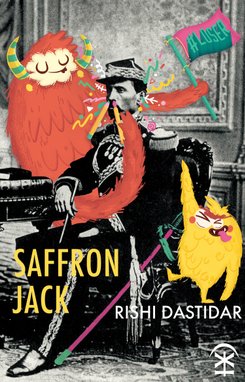
Saffron Jack COVERFirst up is my Malika’s Kitchen mucker Rishi Dastidar, who in his second collection ‘Saffron Jack’ (published by Nine Arches Press), gives us a quite unique character; one who decides he’s had enough of unaccountable power, so goes about setting up his own country. Here’s a bit about the book:

“At once an exploration of a man left hollow by fate, a dispatch from the frontline of identity politics, and a rumination on the legacy of migration and empires, Saffron Jack is the story of a man trying to find somewhere he might be himself. Using an innovative form, Rishi Dastidar’s long narrative poem boldly updates Kipling’s ‘The Man Who Would Be King’ to confront one of the most pressing issues our fractured world faces today – how can we live together in peace if we exile the most vulnerable in our societies and deny them a place to belong?

So without further ado, here’s Rishi:

rishi pic

Image: Naomi Woddis

“I’m sure some of you know and have watched I’m Alright Jack, the 1958 Boulting Brothers film starring Peter Sellers as a shop steward at a missile factory, which became a byword for pointing out the various skullduggeries that went on in British business at the time. The title cemented in popular usage the phrase (derived from the old name for a sailor, Jack Tar), meaning roughly people who only act in their own best interests – even when helping others won’t cost them much, literally or figuratively.

I can’t say that the film, or the phrase directly inspired Saffron Jack, but the more I come to look at the book, there is a large part of it that reflects this ‘up yours!’, ‘sod you!’ type of attitude. Of course, my Jack is not alright – far from it – but I think there’s a commonality between Jack as a character, and the extreme individualism he displays. It’s a continuum of sorts, isn’t it: acting in what you perceive to be best for you, all the way to setting up your own country, because that’s the only way you can see to solve your problems. Look after yourself, leave the others behind.

I say this not to be hard on Jack, but perhaps to ask you to be kind to him when you ask: why is he so self-obsessed? Why doesn’t he ask for help? Why doesn’t he try and help others who might be feeling something similar? Empathy comes more easily to some monarchs than others.

There is a class angle somewhere in Jack too, of course. His is, let’s be blunt, a very middle class form of rebellion – the wherewithal to get to this war zone, the natural assumption that of course he should inherit his destiny as the prince he believes himself to be, the lifestyle that he thinks he should be living and isn’t… And of course his solution to the crisis he finds himself in? Become the ultimate aristocrat in his on personal Heimat.

So there’s a moral I should have Jack meditate on more: solidarity in a crisis matters even more than in ‘normal’ times, whatever they are.”

Thanks Rishi: You can purchase Saffron Jack from Nine Arches Press here.

Excerpt from Saffron Jack:

25. How much was this crown?
        25.1. This proof and reproof of your status?
        25.2. It is not a question you thought you might ask, when you were at school.    
        25.3. What happens when you need to buy a crown?
                25.3.1 And you do not mean a tiara.
                        25.3.1.1. (You’re not on your hen night.
                       25.3.1.2. Much as you might wish you were…)
       25.4. You mean a proper, fuck off I’m a king crown.
               25.4.1. (John Lewis don’t stock them).
                       25.4.1.1. Not even Peter Jones.
                       25.4.1.2. The last piece of evidence the shops were founded by a Marxist.
                       25.4.1.3.‘My apologies, sir, we’ve never had a royal headwear department.’

26. Why go where every other monarch has gone before you?

27. Elizabeth Duke.
        27.1. As your royal jewellers by warrant.
              27.1.1. It wasn’t your first choice.

28. A crown helicoptered in specially.
        28.1. Now the only thing you’ll be able to take with you.
        28.2. The last relic of your reign.
        28.3. The only relic of your reign.
        28.4. Not many monarchies will leave a lighter footprint than yours.

29. You would love to stuff your pockets with jewels and dubloons, wine and old masters and furs and silks; whatever you are meant to do – to claim as yours – when the curtain is coming down. A hogshead or two. But no.

30. All you have left is a cheap shit, £9.99 crown from Argos.
        30.1. And a little blue pen.
                30.1.1. ‘Order No. SJ33, please come to the collection point.’

This Thing Moves by Anthony Anaxogorou

Today is World Theatre Day. Here is Anthony Anaxogorou from 2016 writing about the Bush Theatre.

Peter Raynard's avatarProletarian Poetry

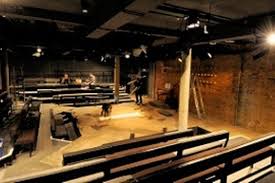
I was in the room when he kicked her in the stomach. She was pregnant. Her scream was piercing. I was in the room when he drew blood back into the syringe before injecting himself with heroin. I was in the room as others left, unable to cope with what was unfolding in front of them, only a few feet away. I was in the room, at the first showing in London of the play Trainspotting at the Bush Theatre, back in 1995 before it was made into a film. As the eponymous blog says, it was ‘in-yer-face-theatre’.

bush theatreTheatre is often tarred with the same brush as poetry; that it is elitist, not for the masses, etc.. Some of which may be true, but outside of the honeypot of the West End, in fringe and regional theatre, much of what goes on is done with an inclusive…

View original post 800 more words

Like Mother by Nadia Drews

For mothers everywhere, this by Nadia Drews from 2016. Read it out loud to yourself.

Peter Raynard's avatarProletarian Poetry

16659957706_01284e0b15_z Image by G Travels

We are coming to the end of the school year; a year full of turmoil instilled by a Government who feels it needs to do more than tinker with the education of our children, treating them more like guinea pigs in an ideological battle to send us back to Victorian times. Both education Secretaries (Gove and now Morgan), seem to want a war with teachers with the proposed imposition of academy status for all schools (thankfully withdrawn), new SATs for Year 6 students, and the madness of testing those under the grand old age of seven.

Governments still struggle with mass education; with classes of upwards of thirty children, herded together like cattle despite their different needs and abilities and family circumstance, all with the sole intention of getting them to pass a minimum of five GCSEs. I know from personal experience…

View original post 1,281 more words

Love Letter to the NHS by Emma Ireland

For these times.

Peter Raynard's avatarProletarian Poetry

nhs_march_logoWhen I was born in the early ‘60s, I put my mother through a two day ordeal of labour, then was extracted via C-section; this was in the days when the scar of such a section was twice as long as it is today. So, it is little wonder that when leaving the hospital with my dad, my parents forgot to take me with them. Thank God for the NHS and all its efficiency, for an eagle-eyed nurse came running out of reception saying: ‘Haven’t you forgot something?’ Just over two years later, and my parents were playing cricket with friends in the stretch of scrubland outside our flat; when I was in need of something, I ran up to my mother who was in bat. The ball arrived at her stump the same time I did, she missed the ball and broke my nose. Thank God for…

View original post 1,268 more words

Diagnosis: ‘Londonism’ by Rishi Dastidar

Given the crisis were are currently experiencing, and the fact that in the UK, much of the attention in terms of cases is London, I thought it apt to share this again from Rishi Dastidar. His new book Saffron Jack, which I highly recommend is available here (free P&P): https://www.ninearchespress.com/publications/poetry-collections/saffron-jack.html

Peter Raynard's avatarProletarian Poetry

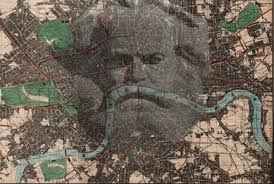
“Capitalism has subjected the country to the rule of the towns. It has created enormous cities. Capitalism has agglomerated population, centralised means of production, and has concentrated property in a few hands.”

karl marx london marxwalks.com

Karl Marx was 195 on May 5th last year, and wrote these words albeit using the word ‘bourgeoisie’ instead of capitalism. John Lanchester used this trick when quoting Marx to show how prescient he was in describing the structure of capitalism and the way in which it changes the landscape (I sometimes think that capitalists understand Marx better than Marxists).

View original post 625 more words

Farewell and all that…

that's all folksJust over five years ago, I began my journey into the poetry world. Blighted by a preoccupation/ obsession with class and the arts, I brought them along for the ride. I started Proletarian Poetry for two reasons: to put more working class poetry ‘out there’, and by doing so, learning from and engaging with what became 150 poets. I have written around 150k words of commentary, which some day might become a book, and there has been 65k visitors to the site.

However, not in small part due to my continued ill-health, but also because I need to move on a little with my own writing, I have decided to bring down the bright red curtain on the site. I will continue to keep it accessible and will tweet missives relevant to class and poetry.

My next venture is two-fold: first, completing the manuscript for my next collection to be published by Nine Arches Press in 2021. Second, I have just been awarded an Arts Council grant to write a novel in verse (gulp).

I want to thank every poet, publisher, and reader who has been involved with PP, including those who read at the events I organised. Fear not, there is still plenty of working class poetry out there, but I hope in some small way, that PP has added to the barbed wire poetry of resistance.

Adios amigos. Venceremos!

In solidarity, Peter Raynard.

Another Life by Jill Abram

In these times of uncertainty and lack of hope – I speak only for myself here 😉 – the following from the archives is a poem by the lovely Jill Abram, imagining Martin Luther King as a postman.

Peter Raynard's avatarProletarian Poetry

Many years ago my friend went for an interview at the Royal Mail; when asked why he wanted to be a postman, he said, “Because my uncle runs the pub across the road.” He didn’t get the job, which wasn’t fair really because the pub was always full of posties at lunchtime.

Charles Bukowski was probably the most famous literary drinking postman. When deciding whether to continue at the post or become a full-time writer he said, “I have one of two choices – stay in the post office and go crazy … or stay out here and play at writer and starve. I have decided to starve.”

Imagine however, that instead of delivering other peoples’ letters or junk mail, the postman delivered a message of his or her own. What would the folks of downtown L.A. have thought about missives from Bukowski or Burroughs? Or…

View original post 322 more words

They count on you getting tired, giving up by Kathy Pimlott

When I first moved to London in 1992, a friend said to me ‘get your name down on the council, else you’ll never be able to afford to live here’. I didn’t and he was right. After ten years, and with a partner and young child, we upped sticks and moved outside the M25, where we still couldn’t afford to buy anywhere but could just afford to rent a house. This is the hollowing out of London, leaving only those clinging to their council/social housing and the upper rich and their extorted money.

Whether you’re a bearded Marxist, or a bearded hipster, you would have to agree that it is much more expensive to live in London than it was thirty years ago. Extremes of wealth are seeping into every pore starting from the boil’s epicentre, The Square Mile, reverberating across the country from the 1980s’ deregulation earthquake.

kathy_pimlottFor those, like our poet today, Kathy Pimlott, who have lived in the centre of London in ‘protected’ housing (whether council or social housing) for many years, it has felt like only a matter of time until the long claws of late capitalism, tear into peoples’ homes for profit. In her poem, ‘They count on you getting tired, giving up’ she shows us howMoney wants no-one/ to belong here, just pass through, hold no memories /worth fighting for to temper plans to squeeze the streets’. Maggie Snatcher’s Housing Act in 1980, saw the stock of social housing in London fall from being the most popular form of habitat, to the lowest – now at only 20%. For Covent Garden in particular Kathy says: ‘The specifically galling thing about the monetisation of the picturesque and ‘villagey’ Covent Garden/Seven Dials is that the area would have been flattened and replaced with a raised central ‘island’ of hotels and offices surrounded by a three-lane ring road if the community hadn’t fought these plans for demolition and redevelopment in the 70s.’ And coverKathy shows this ‘gentrification’ of both housing and business in a number of other poems in her wonderful new pamphlet, ‘Elastic Glue’ published by prodigious The Emma Press.

There are a number of crises facing Londoners today, most prominent recently being knife crime. But there are others, such as pollution, jobs, and our subject of today, housing. Too much I feel is expected of the likes of London’s Mayor Sadiq Kahn; who doesn’t have the powers that many people perceive him to possess. A (con)tradiction began when New Labour attempted to decentralise power with greater local council autonomy, the setting up of city mayors, then the Con/Dem pact’s Police and Crime Commissioners, because all were done without the economic coffers to endorse these new powers. It’s like giving a toilet cleaner the keys to the public bogs, but nothing to clean them with, or someone a pop-up tent with no land to pop it on. Time for them to do one.

Kathy Pimlott’s two pamphlets, ‘Elastic Glue’ (2019) and ‘Goose Fair Night’ (2016), were both published by The Emma Press. Born in Nottingham, in the shadow of Player’s cigarette factory, she has spent her adult life in Covent Garden. She has been, among other things, a social worker and community activist and currently works on community-led public realm projects. www.kathypimlott.co.uk @kathy_pimlott


They count on you getting tired, giving up

No-one lives here, you’d think, in the city’s glitzy heart
except the agile young wanting to shimmy and shine
before taking a van out to somewhere more… private.

Yet here we are, in infill blocks we made them build
all those years ago, knowing your mum, your kids
since before they had their own, so close we hear

each other’s sneezes, dying. Upstairs, temporary men
keep Spanish hours that clatter on their wooden floor,
my bedroom ceiling. They’ll go. I know who plays away,

who cooks mackerel, who’s been inside, uses Economy 7,
tunes in to Magic Radio. I know we’re on borrowed time.
Where are the old girls of the market, theatres, print?

Gone to Guinnesses in the sky. Money wants no-one
to belong here, just pass through, hold no memories
worth fighting for to temper plans to squeeze the streets,

trick them out in shoddy to look like style, smell like profit.
Silly us. All that time we thought it ours, rallied, witnessed,
held the line, all that grief, just making it nice for Money.


Telling the Lads by Toby Campion

homophobiaThe Sultan of Brunei, not known for being a man of contemporary enlightenment, has decreed that gay sex and adultery will be punished by stoning to death. A number of countries, including Saudi Arabia, Somalia, Sudan, Nigeria, and Indonesia still employ stoning as a method of capital punishment. Of the 53 Commonwealth countries, 37 have laws that criminalise homosexuality. Such discrimination harks back to colonial rule. And yet, every four years, athletes compete in the Commonwealth games, where gay people face the danger of being imprisoned, when all they should be concentrating on the competition – one which is meant to bring people together. (more…)