 When a person walks out their door, whether going to the shop, to work, or for a night out, I imagine it is only the lucky ones, who are not conscious, or made conscious of, who they are. I imagine the stereotypical, white middle class male, irrespective of their political hue, on this journey imbibing the day without constraint; not physical, psychological, nor spiritual. They may believe they are completely unbiased in respect of how their position, influences their decisions, or perspective when dealing with other people. They may give to charity, volunteer, despise racism, sexism, and other forms of discrimination, whilst at the same time, feel totally at peace with the world – that for all its faults, see the world moving in the right direction. And on the whole, they are right – headline figures, which the late Hans Rosling so eloquently showed, see many indicators of human development (child mortality, mortality, rates of disease, etc.) on a positive trend. However, this position is also the problem. On whose backs were these improvements in quality of life carried? Often, it was either the existing poor, and when there weren’t enough of them, immigrants, such as the Windrush generation. (more…)


 Tim Wells has been (still is, in fact) one of the great stalwarts of poetry; as a poet, promoter, and historian of all things working class, for the past four decades. One of the original ‘ranters’ of the 1980s, he has been a regular on the London poetry scene, as well as wider shores, giving it large with poems about working class lives; poems that don’t pander to the type of melodrama or demonisation which undermines the notion of class as being some drop out numpty who drives a van with its break lights not working. “I was a teenage suedehead. Dressing sharper than the posh kids and our style was crucial to us. That, and I don’t drive,” he told me.
  Next year
 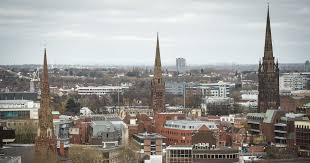 Ah, the poetry of football chants. Often it is football that defines what home is for the working classes. And in the League Two play-off finals, that sound rang around Wembley Stadium; forty thousand of us, compared to Exeter’s ten, when we got promoted to the heady heights of League One at the end of May.
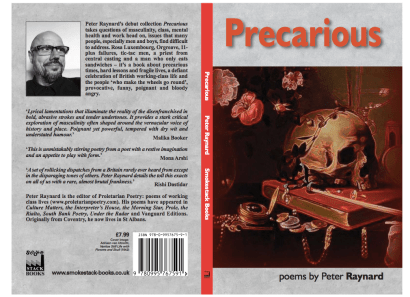 Precarious was published by Smokestack on April 1st this year, and I have been on a Precarious Tour around the country, with the novelist and poet Richard Skinner (whose book
 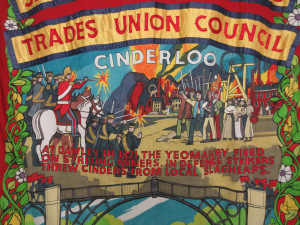 I’m sure most of you will know Shelley’s poem, the
  When I was born in the early ‘60s, I put my mother through a two day ordeal of labour, then was extracted via C-section; this was in the days when the scar of such a section was twice as long as it is today. So, it is little wonder that when leaving the hospital with my dad, my parents forgot to take me with them. Thank God for the NHS and all its efficiency, for an eagle-eyed nurse came running out of reception saying: ‘Haven’t you forgot something?’ Just over two years later, and my parents were playing cricket with friends in the stretch of scrubland outside our flat; when I was in need of something, I ran up to my mother who was in bat. The ball arrived at her stump the same time I did, she missed the ball and broke my nose. Thank God for the NHS. Aged sixteen, down to five stone in weight, everything had been tried, to understand why I was slowly dying – a nurse’s strike delayed final test results coming in, but eventually they discovered I had Addison’s Disease. Thank God for the NHS. And subsequently, I have frequented various hospitals as more diagnoses of auto-immune attacks have been found. Thank God for….yes, you get the picture.
  Proletarian Poetry