Poem

Culture Matters Anthology Submission Call Out ‘100 Years of Solidarity’ – marking the centenary of the UK’s General Strike in 1926

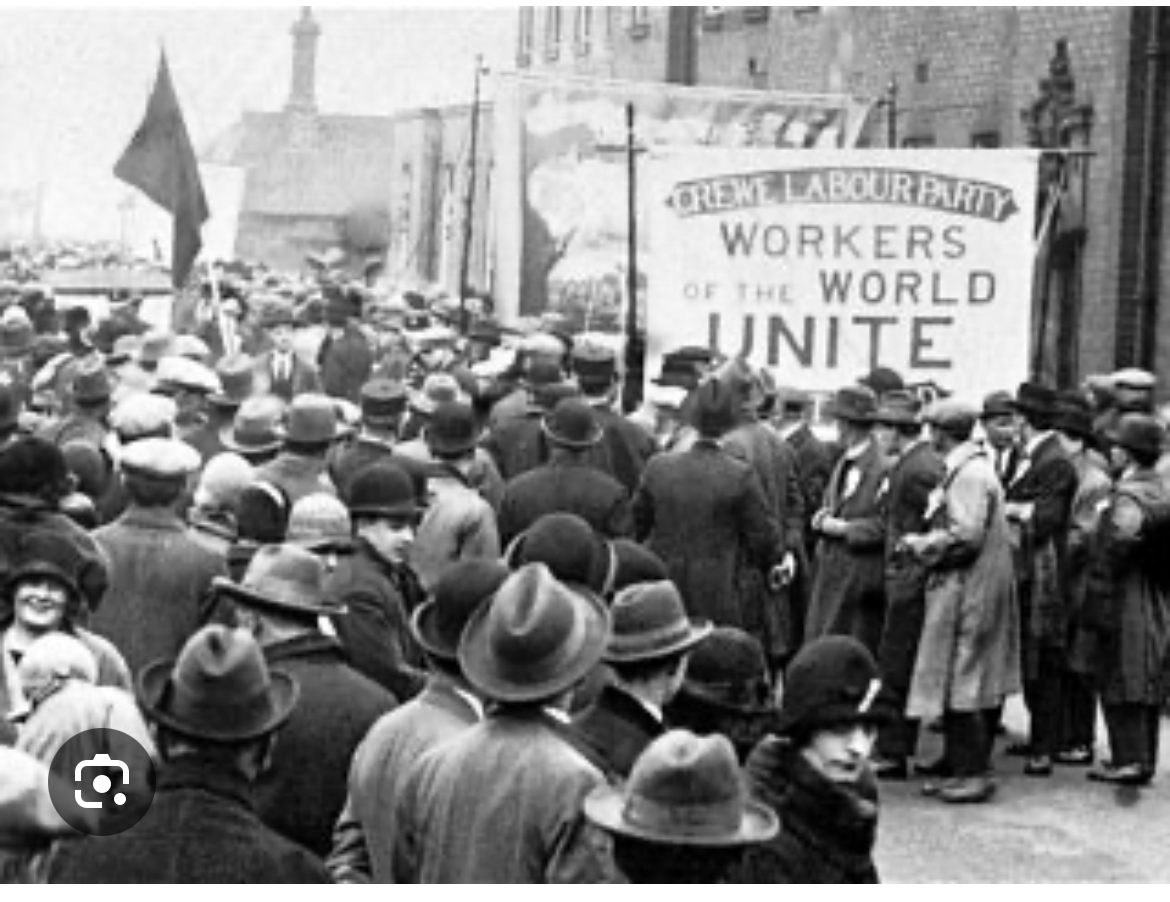
Culture Matters invites poems for a special poetry anthology marking the 100th anniversary of the 1926 General Strike. The collection, 100 Years of Solidarity, will celebrate and memorialise the voices and experiences of working class people, past and present, through poems that remember, and uphold the labour movement’s enduring values of solidarity and collective action.

Consider submitting one or two original, unpublished poems that speak to themes such as:

Trade union life, strikes, picket lines, and industrial action

Acts of solidarity and working-class resilience

Historical reflections from the last century

Inspiration drawn from labour movement history or contemporary struggles

The hopes, anger, humour, and humanity of people organising for justice

Submission guidelines:

1–2 poems, maximum 50 lines each

Please submit as a Word document

Include your name, address, and email

Send to info@culturematters.org.uk with the subject line: “100 years entry”

Deadline: 28th February 2026

The anthology is scheduled for publication on May 1st, 2026, to coincide with International Workers’ Day.

Further information can be found here: https://www.culturematters.org.uk/callout-to-celebrate-100-years-since-the-general-strike/

A Tribute to Fred Voss

The poet Fred Voss, who has died at the age of 72, was one of the great American writers of manual labour. He went beyond the poet as witness in a journalistic sense, for he lived what he wrote and he wrote more than three thousand poems.

Fred was born in Los Angeles in 1952. Initially he thought he would go into academia. On passing a Bachelor of Arts degree in English he was offered a place on a Ph.D. program at the prestigious University of California, Los Angeles. But he turned it down to begin work as a machinist, which he carried on doing for the rest of his life.

He turned to poetry as a way of documenting the lives of his fellow workers who work for the ‘man’, the ‘machine’, the ‘system’; machinists who may be making engine parts for fighter planes that drop bombs in Iraq or Afghanistan. His workmates came from across the Americas and his poetry exhibits that microcosm of working class life, which you rarely find in other peoples’ poetry, besides Martin Hayes and his portrayals of London couriers and controllers.

Fred published numerous collections. His first, Goodstone was published here in the UK by the ever astute Neil Astley’s Bloodaxe Books in 1991, in which Voss did a reading tour of the UK. His poetry had arisen out of the South Californian poetry of Charles Bukowski. But it was Professor John Osborne from Hull in the UK, who first published a hundred poems of Voss in the influential Bête Noire magazine which ran for ten years between 1985-1995. Goodstone was the touchstone of the more than three thousand poems Voss wrote over the next 35 years. Goodstone was the name Voss derived from the companies he had worked as a machinist. The poems, like the many that followed, told of the day-to-day struggles of men and women working in machine shops and factories of Southern California from the late 80s onwards.

Bloodaxe went on to publish two more collections with the wonderfully evocative titles, Carnegie Hall with Tin Walls 1998, and Hammers and Hearts of the Gods 2009, which was the Morning Star’s book of that year. Other collections include ‘Some Day there will be Machine Shops Full of Roses, in 2023 with Smokestack Books. As well as two with Culture Matters, The Earth and the Stars in the Palm of Our Hand, and Robots Have No Bones in 2018.

In the introduction to Robots Have No Bones (two years into the first Trump presidency I wrote:

“Fred Voss’s poems situate us in the workplace, and by doing so, show us the humanity and diversity of those who work there – ones who both support or hate Trump, but as one want, at a minimum to support their family, not have to struggle and work long hours to do just that.” Sadly, nothing has changed, and we are now at the beginning of another Trump presidency.

Fred was very generous with his poetry, offering me two poems in the early days of Proletarian Poetry back in 2015. Then more recently in an academic paper I wrote about his work, and that of his good friend Martin Hayes, on the Poetics of Precarious Work for the journal English (forthcoming in 2025). He was over the moon about his poetry being analysed for the precarity of the job, given his initial interest in the academic life, and it is so sad he didn’t get to see the published copy.

Two poems illustrate the lives of his fellow workers and Fred’s deep empathy and love for them. In ‘Los Angeles’ (see below), many of the workers wear crosses, believe in God, go to church on Sundays, but because of the environment in which they live, through poverty, violence, and low wages, are close to breakdown, close to ending their life. This is also seen in the poem ‘Grease Spots’, as a worker hopes the US Air Force will make a ‘grease spot’ of the Iraqis in response to the Twin Towers crashes. Voss wonders conversely, if their own government has made a grease spot of them, because the workers are barely able to feed their children and may never be able to retire.

I have a feeling that Fred wasn’t given deserved recognition by the mainstream poetry community in the US; there is no record of him on either the Poetry Foundation’s website nor the American Academy of Poets, and yet there is a Wikipedia page of his life.

Fred is a great loss both as a beautiful human being and a poet who exposed the daily struggle facing workers in the precarious waters of late stage capitalism. Our thoughts and love go to his dear partner Joan Jobe Smith.

Los Angeles’ by Fred Voss

In Los Angeles I have seen
men in factories with big crucifixes
on their chests
crucifixes
exchanged for guns
needles
leaps out of 10th story windows crucifixes
big
and heavy swinging on the massive hairy chests of these men crucifixes
exchanged for bottles that had these men face down on floors
or in alleys bottles
or needles that took their women their families
their souls I have seen men
in factories
without one trace of shame wearing big shiny crucifixes
on their chests men
this close
to picking up a knife
and ruining their lives this close
to blood they could never wash off their hands men
from gangs from prisons
from tiny rooms where the devil pulled up a chair
next to them men
who’ve earned
their crucifixes.[i]


[i] Fred Voss, Hammers and Hearts of the Gods (Hexham: Bloodaxe Books, 2009), p. 37.

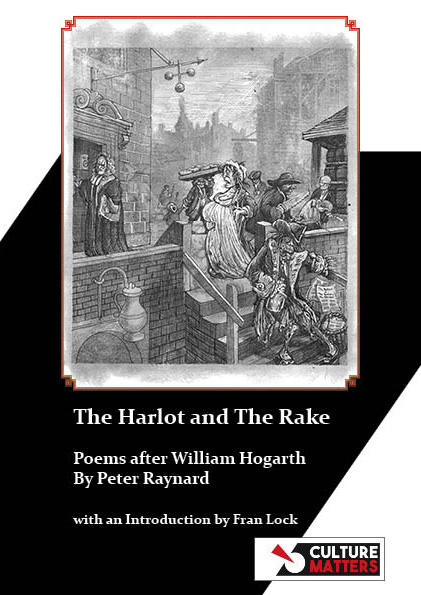
‘The Harlot and the Rake, poems after William Hogarth.’ Publication Day for My Debut Pamphlet.

I’m delighted that my pamphlet, an heroic crown of sonnets after William Hogarth’s prints, is published today by Culture Matters. It comes with a wonderful introduction by Fran Lock, and cover art by the Guardian’s Martin Rowson.

You can purchase a copy for £7.50 (plus £1.50 P&P, UK) at

https://www.paypal.com/paypalme/praynard/9 , or Worldwide https://www.paypal.com/paypalme/praynard/12

From Fran Lock’s introduction

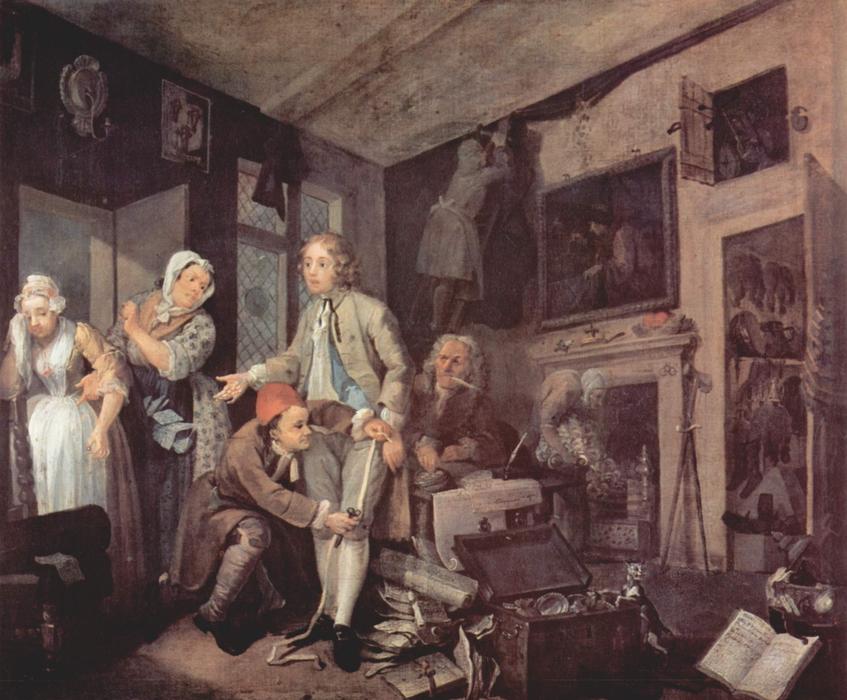
Peter Raynard’s heroic crown of sonnets after William Hogarth’s (1697–1764) of A Harlot’s Progress (1731) and A Rake’s Progress (1733) run the same gamut of moral and social concerns but bring a contemporary socialist sensibility to bear on the interconnected fates of Tom Rakewell and Moll Hackabout. Raynard uses the connected but very different downfalls of Tom and Moll to interrogate the complexities of ‘choice’, the notion of complicity and the limits of our sympathy.

The Heir

A rich Father dies, so a son’s life as heir begins.
Vanity’s the sling which Tom will throw family
chains from: his Father, a staid suit of a man
battened down by the clamp of God’s utility

mother weeping, wife with child warming inside her.
He will leave enough to oil their grief, but says there
is no need to pray. With old money, time does shun
less miserly ways ending troughs of emotion

such wealth held: when men lay idle no-one need read
King James’ bible. New clothes fit both size and stead
with enough silver to sail a ship. London ho!
with its trade winds blown by slave labour. God well knows

the streets men of off-note graze on. All benighted
in the Capital’s treasures of sin but not be sinned

“What Hogarth etched and engraved, Raynard successfully recreates in verse.
The comparisons of life in Britain today are there to be made.”
(Owen Gallagher)

“The tone Raynard manages to hit with his quite ravishing language and the use of the 3rd
person voice as witness carries you along like you’re on some kind of walking tour of the
grubby streets of the human mind/body leaving you eager to turn the next page, the next corner, to see what has next befallen Moll or Rake.”
(Martin Hayes)

Publication Day for Manland my Second Collection

Today my second collection ‘Manland‘ is published by Nine Arches Press, https://www.ninearchespress.com/publications/poetry-collections/manland (£9.99 with free P&P). The first fifty orders will be signed. Nine Arches Press also do a very good book subscription,

image.png

Described as a a “bold, brilliant and outspoken new collection of poems that scrutinise men and manhood, mental health, working class lives and disability. Aloud and alive with music, wit, anger and rebellion, this is an accomplished, politically-aware and vital book.”

I am grateful to Fran Lock, Jacqueline Saphra, and Richard Skinner for the following endorsements:

“Part manifesto, part hymn, part raging lament, this collection takes apart the dirty engine of so-called masculinity, strips it down to its component parts, reconsiders and rearranges them using a dazzling array of poetic forms. It is only through acknowledging the strength of their vulnerability, these poems suggest, that men will be able to manifest change in our broken system where the violence of patriarchy is the enemy of us all.” – Jacqueline Saphra

“In Manland Peter Raynard traverses the unstable terrain of working-class masculinity. His poems meet manhood in all of its banter and swagger; its persistent myths and dangerous silences. With his characteristic lyric verve, Raynard explores what it means to be a man, a father, a husband, and a son. The result is moving, candid, wise and tender, full of humour and hard-won insight. A convincing and beautiful book.” – Fran Lock

“One of the things I love most about Peter Raynard’s work is his voice. His voice is necessary, vital, passionate. It is the voice of anger at social injustice, a voice that deconstructs toxic masculinity, a chronicler of illness. Above all, it is the voice of truth. He tells us how the world is, not how we would like it to be. In this way, Peter Raynard is nothing short of a truth-teller.” – Richard Skinner

If you are able to buy it, I’d be very grateful and I hope you enjoy it.

Best wishes, Peter

Free Anthology: A Fish that Rots from the Head (selected and edited by Rip Bulkeley)

A Fish Rots From The Head

A Fish Rots From The Head: A Poetic and Political Wake (published by Culture Matters) is a flash anthology of poetry and artwork, by around 100 poets and artists from England, Scotland and Wales. It expresses the fury and betrayal felt by working people about the leadership of this country – the mendacity, selfishness, corruption, smears on opponents and disregard for the general public shown by leading figures in the Johnson government.

This collection of images, parodies, rants, squibs, and full-on poems, put together in less than three weeks, is just part of a tide of satire now sweeping across Britain. It challenges, satirises, despairs, and even dares to laugh at the venal moral hypocrisy of our leaders, whose malignant mixture of callousness and ineptitude has never made life so hard, in so many ways, for so many working people in this country. Through its demonstration of compassion for the suffering of others, and its protest against wrongdoing by those in high office, this collection of poems and artworks provides a very necessary space and inspiration for solidarity and resistance. Let’s hope the removal vans come soon!

The book is available below. Feel free to download it and share with your friends and networks. You are also free to make a donation towards Culture Matter’s costs, as much as you like, using this button and download the anthology here. In solidarity!

Callouts for Poetry/Prose Submissions from Culture Matters

There are a number of callouts for working class writing from the co-operative publisher Culture Matters

The Bread and Roses Poetry Award 2021,
https://www.culturematters.org.uk/index.php/arts/poetry/item/3630-callout-the-bread-and-roses-poetry-award-2021

The Bread and Roses Songwriting and Spoken Word Award 2021,
http://www.culturematters.org.uk/index.php/arts/music/item/3609-callout-the-bread-and-roses-songwriting-and-spoken-word-award-2021

A Scottish anthology of radical prose, the follow-up to Kist of
Thistles,
http://www.culturematters.org.uk/index.php/arts/life-writing/item/3608-callout-working-people-s-stories-from-contemporary-scotland

The Brown Envelope Book,
http://www.culturematters.org.uk/index.php/arts/poetry/item/3576-callout-for-the-brown-envelope-book

The Cry of the Poor anthology,
https://www.culturematters.org.uk/index.php/arts/poetry/item/3631-callout-the-cry-of-the-poor

My Year In and (mostly) Out of Poetry, with poem ‘Rabbie’ for my Father

IN

My year began well. I spent a wonderful week on a Nine Arches retreat in Hartsop with fellow poets, Jane Commane, Jo Bell, Josephine Corcoran, Gregory Leadbetter, and Roy MacFarlane. At that point, COVID was still an inside page and I can’t remember it coming up in conversation. Roll on into the pandemic and I found it increasingly difficult to engage with poetry and the outside world more generally, so withdrew from most things beyond my front gate including social media.

1. OUT

Roughly two weeks ago, my 87 year old Father rang to say he was finally getting his second hip operation. So, although happy for him, the worry began its loop de loop. Despite a delay of over a year, he is one of the lucky ones. Born in the Gorbals in the early ‘30s, he’s been in many a scrape, from cracking his skull aged 3 to gang fights, bar fights, burst ulcer, kidney problems, and now his joints.

My extended family has been relatively lucky in terms of tragedies; but that ended this year, as it has for many people. The tragic irony was that ours wasn’t Covid. My wife’s cousin died in a car crash in April, after an impatient driver tried to overtake on the opposite side of the road, and hit him head on. He was a beautiful person; a teacher in Kent, aged twenty-six and just really starting his adult life. Because of lockdown restrictions, only his mother, father, and sister were able to attend the funeral.

[INTERLUDE]

Even though I have not read or written any poetry, I have still thought a lot about it, in particular working class poetry. In recent times, important poetry books of working class life have emerged, such as Caleb Femi’s recent Poor, all of Fran Lock’s brilliant writing, Jay Bernard’s Surge, Chip Hamer’s Class Act, and Julia Webb’s Threat, to name but a few. And I hope that 2021 sees more new voices.

I am most excited for Malika’s Poetry Kitchen 20th anniversary year, with its anthology (out in August) and series of events that will hopefully further fuse race and class within poetry. Malika Booker is one of the most inspiring people I have met, and Malika’s Kitchen is one of the most important things to happen in poetry, and I miss all of the members.

My son is a producer of drill and trap beats so I have been listening to quite a lot of Grime (check out GRM Daily). Some of the lyrics/poetry these young men and women are producing is lit (in my son’s parlance). Writing about poverty, gang violence, prison, it is a vital avenue for working class voices. I like Meekz, but I also love Ghetts’ video ‘Proud Family’ that goes beyond the horror stories, to portray his family life. Poetry can learn a lot from this genre.

2. OUT

Then, in the midst of my breakdown, I cancelled my third book (which was due to be published in two weeks). But after a few calmer weeks, my wonderful publisher and fellow Coventarian Jane Commane of Nine Arches Press, talked me round and the book will now come out in 2022 for my 60th year; although sadly I won’t be part the Coventry City of Culture’s Contains Strong Language weekend in September of next year.

Then, ratatattat eight days ago, my youngest son developed a cough and temperature, and tested positive for Covid. Three days later, my wife tested positive. I have a number of endocrine conditions, which puts me at heightened risk, so my anxiety hit the roof. However, the imperative of looking after the two of them, with the help of my older son, helped ease me away from my own dark thoughts.

Thankfully, he and I tested negative, so we are now running the Covid Hotel to feed my wife and other son and keep their spirits up. But it is exhausting, wearing a mask for most of the day, constantly cleaning, constantly stressed; though ten years a househusband has helped (unlike the so-called progressive Tony Blair, who admitted to not doing his chores – naughty boy). I can only imagine how truly horrendous it has been for nurses and doctors.

I am hopeful that things will be okay over the next day or two as their symptoms are subsiding, and we are nearing the end of enforced isolation. Though the best we could get for our Xmas meal is an Iceland frozen turkey crown – but it only makes me feel more working class 😉

My Father had his operation today, and thankfully it was a success and he should be home before Christmas Day. All of which makes me momentarily believe there is light at the end of a cliché.

I am hoping he can walk again in the New Year, and I have wrote this wee poem for him.

Keep well everyone, and I hope your year has not been terrible, thank you for continuing to follow Proletarian Poetry, even though like an old boxer, I keep trying to retire it. Much love to you all, and come Hogmanay, raise a glass for the sake of your own Auld Lang Syne.

Ma Da

Rabbie by Peter Raynard

For my Father, life has ever been
a braw bricht moonlit nicht
But Lauder was no Burns
for the Ayrshire Bard’s picture
was a fixture on the shelf
within a line of our kin.
Though my Father never read poetry
Burns was the man
like Celtic the team
whisky the drink
leaving Scotland the means
to go down South
behind auld enemy lines
armed with saltire crosses
their brogue voices lilting
the bars with songs
for the displaced who
wandered many a weary feet
singing their way home
for the sake of a fading time
for the sake of Auld Lang Syne.

Cheers!

Guest Post: ‘How to Carry Fire’ by Christina Thatcher, with poem ‘Subtext’

Today’s guest post by Christina Thatcher is a fascinating account of being a working class academic, and the feeling of not fully belonging to your past or present. It tells of her upbringing in the US by hard working parents, doing well at school, then going on to University to study, and now living in the UK working as a Creative Writing Lecturer at Cardiff Metropolitan University. The poem ‘Subtext’ is from Christina’s brand new collection, How to Carry Fire. You can buy a copy of the book, here:

*******************

Black and white head shot“I grew up in a working class family. My mom worked on a farm and my dad in a factory. These were physical jobs. When I was a kid, I remember bragging to friends about how strong my mom was: she can lift 50 hay bales. I have a filmic memory too—which plays on repeat—of my dad walking through the back door after work, dropping his car keys, grabbing a Budweiser and heading straight to the couch. His back was a constant ache.

Both my parents valued hard work and believed in the adage that children should ‘be seen and not heard’. I knew better than to bother them with my child-sized worries. After all, my dad’s reply would only ever be ‘wait until you get to the real world, honey, then you’ll know what worries are’. So, my brother and I tried to keep out their way but often found ourselves eavesdropping on adult discussions about work, food and money: how much or how little of it we had. These eavesdropping sessions transformed us in different ways; my brother turned to material goods (‘if only we had a bigger TV…’) while I turned to education (‘a degree is my ticket out…’).

Both my parents were high school drop outs. Although they encouraged me to study and get good grades they frequently spoke about how much they hated school. They joked about how it was a place where children ‘did time’, a necessary evil. Still, when my report card arrived, they never missed an opportunity to say how proud they were of me. Soon, school became my place, the teachers offering their bay-windowed classrooms as safe havens and creative sanctuaries.

In 2004, I graduated high school and then went on to graduate university. After that, I won a scholarship to come to the UK where I completed two Master’s degrees and, very recently, a PhD. Every step of the way, my parents cheered me on from afar but, as I attended class after class, I could feel a gulf opening between us.

As I progressed further into my education, I could feel myself straddling my old life and my new life, never quite feeling at home in either. I had no one really, to introduce me to academia or make it clear what was expected of me. I frequently asked myself: do I belong here? Am I good enough for this?

I tried so hard to quiet these questions and, instead, focus on learning. In addition to my coursework, I practiced handshakes with well-to-do friends, noted down new words to expand my vocabulary, asked for professional clothing advice from university counsellors; but it never felt like enough. Meanwhile, other working class friends and acquaintances would poke fun at me, call me books or professor. Soon, I began to feel like I didn’t belong anywhere.

How to Carry Fire - FINAL (LOW RES)Now, even as a full-time Creative Writing Lecturer, I am still trying to figure out what it means to be a working class academic, to navigate a world that once seemed so impossibly out of reach. I am still trying to figure out a way to both honour my roots and embrace my new path. One way I am figuring these things out, is by writing poetry.

My new collection How to Carry Fire speaks to my experiences of growing up in America and, much later, moving to Wales. Several poems in this collection deal with class issues but I will leave you with just one today. This poem ‘Subtext’, attempts to capture some of what it means to be both working class and an academic, although, honestly, I still have so much to figure out.”


Christina Thatcher is a Creative Writing Lecturer at Cardiff Metropolitan University. She keeps busy off campus as Poetry Editor for The Cardiff Review, a tutor for The Poetry School, a member of the Literature Wales Management Board and as a freelance workshop facilitator across the UK. Her poetry and short stories have featured in over 50 publications including The London Magazine, North American Review, Planet Magazine, The Interpreter’s House, and more. She has published two poetry collections with Parthian Books: More than you were (2017) and How to Carry Fire (2020). To learn more about Christina’s work please visit her website: christinathatcher.com or follow her on Twitter @writetoempower.


Subtext

What the doctor means when he shows you the scan, points
to visceral fat clinging like anguished ghosts to your pancreas,

is that you were poor. He means your body was built on Big Macs,
stacks of Ramen noodles. He means you should never have eaten

those sweet treats dad smuggled from factories, burping up
synthetic mint for weeks. He means you are smarter now.

You know the definition of subcutaneous so your belly must
shrink, assume its correct position. He means you must eat

green leaves until your insides gleam, pop enough blueberries
to grow neurons. He means you must shed your cells

like thousands of colorful scales. Only then will you be new.


(You can buy a copy of How to Carry Fire here)


Guest Post: ‘Almarks: An Anthology of Radical Poetry from Shetland’, edited by Jim Mainland and Mark Ryan Smith with poem ‘The desert is only as deadly as the circles we walk’ by Gina Paola Ritch

This is the second in a series of guest features by editors of recently published anthologies from Culture Matters. Here, Jim Mainland discusses the book ‘Almarks‘, Shetland life, and the richness of its poetry. It’s a really interesting read, and the book is great. You can buy a copy of the anthology Almarks, here:

**********************

JM“When Mike Quille of Culture Matters suggested putting together an anthology of radical Shetland poetry I discussed the notion with a friend of mine whose political acumen I usually respect.  He gave me chapter-and-verse why such an undertaking would fail.  Shetland wasn’t a radical place and didn’t have any of the ingredients required to fuel such an anthology – there were no particularly active feminist groupings, BAME groups, or LGBT+ organisations.  The local Trades Council has been moribund for decades and political parties have no real impact locally and rarely spearhead campaigning, certainly not in national terms.  And even where there was a presence, there was certainly no evidence of a literary wing to them. However, this starkly negative prognosis only made us all the more determined to accede to Mike Quille’s request.

almarksWe did this because whatever the overall radical potential of Shetland writing, we believe that poetry from Shetland is in a strong place at the moment.  The poet and novelist Kevin MacNeil said as much a few years back when he was Shetland’s Writer-in-Residence.  He said that what was missing wasn’t the talent but the self-confidence, the self-belief.  It was also our feeling that an anthology of Shetland verse with a progressive remit would be a worthwhile event in any case. Moreover, it can be argued that Shetland does have a solid radical poetic tradition to build on, in the work of J.J. Haldane Burgess, Hugh MacDiarmid, Billy Tait, and Laurence (Lollie) Graham particularly.

And although Shetland is known throughout the world for its ponies, its Fair Isle knitwear, its nature and natural, rugged beauty, Shetland also has its food banks, its own social problems, and has always been economically precarious, and vulnerable to economic exploitation.  And there has always been a strong sense of community here, an ingrained duty to look out for one another, and rally round in time of need.

In the event, the call-out met with a good response. We have to thank the facilitators of the various writers’ groups in Shetland for encouraging poets to submit, and for individuals who sent in contributions.

Unsurprisingly, some poets were unsure if what they sent in could be described as ‘radical’.  Others, like Gina Paola Ritch, were very clear:  “Is [the radical aspect] the subject matter or the style in relation to ‘cosy reading of traditional themes’? And does poetry highlighting social injustice constitute radical or are you looking for something that questions and challenges the system and authority in general?” Yes, yes and yes! Poets who wrote mainly in Shetland dialect were among the first to respond, keen to dispel any notion that dialect poetry didn’t deal with radical themes and perhaps hinting that even to write in dialect these days could itself possibly be interpreted as a radical act.  Ultimately, therefore, the contributors’ response has shaped the definition of radical and has given the collection its guiding principle. We decided to call it ‘Almarks’ – an ‘almark’ is the Shetland name for those particularly thrawn and awkward sheep who will jump walls and break through fences into common ground.

Many of the poems here are, broadly speaking, issue-based – they strike an attitude.  Others are more observational and personal or reflective.  Some are clearly political, others radical in terms of subject-matter or style.  Appropriately, some are in English, and some in Shetland  dialect, or Shetlandic, as it has recently come to be known.

Christine De Luca has for long shown that the small, diminishing, rich and enriching word-hoard of Shetlandic can still be an effective vehicle for acerbic contemporary comment and the telling contrast.  For Laureen Johnson, it is the natural voice of ordinary folk, free from ‘bullshit’ and pretence, whether commenting on the waste of war or the loss of a livelihood, a fishing birthright, brought about by the insensitive bureaucratic meddling of the faceless and the conscience-free.  Sheenagh Pugh, whose poems are always models of clarity, is a poet who has always championed the underdog, and not always the ones you would expect, in her work. Her novel set in Shetland, ‘Kirstie’s Witnesses’, deals harrowingly with a notorious case of injustice from 19th century Lerwick dealing with homelessness and misogyny and has clear contemporary resonances still. Raman Mundair, whom I first heard give an electrifying performance of her poem about the murder of Stephan Lawrence to an audience in Lerwick, has always written strongly from an activist perspective.

As I write this, radical measures are being enforced as the world hunkers down before the ravages of the Covid-19 pandemic, in what many would argue is a foretaste of what is to come, albeit from a different threat.  Whatever kind of society emerges from this, one thing is certain – the need for radical, committed poetry will be all the greater.

Poetic doomsayers are fond of quoting what W.H. Auden famously said in In Memory of W.B. Yeats: “poetry makes nothing happen”.  However, if you follow his argument to its conclusion, it is far from negative: “…it survives, /A way of happening, a mouth.”

“A way of happening, a mouth.” That is what we have in this anthology: a variety of ‘almark’ mouths, young and old, in Shetland and English, never mouthpieces, never mouth-y, and never, as we say, ‘blate’ ( Shetland/Scots: timid, reserved).  It’s a good start.

GinaGina Paola Ritch is a consistently political poet, who, while working as a fisherman, wrote gripping, realistic, unsentimental accounts of the perils and travails and dignity of that particular trade. Then as now, authenticity has always been important as a way of validating her voice.

Her poem, ‘The desert is only as deadly as the circles we walk’ relentlessly catalogues the harsh economic realities faced by so many, an account which is all the more effective because it is based on the poet’s own experience.  But it also includes those who are at the sharp end of capitalist exploitation, and suggests they are no better, despite their apparent ‘success’ and drive for ‘growth’. They, too, perhaps even more so, are unfulfilled and empty.  But poetry’s fragile art, the poem suggests, can transcend the economic treadmill, the marketing deadmill; its integrity is a fragile, tenuous hope, a light in the darkness.

‘The desert is only as deadly as the circles we walk’

Scraping by on the minimum wage
and the tips that a waitress scrapes from the tables
pissing my life away
in the grind to survive
like a thousand faces I see everyday
of the damned and the dead and the drowned
floundering in the rut
or clinging to a ladder
with no way up
and no way down;
the marketing men, the junior clerks
the lawyers, accountants
financial advisors, property managers
sales assistants,
ruthless nobodies who are somebodies in oil
and the loveless family with nothing more to say
as they impatiently wait
in a world where everything is too late,
and I am no different
pissing my life away
in the monotony
trapped in the banality, the stress, the fear, the race,
the slave to the mortgage
and the monthly pay
where my only escape
is the half-finished poem in my pocket
that carries me through the madness
of being just one more wasted creature
dancing between the tables
of a wasted world
watching the wasted and featureless faces
that contemplate profit margins, cash projections,
structure, streamlining and cuts,
sales, commissions and deadlines,
costs and expenses to slash,
portfolios that perform
deadwood that doesn’t
equities and pension funds,
a budget break to Benidorm
or any God-forsaken shit-hole in the sun.

My half-finished poem
my passion, my heart,
my destruction, my salvation,
my part that stops it all from becoming bearable.
And when asked,
‘Why not quit and try to making a living from your art?’
I simply say,

‘Poetry doesn’t pay the bills.’
And God how I pray,
sweet merciful Jesus how I pray
that it never will!

You can buy a copy of Almarks here

Guest Post: Launch Day for ‘Wild Persistence’ by Katrina Naomi with poem ‘Boasting Sonnet’

I am very excited about today’s guest post by Katrina Naomi, because today is the LAUNCH DAY of her third collection, Wild Persistence published by Seren Books. Katrina is a great supporter of poets and poetry, running workshops, mentoring, as well as active in the Society of Authors as member of their Poetry and Spoken Word Group. Katrina previously appeared on Proletarian Poetry back in 2015. So why not celebrate Katrina’s launch day by reading her guest feature, and if you can, buying Wild Persistence here. She is also doing a virtual launch on June 11th, details here.

*************************

Head n Shoulders“I’ve chosen to write about the poem ‘Boasting Sonnet’, from my new collection, Wild Persistence, (Seren, 1 June 2020) partly because it’s joyful and partly because the poem considers questions around class.

I was brought up working class, ‘me from a council estate’ in Margate, Kent, and was expelled from school. Since then, I’ve gone on to do any number of things that I might not have seen for myself, including moving to Cornwall. I was commissioned to write ‘Boasting Sonnet’ by Alyson Hallett and Rachel Bentham for Project Boast, a project which asked women to write about their achievements. To begin with, I found the idea of boasting about myself difficult. Then I thought of Sharon Olds’ poem ‘The Language of the Brag’ – how it takes on male entitlement – and I began writing.

wild persistenceOnce I had my first line, I really enjoyed myself. I decided to mix things up, in what is a pretty personal poem, placing areas of my life that I might consider to be showy, alongside things that are more flippant. Everything in ‘Boasting Sonnet’ is true. Sharon Olds did write me a poem, after I interviewed her back in 2011, and I have no truck with marriage.

I love receiving commissions – I’m working on one at the moment – I like how they take me out of my comfort zone, when I’m asked to write in a new way, or to write in response to a subject I know next to nothing about. And as a poet, I think it’s good to be taken out of your comfort zone, to have your foundations shaken up a little. (Although perhaps there’s enough of that at the moment?)

Still, ‘Boasting Sonnet’ reminds me that I still think of myself as working class – and that I’ve very much been taken out of my comfort zone – going to Poly, then University, entering into a new language, and only then – much later, not until my early 30s, discovering poetry.

This mix up is what makes a life, and is possibly what makes a poem. I don’t usually write sonnets – and usually avoid rhyme – but once I’d opened up on the boasting, I needed a way to contain it. I’d been re-reading Patience Agbabi’s wonderful sonnet, ‘Transformatrix’, so I thought I’d see if the form might work for all of this showing off. I feel it does. ‘Boasting Sonnet’ told me things I’d perhaps forgotten. It also enabled me to say things I might not previously have been brave enough to share.”

Katrina Naomi received an Authors’ Foundation award from the Society of Authors for her third full collection, Wild Persistence, (Seren, June 2020). Katrina has published four pamphlets of poetry, including the Japan-themed Typhoon Etiquette (Verve Poetry Press, 2019). Her poetry has appeared on Radio 4’s Front Row and Poetry Please, and on Poems on the Underground. Katrina was the first poet-in-residence at the Brontë Parsonage Museum and was highly commended in the 2017 Forward Prize for Poetry. She has a PhD in creative writing (Goldsmiths) and tutors for Arvon, Tŷ Newydd and the Poetry School. She lives in Cornwall. www.katrinanaomi.co.uk


Boasting Sonnet

I’m not one to brag but Sharon Olds wrote
me a poem; me from a council estate.

I’ve done handstands, on a skateboard, downhill
yet failed both Maths and English O level.

I’m still in love with the man I met at
eighteen. I don’t believe in marriage but

I once won an award for headbanging
and chaired human rights talks at the UN.

Expelled from school, I’m now a PhD.
I don’t wear make-up, this is the real me

unless I’m doing panto. In Cornish.
I’m a qualified mountain leader. Wish

you could see my scything and lindyhop.
I’d say much more but sonnets make you stop.

(from Wild Persistence, Seren, 2020, which you can buy here)