Poem

Working Class Poem by Josephine Corcoran

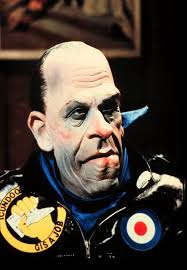
bernard rightonLet’s start with a joke: “There’s a black fella, a Pakistani, and a Jew in a nightclub. What a fine example of an integrated community.” Here’s another one for ya, “Two homosexuals in the back of a van, having sex. They’re over twenty-one! What’s wrong with that?” These are the anti-stereotype jokes of ‘Bernard Righton’, a character acted by the comedian John Thompson in the Fast Show from the 1990s. The second joke in fact shows how far we have come as the age of same sex consent is now 16. Although progress has been made in challenging stereotypes, many still exist, and often they target the working class.

The latest to be challenged, is that of the Essex girl; Essex is a county in England, and the stereotype is that it is populated by bleach-blonde, high-heeled, promiscuous women of low intelligence. This has gone on for years and has been promulgated by such TV shows as Birds of a Feather and The Only Way is Essex (TOWIE). Although some people might argue that it’s only a laugh, for many women it is a real problem. Sadie Hasler is a playwright from Essex, who left acting because she was only offered roles that involved wearing cat suits, going topless and always being sexual. A number of initiatives are ongoing to challenge the Essex Girl tag; these include a petition, social media campaign, a walk (The Essex Way), and a charitable foundation, the Essex Women’s Advisory Group.

A recent article by the poet Andrew McMillan, with echoes of Richard Hoggart some fifty years ago, forcefully argued for the need to hear more stories of working class lives in order to counter the void filled by the far right: “There must be an urgency, now, to help disenfranchised communities of all different types express their identity, to celebrate their history, to see themselves as belonging to part of a bigger picture, and this must include a refocusing on the working classes.” Similarly, another article called for politicians to better understand the working class vote, getting away from the belief they are only white; “mixed-race is the fastest growing demographic category, and that the growth is largely among the working class.”
Me in March 2017If this site does one thing, I hope it shows that the working class are not a one dimensional, culturally barren, single type of person. Poems from Kim Moore, Jacob Sam-La Rose, and many more have debunked such stereotypes. Josephine Corcoran’s “Working Class Poem” strongly adds to that story, because “This poem went to a state school and a university.  This poem left school at 16.  There are no whippets in this poem.  This poem isn’t going down a mine.  This poem doesn’t buy The Sun.” Josephine wryly highlights the cultural stereotypes, “this poem doesn’t recognise itself in soap operas,” and debunks them with “This poem goes to art galleries, museums, poetry readings,” spelling it out succinctly, “There is no tick box for this poem.” But going back to our start, there is also humour in, “this poem is an embarrassment” and ending, “this poem doesn’t have a glottal stop.” There is no cultural coagulation that defines this large swathe of people; and this goes beyond a joke when such stereotypes are used by the powerful dictate the life chances of those they employ or represent.

Josephine Corcoran blogs at www.josephinecorcoran.org and is editor at www.andotherpoems.com. Her poetry pamphlet The Misplaced House was published by tall-lighthouse.

Working Class Poem


This poem was born in a council house, rented flat, NHS hospital, caravan, servants’ quarters, bed and breakfast, children’s home, mortgaged house.  This poem went to a state school and a university.  This poem left school at 16.  There are no whippets in this poem.  This poem isn’t going down a mine.  This poem doesn’t buy The Sun.  This poem had free school dinners and uniform vouchers.  This poem got into trouble.  This poem went to night school.  This poem had a social worker.  This poem has no formal qualifications.  This poem has a PhD.  This poem was top of the class.  This poem was a teenage parent.  This poem is childless.  Little is expected of this poem.  This poem is framed on its parents’ living room wall.  This poem works as a university lecturer, shop assistant, hairdresser, teacher, call centre worker, filing clerk, police officer, bricklayer, food scientist, teacher, software consultant, sales person.  This poem hasn’t disclosed its occupation. This poem is unwaged. This poem likes films by Pasolini, Truffaut, Rohmer.  This poem reads The Beano.  This poem’s father was a gas fitter.  Its mother washed other people’s floors. This poem watches live opera and ballet streamed to cinemas.  This poem doesn’t play football. This poem drinks beer, wine, spirits, tea, cappuccinos, is teetotal. This poem has never eaten mushy peas. This poem does not recognise itself in soap operas. This poem goes to art galleries, museums, poetry readings. This poem is an embarrassment. This poem goes to the pub.  There is no tick box for this poem. This poem grew up on benefits. This poem pays higher rate tax.  This poem isn’t in an anthology. This poem doesn’t have a glottal stop.

(Working Class Poem was previously published in Under the Radar)
We Are Premier League by Rishi Dastidar

The footballer Colin Kazem-Richards was born thirty years ago in east London to a Turkish/Cypriot Muslim mother and a West Indian Rastafarian father. He has played for 13 clubs in as many years, in seven countries, winning titles in Turkey, Greece and Scotland. He currently plays for the Brazilian team Corinthians, is married to a Brazilian woman with whom he has two children, who are their mother’s nationality. His national team is Turkey. Kazem-Richards is an embodiment of what the philosopher, Kwame Anthony Appiah (himself of mixed-heritage and has lived on three continents) calls ‘cosmopolitanism’; being a citizen of the world through shared values and culture.

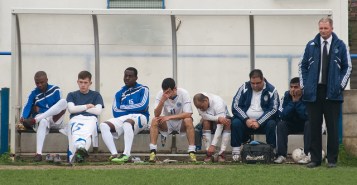
Chertsey Town vs Mole Valley SCR

Image by Chris Turner*

It could be argued that today’s elite football at least, is one of those shared cultural experiences, being played and watched by billions of people across the world (China is the latest country to spend big on the game). In the UK, the Premier League is a polyglot of players from different countries (in 2015 it was 64 countries, compared with 50 in Spain’s La Liga). But whilst this is a positive illustration of cosmopolitanism, it is also a negative illustration of globalisation in terms of the economic foundations that prop it up. If the Premier League is the London Square Mile of football, the lower leagues are the forgotten inner city and rural pockets of deprivation (ask any fan of my team Coventry, or Leyton Orient). Where players in the Premier League can command long and rich contracts (they are paid five times more than a Championship player), a League Two player will not only be paid much less but will have much more precarious employment conditions (short-term/loan). And then there is the totem ‘tea lady’, who is barely paid a living wage.

Rishi 9 FINAL BW suggested cropRishi Dastidar gives us a wonderful carousel of images of today’s modern Premier League players in his poem “We are Premier League”. The lines “We are Nando’s skin on X-box wings/We are charitable visits, making dreams come true”, shows the seeming contradictions of characters who command such wealth but still enjoy the ‘finer’ delights of chicken shops whilst visiting hospitals and schools. Many of these players themselves come from disadvantaged backgrounds, with little education (they were too good at football in their teens to worry about A levels, if not GCSEs) and travelled little. But like a lottery winner, the money can go to their head, and without proper guidance, they become: “We are court appearances in Armani suits/We are playthings of offshore corporations.” I wouldn’t go so far as to say they should be the foundation of a social mobility strategy, but neither should they be made the scapegoats of global capitalism. Many of the leading players, when retiring do a lot of good work supporting different communities. But there should be a way in which the benefits of cosmopolitanism can spread the income from globalisation more equitably; the football authorities are in a position to show leadership here, especially in these times of a resurgence in reactionary nationalism.
Rishi Dastidar’s poetry has been published by the Financial Times, Tate Modern and the Southbank Centre amongst many others, and has featured in the anthologies Adventures in Form (Penned in the Margins) and Ten: The New Wave (Bloodaxe). A fellow of The Complete Works, the Arts Council England funded programme for BAME poets in the UK, he is a consulting editor at The Rialto magazine, a member of the Malika’s Poetry Kitchen collective, and also serves as chair of the writer development organization Spread The Word. His debut collection, Ticker-tape, is published by Nine Arches Press.


We are Premier League

We are Nando’s skin on X-box wings
We are charitable visits, making dreams come true

We are role models and bandwagon drivers
We are baby Bentleys on private roads

We are gold tattoos on choking necks
We are orange spider mohicans on the backs of heads

We are dating on TOWIE and fit well jel
We are boys made good on our roasts

We are court appearances in Armani suits
We are playthings of offshore corporations

We are sponsored elite, and we are endorsed
We’ve parked the bus and we want more

We are the wages of underachievement
We are 17th place and we are class

(“We are Premier League” is taken from Rishi’s debut collection, Ticker-tape, published by Nine Arches Press)

* Image by Chris Turner

“Hauntings” and “Paddy” by Nick Moss

Just over a year ago, Dean Saunders was imprisoned for the attempted murder of his Father. The family understood that Dean needed medical and psychiatric help as the attack happened during a bout of paranoia. He shouldn’t have been put in prison, where – as has been found – support was wholly inadequate. Dean electrocuted himself in his cell and died in January last year. The year 2016 will see suicides in prisons doubling from five years ago to a record level.

1705450639_171ca6933f_z

Image by Nic McPhee*

This is not the only problem that prisons face because of the cuts imposed by the government during its mania of austerity. High profile prison protests, although they are termed as riots, have taken place in a number of UK prisons over the recent past. There have also been vigils held outside prisons in support of transgender prisoners as part of the International Trans Prisons Day of Action and Solidarity. Prisoners and prison officers are in agreement, there are not enough resources, both human and financial, to support an overcrowded antiquated system. But as with most of the cuts made, it falls heaviest on those weak, vulnerable, and powerless.

Nick Moss’ two poems “Hauntings” and “Paddy”, shows a more humane side of the characters that are imprisoned, and the relations between them. In Hauntings, Nick talks about a cellmate who was recently released, although it “feels like a life ago”, and how they talked “Behind a metal door/Of all the fears of home,/Of life; of kids not seen for 10 plus years;/Adrenaline kicks and white lines crossed/And snorted; anticipation of cold beers/And family curses.” But on leaving they become like ghosts – “Carrying our souls in plastic sacks/We haunt each other for a while/Then flash away/Like shadows do.” And then there are the characters you never forget, trailing their history in their conversations and actions. For Paddy, it’s “Fragments of half-remembered rebel songs/Dentures, collapsed veins and yellowed skin/Longing for the days of/The ‘RA on the wing/And you/Vicarious/Behind the wire.” A great deal of hope is lost in prisons, coloured by the past and its repeat. But in Paddy, there is some left in the “Singing and rattling round the wings/Hoping a cracked-voiced chorus/Of the Wolfe Tones/Will bring down the walls.”


Nick Moss grew up in Liverpool but now lives in London. He was released from a prison sentence last year. He began to write poetry as a way of mapping his experiences in jail, and won Koestler awards for his collection The Skeleton Choir Singing, and his poem “Never Again?” In 2016 he was awarded a May Turnbull Scholarship, and had work featured in, and performed at, the We Are All Human exhibition at the South Bank. He performs regularly and continues to write because “if we keep shouting, eventually we’ll hear each other”.


Hauntings

It’s a week since Peter went home
Feels like a life ago
It happens all the time
One day here
In all our lives
The next day gone
Time up or shipped out
Either way
Another voice just echoing now
On the wing

We slip in and out of each other’s lives
Walk the landings, revenants
Carrying our souls in plastic sacks
We haunt each other for a while
Then flash away
Like shadows do
When the sun hits the yard

Yesterday we talked
Behind a metal door
Of all the fears of home,
Of life; of kids not seen for 10 plus years;
Adrenaline kicks and white lines crossed
And snorted; anticipation of cold beers
And family curses
Now you’re out again
Hoping for notoriety
But knowing you just face shame

Carrying our souls in plastic sacks
We haunt each other for a while
Then flash away
Like shadows do
When the sun hits the yard

Jail-pale ghosts
No more real to each other here
Than we are to our lives at home.

PADDY

Fragments of half-remembered rebel songs
Dentures, collapsed veins and yellowed skin
Longing for the days of
The ‘RA on the wing
And you
Vicarious
Behind the wire

The days when you first reached London
Full of love and crack and E
Days turned soon to sleeping in doorways
Robbing shops at night
Six month stretches
In Wandsworth and the Scrubs
But still the rebel
Halfway between Bobby Sands
And Elvis.

Now it’s a four year stint
A cup of the green every morning
Spice at the weekends
No visits
A letter and a postal order
Once in a while
Chance of a tag slipping daily away

Still singing
On the one road to your
Bridge over troubled waters
A sweet voice
Shite skin and life-bleared eyes
Rattling round the wing
On the cadge
For coffee, burn, sugar

Wondering where that first love went
After Holloway
She never came home
Dead, married, working for probation
For all you know

You’ll go home soon bro
A flat and a wife in Hammersmith
A son dealing weed
An overweight staffie
And not a chance
Of a chance

Fucked over
Self-sabotaged

People like us
If we have dreams
The dreams end up in shop doorways
Under cardboard
Getting pissed on by strangers

Til they piss out our flame
And our legacy becomes
Shite skin and life-bleared eyes
Passed down to daughters and sons
Who carry failure in their genes
While trying to avoid
Outright defeat in a rigged, fucked game

Singing and rattling round the wings
Hoping a cracked-voiced chorus
Of the Wolfe Tones
Will bring down the walls.

*Image by Nic McPhee

A Lack of Minarets by Katie Griffiths

One hundred years ago, in the penultimate year of the First World War, a train journey was undertaken that would change the course of history. Negotiated with the Germans, Lenin took the long way round to Russia from Switzerland, on a sealed carriage with 32 compatriots and family, to foment the Bolshevik revolution. A century later, two recent journeys reflect the state of world affairs. The first was a freight train’s 12,000 kilometre from Beijing to London that follows the old Silk Road route and offers a third option for export besides sea and air. The second, a more troubling symbolic journey, took place in the Balkans. A Serbian train, attempted to enter Kosovo, a country it (and Russia) does not recognise. It was daubed with the message, ‘Kosovo is Serbia’, adorned with the colours of the Serbian flag and Orthodox Christian symbols – the majority of Kosovans are Muslim but the country has no official religion. The train was turned back at the border.

scan_20140715_152850-copy-copySuch a journey shows the continued fragility of the situation in the Balkans since its protracted war in the 1990s.  In Katie Griffiths’ poem, A Lack of Minarets, she takes a journalistic eye to describe a particularly iconic moment in the war, that of Mostar and the destruction of its historic bridge. “From a distance something is wrong,/a skyline tampered with, hard edited./As the bus coils down the mountainside/into the basin of Mostar.” The city was a main route for refugees on their way to Split from Sarajevo. “This is the home of the dispossessed,/shunted like marbles from zone/to zone, who pick their way/past commandeered cars/and makeshift kiosks sprouting/at odd corners to replace/shops that once packed the town.” The city has since been rebuilt, which included restoration of the bridge to its original design. It took nearly ten years. Still, as with many wars, the return and rehabilitation of its citizens will take many more years.mostar-brdige

What the aborted train journey from Serbia shows, as does the situation in Ukraine, the recent deployment of US troops in Poland, and the uncertain future of NATO with the advent of President Agent Orange of America, is that the Cold War is still alive and kicking harder than it has for almost thirty years.


The daughter of Northern Irish parents, Katie Griffiths grew up in Ottawa, Canada.  She returned to the UK for university and later worked at Radio Times, as volunteers’ co-ordinator for refugees of the war in the former Yugoslavia, and as teacher at a further education college.  Her collection My Shrink is Pregnant was joint runner-up in the 2014 Poetry School/Pighog Poetry Pamphlet Competition.  In 2016 she was chosen with three other poets to be in the first edition of Primers, published by Nine Arches Press.  A novel, The Hand-Me-Down Madonna, about the war in the former Yugoslavia, was longlisted in both Mslexia and Cinnamon Press competitions.  She’s a member of Malika’s Poetry Kitchen, and of Red Door Poets, and is also singer-songwriter in the band A Woman in Goggles https://www.youtube.com/channel/UCkDU42yNJQVesgAx7r9sxQw under which name she also blogs www.katiegriffiths.com


A Lack of Minarets

From a distance something is wrong,
a skyline tampered with, hard edited.
As the bus drives down the mountainside
into the basin of Mostar,
a dampening of voices gives time
to ponder that what’s awry
is the city’s heart,
charred, glassless and emptied out.

This is the home of the dispossessed,
shunted like marbles from zone
to zone, who pick their way
past commandeered cars
and makeshift kiosks sprouting
at odd corners to replace
shops that once packed the town.
Spring sidles in tentative, unremarked.

Inside my borrowed flat I trip
on the owners’ void, their pictures
and mementoes a dead weight.
Impossible to see through grubby
UNHCR plastic, stretched
to soften the windows’ absence,
whether Serbs lie in wait
up on Mount Hum, lost in snow.

Past curfew, with the moon
a weak salve on dark buildings,
their amputations, their spilling stones,
I walk the former front line
to a rowdy cavern restaurant,
where glasses clink toward the photo
of the now-dead owner diving
close by, off the ancient Stari Most.

I step outside. The old bridge
has been blown to pieces, I know –
in blackness the Neretva snags
on rubble heaped in its way.
But the night is sly, for I’d swear
the arch is still high above me,
a cupped hand about to swipe,
and all the air teetering.

(the poem was originally featured in Primers Volume One, a collaboration between Nine Arches Press and the Poetry School).

A poem from “All Damn Day” by Jemima Foxtrot

25965646176_ae21edb384_z

 Image by Kevin Doncaster*

In 2009 two health experts published an influential book that resonated well beyond their field of interest; it was called The Spirit Level: Why More Equal Societies Almost Always Do Better (the sub-title was later changed to the less strident, Why Greater Equality Makes Societies Stronger). It argued that inequality has all kinds of negative outcomes on society such as erosion of trust, poor health, and encourages over-consumption. Like many provocations, it divided opinion; these accorded to the rigour of the analysis and unsurprisingly along political lines. Those critical of their argument, as always, didn’t tend to come from the poorer in society, and were bolstered by disingenuously wrapped up as being objective. Thatcher’s biographer, Charles Moore said it was “more a socialist tract than an objective analysis of poverty,” which give its greater strength in my book. And as the authors wrote in 2014, “It is hard to think of a more powerful way of telling people at the bottom that they are almost worthless than to pay them one-third of one percent of what the CEO in the same company gets.”


3773877034_9c312827f7_z

 Sourced from ADiamondFellFromTheSky

There used to be a term that described the wealth gap in society; “how the other half lives”. I have a book with that title by the photographer Jacob Riis that includes one hundred photographs of the slums of New York at the turn into the 20th century. I am not sure it has even been an equal split between the haves and have nots, but as the rich get richer, the politics of democracy has become more binary. The Yes/No paradigm we have today in the outcome of how we vote seems to be driven by the negative – an ‘us against them’, even though it is not so clear who either side is. Danny Dorling, who for many years has studied the effects of inequality on societies, published a paper showing that of the richest 25 nations, the UK and US were the most unequal. He concluded the paper by saying that if you don’t believe the effects this has on societies, essentially, “go see for yourself what it is like to live in a more affluent nation where people are more similar to each other economically. See how they treat each other, the extents to which they trust or fear each other. Spend a little longer living there and see how it might also change you. Explore!


img_7762For those of us not able to do so, we are very lucky to have the likes of multi-talented Jemima Foxtrot who in a poem from her debut collection, All Damn Day, does what a lot of great poets do, allows us to dream. She takes a somewhat Manichean outlook that fits with the division we all feel in what we would like to do: “A half of me wants to exist in a tepee,/breed children who can braid hair and catch rabbits./Drink cocoa from half Coke cans twice a year/on their birthdays, the edges folded inwards/to protect their sleepy lips, cheap gloves to buffer their fingers,/precious marshmallows pronged on long mossy sticks.” However, such ‘rural and romantic poverty’ does not always fit with present circumstance, so we dream elsewhere. “If I were rich/I’d eat asparagus and egg,/in my Egyptian-cotton-coated bed, for breakfast. Bad. Ass./You’d find me in my limo, got a driver called Ricardo,/wears a nice hat. That’s that. Bad. Ass.” And in this dream we may travel to such places as Dorling suggests, but Jemima insightfully shows what lies at the heart these ‘hypocrisies’ we sit in, and how a division of one half or another can lead us all to a false sense of what it is we are after. “Capital has split my dreams in two /like a grapefruit./And I want both.                    And I want both.”

Jemima Foxtrot was shortlisted for the Arts Foundation Spoken Word Fellowship 2015. Jemima performs extensively across the country. All Damn Day, Jemima’s first collection of poetry was published by Burning Eye Books in September 2016. Jemima has written many commissions including for the Tate Britain, the BBC, the Tate Modern and Latitude Festival.  Her poetry film Mirror, commissioned by BBC Arts as part of their Women who Spit series, was available on iplayer for over a year. She has also appeared on Lynn Barber’s episode of Arts Night on BBC2 and on the Tate Modern: Switched on programme on BBC 2 in June this year with a poem especially written to celebrate the opening of the Tate Modern’s new wing. Jemima’s debut poetry show Melody (co-written with and directed by Lucy Allan), won the spoken word award at Buxton Fringe Festival 2015 and was critically acclaimed at its run at the PBH Free Fringe at Edinburgh 2015, receiving several excellent reviews. Melody was runner-up in the Best Spoken Word Show category at the 2016 Saboteur Awards.


Untitled (from All Damn Day)

Capital has split my dreams, a grapefruit cut in two,
the separate segments of both lives glimmering
          like a new breakfast.

A half of me wants to exist in a tepee,
          breed children who can braid hair and catch rabbits.
Drink cocoa from half Coke cans twice a year
          on their birthdays, the edges folded inwards
to protect their sleepy lips, cheap gloves to buffer their fingers,
precious marshmallows pronged on long mossy sticks.
Wrap them in goatskin. Leave them giggling
                    into drowsiness beneath the pink sky.

A half of me wants to exclude myself
                    – me and some rugged, clever fella –
live in a converted, cramped van. Grow rosemary
                                      and only own two dresses.
Sandals for the summer, boots for the snow.
Pick mushrooms and save them to trip from in springtime.

          Oh, rural and romantic poverty!
Lobster pots, gas lamps, home-grown tobacco,
card games, pine cones,
mussels form the shoreline filled with grit.           This is it!

It has to be.        Or something close to some of it.

I live in London.

And so yes.

And so yes, still the other half appeals to me.

If I were rich
          I’d eat asparagus and egg,
in my Egyptian-cotton-coated bed, for breakfast.             Bad. Ass.
You’d find me in my limo, got a driver called Ricardo,
wears a nice hat.              That’s that.         Bad. Ass.

And if anything important breaks, there’s boy around to fix it.
I’d hire the world’s best campaigner
                    to make everyone a feminist.

It feels so much more comfortable to sit in these hypocrisies when
they’re quilted.

And I’m in my penthouse in the middle of Paris,
          or Tokyo, or Istanbul.
The list of places that I’d like to go is endless and still growing.
But I’m rich now so don’t give a shit about emissions.

I’d buy pink marigolds, plastic crystal on the finger,
fake fur around the cuffs, to pretend to my friends
          that – even though I’m rich now –
I still do my own washing-up.

Do I fuck.

My au pair’s name is Clare, she’s hilarious.
Clare’s on the pots, I’m in the hot tub.

Or on my private beach in Thailand
          or asleep in the Chelsea Hotel.

Quaffing fine white wine,
scoffing oysters and the choicest cuts of beef.
There’s never much grumbling going on.

Restaurants, day-spas, massages, culture, wish fulfilment.

After lunch I’ll take the glider for a fly or got out to buy
a massive pile of overpriced designer tat.

          That’s that.                         Bad. Ass.

Capital has split my dreams in two like a grapefruit.

And I want both.                              And I want both.


* Image by Kevin Doncaster

St Fergus Gran by Beth McDonough

margaretcalvert_3313094b

Image by Margaret Calvert

We are living in a time of shifting demographics, which has the potential for pitting the young and old against one another. Not in a face-to-face sense, but in the way policy makers shift their thinking to ‘balance the books’. Just recently, in the UK the Work and Pensions Committee has recommended an end to the ‘triple lock’ of state pension payments that sees them increase according to three factors (i.e. whatever is highest in terms of average earnings, consumer price index, or 2.5%). There is a fear that as people live longer we won’t be able afford the state pension in its current form. This is compounded by the roll back in salary-linked company pensions. The elderly then are seen to be costing ‘us’, as though ‘we’ are the ones paying for their inactivity.

This is dangerous and not based on fact. You walk around during the working week and see how many grandparents are picking up their grandchildren from school; or looking after pre-schoolers all day whilst their own children are working. It is estimated that grandparents contribute £7 billion free childcare each year. They are contributing a similar amount to help fund their grandchild’s education. But it is also wrong to assume that they are all wealthy; one in seven pensioners live in poverty and a further 1.2 million live just above that line.

beth-mcdThis sets aside the history they have lived through and the people they became because of it; a World War to monumental technological change from the TV to virtual reality. They have so many stories to tell and be told, and Beth McDonough’s eponymous poem ‘St Fergus Gran’ does just that. “Great Gran lived in weighty old pennies, dropped/from bonehard hands to my fat-cup palm/just before we’d journey west.” Like many stories, hers is one that is handed down the generations, “I never knew of her second sight/All those deaths, and how she kent/her brother lived, when the telegram said not.” Their lives weren’t a straightforward one of getting married and having children; war put pay to that. “I met the East End Glasgow lad she’d/fostered in the war, with all his tricks, his walk/to her from the west coast up to Buchan.” Here Beth tells us a little more about the poem:
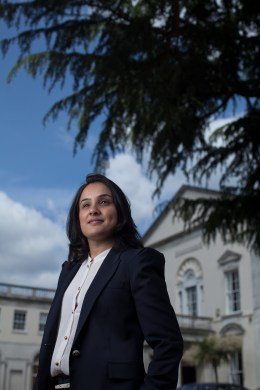
“Although my poems are often partly autobiographical, they are rarely so openly so. This one arrived that way. I suspect my Dad would have problems with it, as for his Scots generation there is still a perceived stigma. For my part, I am in awe of my Great Gran – a couthy and brave woman. The knowledge of her  situation, so much later, only increased my respect. The two sisters brought up their families a few miles apart in rural Aberdeenshire, where doubtless no secret about my Grandfather’s paternity could be kept. I feel a certain indebtedness to Norman MacCaig’s Aunt Julia, and yes there are “so many questions/unanswered” and in St Fergus Gran’s case, I mourn too that I will never really know those answers in her beautiful Doric, so specific to that area.”


Beth McDonough trained in Silversmithing at GSA, completing her M.Litt at Dundee University. Writer in Residence at Dundee Contemporary Arts 2014-16, her poetry appears in Gutter, The Interpreter’s House and Antiphon and elsewhere and her reviews in DURA. She has a background in teacher trade union activism and she is involved in various disability-related groups. Handfast, her pamphlet with Ruth Aylett (Mother’s Milk, May 2016) charts family experiences – Aylett’s of dementia and McDonough’s of autism.


St Fergus Gran

Great Gran lived in weighty old pennies, dropped
from bonehard hands to my fat-cup palm
just before we’d journey west. She was coiled
inky hair, all starling eyes, a bent body leant
on a wooden frame. She lived till I was twelve.

I never knew of her second sight.
All those deaths, and how she kent
her brother lived, when the telegram said not.
She dreamed birds and hearts. It took
my first adult death for Dad to tell me this.

What she could not see, was how
the man who left her pregnant was to wed
her sister in their kirk before
their son was born. It took
his Father’s death for Dad to tell me this.

I met the East End Glasgow lad she’d
fostered in the war, with all his tricks, his walk
to her from the west coast up to Buchan. I loved
his anarchy on buses to the Broch. It took
his Mother’s death for Dad to tell me this.

Today, I asked my Dad about my Great-Gran’s
Christian name. He can recite the cottage signs,
say all those burns that feed the Ythan, but
he cannot tell me this. They had
no need to know her name. She was just
St Fergus Gran.


Life of Thorka by Aisha K. Gill

In the US, the word pacifier is used to describe what we in the UK call a baby’s dummy. Yet, during the Vietnam War, pacification was the popular term used to describe the actions of soldiers entering villages, shooting domestic animals and rounding up all of the men and boys, killing any who resisted (its more official title was Civil Operations and Revolutionary Development Support). Similarly, the term collateral damage is meant to descale the actual impact of a violent intervention making it a more ‘acceptable’ price of war. The same goes for friendly fire and many other terms. Euphemisms abound when talking of war or violence. And they are not used passively; they have political purpose. As the Encyclopaedia of Violence, Peace and Conflict states: “This instrumental approach to language, detaches language from history and moral judgement, converting it to a mere technique in the assertion of political power.[1] And it gives the example of the “Final Solution” to make its point so powerfully.

Now think of the terms shame and honour; shame can be used in a quite benign way, e.g. “ah, what a shame,” when you just missed out on something. Whilst honour conjures up bravery and sacrifice, maybe for your country or a cause you believe in. But as with euphemisms of war, set in a different context they can mean very different things and Asian Women Awardstherefore have very different connotations. Our poet today, Professor Aisha K. Gill [http://www.roehampton.ac.uk/staff/Aisha-Gill/] is an expert on violence against black and minority and refugee women in the UK, Iraqi Kurdistan and India. In her work she has shown the link between honour and shame that leads to honour based violence (HBV), overwhelmingly against women. “…honour relates to the behaviour expected of members of particular community, while shame is associated with transgressions against these expectations” (Gill, 2014: 2). This HBV is driven by the expectation by men of how women are meant to act in their family’s honour, “by behaving appropriately through deference, fidelity, modesty and chastity” (Gill, 2014: 2).[2]
In her poem, “Life of Thorka” she speaks about her escape from violence. “Anxious for clues,/but, without a clear map/it’s the Midland Main Line that’s/doing the calling to bedsitter land./ Look over your shoulder, Asian woman in hiding / Keep searching, (and watching and hiding/from them).” Education is her aim but also her ‘crime’ and hence the urge to be free. However, many are not able to take this route and have their “aims ruined/robbed of ordinary experience / abandoned, starving in silence / their death even claimed. Found innocent of powerlessness.” And yet there is no sense of revenge in this story, even when completely aware of the wider political and social context, this ‘dance to sociological imaginations’. “But I won’t kill him off!/I’ll just leave him alone/in his unwise ageing/A bare old stick, let him/wither in pain.” The form of the poem is also beautifully rendered to reflect the train and the tracks taken in her escape.

What lies behind the use of seemingly benign or traditionally defined terms is critical to a basic understanding of power and how it is exerted; whether in the battlefields or in communities where patriarchy defines how a woman should act in ‘honour’ of her family.


Life of Thorka[3]

ਔਧ ਤੜਕੇ ਦੀ

Two cases stacked on the

          overhead rack.

I’d got my ticket

                  for the runaways’ train.

Anxious for clues,

          but, without a clear map,

it’s the Midland Mainline that’s

                  doing the calling to bedsitter land.

Look over your shoulder. Asian woman in hiding.

Keep searching,

(and watching, and hiding

from them.)


Under the brickworks,

(with help from Barnardo’s),

          education’s the goal  –

that’s the promise I’d made –

            the ticket to freedom

for thousands of others

          just like me!

A thousand others just like me…

          aims ruined

robbed of ordinary experience,

          abandoned, starving in silence,

their death, even, claimed.

             Found innocent of powerlessness,

sentenced for years and years

          under spiteful glares

to crisis, prisoner number,

            exposed, time for duty.


Put on the mask and

play the game.

                (Insanity pervades the

                spirit, schizo!)


(They say that the personal is political.)


So memories of make the thorka

[ਤੜਕਾ ਬਨਾ ਲਵਾ] -interlaced with a slap –

          play on

sarson ka saag banane ke liye

 [ਸਰ੍ਹੋਂ ਕਾ ਸਾਗ ਬਨਾਉਣੇ ਕੇ ਲੀਅੇ].

Intersectionality, critical conversations

          dance to sociological imaginations,

the symphony of living in Essex,

the “Masala Curry Queen”from DE23!


 Masala channa, punjabi masala, palak

                 paneer aloo, mooli, gobi or just plain

                                 paratha?


But I won’t kill him off!

          I’ll just leave him alone

in his unwise ageing.

A bare old stick, let him

          wither in pain.


author biography

Aisha K. Gill is a Professor of Criminology at the University of Roehampton, UK. Her main areas of interest and research are health and criminal justice responses to violence against black, minority ethnic and refugee women in the UK, Iraqi Kurdistan and India. She has been involved in addressing the problem of violence against women at the grassroots level for the past seventeen years and has published widely in refereed journals such as Current Sociology, European Journal of Women’s Studies, Feminist Criminology, Feminist Legal Studies, Feminist Review, Journal of Gender Studies, Journal of Social Welfare and Family Law, Violence against Women Journal and Women’s Studies International Forum. [@DrAishaKGill]


[1] Source: Encyclopaedia of Violence, Peace and Conflict: Po – Z, index. 3: 308

[2] Gill, A.K. (2014) ‘Honour’, ‘honour’-based violence: Challenging common assumptions, in Gill, A., Roberts, K., Strange, C. (eds) ‘Honour’ Killing and Violence: Theory, Policy and Practice, London: Palgrave Macmillan. http://www.amazon.co.uk/Honour-Killing-Violence-Aisha-Gill/dp/1137289554

[3] First published in Feminist Review, Special Issue of Food. Autumn 2016: Issue 114.  Reprinted with permission of Feminist Review http://link.springer.com/journal/41305

THE MAPS YOU TOOK WITH YOU WHEN YOU WENT BY JOE HORGAN

We tend to think of migrants as those who only cross borders. However, Internally Displaced People (IDP) are a huge issue facing countries experiencing humanitarian disasters and wars. All of which puts a great burden on a country’s resources when they are at the most strained. In Syria there is estimated to be 6.6 million IDPs. By the end of 2014, a record level of 38 million people were displaced within their own country as a result of violence; countries such as Democratic Republic of Congo, Iraq, Nigeria, South Sudan and Syria making up 60% of the world’s IDPs.

tebbittIn more wealthy countries people are also pressured to move. For example, because of past policies of selling off council housing, people are being forced to move to a different part of the country if they need a home. Margaret Thatcher’s henchman, Norman Tebbitt, once infamously said, “you dirty worthless working class scum, I’m going to wipe you off the face of this country.” Okay, maybe he didn’t say that exactly, but he did once say in response to the riots of the early 80s, “I grew up in the 30s with an unemployed father. He didn’t riot, he got on his bike and looked for work and kept looking till he found it.” Setting aside the fact that he did as much to dismantle the bedrock of his heritage, and the fact that not everyone can move to find work, the internal migration, to which he is essentially referring is one driven by economic hardship and capitalist discrimination. People don’t generally move because they are happy with their circumstance, unless they may be going to University or have been offered a job they willingly applied for.
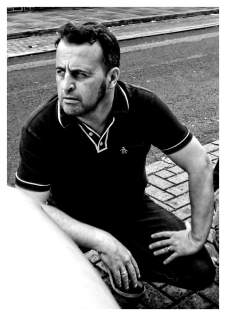
received_10206899908830065-1Nonetheless, whether a refugee who has left their country, or internally displaced person, the majority of people still call home the place they were born. Joe Horgan’s poem, “The Maps You Took With You When You Went,” tells of the place he was born, Birmingham and the situation facing many working class people during the 1980s. The irony being that many came to the city, as they did to my own home of Coventry, from Ireland and Scotland, only to see a number of their own children leave; some went back to Ireland during the Celtic Tiger bubble, whilst others dispersed to various corners of the country and abroad. (more…)

all fall down by Reuben Woolley

children-aleppoI know that saying children are remarkable, is not a particularly remarkable thing to say. Nonetheless, I see it with my own sons; how they shrug off an argument they may have had, or in my older son’s case, how he recovered from severe depression. And I was reminded of this when seeing young boys smiling as they jumped into a water filled bomb crater, a splash pool of war, in Aleppo.

War is indiscriminate. In the past you could have said children were unintended casualties. But in modern warfare they are often the intended targets; “to kill the big rats, you have to kill the little rats”, was the message on the eve of the Rwandan genocide. Even with the boy-sister-aleppoadvancement in technology and so called smart bombs, civilian casualties are always much greater in the type of modern warfare we see in Syria. Over 11,000 children were killed in the country between 2011, when the conflict started, and 2013; some of them being summarily executed. But tragically, even images such as that of the young boy covered in dust and rubble in a hospital in Aleppo (his sister was also with him but was kept out of the shot), don’t seem to make a difference on the ground.

It appears that Russia is heading for a finishing line adorned by young deaths and a uninhabitable country. In the final week of September it is estimated that over one hundred children were killed in Aleppo. The other powers, especially the US, wallow in impotency; more interested in leaving the baton on the ground whilst they decide who should be their next President.

me-at-newcastle-stanzaReuben Woolley’s poem ‘all fall down’ poignantly captures the tragedy of war, “where/children sang in cinders”. As Michael Rosen did previously in his poem, ‘Don’t Mention the Children’ about the situation in Gaza, Reuben has taken to highlighting their universal plight of being exploited and killed by those in power, leaving untold ‘invisible trauma’, “bring them to us now/we’ll have their eyes.” Yes, children have a great resilience, as demonstrated by the boys making play out of a bomb crater, as children did in London and elsewhere during the Blitz. But one can only imagine the terror they feel as they try to sleep, not knowing what the powers that be have in store for them during the darkness of night.
Here is Reuben talking about the poem and his site, “I am not a silent poet.”

“In November, 2014, I got fed up of the sickening reports everywhere in the media, bth the traditional media and the social media, of the human abuse of other humans and of the planet. Some of my poetry was written very much in protest against this abuse but I felt that something else needed doing. I was sure that I wasn’t the only poet affected by this so I set up the online magazine, I am not a silent poet, and its associated Facebook group page, as a site for bringing together poems about/against any type of abuse anywhere in the world. I invited a few friends and also begged people for poems to get things started. I must admit that I thought it might last for a few months before petering out. I was wrong. It has grown enormously from those small beginnings, but it still tries to provide a space for people’s voices and give a voice to those who haven’t one. It also tries to give a very rapid response so that the work is just as relevant when it is published as when it was written. Like most of the poems on the magazine written about Syria, my poem looks closely at those who suffer most in the conflict: the children.”


Reuben Woolley has been published in various magazines including Tears in the Fence, The Lighthouse Literary Journal, The Interpreter’s House, Domestic Cherry, The Stare’s Nest and Ink Sweat and Tears. His collection, the king is dead was published in 2014 with Oneiros Books, and a chapbook, dying notes, in 2015 with Erbacce Press  Runner-up: Overton Poetry Pamphlet competition and the Erbacce Prize in 2015. Editor of the online magazines: I am not a silent poet and The Curly Mind. A new collection on the refugee crisis, skins, has been published by Hesterglock Press, 2016.


all fall down

& all the story
in
     between
                    where
children sang in cinders

we saw them
     clothed in tired skin
& dying
    daily

not meat enough
nor grain
there’ll be no
               joyous
               noise
a game
a ring of posies
& blackened flesh

                    bring them to us now
we’ll have their eyes
& string
a dull
pendant
to show a rusty path. i’ll grind
a bone
an arrow head


The Speaker by Hilda Sheehan

Black Power, White Power, Girl Power, Soft Power, Superpower,
I’ve got the power, fight the power, power up, power down,
power to the people, power of the weak, power lists, holders of power,
gatekeepers, gatehousers, laws, wars, protest, silence, apathy, violence,
rational, ruthless, monopoly, oligopoly, oligarchy, autocracy, dictatorship,
cultural power, charisma, charm, patriarchy, matriarchy, infancy,
authority, legitimacy, language, shouting, beating, killing, Simon Cowell.

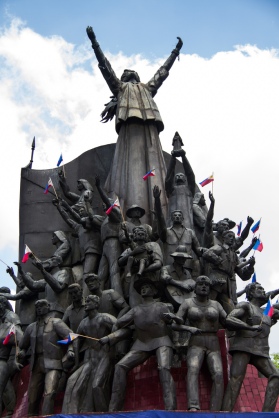
peoplepowermonumentPower is ubiquitous and multi-layered. Just look at the range of power lists; from political figures, to those in the media, LGBT, there is even one for those working in ophthalmology. Power influences and affects everything we do, whether as individuals, families, groups, organisations, or countries. Your access to healthcare for example, can be determined by your ability to be an advocate for yourself, at a time when you are most vulnerable. At a state level, beyond laws, governments will use ‘softer’ powers to get us to change our habits (otherwise known as ‘nudge’); in the UK this can be something as innocuous as charging five pence for shopping bags or automatically enrolling people into workplace pensions. This then extends at a global level to international relations, where states hold power because of the ‘attractiveness’ of a number of indicators, such as political stability, health systems, wealth, or adherence to human rights. But it tells you something when countries such as the UK and US top the various soft power lists, as these cannot be extricated from their hard power of colonial and imperial interventions backed up by an arsenal of nuclear weapons. It even extends to pop impresarios such as Simon Cowell, although he presses a different kind of button to the nuclear version, thank goodness.

923356_10151603184340218_2128322234_nAs individuals, it is quite easy for us to feel powerless and Hilda Sheehan’s poem The Speaker forcefully captures this sense through the metaphor of noise. “The Speaker//is an electric vulture//….It is/a god of dropped insects/from a carriage clock/or wasp holder/left to go on-off, on-off/riddling the town’s ears/from where it came.” This barrage of messages – part of this idea of influence, of soft power – is now at a ‘volume’ we cannot control. Inside a speaker is Hell -/a radio of church-like/persuasion/from four walls a prison/of persecutors of/television visions/crackling away in the gutters.” It is not that easy to turn things off. But this powerless feeling of not being listened to is what brings people together; we see it with Black Lives Matter, with the Occupy movement, and the Arab Spring protests. There is both a soft and hard power that individuals can exert. One that is more than just a nudge to those in power. One that is a shout so loud it cannot be ignored. (more…)