Poem

Another Life by Jill Abram

Many years ago my friend went for an interview at the Royal Mail; when asked why he wanted to be a postman, he said, “Because my uncle runs the pub across the road.” He didn’t get the job, which wasn’t fair really because the pub was always full of posties at lunchtime.

Charles Bukowski was probably the most famous literary drinking postman. When deciding whether to continue at the post or become a full-time writer he said, “I have one of two choices – stay in the post office and go crazy … or stay out here and play at writer and starve. I have decided to starve.”

Imagine however, that instead of delivering other peoples’ letters or junk mail, the postman delivered a message of his or her own. What would the folks of downtown L.A. have thought about missives from Bukowski or Burroughs? Or how about messages from those promoting social justice and equality, like Gandhi or Jerry Springer.

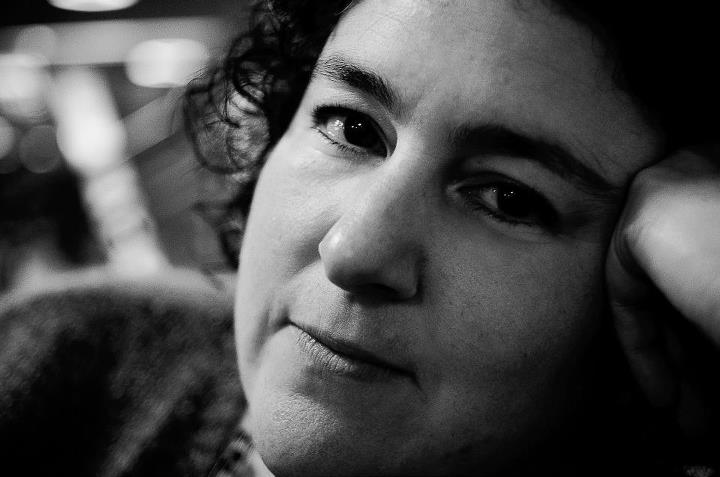
B&W by Naomi

Photo by Naomi Woddis

Jill Abram, in her poem, Another Life, does just that when she imagines Martin Luther King walking the streets with his dream, ‘but instead of sharing it/with all the world at once,/he would have told people individually/household by household.’ Can you imagine getting a personal message from MLK, how life changing that could be? And how you could pass on his word, “neighbour to neighbour/over garden gates and hedges/and cups of tea.”

(more…)

For Eliza (my great grandmother) by Katrina Naomi

It is an indictment on those who hold power and are resistant to its democratisation that days such as yesterday’s International Women’s Day remain such an important reminder of the discrimination women face throughout the world. Here in the UK, it is particularly poignant given the upcoming general election, where women’s role in politics is still far outweighed by men; though I do like to think it is no coincidence that the more progressive political parties of the United Kingdom, the Greens, Plaid Cymru, and SNP are all now led by women.

The suffragette movement of course was instrumental in creating change. But I used to think it was portrayed as a rather middle/upper class movement, when, this is clearly not the case. There are many examples of working class women involved in the movement, and campaigning for equal rights many years before the turn of the century.

A programme just this week on BBC television, Suffragette’s Forever, showed how in the 1850s, in response to the male dominated Chartist movement, there was the formation of the Sheffield Female Political Union, who proclaimed: “To the women of England, beloved sisters, it is our birth-right, equally with our brothers to vote for our destiny, …and we ask in the name of the new justice must we continue ever the silent and servile victims of his injustice? Is the oppression to last forever? We, the women of the democracy of Sheffield, answer – No!” As Professor Amanda Vickery says, ‘it disputes the idea that working class women were downtrodden and prepared to suffer and be still; but more than that it gives a lie to the idea that the suffragette movement was a snooty middle class affair born in drawing rooms in Kensington and Mayfair. It seems to me it was born here in Sheffield in 1851.”

Katrina NaomiKatrina Naomi’s elegiac poem ‘For Eliza (my great-grandmother) who ‘ran away to north London,/never spoke of home, fled as a child/from that gap on the form where your father would have been;’ and who went on to be part of a movement that changed the course of history ‘When you straightened up,/out of the poor light, you thrust a pin/through the crown of your best straw hat/worked amongst those with a larger vision.’ beautifully encapsulates the height of the suffragette movement, (more…)

Poems from “How the bookmaker feels about the dogs” by Joey Connolly

You may not have noticed but the days are getting longer. Shops’ opening hours seem extend to meet the needs of everyone’s body clock. Superstores are 24/6, bars open to 2am, some banks on Sunday. It seems it is only doctors’ surgeries that escape the creep of capitalist opportunity. One that strikes me, given my previous life, is when walking home late evening to see the bookmakers (betting shops) still open till 10pm; when I worked in a bookmakers in the 1980s, there was no night racing, far fewer race meetings, no slot machines, you were never open on a Sunday, and there were no PDQ machines to pay by card – you could only lose what was in your pocket. Now their shops are open 12 hours a day seven days a week – 24 hours if you count online.

I feel that more than ever, being in a bookies is all about waiting and counting; whether it’s the time of the next race, your next win, the odds, how much you’ve got to bet with, how much you can afford to lose, how much you actually lose that gives you that sickening feeling when you walk home to face your family (it is rarely the more positive alternative). The same applies to the bookmaker/owner but more so for the person working on the till. How do you fill the time and what counts?

joey connollyJoey Connolly passes the time writing poems when he’s working in the bookies, which is a great way to pass the time, even when you’re being interrupted; and in a series of poems from ‘How the bookmaker feels about the dogs‘ he portrays this mix of creativity and capitalist intrusion very well. ‘It’s a position I struggle to reconcile,/naturally. But it’s more interesting than an office/and it’s anyway impossible/to stand completely outside/of Capital’s relentless comprehension in this day, this age.’ It is a frustrating position and not like any other retail position, because you are dealing with people for a number of hours during a day – they don’t all just walk in, place a bet and walk out again. ‘I trudge to the bookies where I work and will find time/to write this….and will concern money…– but also/other important things; all of which/are suspended to take Joe’s throw-of-the-dice tricast,/Joe, who is/a real misogynist.’ (more…)

Dance Class by Hannah Lowe

At fifteen I was a punk. I don’t have the spiky hair anymore (don’t have any in fact) but I still like to think I have a little bit of the ethos. My son is fifteen and into much the same type of alternative music, although his relates more to the various genres of heavy metal.  It is only now, however, I have spotted a contradiction in our choices, for although I reveled in being different, I also wanted to be part of a group who looked and felt the same.

Hannah-Lowe-wpWhat we all have in common, whatever identity we feel we have, is the need to belong to something. It may only be with four other boys playing Warhammer in Games Workshop on a rainy Sunday afternoon, or as in Hannah Lowe’s poem Dance Class, being with ‘the best girls posed like poodles at a show‘. But it is often not that easy to fit in, you may not be good at the game; you may be ‘a scandal in that class, big-footed/giant in lycra‘. (more…)

Wit is it? by William Letford

Having a laugh. Taking the piss. Bit of banter. Up for the craic. All are the stereotypical currency of conversation in the workplace. All assume a set of common of interests and culture amongst the workers: betting, beer, birds and football (obviously male dominated ones that is). And certainly a lot of such talk goes on in the mail rooms, building sites, pubs and changing rooms across the country.

Image 1However, you wouldn’t necessarily assume that such a group would be talking about something ‘deeper’, about who they are, their purpose, or the meaning of life itself. But in Billy Letford’s poem, Wit is it? such a conversation is going on, presented as an unknown question answered differently by the stonemason, plumber, sparky, labourer, joiner, gaffer and roofer. ‘it’s aw in yur heed’…’It’ll ‘stope yur hert deed’…’It’s aw in the mix’…’wit diz it mettur‘.

I can imagine this as an opening scene of a Samuel Beckett type play; them all in their positions on a building site looking down at something beneath them that we can’t see, that we never see. (more…)

TWO YEARS FROM RETIREMENT, MY NEIGHBOR CONTEMPLATES CANADA by Kyle Dargan

In 1930 the economist John Maynard Keynes, predicted that by the beginning of the 21st century, capitalism would have been so successful people would only need to work a fifteen hour week in order to maintain a decent quality of life. As great and influential an economist as he was, he missed the carnivorous quality of capitalism to feed off others and to not know when it is full. So today, near on a century since his prediction, most people are still working a forty (or more) hour a week, just to stand still.

Yes, in global terms there is more wealth, improved health, and wider variety of leisure, at least in developed countries, but we are far from being a ‘leisure’ society. However, there is greater competition for jobs at lower wages with a growing global population and a predicted reduction in employment due to technological advances.

Dargan - Copy (800x480)All of these developments affect people in developed and developing countries alike and these global shifts are reflected beautifully in Kyle Dargan’s poem, “Two years from retirement, my neighbour contemplates Canada.” An ageing neighbour, whose arthritis is ‘now a hymn sung/by the choir of his bones’ will not be having the retirement he hoped for, and looks to work his final years in Canada, where its map is “speckled with throbbing circles,/bull’s-eyes. Those are the job sites—so many,/one must wonder what is Canada building.(more…)

Speechless by Jacob Sam-La Rose

Where were you when….? This is often a question that roots us to a place, a memory where the global meets the local. For my parent’s generation it was either the end of the Second World War or when Kennedy was shot (I was probably asleep in my pram). For my generation it was when Thatcher was elected, fall of the Berlin Wall, or when Princess Diana died (I think I was asleep for that one as well). And for today’s generation it must be 9/11 or when Simon Cowell appeared on the Simpsons. But of course there are many less tragic memories that take us back in time.

IMG_2104-Sam BurnettIn Jacob Sam-La Rose’s epic five part poem Speechless, he takes us through the stages of his life with references to major events (both good and bad), linking them to his own family’s history and those that affected him personally. It begins in 1950: ‘Uruguay beats Brazil 2-1/to win the World Cup, China invades Tibet’. In Guyana his mother who ‘has a voice like ripe Jamoon wine‘ is trying to find her freedom in the shadow of her Father who is a Police Sergeant and whose ‘word is law’ and on the wall is ‘a poster/proclaiming that Britain needs you.’ (more…)

I Dream a World by Langston Hughes

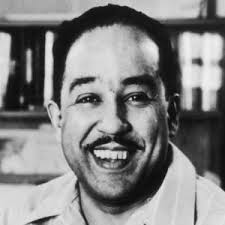
langston hughesToday would have been Langston Hughes (one of the original Proletarian Poets) 113th Birthday. Google has marked the occasion with a Googledoodle.

Here is the link to it, Langston Hughes, I Dream a World, and here it is in words. Enjoy.


I Dream A World

I dream a world where man
No other man will scorn,
Where love will bless the earth
And peace its paths adorn
I dream a world where all
Will know sweet freedom’s way,
Where greed no longer saps the soul
Nor avarice blights our day.
A world I dream where black or white,
Whatever race you be,
Will share the bounties of the earth
And every man is free,
Where wretchedness will hang its head
And joy, like a pearl,
Attends the needs of all mankind-
Of such I dream, my world!

Hammersmith Hospital 1968 by Roz Goddard

A lot of waiting goes on at a hospital and consequently a lot of thinking, where the imagination takes over. My first son was born in St Thomas’ Hospital in 1999. He was put into the neo-natal unit for the first week of his life and my wife was given a room facing the Houses of Parliament as we waited for his recovery (he was fine). Anyhow, at night I would look across at Parliament’s golden facade and wonder what the MPs were up to at that particular time; yes, sessions would still be going on, and possibly committee meetings, but I also imagined there to be lots of drinking and other intra-party ‘extra-curricular activities’, all in the name of oiling the cogs of democracy. I was almost tempted to go down to A&E to see if I could spot an errant MP.

momenya smallerI am reminded of this by Roz Goddard’s delightful poem Hammersmith Hospital 1968. The hospital is situated in an area of scrub land in West London. What’s interesting about it, is it sits right next to one of the most well-known (notorious?) prisons in the UK, Wormwood Scrubs. And like myself, our poet is waiting, and whilst waiting is looking out the window at the prisoners during recreation time. ‘I can see men in the exercise/yard larking about.’ But she has a very active imagination, ‘I imagine/them issuing threats and swearing and a fight/breaking out.’ (more…)

Barnsley Chop and Seams by Kay Buckley

I’ve moved us away from ‘that London’ and back up to the North of England for two poems that tell a story of the town of Barnsley, through its ‘chop’, and in ‘Seams’ that of Yorkshire more widely during the 1980s.

Photo of Kay BuckleyLike Roy Marshall’s poem, ‘Meat is Murder’, Kay Buckley’s description of the butcher’s in ‘Barnsley Chop‘ is visceral and time-bound; ‘Back in day, when meat came in brown paper,/the blood soaked right through‘, and ‘those rubbery links hung like fat lips/from uppercuts on S shaped metal hooks‘. The ‘Barnsley Chop’ is being prepared for a visit by the Prince of Wales and comes to symbolise that mix of ceremony and tradition with a down-to-earth truth to self. So the meal is served barnsley chopon best china and the chop has ‘more meat than you can eat’, as though setting up the Prince (who is no ‘trencherman’) for a fall; and then the Mayor, ‘the host, ex-workhouse and a big union man./He didn’t stand on ceremony‘ with his stern humour when telling the Prince, ‘“If tha’ don’t eat that, I’ll tell thee mother.”’ (more…)