Uncategorized

A Tribute to Fred Voss

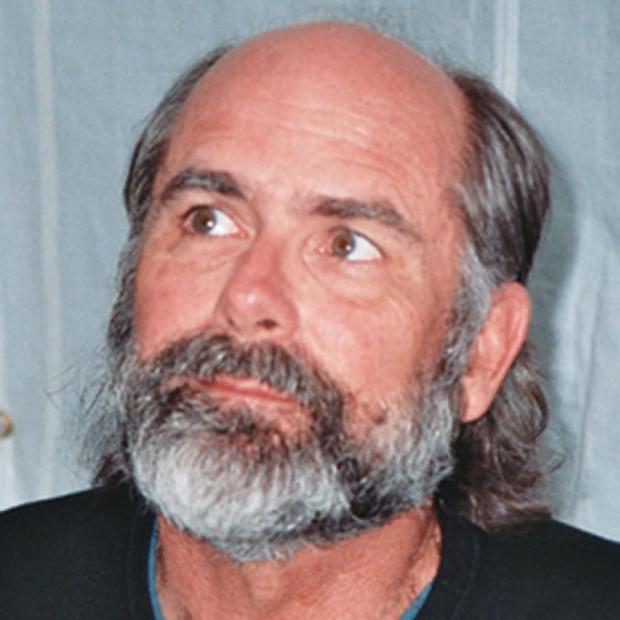
The poet Fred Voss, who has died at the age of 72, was one of the great American writers of manual labour. He went beyond the poet as witness in a journalistic sense, for he lived what he wrote and he wrote more than three thousand poems.

Fred was born in Los Angeles in 1952. Initially he thought he would go into academia. On passing a Bachelor of Arts degree in English he was offered a place on a Ph.D. program at the prestigious University of California, Los Angeles. But he turned it down to begin work as a machinist, which he carried on doing for the rest of his life.

He turned to poetry as a way of documenting the lives of his fellow workers who work for the ‘man’, the ‘machine’, the ‘system’; machinists who may be making engine parts for fighter planes that drop bombs in Iraq or Afghanistan. His workmates came from across the Americas and his poetry exhibits that microcosm of working class life, which you rarely find in other peoples’ poetry, besides Martin Hayes and his portrayals of London couriers and controllers.

Fred published numerous collections. His first, Goodstone was published here in the UK by the ever astute Neil Astley’s Bloodaxe Books in 1991, in which Voss did a reading tour of the UK. His poetry had arisen out of the South Californian poetry of Charles Bukowski. But it was Professor John Osborne from Hull in the UK, who first published a hundred poems of Voss in the influential Bête Noire magazine which ran for ten years between 1985-1995. Goodstone was the touchstone of the more than three thousand poems Voss wrote over the next 35 years. Goodstone was the name Voss derived from the companies he had worked as a machinist. The poems, like the many that followed, told of the day-to-day struggles of men and women working in machine shops and factories of Southern California from the late 80s onwards.

Bloodaxe went on to publish two more collections with the wonderfully evocative titles, Carnegie Hall with Tin Walls 1998, and Hammers and Hearts of the Gods 2009, which was the Morning Star’s book of that year. Other collections include ‘Some Day there will be Machine Shops Full of Roses, in 2023 with Smokestack Books. As well as two with Culture Matters, The Earth and the Stars in the Palm of Our Hand, and Robots Have No Bones in 2018.

In the introduction to Robots Have No Bones (two years into the first Trump presidency I wrote:

“Fred Voss’s poems situate us in the workplace, and by doing so, show us the humanity and diversity of those who work there – ones who both support or hate Trump, but as one want, at a minimum to support their family, not have to struggle and work long hours to do just that.” Sadly, nothing has changed, and we are now at the beginning of another Trump presidency.

Fred was very generous with his poetry, offering me two poems in the early days of Proletarian Poetry back in 2015. Then more recently in an academic paper I wrote about his work, and that of his good friend Martin Hayes, on the Poetics of Precarious Work for the journal English (forthcoming in 2025). He was over the moon about his poetry being analysed for the precarity of the job, given his initial interest in the academic life, and it is so sad he didn’t get to see the published copy.

Two poems illustrate the lives of his fellow workers and Fred’s deep empathy and love for them. In ‘Los Angeles’ (see below), many of the workers wear crosses, believe in God, go to church on Sundays, but because of the environment in which they live, through poverty, violence, and low wages, are close to breakdown, close to ending their life. This is also seen in the poem ‘Grease Spots’, as a worker hopes the US Air Force will make a ‘grease spot’ of the Iraqis in response to the Twin Towers crashes. Voss wonders conversely, if their own government has made a grease spot of them, because the workers are barely able to feed their children and may never be able to retire.

I have a feeling that Fred wasn’t given deserved recognition by the mainstream poetry community in the US; there is no record of him on either the Poetry Foundation’s website nor the American Academy of Poets, and yet there is a Wikipedia page of his life.

Fred is a great loss both as a beautiful human being and a poet who exposed the daily struggle facing workers in the precarious waters of late stage capitalism. Our thoughts and love go to his dear partner Joan Jobe Smith.

Los Angeles’ by Fred Voss

In Los Angeles I have seen
men in factories with big crucifixes
on their chests
crucifixes
exchanged for guns
needles
leaps out of 10th story windows crucifixes
big
and heavy swinging on the massive hairy chests of these men crucifixes
exchanged for bottles that had these men face down on floors
or in alleys bottles
or needles that took their women their families
their souls I have seen men
in factories
without one trace of shame wearing big shiny crucifixes
on their chests men
this close
to picking up a knife
and ruining their lives this close
to blood they could never wash off their hands men
from gangs from prisons
from tiny rooms where the devil pulled up a chair
next to them men
who’ve earned
their crucifixes.[i]


[i] Fred Voss, Hammers and Hearts of the Gods (Hexham: Bloodaxe Books, 2009), p. 37.

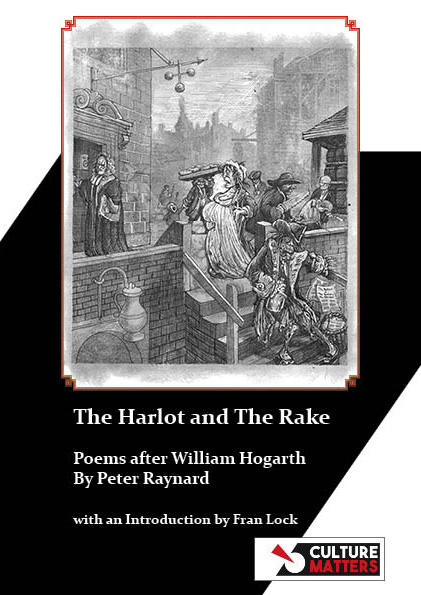
‘The Harlot and the Rake, poems after William Hogarth.’ Publication Day for My Debut Pamphlet.

I’m delighted that my pamphlet, an heroic crown of sonnets after William Hogarth’s prints, is published today by Culture Matters. It comes with a wonderful introduction by Fran Lock, and cover art by the Guardian’s Martin Rowson.

You can purchase a copy for £7.50 (plus £1.50 P&P, UK) at

https://www.paypal.com/paypalme/praynard/9 , or Worldwide https://www.paypal.com/paypalme/praynard/12

From Fran Lock’s introduction

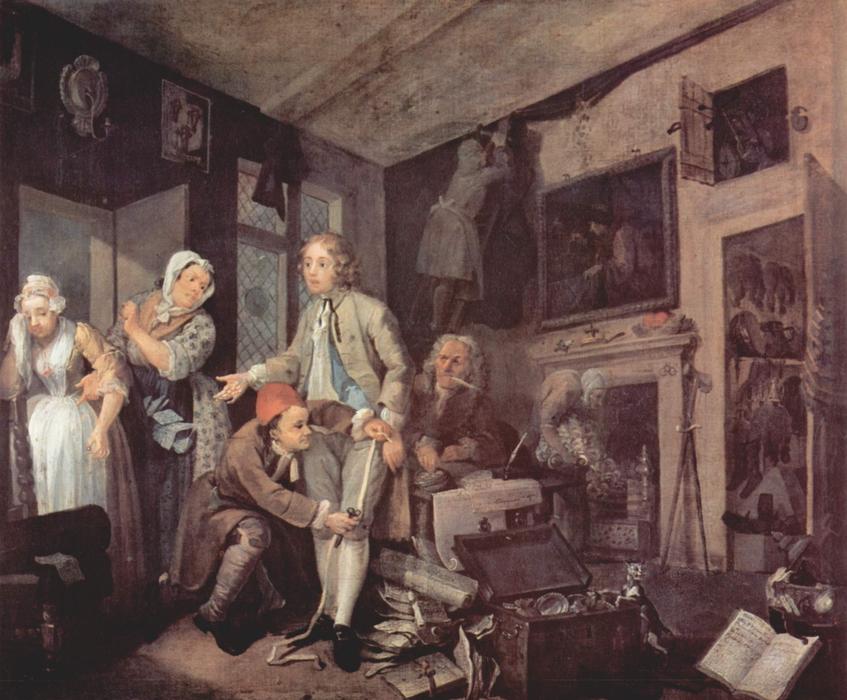
Peter Raynard’s heroic crown of sonnets after William Hogarth’s (1697–1764) of A Harlot’s Progress (1731) and A Rake’s Progress (1733) run the same gamut of moral and social concerns but bring a contemporary socialist sensibility to bear on the interconnected fates of Tom Rakewell and Moll Hackabout. Raynard uses the connected but very different downfalls of Tom and Moll to interrogate the complexities of ‘choice’, the notion of complicity and the limits of our sympathy.

The Heir

A rich Father dies, so a son’s life as heir begins.
Vanity’s the sling which Tom will throw family
chains from: his Father, a staid suit of a man
battened down by the clamp of God’s utility

mother weeping, wife with child warming inside her.
He will leave enough to oil their grief, but says there
is no need to pray. With old money, time does shun
less miserly ways ending troughs of emotion

such wealth held: when men lay idle no-one need read
King James’ bible. New clothes fit both size and stead
with enough silver to sail a ship. London ho!
with its trade winds blown by slave labour. God well knows

the streets men of off-note graze on. All benighted
in the Capital’s treasures of sin but not be sinned

“What Hogarth etched and engraved, Raynard successfully recreates in verse.
The comparisons of life in Britain today are there to be made.”
(Owen Gallagher)

“The tone Raynard manages to hit with his quite ravishing language and the use of the 3rd
person voice as witness carries you along like you’re on some kind of walking tour of the
grubby streets of the human mind/body leaving you eager to turn the next page, the next corner, to see what has next befallen Moll or Rake.”
(Martin Hayes)

Affrilachian Poetry: Breaking another Stereotype

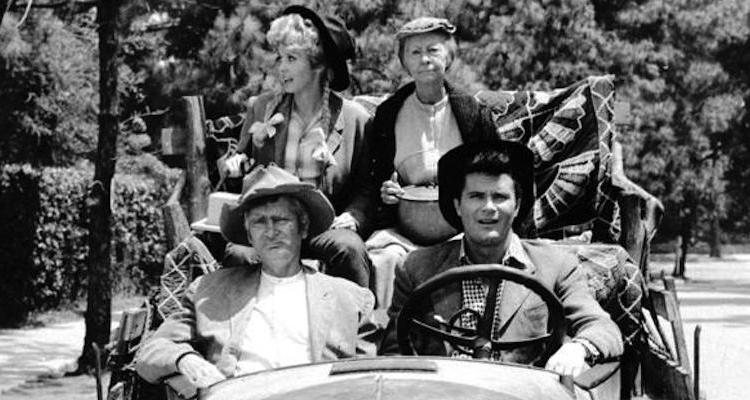
For those of you in the UK who were born in the 50s you may have seen the US TV show Beverly Hillbillies, embodied in the Clampett family, who became rich through the discovery of oil, as the lyrics of the theme tune demonstrated.

Let me tell you a story ’bout a man named Jed: Poor mountaineer barely kept his family fed. … and then one day he was shootin’ out some food … and up from the ground came a bubblin’ crude.”

For those of us born a little later, the 1973 film Deliverance was another gateway to the life of Appalachian poor. A film about some city men who want to experience the back woods and rivers of the countryside but bump up against ‘rednecks’ (‘squeal like a pig boy’- if you know you know), and most famously where one of the men plays guitar with a young local boy on the banjo who outplays him; known as the duelling banjos scene.

For those of us born a little later, the 1973 film Deliverance was another gateway to the life of Appalachian poor. A film about some city men who want to experience the back woods and rivers of the countryside but bump up against ‘rednecks’ (‘squeal like a pig boy’- if you know you know), and most famously where one of the men plays guitar with a young local boy on the banjo who outplays him; known as the duelling banjos scene.

In these programmes and films, Appalachian people are seen as uneducated, poor and unlawful. A lot of very good Southern gothic literature comes from the region, and Savanah Alberts has written a great article, ‘Hootin’ and Hollerin’: The Portrayal of Appalachians in Popular Media, which kicks back against the negative stereotypes.

What is most striking to me now looking back, is that all the characters were white. Yet, African Americans make up 10% of Appalachia (a long spine of mountain area from central Alabama, northeast into southern Canada). For a hundred and fifty years, African American Appalachians have had to fight just to be noticed. This began when the first celebration of emancipation in America took place in the small town of Gallipolis Appalachia, on the Ohio River on September 22nd, 1863.

Crystal Wilkinson

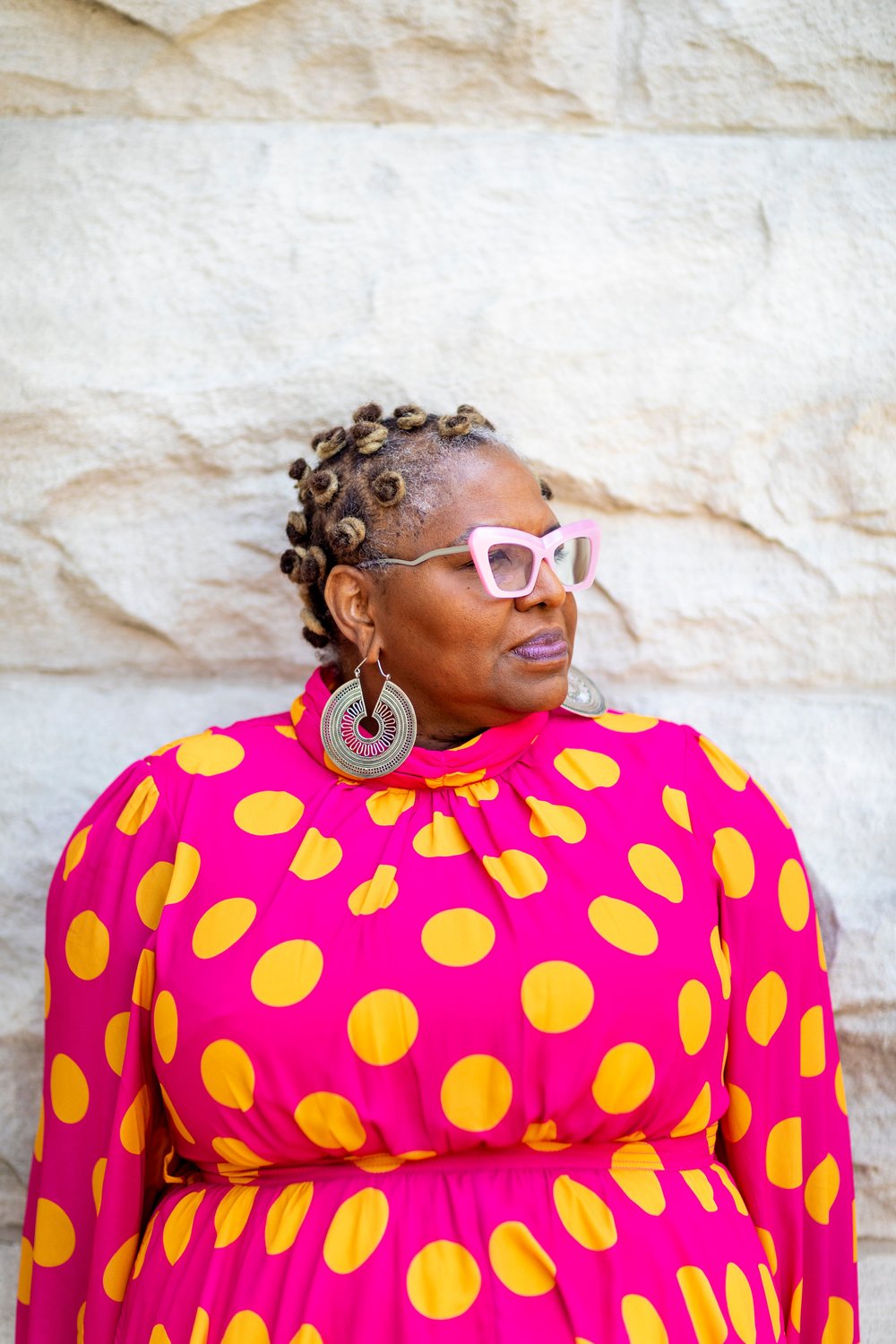
What filled this gap in my knowledge was reading Crystal Wilkinson’s collection Perfect Black, in which she explores her identity of being poor and black in Appalachia. In the opening, aptly named poem, ‘Terrain’, she describes herself in relation to the area.

“I am plain brown bag, oak & twig, mud pies & gut-wrenching gospel in the throats of old tobacco brown men….. I toe-dive in all the rivers seeking the whole of me, scout virtual African terrain sifting through ancestral memories, but still I’m called back home through hymns sung by stout black women in large hats & flowered dresses….All roads lead me back across the waters of blood & breast milk, from ocean to river, to the lake, to the creek, to branch & stream, back to sweet rain, to the cold water in the glass I drink when I thirst to know where I belong.”

Frank X Walker

Wilkinson is part of a poetry collective known as The Affrilachian Poets. The term Affrilachia was coined by fellow poet, Frank X Walker in 1991 to address the gap in knowledge of the African American experience in Appalachia. In his own collection, Affrilachia, the poem Statues of Liberty, conveys the hard life of his mother. ‘mamma scrubbed/ rich white porcelain/ and hard wood floors/ on her hands and knees/ hid her pretty face and body/ in sack dresses/ and aunt jemima scarves/ from predators/ who assumed/ for a few extra dollars/ before Christmas/ in dark kitchen pantries/ they could/ unwrap her/ presents’

The collective has being going for over thirty years and celebrated its 25th anniversary with the anthology, Black Bone. Other poets in the collective include, Nikki Giovanni, and Bianca Spriggs, amongst others. Here is a Book Riot article on seven collections from the collective. Finally, if podcasts are your thing, there is a great series called Black in Appalachia.

Featured on Planet Poetry Podcast

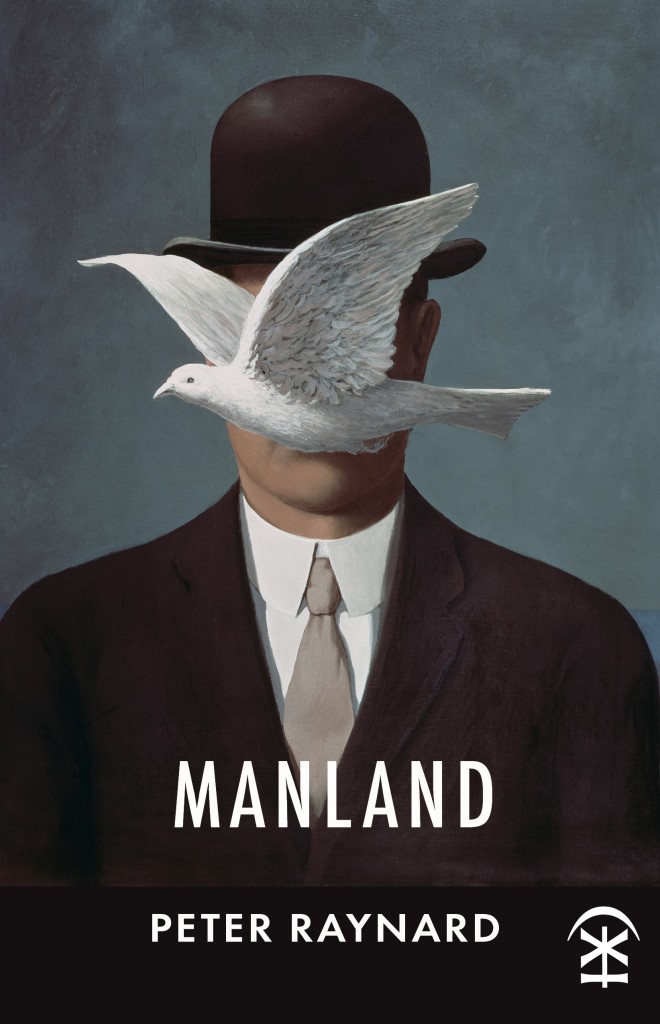
I had the great pleasure of talking about masculinity, class, disability and fatherhood with Peter Kenny and reading poems from my collection ‘Manland‘ on his and Robin Houghton‘s Planet Poetry Podcast. I hope you enjoy it.

Here is the link on Spotify:

https://open.spotify.com/episode/3S47nmrsdLCYQQMPvLrkQ8

If you don’t have Spotify you can listen to it on other platforms by going to,

https://planetpoetry.buzzsprout.com/

You can buy a copy of Manland from myself for £10 (incl. P&P UK only) or £13 (incl. P&P worldwide)

or direct from my publisher Nine Arches Press by clicking here

Featured Publication – Manland by Peter Raynard

My book Manland is the featured publication on Atrium. Thanks to Holly Magill and Claire Walker. You can get a copy here https://ninearchespress.com/publications/poetry-collections/manland

Claire Walker's avatar

Our featured publication for September and October is Manland by Peter Raynard, published by Nine Arches Press.

Peter Raynard’sManlandis a bold, brilliant and outspoken new collection of poems that scrutinise men and manhood, mental health, working class lives and disability. Aloud and alive with music, wit, anger and rebellion, this is an accomplished, politically aware and vital book.

Raynard is a skilled observer, and these razor-sharp poems document parenthood through the lens of a stay-at-home dad, attempt to tell the truth about men and depression, study our cultural and social and medical relationships with drugs and drug-taking, and lay bare the realities of life at the sharpest edges of society. By turns frank, painful and bleakly funny, this humane and brilliant book encompasses pride and prejudices, the bonds between lads and dads, the toxic pressures of masculinity and the way illness and poverty irrevocably shape lives.

InManlandPeter Raynard traverses…

View original post 362 more words

The Communist Manifesto: a poetic coupling by Peter Raynard

On the day of Marx’s birth, my poetic coupling of the Communist Manifesto

Peter Raynard's avatarProletarian Poetry

The following appeared on the brilliant Culture Matters site, edited by Mike Quille. The site is a great source and resource of working class and socialist culture.

A Poetic Coupling of the Communist Manifesto by Peter Raynard (with Karl Marx)

Counting in at around 12,000 words, can there be a more influential book with so relatively few words, than the Communist Manifesto? Today (21st February, 2018) is said to be the 170th anniversary of its publication. Written in a six-week rush, after the Communist League imposed a deadline on Marx, its take up has been phenomenal and its relevance remains today, if not more so.

Much is planned to mark the occasion, especially as it is also the 200th anniversary of Marx’s birth on May 5th. I have read the Manifesto a number of times over the years. However, as a poet, I hadn’t given it…

View original post 1,105 more words