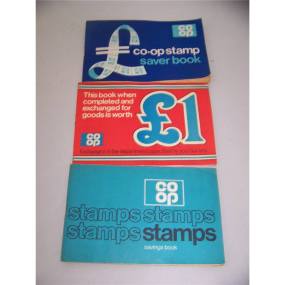
 When I was young, my mum used to collect stamps. We had a Co-op on the corner. I remember she would come home with the shopping and blue stamps, letting me stick them in to slowly fill the pages until you had enough for a dividend (the books are low value collector’s items these days). The Co-op’s stamps were a response to their competitors’ schemes, especially the catch-all Green Shield stamps, which were very popular during the 1960s and 70s. Its founder, Richard Tompkins went on to set up Argos. These were the precursor to modern-day loyalty cards that now involve you giving them information about your habits through your purchases thereby capturing your ‘loyalty’.
The stamps were first introduced in the United States towards the end of the 19th century; given to customers who paid in cash as opposed to credit. There are though other schemes, especially saving for Christmas, which is implied in Alison Jones’ poem, “Saving for the Hamper”: “There was more to it than I thought, the pulling together  of pennies/ in a small leather purse and counting them when no one was looking,/ the card left face down on the kitchen table, in anticipation of a stamp.” These schemes were/are targeted at those who may not have bank accounts, or a way in which they have enough extra money at the beginning of December. This was the case for the grandmother in this poem, “I did not see the strange woman/ who woke in the dark and went digging through her pockets,/ knowing she would find nothing more than ghosts and prayers.” The schemes are now fairly widespread, the latest being Toys R Us; this despite a number going bust, sometimes before the Xmas return to its customers, such as Farepak where people tried for years to get their money back without success. Pleasures change, whether it be a computer game, or as in our poem, “The sweetness of boxed dates was as surprising as summer rain,/ and now I know that hope was a wellspring beneath the ground.” Merry Christmas everyone, whatever your faith or time of the year it may be, at least when it comes to the concerns of capitalism.
Ali Jones is a teacher, and writer, living in Oxford, England. She holds an MA in English, focused on poetry in domestic spaces and has written poetry in a variety of forms for many years. She is a mother of three. She is interested in the relationships between place and personal, in terms of ancestry, the everyday, geology, folk lore and fairy tales. Her work has appeared in Fire, Poetry Rivals Spoken Word Anthology, Strange Poetry, Ink Sweat and Tears, Snakeskin Poetry, Atrium, Picaroon Poetry, Mother’s Milk Books, The Lake Magazine, Breastfeeding Matters, Breastfeeding Today and Green Parent magazine. She writes a regular column for Breastfeeding Matters Magazine, and blogs for The Motherload. She was the winner of the Green Parent Writing Prize in 2016, the runner up for the Mother’s Milk prize for prose in 2016, and has also written for The Guardian. Her poetry pamphlets, Heartwood and Omega are forthcoming with Indigo Dreams press in 2018.
Saving for the Hamper
There was more to it than I thought, the pulling together of pennies
in a small leather purse and counting them when no one was looking,
the card left face down on the kitchen table, in anticipation of a stamp.
There’s more to making a celebration than I ever expected,
the small processes of finding one thing to set against another
one thing to leave out, to make do without. The chill of the larder,
the echoes in the meat safe that I did not hear, stilted to lift it
from the reachings of hungry mice. I did not see the strange woman
who woke in the dark and went digging through her pockets,
knowing she would find nothing more than ghosts and prayers.
It was always better than I hoped, the old need keeping us strong,
the anticipation of cardboard boxes and shredded newspaper,
spam, Dundee cake, jellied fruits, Baxter’s soup and beetroot relish,
My grandmother’s cooking always tasted the best. At those times,
I think we had something else with us all along, in the way she worked
hour after hour, back bent beneath the heat, drifting between
house and garden, bringing everything in, currants and plums,
potatoes and peas, turning the soil, not a scrap wasted, ever.
The sweetness of boxed dates was as surprising as summer rain,
and now I know that hope was a wellspring beneath the ground,
as she worked, letting things in, immersed in the purr of the wireless,
bleeding carols through the air, making things possible, gathering us in.
 Fluoxetine and psychiatry didn’t help; it wasn’t until he was free of daily commitments, went on mirtazapine and saw a therapist fortnightly, that he slowly came back to us. He is now just at the beginning of withdrawing from the medication as it makes him very tired and sluggish. We will see how it goes. The reason I mention this, is that this year’s theme for
  The poet, Emily Harrison, in her brilliant collection, ‘
 It is seventy years since George Orwell’s Homage to Catalonia was published; his personal account of the Spanish Civil War. Now, the papers’ headlines carry the same title, as the people of Catalonia once again go against the Madrid government in a so-called ‘illegal’ referendum on independence. Irrespective of one’s views about the subject of the vote, the state response of violence against all and sundry was abhorrent. Scenes across the region, but in particular Barcelona where much of the media was concentrated, and lest we forget where a terrorist atrocity was carried out along the famous Las Ramblas, showed an elderly woman with blood pouring from her head, another with a woman’s fingers being broken, and many other such beatings.
 Matt Duggan’s poem, The Spaces Left Bare, reflects on such a protest during a stay in Barcelona; one that can be seen as a wider indicator of heightened capitalism and its effect on peoples’ ability to afford housing in major cities and conurbations throughout the world; something that echoes developments from San Francisco to
 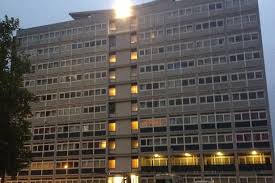 In 1980, the tower blocks of Hillfields that overlook Coventry city centre were mainly occupied by the working classes of West Indian and British origin. My friend had a flat on the eighth floor of Douglas House, a maisonette he shared with his girlfriend. We used to go round regularly, spending much of the night smoking weed and listening to reggae. One time, he wasn’t in so we knocked his neighbour and went through her flat, climbed over the balcony, shuffled along at one hundred feet up, and got in via his balcony. I still can’t comprehend the stupidity of that act now; just so we could find somewhere to hole up and get charged listening to Red by Black Uhuru.
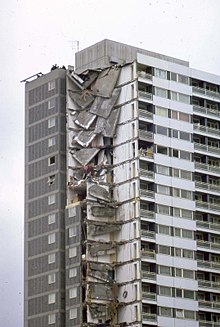 working class homes during the 1960s have a lot to answer for. Such housing was quickly seen as going against the way in which humans should live together. One early example was the
  Although not an Asian, the poet Nick Makoha and his mother also left the country due to the coup, becoming part of the Ugandan diaspora. In his haunting poem ‘At Gunpoint’ (and throughout his brilliant collection ‘Kingdom of Gravity’), he describes the terror of a country under military rule. “The Times will report of people/ being forced to volunteer to avoid/ being a body hiding in the toilet/ or a corpse folded on a table.” Beyond the terror of trying to survive, questions of what you should do in such a situation arise, that challenge your own identity. “A man can’t but look into his own imagination/ to solve the conflict of himself. Should I have been/ the doctor, or the poacher in the clearing, a mad man,/ or shepherd boys minding their business?” Like many of the diaspora,
  One of the darker but also more playful songs by Tom Waits is “
 But I also think that people are amazing in the projects they engage in. My son watches endless YouTube videos of everyday inventors – people who try to
 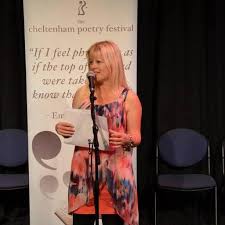 Anna Saunders’ beautiful poem “Befriending the Butcher’, tells the story of a working class life that furthers this idea that you never know what a person might be. “He spent his days dressing flesh/ preparing Primal Cuts and his nights – carving wood,/ reading brick-heavy biographies of Larkin or Keats.” And what you start will carry you into later life, “There we sat, …./ on chairs as dark and immense as the Wagner/ which poured into the room,” So think again when you’re at the checkout, at the bar, chatting with the postman or the butcher, for you never know what they may be building when they get back home and hide themselves away in the attic or the shed.
  My first taste of independence came when I had authority over the amount of ketchup I spread over my tea. It wasn’t like drizzling icing over a cake because this was the days of the bottle, where if you weren’t careful, huge globules would flood your ham, egg and chips; with the introduction of the
  But I have veered into the serious, which I’m trying not to do for once. This feature was prompted by the poet,
 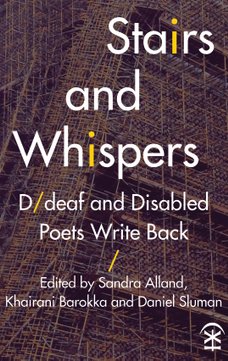 This was the launch of the anthology of “
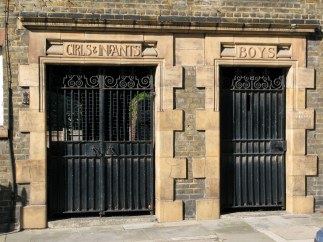 Back home in one of the bars in my local, there was no women’s toilet (this was the mid-80s). The few women who did frequent the smoke room, had to go outside, in all kinds of weather, to the single female toilet in the other bar. At the same time an old school down the road still had signs showing the separate boys’ and girls’ entrances. Society remains divided in many ways, not only in gender. One of the most obvious, yet at the same time, nefarious, regards consumer preference.
