Just over a year ago, Dean Saunders was imprisoned for the attempted murder of his Father. The family understood that Dean needed medical and psychiatric help as the attack happened during a bout of paranoia. He shouldn’t have been put in prison, where – as has been found – support was wholly inadequate. Dean electrocuted himself in his cell and died in January last year. The year 2016 will see suicides in prisons doubling from five years ago to a record level.
Image by Nic McPhee*
This is not the only problem that prisons face because of the cuts imposed by the government during its mania of austerity. High profile prison protests, although they are termed as riots, have taken place in a number of UK prisons over the recent past. There have also been vigils held outside prisons in support of transgender prisoners as part of the International Trans Prisons Day of Action and Solidarity. Prisoners and prison officers are in agreement, there are not enough resources, both human and financial, to support an overcrowded antiquated system. But as with most of the cuts made, it falls heaviest on those weak, vulnerable, and powerless.
Nick Moss’ two poems “Hauntings” and “Paddy”, shows a more humane side of the characters that are imprisoned, and the relations between them. In Hauntings, Nick talks about a cellmate who was recently released, although it “feels like a life ago”, and how they talked “Behind a metal door/Of all the fears of home,/Of life; of kids not seen for 10 plus years;/Adrenaline kicks and white lines crossed/And snorted; anticipation of cold beers/And family curses.” But on leaving they become like ghosts – “Carrying our souls in plastic sacks/We haunt each other for a while/Then flash away/Like shadows do.” And then there are the characters you never forget, trailing their history in their conversations and actions. For Paddy, it’s “Fragments of half-remembered rebel songs/Dentures, collapsed veins and yellowed skin/Longing for the days of/The ‘RA on the wing/And you/Vicarious/Behind the wire.” A great deal of hope is lost in prisons, coloured by the past and its repeat. But in Paddy, there is some left in the “Singing and rattling round the wings/Hoping a cracked-voiced chorus/Of the Wolfe Tones/Will bring down the walls.”
Nick Moss grew up in Liverpool but now lives in London. He was released from a prison sentence last year. He began to write poetry as a way of mapping his experiences in jail, and won Koestler awards for his collection The Skeleton Choir Singing, and his poem “Never Again?” In 2016 he was awarded a May Turnbull Scholarship, and had work featured in, and performed at, the We Are All Human exhibition at the South Bank. He performs regularly and continues to write because “if we keep shouting, eventually we’ll hear each other”.
Hauntings
It’s a week since Peter went home
Feels like a life ago
It happens all the time
One day here
In all our lives
The next day gone
Time up or shipped out
Either way
Another voice just echoing now
On the wing
We slip in and out of each other’s lives
Walk the landings, revenants
Carrying our souls in plastic sacks
We haunt each other for a while
Then flash away
Like shadows do
When the sun hits the yard
Yesterday we talked
Behind a metal door
Of all the fears of home,
Of life; of kids not seen for 10 plus years;
Adrenaline kicks and white lines crossed
And snorted; anticipation of cold beers
And family curses
Now you’re out again
Hoping for notoriety
But knowing you just face shame
Carrying our souls in plastic sacks
We haunt each other for a while
Then flash away
Like shadows do
When the sun hits the yard
Jail-pale ghosts
No more real to each other here
Than we are to our lives at home.
PADDY
Fragments of half-remembered rebel songs
Dentures, collapsed veins and yellowed skin
Longing for the days of
The ‘RA on the wing
And you
Vicarious
Behind the wire
The days when you first reached London
Full of love and crack and E
Days turned soon to sleeping in doorways
Robbing shops at night
Six month stretches
In Wandsworth and the Scrubs
But still the rebel
Halfway between Bobby Sands
And Elvis.
Now it’s a four year stint
A cup of the green every morning
Spice at the weekends
No visits
A letter and a postal order
Once in a while
Chance of a tag slipping daily away
Still singing
On the one road to your
Bridge over troubled waters
A sweet voice
Shite skin and life-bleared eyes
Rattling round the wing
On the cadge
For coffee, burn, sugar
Wondering where that first love went
After Holloway
She never came home
Dead, married, working for probation
For all you know
You’ll go home soon bro
A flat and a wife in Hammersmith
A son dealing weed
An overweight staffie
And not a chance
Of a chance
Fucked over
Self-sabotaged
People like us
If we have dreams
The dreams end up in shop doorways
Under cardboard
Getting pissed on by strangers
Til they piss out our flame
And our legacy becomes
Shite skin and life-bleared eyes
Passed down to daughters and sons
Who carry failure in their genes
While trying to avoid
Outright defeat in a rigged, fucked game
Singing and rattling round the wings
Hoping a cracked-voiced chorus
Of the Wolfe Tones
Will bring down the walls.
*Image by Nic McPhee
 Such a journey shows the continued fragility of the situation in the Balkans since its protracted war in the 1990s. In Katie Griffiths’ poem, A Lack of Minarets, she takes a journalistic eye to describe a particularly iconic moment in the war, that of Mostar and the destruction of its historic bridge. “From a distance something is wrong,/a skyline tampered with, hard edited./As the bus coils down the mountainside/into the basin of Mostar.” The city was a main route for refugees on their way to Split from Sarajevo. “This is the home of the dispossessed,/shunted like marbles from zone/to zone, who pick their way/past commandeered cars/and makeshift kiosks sprouting/at odd corners to replace/shops that once packed the town.” The city has since been rebuilt, which included restoration of the bridge to its original design. It took nearly ten years. Still, as with many wars, the return and rehabilitation of its citizens will take many more years.


 For those of us not able to do so, we are very lucky to have the likes of multi-talented Jemima Foxtrot who in a poem from her debut collection, All Damn Day, does what a lot of great poets do, allows us to dream. She takes a somewhat Manichean outlook that fits with the division we all feel in what we would like to do: “A half of me wants to exist in a tepee,/breed children who can braid hair and catch rabbits./Drink cocoa from half Coke cans twice a year/on their birthdays, the edges folded inwards/to protect their sleepy lips, cheap gloves to buffer their fingers,/precious marshmallows pronged on long mossy sticks.” However, such ‘rural and romantic poverty’ does not always fit with present circumstance, so we dream elsewhere. “If I were rich/I’d eat asparagus and egg,/in my Egyptian-cotton-coated bed, for breakfast. Bad. Ass./You’d find me in my limo, got a driver called Ricardo,/wears a nice hat. That’s that. Bad. Ass.” And in this dream we may travel to such places as Dorling suggests, but Jemima insightfully shows what lies at the heart these ‘hypocrisies’ we sit in, and how a division of one half or another can lead us all to a false sense of what it is we are after. “Capital has split my dreams in two /like a grapefruit./And I want both. And I want both.”
 It is essential to make the reader believe there is but one type of working class person; they can be of a different age but they must look related, ideally inbred. The main type will be a saggy clothed, got a loyalty card from Sports Direct, Union Jack pale-faced male who claims he can trace his ancestors back to Neanderthal times, which in reality is just before the Second World War when his great granddad ran off with a Polish woman – but don’t talk about that obviously. Always have them accompanied by a muscle shaped dog, preferably tight-leashed, with a 70s punk rock sell-out dog collar, white drooling jaw, and a ravenous appetite for the calf-muscle of an outsider, which is basically anyone born within a mile of their ends.
 With females, try to find a young heavily made up woman in her late teens, early twenties at most, with a neck tattoo and a ciggie hanging from her botoxed lips. She must be pushing a pram, if possible with a brown skinned baby inside wailing its lungs out. Even better if she also has slightly older offspring biting at her heels.
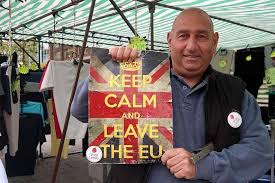 old medieval days, even though many of them died before the age of five and none of the adults had their own teeth; why do you think they like soup so much? Then move on to Brexit and listen to the range of opinions on this newly found independence, from ‘we can now take our country back’ to ‘we can now send them back’. Pretend to take copious notes at this point to induce a feeling they are finally being listened to.
 This sets aside the history they have lived through and the people they became because of it; a World War to monumental technological change from the TV to virtual reality. They have so many stories to tell and be told, and Beth McDonough’s eponymous poem ‘St Fergus Gran’ does just that. “Great Gran lived in weighty old pennies, dropped/from bonehard hands to my fat-cup palm/just before we’d journey west.” Like many stories, hers is one that is handed down the generations, “I never knew of her second sight/All those deaths, and how she kent/her brother lived, when the telegram said not.” Their lives weren’t a straightforward one of getting married and having children; war put pay to that. “I met the East End Glasgow lad she’d/fostered in the war, with all his tricks, his walk/to her from the west coast up to Buchan.” Here Beth tells us a little more about the poem:
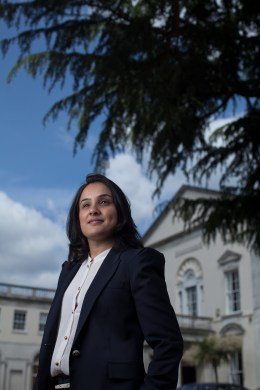 therefore have very different connotations. Our poet today, Professor Aisha K. Gill [
 In more wealthy countries people are also pressured to move. For example, because of past policies of selling off council housing,
  Nonetheless, whether a refugee who has left their country, or internally displaced person, the majority of people still call home the place they were born. Joe Horgan’s poem, “The Maps You Took With You When You Went,” tells of the place he was born, Birmingham and the situation facing many working class people during the 1980s. The irony being that many came to the city, as they did to my own home of Coventry, from Ireland and Scotland, only to see a number of their own children leave; some went back to Ireland during the Celtic Tiger bubble, whilst others dispersed to various corners of the country and abroad.
  I know that saying children are remarkable, is not a particularly remarkable thing to say. Nonetheless, I see it with my own sons; how they shrug off an argument they may have had, or in my older son’s case, how he recovered from severe depression. And I was reminded of this when seeing young boys smiling as they jumped into a water filled bomb crater, a splash pool of war, in Aleppo.
 advancement in technology and so called smart bombs, civilian casualties are always much greater in the type of modern warfare we see in Syria.
  Reuben Woolley’s poem ‘all fall down’ poignantly captures the tragedy of war, “where/children sang in cinders”. As Michael Rosen did previously in his poem, ‘
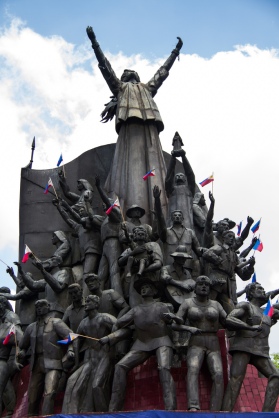 Power is ubiquitous and multi-layered. Just look at the range of power lists; from political figures, to those in the media,
  As individuals, it is quite easy for us to feel powerless and Hilda Sheehan’s poem The Speaker forcefully captures this sense through the metaphor of noise. “The Speaker//is an electric vulture//….It is/a god of dropped insects/from a carriage clock/or wasp holder/left to go on-off, on-off/riddling the town’s ears/from where it came.” This barrage of messages – part of this idea of influence, of soft power – is now at a ‘volume’ we cannot control. “Inside a speaker is Hell -/a radio of church-like/persuasion/from four walls a prison/of persecutors of/television visions/crackling away in the gutters.” It is not that easy to turn things off. But this powerless feeling of not being listened to is what brings people together; we see it with Black Lives Matter, with the Occupy movement, and the Arab Spring protests. There is both a soft and hard power that individuals can exert. One that is more than just a nudge to those in power. One that is a shout so loud it cannot be ignored.
  Like Father, like son. Well, when your father is Donald Trump, those footsteps should not be ones that you follow. But when nurture combines with nature, Junior treads where he has been fomented. DT Junior,
 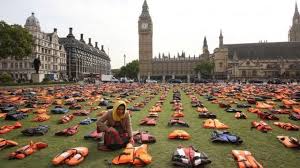 Those who came from another land, whether back in the day, or last week, are the currency of conversation and policy debate and inaction, at the present time. They are used in debates about Brexit, the war in Syria, lone terror attacks in the US, co-ordinated ones in Paris and Brussels. They are said to be the reason for Angela Merkel’s weak results in last week’s election in Germany,
  Matt Duggan’s poem “Voices from the Charcoal”, captures these fluid, turbulent and fateful times; “fishing boats once floating saviours for the persecuted/now we build walls from those we’ve liberated; /Cutting off our own ears /awakening a poisonous serpent for oil.” The powerful extract economically from other countries, through war for oil, then leave a mess that goes beyond the borders they originally set post-WW1. Matt reflects this marrying of history, “Those dusting jackboots are stomping/on the gravestones of our ancestors,/though we’d fill a whole lake with blood oil /we’d starve our own children leaving them to die on its banks.”
  Proletarian Poetry