We are coming to the end of the school year; a year full of turmoil instilled by a Government who feels it needs to do more than tinker with the education of our children, treating them more like guinea pigs in an ideological battle to send us back to Victorian times. Both education Secretaries (Gove and now Morgan), seem to want a war with teachers with the proposed imposition of academy status for all schools (thankfully withdrawn), new SATs for Year 6 students, and the madness of testing those under the grand old age of seven.
Governments still struggle with mass education; with classes of upwards of thirty children, herded together like cattle despite their different needs and abilities and family circumstance, all with the sole intention of getting them to pass a minimum of five GCSEs. I know from personal experience with my son that this can be really damaging to their future; that if they don’t attain these grades they feel like a failure. It drains the appetite of learning right out of them. All done without the seeming understanding of both what the teachers need and what therefore is good for the children.
 So, what then of the children both in school and then when they leave. Nadia Drew’s poem, “Like Mother,” shows us the variety of characters that can make up a class. “The flimsy, thin, sterling silver skin stinging slaps/The back of the class chatting up robbing from the stock cupboard smothered laughs/Julie, longing lashes, soft, leather wrapped in Frank/Debbie, bitty little. Biting lippy, outside the chippy/Gob full of fizz bomber jacketed hands jammed in high/Up in arms, sticking out like chicken wings, flapping/Clucking fuck this and fuck that.” Nadia poem looks at this from the perspective of a young woman’s rite of passage.
Having two sons of my own, I have felt that society is more set up for young boys; team sports such as football, rugby and cricket, and then when older the pubs with their own teams, are gendered to accommodate male activities and leisure. There is far less opportunity for girls and young women, “uniformly/Stubby short to skinny strip/Hanging from the tide marked neck/Now noosed round a reflection in a dressing table mirror/A face painted with disgrace/With no-one waiting till you washed it off/Full term came and went for some /An unmarked summer break becoming an endless spiral-bound roundabout/A mid-afternoon, windblown, swinging groan/With no bell ringing time to go home.” And then the child becomes a young adult, out of their teens and into a great open space of uncertainty. It is meant to be a time to be free to achieve those goals that were drummed into them.
Up to twelve years in an institution, getting them ready to earn and contribute, whether to parents with whom they still live because there is little affordable housing, or to society through paying taxes. But sadly, this is not for all. For example, not everyone can go to University, although the political mantra and investment has always been that this is what you should be striving for; the nobility of social mobility. “All your mates had to stay in evenings/Facing days framed by pram handles/And pacing familiar avenues/Dangling struggling little girls/Heavy with hope from the hip/Where you all used to stand about strangling laughs/Yanking tangles, swapping bangles.“
‘Everybody can be somebody’, is the Adidas-like mantra of my son’s school; well it all depends on how you define and measure what a ‘somebody’ is and whether you go on to repeat the life of another, ‘Like Mother’.
Nadia Drews was born in San Francisco and brought up in Greater Manchester. A Socialist mother with a suitcase of vinyl recordings by Leadbelly and Howlin’ Wolf and a well-earned Young Democrats badge led her to revolutionary politics and eventually to sing and write songs about changing the world first in the bedroom and then on stage. The stories of working class lives in the songs grew into plays and she left Manchester having written and co-produced ‘I Love Vinegar Vera (What Becomes of the Brokenhearted)’ based on the local legend of a woman that each Lancashire town seemed to have. Having moved closer to family roots in the East End of London in 2011 she began to perform poetry at the Poetry Cafe’s Poetry Unplugged night and then to become a Farrago Poetry Slam champion. Through this she has been able to start to find the ranting voice she was unable to achieve in the 80s. Thirty years of repressed rhymes mean she writes long poems…but she reads them fast.
Like Mother
Settle down, bottom set, poor concentration, what do you expect?
Failed tests, predictable results, staying behind red lines
Life viewed through windows in sticks, drizzling with tears of spilling piss
Clinging like dribble to chins of grizzling kids, you didn’t do what the other girls did
Tossed like crossings out on screwed up scraps
The Battersbys and the Bickerstaffes
The flimsy, thin, sterling silver skin stinging slaps
The back of the class chatting up robbing from the stock cupboard smothered laughs
Julie, longing lashes, soft, leather wrapped in Frank
Debbie, bitty little. Biting lippy, outside the chippy
Gob full of fizz bomber jacketed hands jammed in high
Up in arms, sticking out like chicken wings, flapping
Clucking fuck this and fuck that
Flicking V’s, not free to fly
Leanne, lanky, shrieking streak of ‘Miss!’
Witty, eyeing, disguised lined rims hidden behind
Sharp as a knife flicked fringe
Shading every ‘shameful’ cringe
All subjects of so much rigid invigilation
Tiddy-tipped, spit slippy, wetly dreamt of unplanned examination
Cupped like slurped chipped china cups spilled in saucers of your warmth
Held in belched petrol smells, cider swilled with fry –ups
Eyeing up, weighing out, measured in points for their pleasure
Stiff inches of sin counting you on scribbling fingers
Summing you up, in and out scratching walls
Hurtful mis-spelt spurting words
Running out and leaving
Stale-tasting tell-tale stained pockets of cock-eyed explanations
After all those years of teaching you lessons
Never reading your need to know
NO …..NO…..NO
Minus one of them speccy gets noticed you go
Woe betide you’d ever forget it-they checked, uniformly
Stubby short to skinny strip
Hanging from the tide marked neck
Now noosed round a reflection in a dressing table mirror
A face painted with disgrace
With no-one waiting till you washed it off
Full term came and went for some
An unmarked summer break becoming an endless spiral-bound roundabout
A mid-afternoon, windblown, swinging groan
With no bell ringing time to go home
Down the dole to drum on doors hard
Then a card and a ticking clock
On the Verdigris, smocked copper bonnet, factory top
Making dull days, patinaed with wages
Catalogued to pay for life in reasonable instalments
24 or 36 weeks
Outfits in drips to disguise your defeat down the pub
Atmosphere thickly misted stinking with chart hits
Spewing what was up supped in the gutter
Up against a throbbing, glugging fug
Filling up belly-aching gaps, swallowing laughs, tapping off happiness
Getting ribbed, coins banged in avoiding trouble
Chasing, knocking back, seeing double
Others would try to get in the club
The price was too high for you to pay
And you were too old to run away again
All your mates had to stay in evenings
Facing days framed by pram handles
And pacing familiar avenues
Dangling struggling little girls
Heavy with hope from the hip
Where you all used to stand about strangling laughs
Yanking tangles, swapping bangles
Mixed up ten pence teeth sticking sweet dreams
Twisted in bags ripped from string
Escaping tear away paper thin lips
Skinned suckling pale pink dissolving flying saucers
Sore ochre cracked with sleeping smiles inside
That mithered mothers now bribe their daughters with
Outside Claire’s shop beyond the school gates when you were meant to stop
You paid your debts to Great Universal
Ticking the box to say you would no longer like to be a representative
And walked out in a patent leather patiently anticipated excellent value for you shoe
Through the front door this time
With your mum’s packed away sadness and matching set of unused suitcases for all occasions
Full of qualifications to be somewhere else
And you slipped into the empty seat on the empty bus
Like a popped in pear drop from a shared quarter
Passed between mother and daughter sat on the sofa staring at the blaring telly
Yelling jokes at soaps her stroking your hair and hoping.
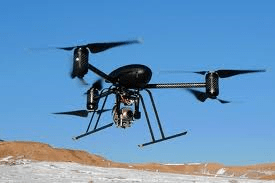 Hungry? No problem, look to the skies. Well, at the moment only if you’re a student at Virginia Tech where Google has permission to test the delivery of food to its campus by drones. The supplier is Chipotle. Burrito anyone? Yum, yum. Similarly, Amazon in the UK is working with the government to test drones to deliver small parcels within 30 minutes of purchase. It won’t be long before they’ve delivered something you only thought about buying. And there is more than one case of men literally ‘caught in the act’ by a drone camera when having paid sex. The drones are often operated by private individuals. The laws on private drone use are in their infancy, if not embryonic.
 Poets have been aware of this, exposing the darker side of such developments. Josephine Corcoran wrote a sonorous poem about them, and here Jennifer L. Knox has done the same with “Drones”. She takes us beyond their use by governments: “Scientists originally built the toy to murder people/in other countries, and now rich people in this country/want to buy them.” And in typical fashion, she mixes humour with the dark side of what the response will be from people who see them imposing on their privacy and human rights. “I can’t wait to kill one: shoot it with a shotgun, shoot it/with the hose, wing it with rocks,…/Rich people will be outraged.” She gets to the heart of our deep frustration and anger at the unhindered development and use of new technologies by powerful interests. (more…)
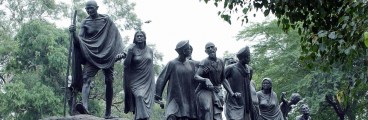 However, there are times when there needs to be protest even when the possibility of positive change has passed. A voice, or a mass of voices, coming together show the powerful in question that although they may have got away with it this time, a battle does not win a war. One of the most powerful forms of activism is marching. Marching comes in many guises outside of protest; from the obvious formation of armies going to battle, through to pipe bands. But as a form of protest the sight of hundreds of thousands of people, a great swathe of banners and heads pictured from above is a powerful image with a powerful message. Notable marches include
  The UK has a long tradition of such marches, most notably the Jarrow March in 1936, in protest at unemployment and poverty in the North East. Previous to that was the mass trespass onto Kinder Scout in the Peak District, which is portrayed by the poet Peter Riley in his ‘
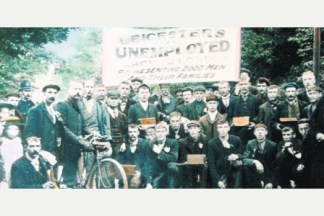 Leicester city.” But nonetheless they were successful in laying down a marker (in one case a physical one with the artwork of seven windows at Leicester’s St Mark’s Church, called

 The supermarket giant Tesco did a funny thing recently.
 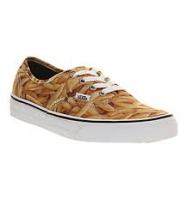 One of the contradictions of capitalism, or should I say one of its cons, is the issue of choice. On the ugly face of it, your choice of purchase, whether it be an earring or a car, is endless. You can get a seeming boundless range of designs; for example, when researching chip vans for this feature, I came across the popular shoe brand Vans, and yes, you’ve guessed it (unless you haven’t) was an image of a pair of shoes covered in chips – you can also get a pair with pepperoni pizza design. But the contradiction in all of this, is that as consumers we tend not to go outside our comfort zones. We wear remarkably similar clothes, eat a small range of foods. Hence trends emerge, promoted by social media, the most recent of which sees half the western world running around playing
  Small family run businesses and trades have been squeezed from such practices for many years. But I think one of the businesses that hasn’t been corporatised in this way, is your fish and chip shop (with the exception of Harry Ramsden’s in the UK, which is now a series of franchises). Lorraine Carey’s nostalgic poem, “The Chip Van,” takes us back to a time when such food outlets were more ubiquitous.
  Yomi Sode’s poem ‘The Rainbow Club’ highlights the end point of this type of child sexual exploitation. As Yomi explains:
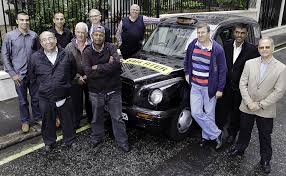 When I used to wait for my sons to come out of school, I was one of only a few men in the playground amongst the mothers and other female carers. There would be the ‘odd’ stay-at-home father like me, a granddad or two (usually with the wife), but the other men were mainly Bengali taxi drivers, whose shifts gave them the flexibility (or burden) to pick up their children. A
  Poets have often taken an interest, as they do with most things, in taxi drivers.
  and we don’t know, he/says, why it is so tall. Just because it can be.” He then goes on to speak with pride about his son who’s in the army and is responsible for driving a General. This allows our passenger to imagine a link to the yacht and a relationship of power. “I imagine, as we go, the son, inside Mirabella’s/mast, leading his General by the hand.” This is a fascinating short poem because it leaves a lot to the imagination, allowing us to drift with our thoughts the same way a taxi driver must do when waiting on their next fare.
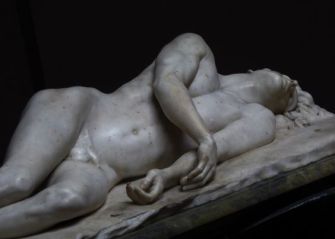 I can’t imagine there to be a poet who so enraged those in authority, that long after his death, his naked statue would have its testicles removed. Yet this was the lot of Percy Bysshe Shelley. As the late Paul Foot explains in his classic book,
  with his poem here, Stabberjocky, holding power to account in the most surreal and satirical way. This reworking of Lewis Carroll’s
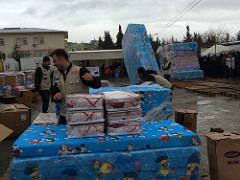 Well the European Union is to lose a member. Maybe it will lose other members. Maybe it will be the end of the Union. What it won’t make a difference to (at least in positive terms), are the crises from Libya to Afghanistan that see thousands of refugees attempting to come to European shores. I am not going to get into the reasons for this fracture in European politics, which is as worrying at it has been since WW2. But one reason is not immigration. I don’t mean people didn’t vote with immigration as an issue, what I mean is that, whether there is an EU or not, it won’t make the slightest difference to these war torn people. And that is the shame of the referendum, which in my opinion should not have been undertaken. It was an ego trip of Cameron to have a legacy; well he’s got one now, but like Blair, it’s not the one he wanted.
 The other sad irony of the decision to Leave is that the United Kingdom couldn’t be further away (in European terms) from the influx of large numbers of refugees. Added to this tragedy has been the fact that this has been left to the most crisis ridden country in Europe, Greece, to deal with it. Emer Davis shows us first-hand the situation facing Greece during this time in her poignant poem, Transient Lives. (Emer was selected as an asylum expert to assist the European Asylum Support Office (EASO) with the EU Relocation Programme on Lesvos Island). “Lesbos/Home to ouzo/And olive oil,/Cobbled lanes and wooden balconies,/The rambling stillness/Of the petrified forest,/Burnt skin trembling/Among dead trees,/We tremble in the evening sun/Re-telling the stories we heard,/And watch an old fisherman Bashing an octopus against a wall.”
  Proletarian Poetry