Inside Out by Zeina Hashem Beck

The late great Liverpool football manager Bill Shankly had many famous sayings that are repeated to this day. The one that struck me growing up was, “Some people believe football is a matter of life and death, I am very disappointed with that attitude. I can assure you it is much, much more important than that.” Although I have followed football all my life, I have rarely, if ever Palestine-Logo-Bigworn my team’s shirt. For one, I didn’t want to get beaten up by any wayward away fans; and two, I have never liked the tribal allegiance element of the game nor the violence that lies behind it.

Football is also not devoid of influencing national politics to the point of igniting armed conflict as was the case in 1969 between Honduras and El Salvador. The political map influences where teams will play; most notable being that the Israeli national team and its clubs compete in Europe. The Palestinian team was only recognised by FIFA in 1998, but has great potential despite the political and social conditions that surround it. I bought the Palestinian football shirt, as a small act of support when at the large protest march against the war in Gaza last year.

Zeina's PhotoOf course, football is a passion among many people in Gaza and the West Bank, and Zeina Hashem Beck puts that into stark perspective in her heart-breaking poem Inside Out, where she paints a scene of Gaza under attack during the World Cup in Brazil in 2014. “my friend’s mom in Gaza is cheering/for Brazil and Holland/all that orange/burning almost/a sunrise all that/smoke”. Zeina goes back and forth from the football to the terrible scene unfolding, “there’s an old woman/who dies holding/her spoon waiting/for iftar/which comes but so do/the rockets/and the news/Brazil loses to Germany 7-1”. The poem continues without punctuation reflecting the relentless nature of the Israeli bombardment, until the end of the tournament when, “a player kisses a trophy/his wife his son/a mother/kisses a dead child/grief inside out/is resistance” Like Laila Sumpton’s poem ‘Morning Prayers’, Zeina juxtaposes the everyday events we take for granted, such as watching a football match with the tragic situation in which Palestinian people live, in a wholly different type of everyday event. (more…)

Monochrome by Angela Topping

Family in front of TV 1

Image by Paul Townsend*

When I was about five or six, towards the end of the 1960s, my parents and I visited my gran in Gateshead. My gran had lived a tough life; she had seven children, and her husband died two years after her last child, my mother, was born. The same week she was born, her twelve year old brother died and another sibling didn’t live beyond five. These were the 1930s and much like that conveyed in Angela’s Ashes. My father’s family were similar; ten born, only five surviving to school age.

When we went into her high rise flat, she was sat in the small living room, where there was a TV in each corner. I was so impressed that she had two TVs, but puzzled as to why they were in the same room. When I asked, “Why’ve you got two tellies gran,” she said in her usual matter-of-fact way, “One’s for BBC, and one’s for ITV.” Somehow or other, she had found two broken TVs that served her purpose. She wasn’t bothered about BBC Two. You still didn’t take TV for granted in the 1960s, and there were great events to marvel at, most notably the moon landing in 1969, when Neil Armstrong stepped out onto that studio set in Hollywood and said those famous words.

OLYMPUS DIGITAL CAMERA

Angela Topping gives us a snapshot of this magical, black and white time in her poem Monochrome. “A candid photograph, a moment caught/in black and white, nineteen fifty nine,/a council house estate interior.” We have a picture within a picture, of a father with his camera, who is watching his daughter and her friend in front of a new television, “in rapture where they lie,/on bellies, heads propped up by hands, enthralled,” You can see that he embraces new technology, and bringing the TV home, “feels some pride in its unveiling day.” There is both a sadness and great sense of love conveyed in Angela’s touching poem; this was a time when the rebuilding after the Second World War and the austerity of the 1950s crossed into a new era, more positive, liberal, and where the screens that are so prevalent today, were just beginning to be turned on. (more…)

Work by Anthony Costello

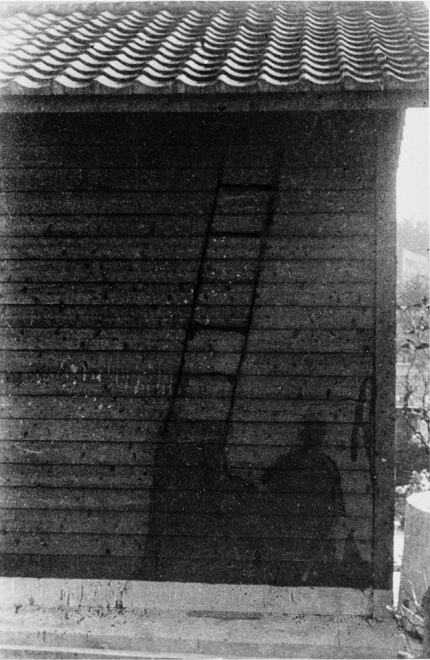
shadow of a soldierHow can you have a shadow without the subject? The picture (right) is the shadow of a Japanese guard taken by Matsumoto Eichii only a few weeks after the bombing of Nagasaki. The image is the burned-in imprint of the man with his ladder and sword at his side. We have just marked the 70th anniversary of the bombing of Hiroshima and Nagasaki in August 1945, and it is images such as these that remind us of such horrors.

The photograph of the soldier was part of an amazing exhibition, Conflict, Time, Photography at the Tate Modern in London last year. I was fortunate enough to be on a poetry course run by Pascale Petit at the gallery that used the images from the exhibition, to write poems. Many great poets have drawn on classic paintings for their poetry; Pascale herself drew on the life and work of Frida Kahlo in her TS Eliot shortlisted collection, What the Water Gave Me.

IMG_20150607_203342-2Anthony Costello has taken this approach in his poem Work, which is inspired by Ford Maddox Brown’s painting. The pre-Raphaelite Brown was fascinated by the social make up of Victorian London, with the noble ‘navvies’ (“like my labouring Irish ancestors/amongst the soil, shovels and lime”), the orphaned children and poorest (“flophouse inmates, bouncers, ragamuffin children”), and upper classes (“the gentlemen-flaneurs,/the yellow waistcoats and red bonnet Gentry”). In a single painting, a single poem, we have the Victorian system of work and hierarchy – ‘a place for everyone, and everyone in their place’. (more…)

Redcastle Furze by Julia Webb

The teenage years are those where you spend most of your free time outdoors. Having spent the first twelve of them corralled in parental protection, you are finally allowed out with your friends. And what does society have to offer you? Well, not very much. You can’t go to the pub (not until you’re at least five foot ten with a fake I.D.), the gym isn’t exactly welcoming or cheap, and having been in school for the day, ‘organised’ activity has limited attraction.

teenager walking 1

image by amanda tipton*

This is why teenage children have always been great walkers. With nowhere to go they end up wandering aimlessly into town, looking furtively at other girls and boys, going into the shops and not being interested in very much. Then when that gets boring they go further afield; into other areas where they find ‘secret’ places – a disused shed in a wood or allotment, deserted school playground, or a house party on the other side of town, where they finally get to experiment with all the things they are not meant to, both human and chemical. Before facing the long bedraggled walk home to that porch light which they hope signals their parents are asleep and not waiting on the sofa in the dark.

julia webJulia Webb’s poem Redcastle Furze is a wonderful evocation of one those journeys; on this mini travelogue you will mix the urban with the rural, “down St Martin’s Way/under the crags/and/overhangs/of the industrial estate/to the place where yoghurt pots/spill their raspberry guts across warm black tarmac.” You will encounter waste alongside nature, “past the tip/spewing doorless fridges foetid carpets/then on down the hill/past/the Edkins/the Snows/and the Tockers    /and into the woods    /through the thick smush of lilac.” And not forgetting the famous landmarks, “spy hill where only the bravest climb,” “helicopter tree corner,” “Witchy Waghorns,” past “the old police house.” As is often said in another context, ‘you couldn’t make it up’. The detail is magical and clearly unforgettable. (more…)

Sofa Surfin, and Pound Shop Politics by Mike Jenkins

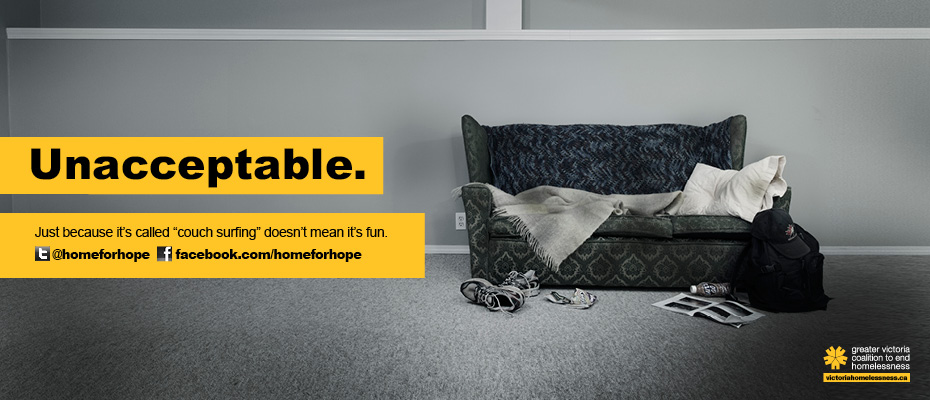
sofa surfinWhen I was eighteen and hanging out on an estate back home doing not very much, I had a friend who always carried a rucksack round with him. We’d be round someone’s flat and he’d stay there when we all left for the night. I didn’t think much of it at first, but gradually as I got to know him better, I found out he was homeless, aka a ‘sofa surfer’. Odd nights, when his mother wasn’t drunk (there was no known father), he would stay with her, the rest of the week, wherever he could find a friend. He didn’t come from a stable background, like I did, but that wasn’t why he was homeless.

It is a common misconception that homelessness is down to the individual’s misfortune, whether self-inflicted or not. Yes, there are such factors as drug misuse, crime, family breakdown that result in the person becoming homeless. But it doesn’t mean they have to remain out on the streets, or more commonly and less obviously, in B&B accommodation or a friend’s spare room or sofa.

mike jenkinsMike Jenkins’ poem Sofa Surfin, written in the vernacular, shows how easily it can be for many people to end up with nothing. “Ee’ve kicked me out/it woz a stewpid argument/’bout a juke-box/’Chirpy Chirpy Cheep Cheep’.” And with homelessness comes bureaucracy, “Ever tried ridin the waves/of forms an offices,/find an answer in impossible paper?/Ever tried goin under,/I mean drownin alive/below all yewer memrees?” People find different ways to deal with their situation, as Ian Duhig’s poem Jungle showed in a previous feature on PP. But often it can end badly, “I stood on-a board/f moments before bein dragged down/t the subway, like an underwater tunnel/where I could ardly breathe.” Sofa surfin is the hidden away, unaccounted for, story of homelessness, where friends and distant family are called on because of the lack of affordable housing, a cruel benefits system and the exploitation of landlords. (more…)

Factotums by Fred Voss

The author Toni Morrison began writing because of a void she felt in the books she read, even in the time of rapid change in the 1960s. “Things were moving too fast in the early 1960s-70s… it was exciting but it left me bereft…. There were no books about me, I didn’t exist in all the literature I had read… this person, this female, this black did not exist centre-self.” I have felt this myself with the majority of the literature I have read over the past thirty years. As I have commented previously, the working classes, irrespective of gender or ethnic background, have rarely been portrayed in anything but overly dramatic caricatures. It is of course why I started Proletarian Poetry, but it also haunts my own writing as I try not to mimic that which I am critical of.

Both writers and readers will question who their writing is for. I think both will initially say it is for themselves; I know I write to help me think clearly and improve my mood. But of course we also write because we feel we have something to say, a unique take on something (if the writing is good that is) and then possibly we are writing about a group of people who are either neglected in literature or misrepresented.

Fred02This was certainly Toni Morrison’s reason, and also in the case of Fred Voss’ poem, Factotums, where he tells of a workmate who ‘catches’ him reading, so he turns, “Bukowski’s Factotum/to the side so the machinist can’t see the cover.” The machinist himself has only ever read one book, “He was probably forced to read Of Mice and Men in High School/told how important it was/made to hate it/like castor oil.” I know with my own sons, they often feel the same way about books being foisted upon them at school. (more…)

Dark Nook by Richard Skinner

My grandfather made his living in the water; he would often get a knock at the door from the police to say there was a body floating in the Clyde. Being a strong swimmer his job was to fish the poor person out of the river. But full-time he worked waist deep in water down the pits. This was during the 1920s where working conditions had improved little since the start of the Industrial Revolution. The development of the deep mines, saw men and women working in desperately hot and cramped space; and during the mid-19th century this raised tensions between the genders, as the men often worked unclothed. There was a particular moment of controversy, when women were pictured working topless because of the heat. Many of the men complained this was immoral but there was suspicion that they didn’t believe women should be working in the pits at all, not least because they felt they depressed wages.

Publicity photo

Coal has received most historic attention in terms of industrial development and of course industrial strife. Less is known of the importance of tin mining. There is a certain awareness of its history in Cornwall, but as Richard Skinner’s poem Dark Nook, and the research behind it shows, it was a feature in the Isle of Man as well. And unsurprisingly, like the experience of the coal industry, conditions were just as bad. However, you had to be lucky in the first place just to get the job. “I am Egbert Clague./I come every morning from Agneash/hoping for the nod from the bargain man.” When you did get the ‘nod’ it took you, “two hours to descend the ladders,/…The hole to go down is just two foot by two,” It was dangerous work and there was no compensation for accidents, so when Egbert’s legs are crushed, his wife has to work on the Washing Floor, sorting the ore from the stone. “It’s worse work than the mine—/she has no more feeling in her hands./I’ll be joining her there soon.” (more…)

Ignoring Alicia by Catherine Ayres

Read all about it!
Man has fifteen kids from twenty mothers!
Man achieves world record number of appearances on the Jeremy Kyle show: “My arm looks like a heroin addicts with all the DNA tests I’ve had,” he says proudly!!
Single mum pops out a kid every six months for the benefits and lives in a mansion on the hill !!!
Man asked to explain how he can you feed ten pit bulls when he can’t feed his own family!!!!

mansion for scroungersOkay, so the above are a bit surreal, but given the way in which the ‘free press’ is able to demonise people on benefits and more recently asylum seekers, I don’t think it is that far-fetched. I honestly wrote, ‘the mansion on the hill’ before I read the Sunday Express headline, “Mansions for Scroungers”; and there are plenty more of these types of ‘stories’ meant to turn working class people against each other, hence the prevalence of the term, ‘hard working family’ – no politician worth their weakness would use a term such as class anymore.

catherine ayres picThis was one of the reasons I started Proletarian Poetry and it has been reinforced when reading Catherine Ayres, sharp and angry poem ‘Ignoring Alicia’. I had no idea of Catherine’s intention with the poem when accepting it, but it stayed with me (which is usually the sign of a good poem). I talked about it with my wife, and it made her think of White Dee from the fly-on-the wall documentary Benefits Street, about a street in Birmingham where a number of people (not the whole street as the media claimed) were on benefits. (more…)

A Day at the Races by Maria Taylor

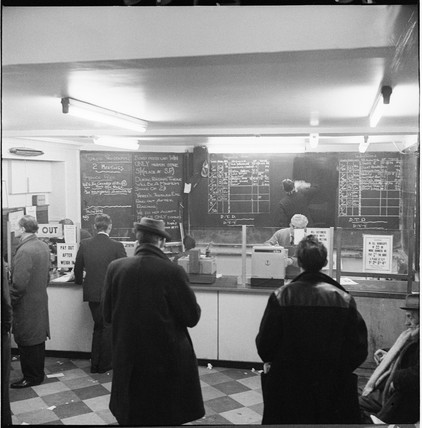
old bookiesBefore going to see my football team of choice-by-birth, Coventry City play at home on a Saturday with my dad, we would stop off at the bookies for him to put on his daily bet. I was about nine and he would sit me in the corner of the smoke-filled shop against a backdrop of walls covered in the vital statistics of the day. We would wait for the first race before heading off up the match (this was years before televised races).

At the off, chatter would be replaced with commentary, and the men’s heads would move 45 degrees North to look at the speaker in the corner. The men would listen with their eyes, as though they had a better chance of winning by using more than one of the senses. As the race progressed, they started encouraging their horses or berating the jockey. Towards the end, the smoke almost gave way to their shouting, until the horses crossed finishing line. Then silence and muttering would be accompanied by the odd screwed up bet thrown at the poor innocent speaker.

Maria_Taylor_15Maria Taylor’s poem, A Day at the Races evokes this male dominated scene from the point of view of a woman who works behind the counter of the bookies. “For over twenty years it’s been a cinch/smiling without any come-on or affection./Her punters see more of her than their wives”. She is trained in the art of customer service; in dealing with the punters (now to be called ‘clients’) her tack is one of bitterness tinged with a sad inevitability of the outcome. “Her name is May, spelt in gold around her neck/she takes money from an old man…/’Today’s your lucky day’, she fibs,/someday she’ll drag his sheep-skinned corpse out.” Maria then neatly weaves in the clash of classes endemic in the racing game as the screen “cuts to ladies, daft complex hats, Lancome smiles,/cut to well-fed gent lifting a ribboned trophy.” (more…)

The Barmaid by Daniel Sluman

Edouard_manet,_al_bar_delle_folies-bergere,_1881-1882,_02One Saturday night, my friends and I were leaving our local to go downtown for a drink. One lad said that he wasn’t going in, that he didn’t feel like it. None of us ever felt like it; however, the ritual and peer pressure locked us in. It was a few weeks later we found out that he had held back to chat with the ‘barmaid’, who he then began going out with, and now some twenty or more years later, is happily married with. I look back at that now and think of how we never really thought of the barkeep, whether man or woman, as anything more than the server of beer. You were polite to them because we were brought up properly, would have a bit of a chat or banter, but that was it. I can’t remember seeing them outside of the pub.

The stereotypical image of the barmaid, as opposed to the barman, is either one of the medieval wench bringing  ‘more mead’, or the post WW2 busty sort the gaffer employed to make sure the punters drank more than they should (just Google barmaid images to see). And she is still identified as ‘barmaid’ today by many in the media, particularly in stories of their murder.

The history of the barmaid has been one of political controversy and social subjugation. In the early 20th century prominent politicians such as Ramsay MacDonald were part of the ‘abolish barmaids’ movement. This was not out of any concern for women’s rights rather a puritanical view that a bar was not the place for a woman and they were taking away the position for the male to fulfil his head-of-the-household role. They were defeated however in Parliament.

Author Photo 2014Daniel Sluman’s poem The Barmaid, tells of the way in which a woman is viewed by men across the bar and how the years have taken their toll through the perspective of the customer. Daniel’s poem at first appears as a casual encounter with the man admiring the way in which she gets his drink: “The Barmaid/pours a shot of vodka/to the bottom of an iced glass,/turns, silver nails coaxing/Sambuca & Jack from the air.” But things develop and her history is shown the next day: “Her face is a fracture of angles/under the morning’s thud of light;/her cheek pockmarked from three years/of bastards.” He is part of that history now but he leaves “to the first pigeons exhaling/into flight.” It is clear however, that she will be behind the bar again that evening. (more…)