If we think about the classes according to their mobility, we see the working class far more ‘on the move’ to find work and a place to live. Whereas with the middle classes, mobility is more one of professional development. Essentially, one driver of mobility is necessity/ survival, whilst the other is much more positive, with higher status, wages, etc..
We have addressed this issue before on Proletarian Poetry, for example most poignantly with Micheal Gallagher’s ‘Paraic and Jack and John from 2016,
Goodbyes to
the mothers, always the mothers,
the father-mother-farmer mothers,
the savers of hay,
the spreaders of turf;
brought into heat once, maybe twice,
a year, migrant’s return, marital duties,
children’s allowances, God’s word –
stuff like that.


In Cathy Galvin’s brilliant debut collection Ethnology: A Love Song for Connemara published by Bloodaxe Books, she portrays the impact of migrancy, both inward and outward. From Coventry like myself, her Irish roots are in the far west of Ireland in Connemara. In my own area of Coventry, a large Irish community settled in Coundon from the 1950s – so many that it became dubbed County Coundon; though there are a number of other areas where Irish families settled in the city. I have friends whose parents came from Donegal, Cork, Mayo, Galway. They came to rebuild Coventry from the Blitz but also to work in the car factories.
But things have changed a lot in the last twenty six years. Helped by its own success then boosted by the UK leaving the EU, Ireland is now a place people migrate to, or return to. More people have returned to Ireland now than left, with the population rising from 4 million in 2000 to 5.4 million in 2025
Cathy has written a beautiful paean to her Irish roots in Connemara and Coventry. She notes this change of inward migration in the featured poem ‘An Ghaeltacht’ which refers to recognised regions of Ireland where Irish is the predominant language. Cathy is a poet, journalist and literary entrepreneur being Founder and Director of The Word Factory,
You can buy a copy of Ethnology here
An Ghaeltacht
Paul – Pól – bought himself a boat
and a house. Took land on the island,
drove through mountains on a motorbike.
But these people with the same name as him,
the same DNA, drinking in the same bar,
kept themselves to themselves.
Gave him no work. And in Galway –
Well you might as well be back in Croydon, he said
All those East Europeans, no one speaking English.
He keeps his curtains drawn, gate padlocked.
I’m told he’s packing his bags. Taking
his estuary English over to Durham
where houses are also cheap. In time, it’s possible
they tell me, he might even pick up the language.
 In 2021,
  Ah, the poetry of football chants. Often it is football that defines what home is for the working classes. And in the League Two play-off finals, that sound rang around Wembley Stadium; forty thousand of us, compared to Exeter’s ten, when we got promoted to the heady heights of League One at the end of May.
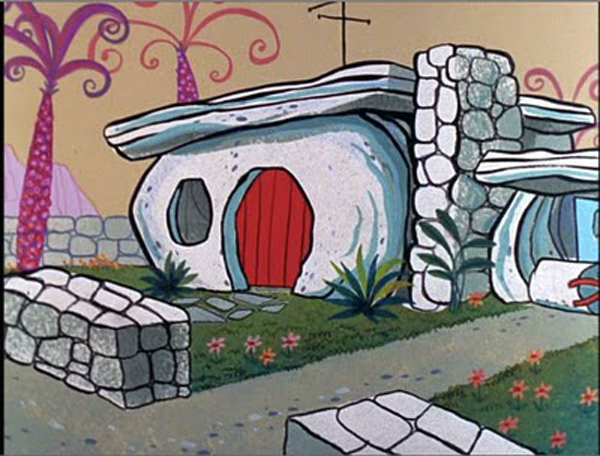 What do you think of when you think of home? Is it the history of wallpaper that reflects the changing times? The leather three-piece suite you bought off some bloke in the pub and had to drive down long country lanes to a hidden away warehouse – but was assured it was all totally legit? (I know someone who actually bought his house from someone in the pub). Was it the smell of chip fat in the kitchen as it cools back to white, a cracked window that was never fixed, the gradual wearing away of the staircase carpet?
 Lorraine Carey’s beautifully evocative poem, From Doll House Windows, is about a childhood home and the memories it still holds. “An aubergine bucket served as a toilet,/in a two foot space. Mother cursed all winter/from doll house windows where we watched/somersaulting snowflakes.” And like the poem, many of us had a pet (mine was a succession of goldfish from the fair, that usually died after two weeks), “My father brought back a storm petrel/from a trawler trip. /I homed him in a remnant of rolled up carpet -/ that matched his plumage.” But in the chaos of a young family’s house, something dark goes beyond the everyday in Lorraine’s poem; a memory of home, which will never be forgotten.


 Proletarian Poetry