Poem

Permission, Disability, Stairs and Whispers, and a poem by Nuala Watt

I only came across the term ‘permission’ in regards of writing when being mentored by Jo Bell. Her wonderful project, 52 had given over five hundred writers the safe space to share their poetry with others in a similar position; the project had essentially given many of them permission to write. Recently I received a different type of permission when attending the Stairs and Whispers event at Ledbury Poetry Festival; the permission to accept that I have a disability.

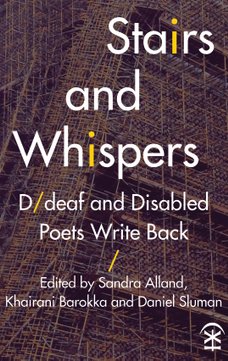
Stairs and Whispers COVERThis was the launch of the anthology of “D/deaf and Disabled Poets Write Back”, edited by Sandra Alland, Khairani Barokka and Daniel Sluman, and published by Nine Arches Press. From the perspective of someone whose hearing and sight is not particularly impaired the event was a multi-media experience of poetry films, readings, and questions, supported by sign, subtitles, and the full text of poems. The editors described themselves for those with sight impairment, and in a large hall it felt like the most intimate and captivating experience.
However, it was only afterwards, when I went away, sat in a café and took a breath that it resonated with me more personally. I have a number of autoimmune conditions; Addison’s Disease, Underactive Thyroid, secondary hypopituitarism (causing low testosterone), low Vitamin D, along with asthma, high cholesterol, chronic fatigue, periodic chronic pain, and depression. I am lucky, as I don’t have to rely on welfare, beyond NHS treatment and free prescriptions, and there are times when I am relatively healthy and able to exercise. So I have had no need to register as disabled and go through the horrendously cruel process that the austerity government has implemented in the past seven years.

(more…)

Thank You for Waiting by Simon Armitage

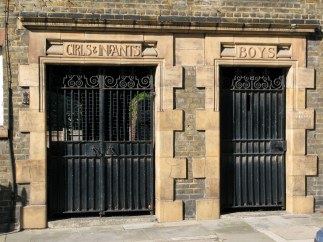
boys and girlsBack home in one of the bars in my local, there was no women’s toilet (this was the mid-80s). The few women who did frequent the smoke room, had to go outside, in all kinds of weather, to the single female toilet in the other bar. At the same time an old school down the road still had signs showing the separate boys’ and girls’ entrances. Society remains divided in many ways, not only in gender. One of the most obvious, yet at the same time, nefarious, regards consumer preference.
Platforms (or are they publishers?), such as Facebook and Twitter, provide their services for free on the basis that its users give away great amounts of personal information. So we now have individual profiling to “guide” us in our purchase choices. You know how it works; you may have been browsing holidays online, then when searching a news item for example, adverts pop up with specific holiday options. Business relies on stereotypes and certainty; such a social contract gives them that. So whilst there is a feeling that the Internet enables free expression, the template-nature of such social media platforms constrains heterogeneity. One of the early pioneers of web development and now critic of its outcomes, Jaron Lanier believes: “The basic problem is that web 2.0 tools are not supportive of democracy by design. They are tools designed to gather spy-agency-like data in a seductive way, first and foremost, but as a side effect they tend to provide software support for mob-like phenomena.”

In the service sector, this translates into splicing customers in different ways according to the data gathered. We are all valued by them, it’s just some are more valued than others – they would claim it is just differently. For example, supermarkets use terms such as “everyday value” or ‘basics’ ranges, to the more ‘upper’ ‘taste the difference’ & ‘you’ve never had it so good’ products. Travel firms have always done such stratification, albeit quite basically – first & second class, or economy, business, first class when it comes to flying. (more…)

From Doll House Windows by Lorraine Carey

I have spoken before about my maternal grandmother’s final home – a high rise flat in Gateshead. My paternal grandparents lived in a tenement block in Glasgow. It was on the bottom floor, with two bedrooms, a small bathroom, kitchen, and living room. Up to ten people at a time lived there (my grandmother had ten children, five of whom died before the age of five) from the 1930s to when I first went there in the 1960s. My father left when he was 17, but at 84 still calls Glasgow home.

Flintstones-HouseWhat do you think of when you think of home? Is it the history of wallpaper that reflects the changing times? The leather three-piece suite you bought off some bloke in the pub and had to drive down long country lanes to a hidden away warehouse – but was assured it was all totally legit? (I know someone who actually bought his house from someone in the pub). Was it the smell of chip fat in the kitchen as it cools back to white, a cracked window that was never fixed, the gradual wearing away of the staircase carpet?

20170517_150346Lorraine Carey’s beautifully evocative poem, From Doll House Windows, is about a childhood home and the memories it still holds. “An aubergine bucket served as a toilet,/in a two foot space. Mother cursed all winter/from doll house windows where we watched/somersaulting snowflakes.” And like the poem, many of us had a pet (mine was a succession of goldfish from the fair, that usually died after two weeks), “My father brought back a storm petrel/from a trawler trip. /I homed him in a remnant of rolled up carpet -/ that matched his plumage.” But in the chaos of a young family’s house, something dark goes beyond the everyday in Lorraine’s poem; a memory of home, which will never be forgotten.

(A small note: by pure coincidence, and a reflection of how small our worlds can be, Lorraine grew up a couple of streets away from me in Coventry – who would have thought that ‘County Coundon’ could be a place of such poetic nurturing).

Lorraine Carey was born in Coventry, England and moved to Greencastle, Co. Donegal where she grew up. Her poetry has been widely published in the following: Vine Leaves, The Galway Review, Olentangy Review, Dodging the Rain, A New Ulster, Quail Bell, Live Encounters, ROPES, North West Words, Sixteen, Stanzas and Poethead and is forthcoming in Atrium and Launchpad. A past winner and runner up of The Charles Macklin Poetry Competition, she was a runner up in the 2017 Trocaire / Poetry Ireland Competition. She has contributed poetry to several anthologies and her artwork was featured as the cover image for Issue 15 of Three Drops From A Cauldron. Her debut collection From Doll House Windows – Revival Press is available from www.limerickwriterscentre.com. She now lives in Fenit, Co Kerry.

From Doll House Windows

The woodlouse dropped off the ceiling
like flaky plaster, landing on the candlewick
that failed to keep me warm in the two roomed house.
In damp darkness feeding on their own waste.
Racing rafters for the little heat in a temporary dwelling,
five minutes from Grandma’s.

An aubergine bucket served as a toilet,
in a two foot space. Mother cursed all winter
from doll house windows where we watched
somersaulting snowflakes, as evening fell.
Icicles sparkled, hung from gutters
in tapered spikes.

My father brought back a storm petrel
from a trawler trip.
I homed him in a remnant of rolled up carpet –
that matched his plumage.
Our kitchen cum every room smelt of children,
resentment, the flapping panic of his final days.

Slaters scuttled through my dreams
I tugged on my bedspread, shook them off,
disrupted my mother’s sleep as she manoeuvred
with her ghost breath sighs caught by streetlight.
She pulled the candlewick taut over her belly
the skin marked with angry tracks,

as my unborn sister stretched
in the safety of her amniotic sac.

Spark Catchers by Lemn Sissay

gec-sponstAged sixteen, in my first (and only) year, as an apprentice at the General Electric Company, I went round the factory and sat with various workers for half a day each, to get to know what they did. One woman’s job involved, picking up a piece of component, putting it on small press, then pulling a lever to fit it. It took her less than two seconds to do one. When she had done about five, she said to me, “that’s it, love. That’s what I do.” This left ten seconds less than four hours to spend together, in which we had a good natter, and I learned a lot that had nothing to do with her job. Of course, it is only in looking back that I realised it was my first encounter in how society is diced and sliced in terms of gender and work, with the women as the army corps and the men as corporals (charge hands), sergeants (foreman), captains (manager), etc..

One of the more recent depictions of such workplace divisions and discrimination came with the film Made in Dagenham about Ford sewing machinists’ strike for equal pay. However, today’s poem about the Bow Matchwomen’s Strike, goes back nearly a hundred years before that, to the much-mythologised East London of the late 1880s and the small=BRYANT-Strike-A-Light1_art_fullindustrial febrile temperature rising across the country at that time (the poet Anna Robinson previously wrote about an aspect of this on the site, in her poems Portraits of Women, East London 1888). This coming Saturday (July 1st), there is the annual all-day Festival in celebration of the women’s strike. The historian Louise Raw, in her book “Striking A Light: the Bryant and May Matchwomen and their place in History”, provides a fascinating account of the strike that rewrites the previous more clichéd and partronising accounts that argued the women were influenced/led by ‘outside forces’. You can read a good review of the book here.

lemnsissay-greenwichlibrarywaterstones-gll-talking-booksLemn Sissay’s poem, “Spark Catchers”, is a tribute to the Matchwomen and is a physical landmark at the Olympic Park where the factory was located. The poem is also an inspiration for an upcoming musical piece composed by Hannah Kendall and performed by the UK’s first black and ethnic minority orchestra, Chineke, at the BBC Proms this

Lemn Sissay is author of a series of collections of poetry. His sculpture poem Gilt of Cain was unveiled by Bishop Desmond Tutu. He has written plays for stage and BBC radio. He describes dawn in one tweet every day. One Morning Tweet Became an award winning building MVMNT commissioned by Cathedral group designed and built by Supergroup’s  Morag Myerscough.

Spark Catchers

Tide twists on the Thames and lifts the Lea to the brim of Bow
Where shoals of sirens work by way of the waves.
At the fire factory the fortress of flames

In tidal shifts East London Lampades made
Millions of matches that lit candles for the well-to-do
And the ne’er-do-well to do alike. Strike.

The greatest threat to their lives was
The sulferuous spite filled spit of diablo
The molten madness of a spark

They became spark catchers and on the word “strike”
a parched arched woman would dive
With hand outstretched to catch the light.

And Land like a crouching tiger with fist high
Holding the malevolent flare tight
‘til it became an ash dot in the palm. Strike.

The women applauded the magnificent grace
The skill it took, the pirouette in mid air
The precision, perfection and the peace.

Beneath stars by the bending bridge of Bow
In the silver sheen of a phosphorous moon
They practised Spark Catching.

“The fist the earth the spark it’s core
The fist the body the spark it’s heart”
The Matchmakers march. Strike.

Lampades The Torch bearers
The Catchers of light.
Sparks fly Matchmakers strike.


this is not your beautiful game by ben banyard

england under 20

future stars?

This past Sunday (June 11th) saw the greatest achievement in English football for 51 years. The Under-20s won their World Cup in South Korea, beating such senior giants as Argentina and Italy, but also less renowned countries like Guinea and Venezuela on the way. Talk (prematurely of course) is now whether they can go on and do the same for the senior team in Qatar 2022. The team is made up of players on the books of top Premier League clubs, but hardly any have played more than a handful of games for the first team. They play their games at lower league grounds, such as Oldham and Rochdale, which I think is good, as it brings international level games to a wider audience and at lower prices.

Football, as we have seen previously on this site with Rishi Dastidar’s poem, “We are Premier League”, is dominated by big money, whether it be players’ wages, ticket prices, or television rights and subscriptions. But as with many sports, top success is underpinned by the misnomer of non-league football, which itself starts with youth leagues, where parents volunteer for the child’s team as manager, trainer, team secretary, running the line, or putting up the nets (the latter two were my job, and at 5ft 7in, the crossbar was out of reach).

Support for their local teams is part and parcel of this territory. It is there that I go by the ‘blighted by birth or where you live’ rule when it comes to supporting a team – there is no pick and mix (I was born in Coventry for the sins of my parents). However, that doesn’t mean you can’t contradict that rule by making your children support the god forsaken team you were born from.

Ben BanyardBen Banyard’s poem ‘This is Not Your Beautiful Game’ nicely captures the reality and sometime excitement of such wind-blown support, “This is not Wembley or the Emirates./We’re broken cement terraces, rusting corrugated sheds,/remnants of barbed wire, crackling tannoy.” You don’t get prawn sandwiches here (not that you would want them), it’s “pies described only as ‘meat’,/cups of Bovril, instant coffee, stewed tea.” But out of such masochistic adversity, comes great strength, as well as pride. “Little boys who support our club learn early/how to handle defeat and disappointment…./We are the English dream, the proud underdog/twitching hind legs in its sleep.” It is never too late for some players’ dreams; many have risen out of the lower ranks, to play in the Premier League, like Chris Smalling, Charlie Austin, Jimmy Bullard, Troy Deeney, and Jamie Vardy. And of course not forgetting Coventry’s own Trevor Peake, who at the age of 26 was bought from Lincoln City and was part of the 1987 FA Cup winning side.

[NB: for one time only, I am allowing a Birmingham fan to grace the pitch of Proletarian Poetry. There are times (and poetry is one of them), when the game must trump the tribalism – aka pride before a fall. But don’t tell any Cov fans]

Ben Banyard grew up in Solihull but has lived in the West Country since the mid-90s. His poems have appeared widely in the likes of The Interpreter’s House, And Other Poems, Under the Radar and Popshot. Ben’s pamphlet, Communing, was published by Indigo Dreams in 2016 and his first full collection, We Are All Lucky, is due out from the same press in 2018. He edits Clear Poetry and blogs at https://benbanyard.wordpress.com


This is Not Your Beautiful Game

This is not Lionel Messi, balletic, mercurial.
We have a journeyman striker with a broken nose
no pace, poor finishing, very right-footed.

This is not Wembley or the Emirates.
We’re broken cement terraces, rusting corrugated sheds,
remnants of barbed wire, crackling tannoy.

Here, the captain winning the toss
chooses to kick uphill or down
considers which half his keeper will stand in mud.

We have pies described only as ‘meat’,
cups of Bovril, instant coffee, stewed tea.

Our shirts feature the logo of a local scaffolding firm,
can’t be found in JD Sports.

Don’t tell us about football’s grass roots.
We don’t worry that all of this must seem small-fry,
that our team comprises keen kids and sore old pros.

Little boys who support our club learn early
how to handle defeat and disappointment,
won’t ever see us on Match of the Day.

We are the English dream, the proud underdog
twitching hind legs in its sleep,
tapping in a last-minute equaliser as the rain
knifes down on tonight’s attendance: 1,026 souls.

because my home town has a hand between its legs by Julia Webb

6569981447_ba590daf97_o

Image by Aslan Media*

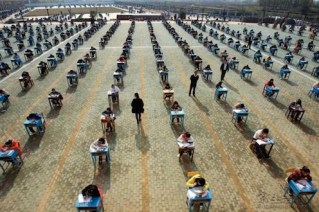
Testing, testing, one, two three. Here in the UK (and elsewhere I am sure), we are in the testing season; ‘tis the season when the educational lives of teenagers (as well as pre/post-teens in many cases) are put under scrutiny to ‘determine’ their future. This ritual, particularly written timed exams, puts huge pressure on young people, often when they are at a critical time of their emotional development. A survey in 2016 carried out by ChildLine, found a 20% increase in the numbers of children needing counselling, because of fear of failure, wanting to please their parents; that triggered eating disorders, anxiety attacks, depression and inability to sleep. The Conservative government has even increased the type of written testing that causes this worrying increase in stress for young people.

The second decade of a person’s life is one of the most important; it is when they move from dependence towards independence, before in later years hopefully moving to interdependence in their familial relationship. And of course, with the Internet their lives are displayed on social media – their peers can amount to thousands of people. It is when the extremes of experience are at their height – when they are doing many things for the first time (sex, drink, drugs, travel, voting, working).

julia authorJulia Webb’s poignant (and wonderfully titled) poem ‘because my home town has a hand between its legs’, encapsulates this precarious, exciting, and frightening time from the perspective of girls/young women, “we spend too much time in public toilets – /smoking, scratching boy’s names onto cubicle doors,/rolling clear lip gloss onto kissable lips.” We all remember hanging out on the streets, when there may have not been a youth club, and the pubs were beyond reach. “Spaces find you: the concrete slope under the road bridge,/the shadowy space beneath the walkways at the bottom of the flats.” And sadly, the vulnerability and dangers that one can be open to, “make sure your Mum’s friend never gives you a ride home alone.”

This all makes me wonder what decade is the most satisfying, rewarding, of our lives; is it those teenage years of first-time experiences, the independence of your 20s (and30s if you’re lucky), or the later freedom of old age if you have made it that far with your suitcase of faculties still intact?


Julia Webb grew up on a council estate in Thetford, Norfolk. She graduated from UEA’s poetry MA in 2011. She has had work in various journals and anthologies. Her first Collection “Bird Sisters” was published by Nine Arches Press in 2016. She is a poetry editor for Lighthouse.


because my home town has a hand between its legs

we spend too much time in public toilets –
smoking, scratching boy’s names onto cubicle doors,
rolling clear lip gloss onto kissable lips.
Imagine the shock of touching an unexpected pickled egg
buried deep inside his hot wrapper of chips.
No myths here, only rumours, streets you can’t walk down
because you have been warned off, boys it’s best not to look at
if you want to avoid the girl with frizz-hair and her pummelling fists.
Spaces find you: the concrete slope under the road bridge,
the shadowy space beneath the walkways at the bottom of the flats.
You’d rather lie through your teeth than confess your sins –
you might get a good hiding or your friend stops being your friend?
There’s a spyhole in the wall of your best friend’s bedroom
through which her brother watches her get undressed.
Shake the boy on the pushbike off at the entrance to the estate,
make sure your Mum’s friend never gives you a ride home alone.


*Image by Aslan Media


At Letterfrack by Doireann Ní Ghríofa

Deference. That key ingredient for soft power, even if it is enforced by hard methods (think of Putin or Trump). A lot would argue that deference is in decline. Figures on trust in public individuals, such as politicians, but also the media, are in decline. The internet allows for a greater challenge to authority than ever before (notwithstanding the ongoing battle over who controls it). Still, I think deference has a lot to answer for when it comes to injustices meted out by those who hold power.

When the archaeology of child abuse is finally dug up, a lot of what was allowed to go on, could be put down to deference. When I was at school, I was once hit on the head with a toffee hammer by a PE teacher for suggesting we play football instead of rugby for a change (this was a Hogwarts type grammar school, that allowed a few of the likes of us in). He cut my head and left a large lump. But I never thought to report it to anybody (not even my parents) because given the regime, I didn’t feel anyone would believe me. But this is such a minor example, given what is now being uncovered in other schools, churches, and institutions where children are under the tutelage of adults (scouts, football). Trust and deference go together.

In the past there were never the type of safeguards that are in place now. An authority figure, be they a priest, teacher, or coach, would command a level of trust given the position they held. But challenging that position, especially when your own values (e.g. religious) are invested in such people, meant that many were afraid to speak out. I know this from the experience of my local community growing up where the priest was a paedophile. Today, many of those parishioners can no longer look at photos of the happiest days of their lives (weddings, christenings, confirmation) because he is in the picture.

letterfrackIt seems there are never ending examples still emerging; in just the past week I have read reports of alleged abuse of children at a ‘therapeutic’ Christian farm in the US state of Georgia, and the discovery of mass graves of young children by unwed mothers in Tuam, Ireland. Doireann Ní Ghríofa’s haunting but beautifully written poem, At Letterfrack is an account of similar abuse at the Industrial School in Ireland that went back to the 1930s. It was so bad that boys would try to escape.Ice grows on dormitory windows. Inside, rows of snores./Together, two boys whisper and dress in the dark. Hand in hand,/they run through white fields towards home.” But as the Ryan Report found, “they would usually be apprehended, sometimes by local people, and returned to the school.” On return, “they are beaten and sprayed with a hose.” One can hardly imagine how the perpetrators could defend such treatment. But people have great belief in the Faith and the institution of the Church; this trust is passed onto those who represent it, and were thus rarely challenged or questioned about their cruel practices.


Doireann Ní Ghríofa is a bilingual writer working both in Irish and English. Among her awards are the Rooney Prize for Irish Literature, the Michael Hartnett Prize, and the Ireland Chair of Poetry bursary. Her most recent book is ‘Oighear’.  www.doireannnighriofa.com


At Letterfrack

From the Ryan Report on Industrial School Abuse, Volume 1,
Chapter 8, paragraph 162: “The children would run away at night
but they would usually be apprehended, sometimes by local people,
and returned to the school soon after.”


          I
This bog of flattened bracken was once a vast forest,
filled with wildcats and wolves.
The bog still dreams of trees, buried deep, unseen.

          II
Centuries ago, people build tougher roads here —
slats of wide wood hauled up and laid side by side
so treacherous wetlands of bog could be crossed.
These roads remain, far below the surfaced,
where years of peat grow over the past like scabs.
The bog swallows people and their paths.
The bog swallows itself.

          III
Later, few trees grow
so people hunt the wood that lies below,
trunks of sunken forests buried in the bog.
At dawn, they seek patches of peat
where dew has disappeared, then pierce
the surface and push long rods deep,
deeper, through gulping ground
until they strike solid wood.
They pull chunks up and make rafters,
doorways, window frames.
From this land, a school and a spire rose.

          IV
Behind the school, a path ends at a small gate–
small plot, small stones, where smalls letters spell small names.
Leaves whisper: there is nothing here to fear.
The earth holds small skulls like seeds.

          V
Winter.
Ice grows on dormitory windows. Inside, rows of snores.
Together, two boys whisper and dress in the dark. Hand in hand,
they run through white fields towards home.
Does the land betray them?
No, a wizened hawthorn holds out hands to try to hide them.

          VI
In winter, runaways are easily found. Even in the dark,
small bootprints break through white to the ground below.
Does the land betray them?
Yes, it shows their path through snow.

          VII
They do not cry as they are dragged back, stripped of clothes,
pushed against the wall, their small feet sinking into snow.
There, they are beaten and sprayed with a hose.
Does the land protect them?
Yes, it holds their hands in the dark?

          VIII
In dormitories of sleeping boys, they shiver and bleed
and weep black bogwater tears. Overhead, rafters dream
of their sunken mothers, submerged still,
deep in the bog.
Does the land protect them?
Yes, it stays under their fingernails forever.

          IX
By March, the snow has returned to air, the footprints
disappeared. From the earth, buds open white petals to light
where wood anemones fill bog-paths with stars.
Do they hold onto this land?
No, they forget. They let go.

          X
They boys grow up. They walk away.
They leave Letterfrack, and go to London, Dublin, Boston.
Through their dreams, the mountain cuts a stark shadow.

Do they hold onto this land?
Yes, it holds them hard always – as a scar silvers from a red welt,
it tightens at the throat like the notch of a belt.

At Letterfrack is from Doireann’s collection Clasp, published by Dedalus Press

Market Scene, Northern Town by Catherine Graham

salt1

middle class vs working class salt

We have two types of salt dispenser in our house. One is the traditional one with holes in the top, which you shake over your food, the other is a small pot with a lid and a tiny wooden spoon on the side. I call the first one our working class salt, the other our middle class. I am fully aware of the madness of this categorisation, which I am sure has not been part of any analysis of social stratification. However, when it comes to food more generally, the divisions in class are legion. Getting beyond the vital mushy peas/mashed avocado debate, food is political in many ways. But it always seems that it is the working class whose eating habits are under scrutiny and held as being essentially unhealthy. In recent times, the fat-tongued mockney Jamie Oliver (who I concede did a good job when it came to school dinners), decided to highlight the ‘poor’ diets of the poor, suggesting they get creative with stale bread.

One point I did agree with him on though was, “going to your local market, which is cheaper anyway, but also they don’t dictate the size.” The supermarkets have recently been criticised for the convoluted way they price their ‘offers’. But like a lot of big capital, supermarkets are winning the day, and local markets are in decline (setting aside the rise in higher priced farmer’s markets, which the supermarkets have cottoned on to). And with that decline comes a loss of community cohesion; a study by the Joseph Rowntree Foundation found that markets were a significant site for social interaction of communities and could play a role in promoting social inclusion and healthy eating.

Catherine GrahamCatherine Graham’s poem Market Scene, Northern Town evokes this scene of bustling activity and its mix of goods: “The lidded stalls are laden with everything/from home-made cakes to hand-me-downs.” This is a tradition that is woven into daily activities: “They’ve/spilled out from early morning mass,/freshly blessed and raring to bag a bargain,/scudding across the cobbles, like shipyard workers/knocking off.” And from the food bought, you will “smell the pearl barley,/carrots, potatoes and onions, the stock bubbling/nicely in the pot.” We shouldn’t be too doom laden when it comes to the decline in markets, because they haven’t died out altogether, and I’m not sure they will. I for one would miss the market trader shouting, ‘Come ‘an ‘av a look. Pand a bowl!

Catherine Graham grew up in Newcastle upon Tyne where she still lives. Her poems have been published in magazines and anthologies in the UK, USA and Ireland as well as online. Catherine’s first full collection “Things I Will Put In My Mother’s Pocket” was published by Indigo Dreams Publishing in 2013. The featured poem Market Scene, Northern Town is taken from Catherine’s pamphlet Like A Fish Out Of Batter, ‘Poems that bring Lowry’s paintings to life,‘ also published by Indigo Dreams Publishing, 2016.

Market Scene, Northern Town

The lidded stalls are laden with everything
from home-made cakes to hand-me-downs.

Just gone eight bells and the church clock
grinds to a tock. It must be Sunday,

women are wearing hats. They’ve
spilled out from early morning mass,

freshly blessed and raring to bag a bargain,
scudding across the cobbles, like shipyard workers

knocking off. One woman bends over to take
a closer look; holier than thou, she’ll pinch the goods

between finger and thumb in gloves she has
worn in bed since that night on her honeymoon.

Note how ‘the hats’ keep their backs to the woman
in the shawl. Martha, mother, sister,

miracle worker; she can turn bones into broth.
Walk by The Dwellings tomorrow and you will know

her home: the polished letter box, sash windows,
open just enough to let you smell the pearl barley,

carrots, potatoes and onions, the stock bubbling
nicely in the pot; steam rising up like a prayer.

Working Class Poem by Josephine Corcoran

bernard rightonLet’s start with a joke: “There’s a black fella, a Pakistani, and a Jew in a nightclub. What a fine example of an integrated community.” Here’s another one for ya, “Two homosexuals in the back of a van, having sex. They’re over twenty-one! What’s wrong with that?” These are the anti-stereotype jokes of ‘Bernard Righton’, a character acted by the comedian John Thompson in the Fast Show from the 1990s. The second joke in fact shows how far we have come as the age of same sex consent is now 16. Although progress has been made in challenging stereotypes, many still exist, and often they target the working class.

The latest to be challenged, is that of the Essex girl; Essex is a county in England, and the stereotype is that it is populated by bleach-blonde, high-heeled, promiscuous women of low intelligence. This has gone on for years and has been promulgated by such TV shows as Birds of a Feather and The Only Way is Essex (TOWIE). Although some people might argue that it’s only a laugh, for many women it is a real problem. Sadie Hasler is a playwright from Essex, who left acting because she was only offered roles that involved wearing cat suits, going topless and always being sexual. A number of initiatives are ongoing to challenge the Essex Girl tag; these include a petition, social media campaign, a walk (The Essex Way), and a charitable foundation, the Essex Women’s Advisory Group.

A recent article by the poet Andrew McMillan, with echoes of Richard Hoggart some fifty years ago, forcefully argued for the need to hear more stories of working class lives in order to counter the void filled by the far right: “There must be an urgency, now, to help disenfranchised communities of all different types express their identity, to celebrate their history, to see themselves as belonging to part of a bigger picture, and this must include a refocusing on the working classes.” Similarly, another article called for politicians to better understand the working class vote, getting away from the belief they are only white; “mixed-race is the fastest growing demographic category, and that the growth is largely among the working class.”

Me in March 2017If this site does one thing, I hope it shows that the working class are not a one dimensional, culturally barren, single type of person. Poems from Kim Moore, Jacob Sam-La Rose, and many more have debunked such stereotypes. Josephine Corcoran’s “Working Class Poem” strongly adds to that story, because “This poem went to a state school and a university.  This poem left school at 16.  There are no whippets in this poem.  This poem isn’t going down a mine.  This poem doesn’t buy The Sun.” Josephine wryly highlights the cultural stereotypes, “this poem doesn’t recognise itself in soap operas,” and debunks them with “This poem goes to art galleries, museums, poetry readings,” spelling it out succinctly, “There is no tick box for this poem.” But going back to our start, there is also humour in, “this poem is an embarrassment” and ending, “this poem doesn’t have a glottal stop.” There is no cultural coagulation that defines this large swathe of people; and this goes beyond a joke when such stereotypes are used by the powerful dictate the life chances of those they employ or represent.

Josephine Corcoran blogs at www.josephinecorcoran.org and is editor at www.andotherpoems.com. Her poetry pamphlet The Misplaced House was published by tall-lighthouse.

Working Class Poem


This poem was born in a council house, rented flat, NHS hospital, caravan, servants’ quarters, bed and breakfast, children’s home, mortgaged house.  This poem went to a state school and a university.  This poem left school at 16.  There are no whippets in this poem.  This poem isn’t going down a mine.  This poem doesn’t buy The Sun.  This poem had free school dinners and uniform vouchers.  This poem got into trouble.  This poem went to night school.  This poem had a social worker.  This poem has no formal qualifications.  This poem has a PhD.  This poem was top of the class.  This poem was a teenage parent.  This poem is childless.  Little is expected of this poem.  This poem is framed on its parents’ living room wall.  This poem works as a university lecturer, shop assistant, hairdresser, teacher, call centre worker, filing clerk, police officer, bricklayer, food scientist, teacher, software consultant, sales person.  This poem hasn’t disclosed its occupation. This poem is unwaged. This poem likes films by Pasolini, Truffaut, Rohmer.  This poem reads The Beano.  This poem’s father was a gas fitter.  Its mother washed other people’s floors. This poem watches live opera and ballet streamed to cinemas.  This poem doesn’t play football. This poem drinks beer, wine, spirits, tea, cappuccinos, is teetotal. This poem has never eaten mushy peas. This poem does not recognise itself in soap operas. This poem goes to art galleries, museums, poetry readings. This poem is an embarrassment. This poem goes to the pub.  There is no tick box for this poem. This poem grew up on benefits. This poem pays higher rate tax.  This poem isn’t in an anthology. This poem doesn’t have a glottal stop.

(Working Class Poem was previously published in Under the Radar)