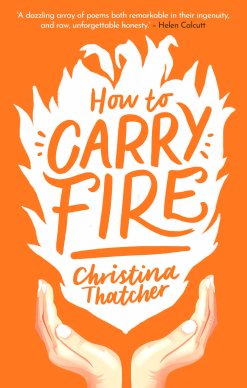
Today’s guest post by Christina Thatcher is a fascinating account of being a working class academic, and the feeling of not fully belonging to your past or present. It tells of her upbringing in the US by hard working parents, doing well at school, then going on to University to study, and now living in the UK working as a Creative Writing Lecturer at Cardiff Metropolitan University. The poem ‘Subtext’ is from Christina’s brand new collection, How to Carry Fire. You can buy a copy of the book, here:
*******************
 “I grew up in a working class family. My mom worked on a farm and my dad in a factory. These were physical jobs. When I was a kid, I remember bragging to friends about how strong my mom was: she can lift 50 hay bales. I have a filmic memory too—which plays on repeat—of my dad walking through the back door after work, dropping his car keys, grabbing a Budweiser and heading straight to the couch. His back was a constant ache.
Both my parents valued hard work and believed in the adage that children should ‘be seen and not heard’. I knew better than to bother them with my child-sized worries. After all, my dad’s reply would only ever be ‘wait until you get to the real world, honey, then you’ll know what worries are’. So, my brother and I tried to keep out their way but often found ourselves eavesdropping on adult discussions about work, food and money: how much or how little of it we had. These eavesdropping sessions transformed us in different ways; my brother turned to material goods (‘if only we had a bigger TV…’) while I turned to education (‘a degree is my ticket out…’).
Both my parents were high school drop outs. Although they encouraged me to study and get good grades they frequently spoke about how much they hated school. They joked about how it was a place where children ‘did time’, a necessary evil. Still, when my report card arrived, they never missed an opportunity to say how proud they were of me. Soon, school became my place, the teachers offering their bay-windowed classrooms as safe havens and creative sanctuaries.
In 2004, I graduated high school and then went on to graduate university. After that, I won a scholarship to come to the UK where I completed two Master’s degrees and, very recently, a PhD. Every step of the way, my parents cheered me on from afar but, as I attended class after class, I could feel a gulf opening between us.
As I progressed further into my education, I could feel myself straddling my old life and my new life, never quite feeling at home in either. I had no one really, to introduce me to academia or make it clear what was expected of me. I frequently asked myself: do I belong here? Am I good enough for this?
I tried so hard to quiet these questions and, instead, focus on learning. In addition to my coursework, I practiced handshakes with well-to-do friends, noted down new words to expand my vocabulary, asked for professional clothing advice from university counsellors; but it never felt like enough. Meanwhile, other working class friends and acquaintances would poke fun at me, call me books or professor. Soon, I began to feel like I didn’t belong anywhere.
 Now, even as a full-time Creative Writing Lecturer, I am still trying to figure out what it means to be a working class academic, to navigate a world that once seemed so impossibly out of reach. I am still trying to figure out a way to both honour my roots and embrace my new path. One way I am figuring these things out, is by writing poetry.
My new collection How to Carry Fire speaks to my experiences of growing up in America and, much later, moving to Wales. Several poems in this collection deal with class issues but I will leave you with just one today. This poem ‘Subtext’, attempts to capture some of what it means to be both working class and an academic, although, honestly, I still have so much to figure out.”
Christina Thatcher is a Creative Writing Lecturer at Cardiff Metropolitan University. She keeps busy off campus as Poetry Editor for The Cardiff Review, a tutor for The Poetry School, a member of the Literature Wales Management Board and as a freelance workshop facilitator across the UK. Her poetry and short stories have featured in over 50 publications including The London Magazine, North American Review, Planet Magazine, The Interpreter’s House, and more. She has published two poetry collections with Parthian Books: More than you were (2017) and How to Carry Fire (2020). To learn more about Christina’s work please visit her website: christinathatcher.com or follow her on Twitter @writetoempower.
Subtext
What the doctor means when he shows you the scan, points
to visceral fat clinging like anguished ghosts to your pancreas,
is that you were poor. He means your body was built on Big Macs,
stacks of Ramen noodles. He means you should never have eaten
those sweet treats dad smuggled from factories, burping up
synthetic mint for weeks. He means you are smarter now.
You know the definition of subcutaneous so your belly must
shrink, assume its correct position. He means you must eat
green leaves until your insides gleam, pop enough blueberries
to grow neurons. He means you must shed your cells
like thousands of colorful scales. Only then will you be new.
(You can buy a copy of How to Carry Fire here)
 “When
“When  We did this because whatever the overall radical potential of Shetland writing, we believe that poetry from Shetland is in a strong place at the moment. The poet and novelist Kevin MacNeil said as much a few years back when he was Shetland’s Writer-in-Residence. He said that what was missing wasn’t the talent but the self-confidence, the self-belief. It was also our feeling that an anthology of Shetland verse with a progressive remit would be a worthwhile event in any case. Moreover, it can be argued that Shetland does have a solid radical poetic tradition to build on, in the work of
  Gina Paola Ritch is a consistently political poet, who, while working as a fisherman, wrote gripping, realistic, unsentimental accounts of the perils and travails and dignity of that particular trade. Then as now, authenticity has always been important as a way of validating her voice.
 “I’ve chosen to write about the poem ‘Boasting Sonnet’, from my new collection, Wild Persistence, (Seren, 1 June 2020) partly because it’s joyful and partly because the poem considers questions around class.
 Once I had my first line, I really enjoyed myself. I decided to mix things up, in what is a pretty personal poem, placing areas of my life that I might consider to be showy, alongside things that are more flippant. Everything in ‘Boasting Sonnet’ is true. Sharon Olds did write me a poem, after I interviewed her back in 2011, and I have no truck with marriage.
 “It’s good to have the book published. Though the timing has been strange. Just a bit off from the start. First spoke to Paul, from Lunar Poetry magazine, about the collection, in 2012. In 2013, I asked
  He did a few edits and then… it all went a bit quiet. Niall suggested Flipped Eye and I was keen (a pretty good fit, I reckon) but didn’t want to let anybody down. Anyway, it drifted a bit. Waited too long, to be fair. In the end, to cut a long story short, a big thank you to all at Flipped Eye for getting it out and doing such a good job with it. Published on May Day too! By then, though, we were all on lockdown. So, no big do at a pub. No little do, either. There will be one, though, trust me.

 On the other side of the conversation, hearing phrases like “it’ll get better over time” and “everything will be okay at the right time” felt like blanket statements disregarding the shame and heartache flooding through my body. A simple overreaction, they call it. The fact that these emotions have been pent up for years, some taught from a young age, can fly so easily over people’s heads.
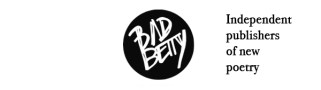 The poem I chose for this post is called “War Dove”, the title poem of my debut pamphlet. In dismantling the concept of forgiveness, the poem studies the separated pieces through weary eyes, working to prove its own cynicism wrong.”
 “Think back to 2017, another time, another crisis.
 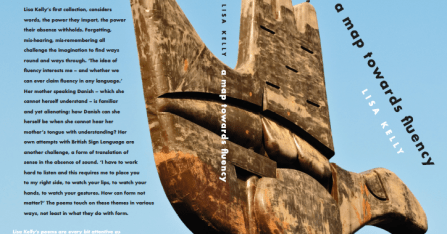 Like many poets, I write to try and make sense of what cannot be made sense of by logic or argument alone. Aside from the unintended foreshadowing in the poem’s title of the current unfolding horror story, there are connections of powerlessness. Holding a pen in your hand, or having computer keys do their bidding under your fingers, is an outlet for some processing of inadequacy in the face of something you would like to solve but basically can’t. Form is one way of marshalling what you want to say, to help shape chaos into a creative act.
 The stamp of
  Some of the sonnets are more indirect explorations of moods – others have a more sustained and obvious focus.
  “Engaging with the general lockdown reaction on social media has shown me how different groups of people have taken it – there are those that are, rightfully panicking, tearing their hair out, thrashing, screaming at the sky, denouncing their gods; and those, like myself, who climatized well due to having experienced some form of lockdown in their life.
 had.
had. Did you ever think that there were a lot of invisible people living in lockdown before this pandemic? There are people everywhere living sad lives, and then they die quietly. I’m left with the lingering frustration that things only become an issue when they affect people en masse, or affect those with a voice.
 “The anthology ‘Onward/ Ymlaen!’ published by Culture Matters comprises left-wing poems from Cymru rather than ‘Wales’. Why do I stress this? As the
 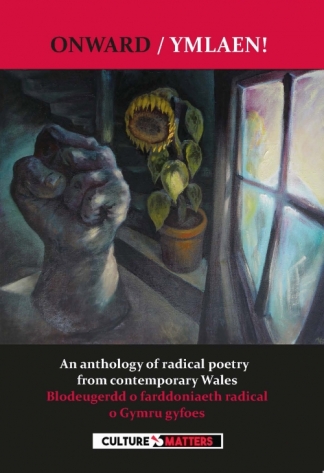 As co-editor of ‘
 Jones’s own journey from Labour supporter to embracing the emerging Indy movement is one which truly reflects our politically fluid times.

 I try to watch the news once a day; more than that and it is really depressing. Alternatively it is infuriating, why do we need to see Royalty clapping in an obviously posed way with their children outside their front door which does not appear to be in a street where anyone else lives. When have they ever used the NHS?
 Yesterday I made marmalade, from one of those tins of prepared Seville oranges; I knew they were good because my mother used them, rather secretly as she saw it as cheating. When I was quite small I remember going, in our fathers cab, to pick blackberries in
 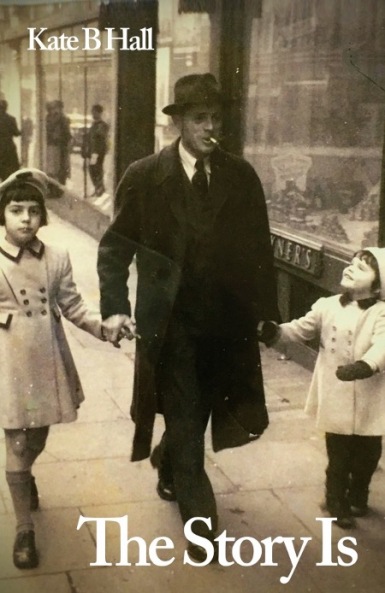 My partner and I are both of an age where a store cupboard is normal. Our parents lived through the war so there were always a few tins and packets kept for emergencies. We order our shopping delivery fortnightly and have a kind of general store. We are trying not hoard and so far have managed to get roughly what we need. When our delivery arrives it gets washed, dried and put away. Sometimes the way we talk about what is happening reminds me of my childhood when food was still rationed and my parents were not very well off. My mother was a genius at making things stretch not just food but clothes too.
 “For much of my life, I struggled with a range of symptoms which seemed to bare no correlation to one another. Chronic fatigue, an increasingly constant nausea level, violent aching without reason.
 My poem, ‘young man,’ was really one of my first explorations of this tension between distance and closeness. It felt like an act of empowerment, as I initially struggled to find work, to admit defeat. To acknowledge flaws, and to ironise them. As it turns out, to be vulnerable in life makes it far easier to be vulnerable on the page, and soon a body of work began to form around the experience of living within my own body.
 Proletarian Poetry