Dance Class by Hannah Lowe

At fifteen I was a punk. I don’t have the spiky hair anymore (don’t have any in fact) but I still like to think I have a little bit of the ethos. My son is fifteen and into much the same type of alternative music, although his relates more to the various genres of heavy metal.  It is only now, however, I have spotted a contradiction in our choices, for although I reveled in being different, I also wanted to be part of a group who looked and felt the same.

Hannah-Lowe-wpWhat we all have in common, whatever identity we feel we have, is the need to belong to something. It may only be with four other boys playing Warhammer in Games Workshop on a rainy Sunday afternoon, or as in Hannah Lowe’s poem Dance Class, being with ‘the best girls posed like poodles at a show‘. But it is often not that easy to fit in, you may not be good at the game; you may be ‘a scandal in that class, big-footed/giant in lycra‘. (more…)

Wit is it? by William Letford

Having a laugh. Taking the piss. Bit of banter. Up for the craic. All are the stereotypical currency of conversation in the workplace. All assume a set of common of interests and culture amongst the workers: betting, beer, birds and football (obviously male dominated ones that is). And certainly a lot of such talk goes on in the mail rooms, building sites, pubs and changing rooms across the country.

Image 1However, you wouldn’t necessarily assume that such a group would be talking about something ‘deeper’, about who they are, their purpose, or the meaning of life itself. But in Billy Letford’s poem, Wit is it? such a conversation is going on, presented as an unknown question answered differently by the stonemason, plumber, sparky, labourer, joiner, gaffer and roofer. ‘it’s aw in yur heed’…’It’ll ‘stope yur hert deed’…’It’s aw in the mix’…’wit diz it mettur‘.

I can imagine this as an opening scene of a Samuel Beckett type play; them all in their positions on a building site looking down at something beneath them that we can’t see, that we never see. (more…)

TWO YEARS FROM RETIREMENT, MY NEIGHBOR CONTEMPLATES CANADA by Kyle Dargan

In 1930 the economist John Maynard Keynes, predicted that by the beginning of the 21st century, capitalism would have been so successful people would only need to work a fifteen hour week in order to maintain a decent quality of life. As great and influential an economist as he was, he missed the carnivorous quality of capitalism to feed off others and to not know when it is full. So today, near on a century since his prediction, most people are still working a forty (or more) hour a week, just to stand still.

Yes, in global terms there is more wealth, improved health, and wider variety of leisure, at least in developed countries, but we are far from being a ‘leisure’ society. However, there is greater competition for jobs at lower wages with a growing global population and a predicted reduction in employment due to technological advances.

Dargan - Copy (800x480)All of these developments affect people in developed and developing countries alike and these global shifts are reflected beautifully in Kyle Dargan’s poem, “Two years from retirement, my neighbour contemplates Canada.” An ageing neighbour, whose arthritis is ‘now a hymn sung/by the choir of his bones’ will not be having the retirement he hoped for, and looks to work his final years in Canada, where its map is “speckled with throbbing circles,/bull’s-eyes. Those are the job sites—so many,/one must wonder what is Canada building.(more…)

January Review – it wasn’t all about London!

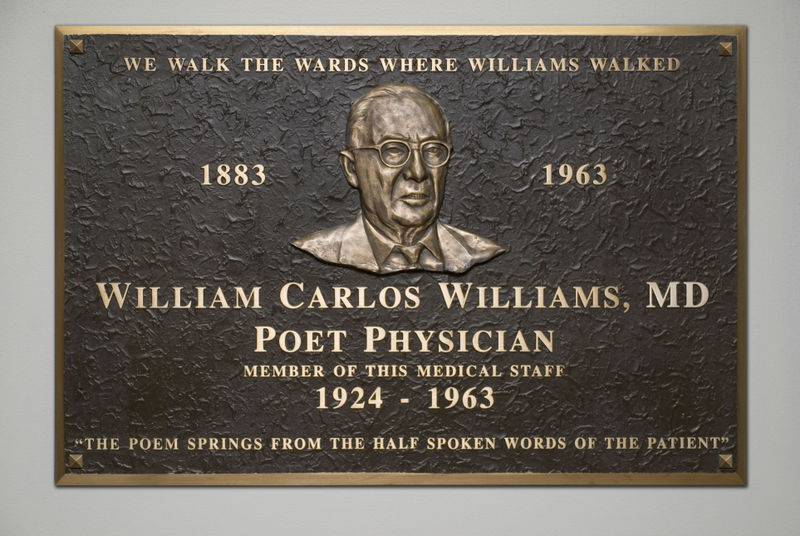
william carlos williamsJanuary by William Carlos Williams

Again I reply to the triple winds
running chromatic fifths of derision
outside my window:
Play louder.
You will not succeed. I am
bound more to my sentences
the more you batter at me
to follow you.
And the wind,
as before, fingers perfectly
its derisive music.

IMG_2830The year kicked off with the poem Midlands Kids by Jane Commane. This took me back to my home town of Coventry where we ‘grew up on the back seats of the long-gone marques of British manufacturing‘ and those who worked in their factories didn’t end up with jobs for life and  vanished from view like ‘the legendary square steering wheel of a paintshop-fresh Allegro.’ (more…)

Speechless by Jacob Sam-La Rose

Where were you when….? This is often a question that roots us to a place, a memory where the global meets the local. For my parent’s generation it was either the end of the Second World War or when Kennedy was shot (I was probably asleep in my pram). For my generation it was when Thatcher was elected, fall of the Berlin Wall, or when Princess Diana died (I think I was asleep for that one as well). And for today’s generation it must be 9/11 or when Simon Cowell appeared on the Simpsons. But of course there are many less tragic memories that take us back in time.

IMG_2104-Sam BurnettIn Jacob Sam-La Rose’s epic five part poem Speechless, he takes us through the stages of his life with references to major events (both good and bad), linking them to his own family’s history and those that affected him personally. It begins in 1950: ‘Uruguay beats Brazil 2-1/to win the World Cup, China invades Tibet’. In Guyana his mother who ‘has a voice like ripe Jamoon wine‘ is trying to find her freedom in the shadow of her Father who is a Police Sergeant and whose ‘word is law’ and on the wall is ‘a poster/proclaiming that Britain needs you.’ (more…)

I Dream a World by Langston Hughes

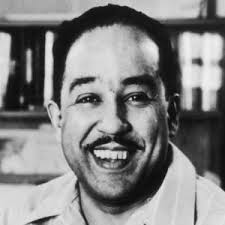
langston hughesToday would have been Langston Hughes (one of the original Proletarian Poets) 113th Birthday. Google has marked the occasion with a Googledoodle.

Here is the link to it, Langston Hughes, I Dream a World, and here it is in words. Enjoy.


I Dream A World

I dream a world where man
No other man will scorn,
Where love will bless the earth
And peace its paths adorn
I dream a world where all
Will know sweet freedom’s way,
Where greed no longer saps the soul
Nor avarice blights our day.
A world I dream where black or white,
Whatever race you be,
Will share the bounties of the earth
And every man is free,
Where wretchedness will hang its head
And joy, like a pearl,
Attends the needs of all mankind-
Of such I dream, my world!

Hammersmith Hospital 1968 by Roz Goddard

A lot of waiting goes on at a hospital and consequently a lot of thinking, where the imagination takes over. My first son was born in St Thomas’ Hospital in 1999. He was put into the neo-natal unit for the first week of his life and my wife was given a room facing the Houses of Parliament as we waited for his recovery (he was fine). Anyhow, at night I would look across at Parliament’s golden facade and wonder what the MPs were up to at that particular time; yes, sessions would still be going on, and possibly committee meetings, but I also imagined there to be lots of drinking and other intra-party ‘extra-curricular activities’, all in the name of oiling the cogs of democracy. I was almost tempted to go down to A&E to see if I could spot an errant MP.

momenya smallerI am reminded of this by Roz Goddard’s delightful poem Hammersmith Hospital 1968. The hospital is situated in an area of scrub land in West London. What’s interesting about it, is it sits right next to one of the most well-known (notorious?) prisons in the UK, Wormwood Scrubs. And like myself, our poet is waiting, and whilst waiting is looking out the window at the prisoners during recreation time. ‘I can see men in the exercise/yard larking about.’ But she has a very active imagination, ‘I imagine/them issuing threats and swearing and a fight/breaking out.’ (more…)

Barnsley Chop and Seams by Kay Buckley

I’ve moved us away from ‘that London’ and back up to the North of England for two poems that tell a story of the town of Barnsley, through its ‘chop’, and in ‘Seams’ that of Yorkshire more widely during the 1980s.

Photo of Kay BuckleyLike Roy Marshall’s poem, ‘Meat is Murder’, Kay Buckley’s description of the butcher’s in ‘Barnsley Chop‘ is visceral and time-bound; ‘Back in day, when meat came in brown paper,/the blood soaked right through‘, and ‘those rubbery links hung like fat lips/from uppercuts on S shaped metal hooks‘. The ‘Barnsley Chop’ is being prepared for a visit by the Prince of Wales and comes to symbolise that mix of ceremony and tradition with a down-to-earth truth to self. So the meal is served barnsley chopon best china and the chop has ‘more meat than you can eat’, as though setting up the Prince (who is no ‘trencherman’) for a fall; and then the Mayor, ‘the host, ex-workhouse and a big union man./He didn’t stand on ceremony‘ with his stern humour when telling the Prince, ‘“If tha’ don’t eat that, I’ll tell thee mother.”’ (more…)

London Undercurrents – two poems by Hilaire and Joolz Sparkes

It is said of Truman Capote that his book, In Cold Blood was the first non-fiction novel. Based on in-depth research, the book tells of a family murdered by two young men in Holcomb, Kansas in 1959. It was part of what became known as the New Journalism by the likes of Tom Wolfe, Norman Mailer and Joan Didion, who used literary devices to tell factual stories. Today, this type of writing has become known as creative non-fiction. Their approach was a form of social archaeology, where the writer is led by the subject, often taking them into strange situations (read Hunter S Thompson for more of that).

Poetry being the most (ahem) truthful of writing forms, I think could be described as creative non-fiction. It often tells true stories either of the poet or others’ lives, and relevant to PP giving voice to to people who are rarely heard or depicted truthfully; Anna Robinson did this beautifully on this site when portraying the lives of the women who were killed by Jack the Ripper.

joolzforPPHilaire for PPThe same is true of the two poems featured here by Hilaire and Joolz Sparkes as part of their London Undercurrents project; this is a fascinating ongoing poetry project to unearth the voices of strong, feisty women who have lived and worked in the capital city over many centuries. Each poet focuses on her different patch of London – Joolz north of the river and Hilaire, south – bringing to life the imagined, real, everyday and extraordinary women whose untold stories lie just beneath the surface. (more…)

Diagnosis: ‘Londonism’ by Rishi Dastidar

“Capitalism has subjected the country to the rule of the towns. It has created enormous cities. Capitalism has agglomerated population, centralised means of production, and has concentrated property in a few hands.”

karl marx london

marxwalks.com

Karl Marx was 195 on May 5th last year, and wrote these words albeit using the word ‘bourgeoisie’ instead of capitalism. John Lanchester used this trick when quoting Marx to show how prescient he was in describing the structure of capitalism and the way in which it changes the landscape (I sometimes think that capitalists understand Marx better than Marxists). (more…)