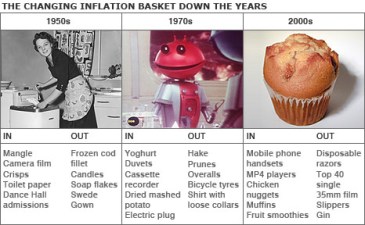
 One of the key indices for measuring consumer habits, and their effect on the economy, is the Consumer Price Index (CPI); called a basket of goods, its contents influence a number of policy decisions, one of which is inflation. The CPI is also an interesting measure of changes in cultural taste, and as ever on this site, this has implications for class; for example, as the Grauniad highlighted, this year’s index saw the following: “Women’s active wear leggings, quiche and raspberries are in vogue while pork pies and bottles of lager drunk in nightclubs are out.” I’m too much of a coward to make judgement of how this affects class habits, particularly as the influence of advertising is often high.
 The year before also saw the inclusion of gin, cycle helmets, and non-dairy milk. It’s an interesting exercise (at least I think it is), to go through the index and look at what you consume yourself. It gives you a distant sense of how you influence, or are influenced by, consumerism. However, this also shows how connected and co-opted we are by the products we consume, and the mechanisms we use to do so; a big one being debt. Debt is the diesel that fuels the economy. Years ago when I finally decided to get a contract for my mobile, I couldn’t get it because I didn’t have a debt record. I had never borrowed money (we don’t have a mortgage) so I couldn’t be trusted, at least by the computer which kept saying no.
 Life, as they say, goes on when we die, and in today’s poem by Dave Eales, List of Items Which Fall Through the Letter Box After I’m Dead, we find a fascinating and depressing set of missives from bodies that don’t know your body is no longer sentient. I’ll leave you to read the poem to see the detail, but for a moment, think about yourself dead (apologies) and what your letterbox would receive after you’ve gone. How much capitalism still chases you; still tries to get you contribute further to the nation’s debt; doesn’t discount you completely from the ever-changing consumer price index. Given the limited amount of spare landfill we have left, I’m sure coffins must be way down the list of consumer items these days. By the way of an end, a fun fact; we are now a global population of 7+ billion – do you know how many people have died since the dawn of people? (c107 billion). Have a great week y’all.
Dave Eales was born in Apapa, Nigeria in 1962. He grew up in Nigeria, South America & UK. He spent many years working in IT in London, as well as writing and drinking in his spare time. Dave lives in France and is currently working on his first novel.
List of Items Which Fall Through the Letter Box After I’m Dead
A letter inviting me to apply for a gold credit card at 17 % APR;
A bill from the Electricity company for £46.22;
A voucher entitling me to enjoy any king size pizza for £4.99 (garlic bread not included);
A letter sent to the wrong person, she no longer lives here;
An advertisement from a bank, promising the lowest rate mortgage available;
Some dust;
A postcard from a long forgotten girlfriend;
A demand for council tax from Islington Borough Council;
An offer to invest in Jupiter’s high income fund ISA;
A reminder from Central Islington Library concerning overdue books;
More dust, leaves too;
A First Direct bank statement, showing a credit balance of 342.39;
A birthday card, (unopened).
 When it comes to making a decision, we all like to think that we have rational minds of our own; we are open to listening to both sides of an argument, then we put our tick or cross in the box, give our opinion in the pub, at work, or Speaker’s Corner. But the truth is, we are all a guilty of bias. However, I don’t necessarily think that’s a bad thing; for example, if Boris Johnson or Alan Sugar say something I’m pretty sure I will disagree with them; so the nihilistic part of me says, why bother listening? Most politicians with wealth (often inherited), are all eyes on maintaining their privileged lineage, thus couch their arguments in a thinly veiled rationale, which usually equates to bullshit and hypocrisy.
 ‘Fracking, North Dakota’ and ‘Prophet and Loss, a plague foretold’, expose the effects fracking and rabid capitalism have on the lives of people directly impacted by them. From the beginning of such processes: ‘Columns of stainless steel stab the earth./ Waste gas flares from a pipe;/ orange flames corrupt the blameless sky.’ To their catastrophic end: ‘Through every field and farm will swarm/ conforming fools consuming all,// returning naught of worth.’ The case for and against a biased attitude is a straightforward one; your opinion is either biased toward ensuring you make huge profits whatever the consequence, or it is skewed toward ensuring you have a livelihood; a job, a home, enough food, access to health services, to education. Of course, if we weren’t so biased we’d use the terms objective/subjective so that everyone would really know which side we were on.
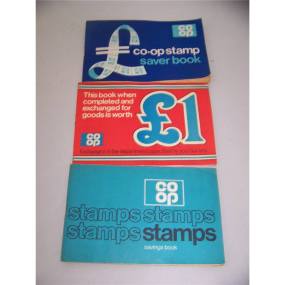 When I was young, my mum used to collect stamps. We had a Co-op on the corner. I remember she would come home with the shopping and blue stamps, letting me stick them in to slowly fill the pages until you had enough for a dividend (
 of pennies/ in a small leather purse and counting them when no one was looking,/ the card left face down on the kitchen table, in anticipation of a stamp.” These schemes were/are targeted at those who may not have bank accounts, or a way in which they have enough extra money at the beginning of December. This was the case for the grandmother in this poem, “I did not see the strange woman/ who woke in the dark and went digging through her pockets,/ knowing she would find nothing more than ghosts and prayers.” The schemes are now fairly widespread, the latest being
 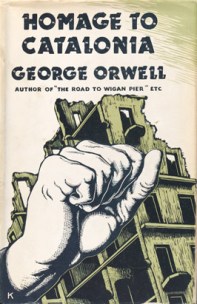 It is seventy years since George Orwell’s Homage to Catalonia was published; his personal account of the Spanish Civil War. Now, the papers’ headlines carry the same title, as the people of Catalonia once again go against the Madrid government in a so-called ‘illegal’ referendum on independence. Irrespective of one’s views about the subject of the vote, the state response of violence against all and sundry was abhorrent. Scenes across the region, but in particular Barcelona where much of the media was concentrated, and lest we forget where a terrorist atrocity was carried out along the famous Las Ramblas, showed an elderly woman with blood pouring from her head, another with a woman’s fingers being broken, and many other such beatings.
 Matt Duggan’s poem, The Spaces Left Bare, reflects on such a protest during a stay in Barcelona; one that can be seen as a wider indicator of heightened capitalism and its effect on peoples’ ability to afford housing in major cities and conurbations throughout the world; something that echoes developments from San Francisco to
  The supermarket giant Tesco did a funny thing recently.
 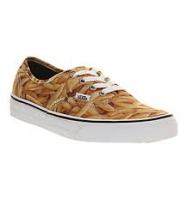 One of the contradictions of capitalism, or should I say one of its cons, is the issue of choice. On the ugly face of it, your choice of purchase, whether it be an earring or a car, is endless. You can get a seeming boundless range of designs; for example, when researching chip vans for this feature, I came across the popular shoe brand Vans, and yes, you’ve guessed it (unless you haven’t) was an image of a pair of shoes covered in chips – you can also get a pair with pepperoni pizza design. But the contradiction in all of this, is that as consumers we tend not to go outside our comfort zones. We wear remarkably similar clothes, eat a small range of foods. Hence trends emerge, promoted by social media, the most recent of which sees half the western world running around playing
  Small family run businesses and trades have been squeezed from such practices for many years. But I think one of the businesses that hasn’t been corporatised in this way, is your fish and chip shop (with the exception of Harry Ramsden’s in the UK, which is now a series of franchises). Lorraine Carey’s nostalgic poem, “The Chip Van,” takes us back to a time when such food outlets were more ubiquitous.
 sticks and leave. Julie Hogg’s poem, Detroit Driftwood is a



 Proletarian Poetry