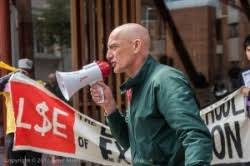
Poem

The Hunger by Rachel Plummer

A family we know have just had their lives changed irrevocably. She worked as a school administrator, had been there for fifteen years. He was a sparky who ran his own small business with his son as an apprentice. Last summer, he had a massive stroke; he is unable to move one side of his body and is having to learn to speak again. He is in his forties. She had to give up her job to look after him, and their son has to find a new job. They are not well off, they don’t own their own home. Their future will be a struggle, and for the first time they will have to engage with the welfare system.

benefits_17I fear for them therefore, because the Employment and Support Allowance (ESA) is, unsurprisingly, falling well short of people’s ability to manage on the financial assistance provided. A survey has just come out from a national coalition of disability organisations, which shows that two thirds of claimants, not only felt they were not being given enough to live on, but that because of this they were falling ill. Of course, this creates a vicious circle because they then need medical assistance. The government denies this; their own survey found that 83% were satisfied – but even if we split the difference, it still means around 40% of people are struggling. (more…)

Tsunami Pilgrims by Khairani Barokka

islandThe warming of the sea is a waking beast; and so, the main effects of climate change are being felt by small islands and those on the coast, particularly in developing countries. I am currently reading Richard Georges’ forthcoming collection ‘Giant’ for a review for the Poetry School. The collection, which focuses on Georges’ home the British Virgin Islands is riven by fragility. Here in the UK, we often talk about the weather – a day of snow will make headline news. We too are an island, but are world away from the experiences of those whose coasts have always been open to the whims of nature, and now compounded by the impact of human consumption. And as I’m reminded by today’s poet, as a colonial power the UK was instrumental in sucking out the resilience of island populations through the extraction of natural resources. (more…)

Dr Lee and the Apple Tree/Silencing Big Ben by Katherine Lockton

lemn sissay christmas dinnersWhat is a working class Christmas? It is two hundred homeless people spending the day in Euston train station, out of the cold and being fed. It is the Christmas Dinner’s Project founded by the poet Lemn Sissay, which provides dinners for those aged 18-25 leaving care. It is organisations like Crisis, the Quakers, the Sally Army, supporting the homeless. There are a whole host of volunteering initiatives on the day. Christmas is about not forgetting those more in need than ourselves, whether they are Christian or not and whatever class and/or religion you may be. And yes, it is the escape from work (not from family though), over-indulging, getting ratted, forgetting what Boxing Day is really about & having a punch up instead, the list I am sure is endless on depending on your inclinations. (more…)

A Short History of San Antonio by Charles G Lauder, Jr.

One of the things I like about doing PP, is learning from the poems – not only the universal themes that have been the mainstay of poetry, but predominantly the history, past figures critical to left wings movements, whether at the global level, or in their own country at a particular time. I tend to be more interested in figures who fought against power, than those who went on to hold it (although being in power is the harder job, as countless leaders have shown in their failure). The lives of people like James Baldwin, Rosa Luxembourg, Langston Hughes, Paul Robeson, Audre Lorde are fascinating in the paths they took to try to change the structures of power, and arguably did so in the more difficult pre-Internet, world war and revolutionary times.

Poets thus far on Proletarian Poetry have covered a number of prominent, yet sometimes not so well-known individuals who tried to hold power to account. Ian Duhig’s poem about the Mexican revolutionary Manuel Palofax who advised Zapato; Malika Booker’s lament to Walter Rodney, the Guyanese academic activist who was assassinated in a car bomb; Matt Duggan’s poem about Wat Tyler the 14th century leader of the peasants’ revolt; Catherine Graham’s poem about the writer Jack Common feted by George Orwell; John Mole’s poem of the ‘peasant poet’ John Clare; Lemn Sissay with Sparkcatchers, about the Bow Matchwomen’s strike, and Jon Tait’s Kinmont Willie, a 16th century border raider against the English. Then of course there are the poems about people, (relations, friends of poets) who led so-called ordinary lives, yet did extraordinary things when looking back from our comparative prosperity and safer lives.
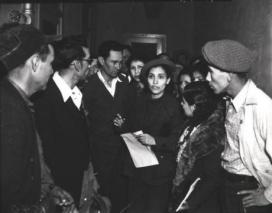
I’m very pleased therefore to add another such poem to the site, with Charles Lauder’s A Short History of San Antonio, which in fact brings the two aforementioned aspects into one; as Charles explains, ‘it started as a personal tale of my great-grandmother’s pecan tree but as poems often do, expanded into one also of Emma Tenayuca (pictured) in the Pecan Shellers Strike of January 1938, her life as a union organizer and fighter for workers’ rights (especially Mexican women).’ As Charles refers to her, she was also known as La Pasionaria (the Passion Flower), like the more well-known (in Europe at least), Isidora Dolores Ibárruri Gómez, who became General Secretary of the Communist Party after her role in the Spanish Civil War and coined the phrase, ‘no pasaran’ (they shall not pass). The juxtaposition of these OLYMPUS DIGITAL CAMERAof stories two women in Mexico and Texas, is so impressive in connecting the personal with the more general sweep of history, and makes for a great read.
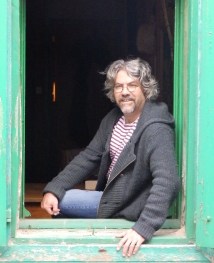
Charles G Lauder, Jr, was born and raised in San Antonio, Texas, and has lived in the UK for the past seventeen years. His poems have appeared internationally and he has published two pamphlets: Bleeds (2012) and Camouflaged Beasts (2017). ‘A Short History of San Antonio’ is part of a new series of political poems. He is also the Assistant Editor for The Interpreter’s House.


A Short History of San Antonio

Sixteen men in dungarees and Zapata moustaches,
the dustiness of their skin revealing
how long they’ve been in Texas,
drink coffee on the newly built
front porch, legs dangling over the edge
while the foreman’s wife hangs doors,
strolls along the garage’s tin roof
hammer in hand, looking for loose sections.
This will be her house, this tree
her personal supply of pecans.

                                        (barefoot La Pasionaria eats ice cream
                                        with her grandfather in Plaza del Zacate
                                        after Sunday morning mass at St. Agnes’s,
                                        listens to an anarchist read newspaper accounts
                                        of revolution in Mexico, of the FBI snatching
                                        and deporting radical leftists, of the Klan’s plan
                                        to parade through the city; it will be a few years
                                        before La Pasionaria organizes her first strike,
                                        spends her first night in jail, two hundred of them
                                        in a space meant for sixty)

Underneath this canopy, the foreman’s wife thinks,
there will be a patio of crazy paving
with places to sit and drink iced tea,
a red-and-silver two-wheeled barrel
flavoring pecans overhead with barbecued
pork shoulder and chuck roast; in October
the tree will throw down a gauntlet of pecans,
their husks like swollen wrinkled yellow eyelids
that must be peeled back, the shell heel-smashed
or delicately cracked over a tin baking tray.

                                        (La Pasionaria discovers Thomas Paine
                                        and Karl Marx, marches and demonstrates
                                        for Mexican women rolling cigars, sewing clothes
                                        in dirt-floor homes lit by kerosene lamp
                                        with no running water or electricity; she learns
                                        about those in white aprons and thin cotton dresses,
                                        with their Si and ¿Baño, por favor?
                                        
herded onto long benches in airless rooms
                                        facing a line of washed-out oil cans and piles of pecans
                                        that must be spun into gold by day’s end)

The foreman’s wife doles out pecans piecemeal
to children and grandchildren like an advance
on an inheritance to see what they make of it,
returning at Christmas with pies and candied yams,
sugar cookies and snickerdoodles,
served after mass to East Coast cousins
with a la mode tales of stupid Mexicans
and an admonishment that ‘a pee-can
is what you keep under the bed in case of emergency.’

                                        (twelve thousand women gather in the park
                                        chanting La Pasionaria’s name; she organizes
                                        pickets, hands out leaflets, ladles soup;
                                        police and Anglos fear the West Side tide
                                        is turning from brown to red, storm picket lines
                                        with bricks and bats while the Klan burn effigies;
                                        the union fears she is too much a communist
                                        and puts a man in charge to end the strike;
                                        the shellers get three more brown pennies
                                        and someone to fix the scales
                                        while men roll cracking machines
                                        into the spaces where they used to sit)

The foreman’s wife has to tear down
and rebuild the garage for being two inches
over the property line, her hammer stained
with the squirrel that bit her son’s calf.
On the garage walls, she hangs
old license plates, tools, and a bathtub
for making gin. Sometimes, she stays up
all night playing cards. She makes
her grandchildren hold the chickens
while she wields the axe. As a widow,
she transforms the house into a duplex,
takes in tenants. Her great-grandchildren
find her on the garage roof mending leaks.

                                        (La Pasionaria runs through an underground tunnel,
                                        as protestors storm the auditorium, rip out seats,
                                        smash windows, where she was just speaking;
                                        she tries to find work, but even under an alias
                                        she is known; she flees to the West Coast
                                        for twenty years; when she returns, she discovers
                                        murals of herself on the walls of laundromat, gas station,
                                        elementary school; she teaches literacy
                                        to Mexican children in the old barrio;
                                        mourners bring pieces of steel to her funeral)
Winner Stays On by Katherine Owen

17843-carters-barn-showroom-pool-tablesMonday nights in pubs was games night. My father was in the dominoes’ team (5s & 3s) at his local at the bottom of the street, and I was in the pool team at my local at the top of the street. This was a strictly male affair, at least in the way traditions don’t change. We played pool across the city; it was the one time you could go to the roughest pubs and not fear a beating – sometimes the locals left that to taking chunks out of each other. The main fear however, was when the opposing team had a female member, sometimes even two, out of the eight. In that male repressed world of banter, if you drew the ‘bird’, you were in a no-win situation – you get the picture.

5170f458a2ff2113c14c63fb591ef0a4Society has been set up for men; whether in their increasingly outdated role of breadwinner, although this is still the predominant form of gender relations, or in social activities – pubs, sports events and team sports. Participation rates in sport between the genders has been massively skewed. In the US for example, 40% of boys played basketball compared with 25% for girls, and that’s one of the better examples. Walk around your local park on a Saturday or Sunday morning and you will see it populated by boys and men, from six to their mid-fifties, playing football. Things are however, improving; women’s football is becoming more prominent, and other sports such as swimming and cycling are being given a certain level of equal coverage.

638x759Katherine Owen’s evocative poem, “Winner Stays On,” depicts a night when a woman takes on the men at pool in their habitat, similar to my own experience back in the 80s. It’s winner stays on at The Brown Jack./ But after our game, Graham and I slip back/ to the shadows./ Not good enough to play the regulars.” On hearing this poem at the Swindon Poetry Festival, Katherine explained how she had been recovering from ill-health, and simply being able to stand at a pool table was a personal advance. “The balls go down in a slow, consistent way./ Now all eyes are on the table:/ the only woman in the pub shoots pool./ Inwardly, I laugh./Even to walk is something new.” I won’t give the game away (sic) by saying how it turns out, but as with any good poem, there is a lot more going on than appears on the surface; much the same as happens in a game of pool, of football, or more generally when looking at the gender make-up and politics of sport.

Katherine Owen started dictating poems during the 14 years of her life she spent bedbound with severe Myalgic Encephalomyelitis. A prize winning poet, Katherine is published in various anthologies, including The Book of Love and Loss. She is author of Be Loved Beloved– a collection of spiritual poetry. Katherine has given talks and readings throughout the country, as well as radio and blog interviews. She runs the popular websites: www.healingcfsme.com and www.a-spiritual-journey-of-healing.com.


Winner Stays On

It’s winner stays on at The Brown Jack.
But after our game, Graham and I slip back
to the shadows.
Not good enough to play the regulars
we invite up someone new.
But the man insists
so I, the winner, step up
apologising for ineptitude.

The balls go down in a slow, consistent way.
Now all eyes are on the table:
the only woman in the pub shoots pool.
Inwardly, I laugh.
Even to walk is something new.

The man gets anxious.
“Don’t let a girl win,”
shouts a voice from the crowd.
But she does.

Another man takes his place.
Now the atmosphere builds.
I resist apologies for misses,
silently chanting,
‘I can pot the balls’,
‘I can pot the balls’.
And I do
benefit from mistakes made by a man
in fear of losing to
a woman.

Another fills his place.
This time, at last, I lose and take my seat.
My friend smiles,
sharing the extraordinary.

Months later, back at The Brown Jack,
I chat to a regular.
He says:
“I was there that night.”

That night a woman walked
and won.


Alternative CCFC CV by Mike Jenkins

The two sides of the same football coin can sometimes be summed up as being humour and violence; and what they both have in common is camaraderie, whether for good or ill. The depths of a football fan’s self-deprecating humour can be many leagues under the sea. At one of the rare Coventry versus a Premier League side games I went to, Arsenal beat us 6-1 in the League Cup at the Emirates. A night game in London, everyone had a blast, pissed up, singing the old songs that harked back to our own Premier League days. A few months later, we played Tottenham in the FA Cup 3rd round at White Hart Lane, and were duly beaten 3-0. So, what did the Cov fans sing to the jubilant Spurs fans? ‘You’re not as good as Arsenal’, because they put six past us and their North London rivals could only manage three.

russia hooliganNext Summer the English fans, for it is only they after the near misses of Scotland, Wales, and both Irish teams, will be heading to Russia for the World Cup. The media are already licking their lips at the prospect of trouble. A BBC documentary on Russian football ‘hooligans’ interviewed a number of organised gangs; those who caused the violence in Marseille in 2016, and were more than looking forward to the arrival of their English counterparts on home soil. There was no hint of irony in explaining how they were merely copying what English fans had been doing domestically for decades; but their perspective felt very dated, as though the UK terraces were still all-standing, and lads with mullets wearing bomber jackets, were going at each other. They are already planning pre-tournament jollies of violence, with the upcoming game between Manchester United and CSKA Moscow, where they plan to team up with their domestic rival like Zenit St Petersburg to cause havoc. No doubt Putin has a hand in it, even if it is only by riding a horse with his top off, and doing judo with giant fish in the Baltic Sea.

DSC_3052 (1)It is therefore nice to have a poem such as Mike Jenkins’ humorous “Alternative CCFC CV”, (his CCFC is Cardiff, not Cov) that marries the comedy of football fans with their penchant for a little bit of aggro. “I’ve stood on the North Bank, Vetch Field,/ supporting the wrong team/ (lucky we never scored!).// I’ve carried on striding/ straight into a marauding Chelsea firm/ saying ‘I’ve lived in Belfast’ to a fleeing friend.” It reminds me a little of the loveable rogue Robbo in Patience Agbabi’s poem, “A Devil in Cardiff”, ‘who would sell his nan for a pint’. But for all their love of the game and roguish ways, would you really want those types of activities on your CV? Maybe. 

Mike Jenkins is a retired teacher of English at several Comps. Novelist, short story writer for both adults and young people; he blogs regularly at: www.mikejenkins.net. He’s a Dedicated Bluebird. Latest books – ‘Sofa Surfin’ (Carreg Gwalch), poems in Merthyr dialect and ‘Bring the Rising Home‘ (Culture Matters) poems accompanied by images from paintings of Merthyr artist Gustavius Payne.


Alternative CCFC CV

I’ve stood on the North Bank, Vetch Field,
supporting the wrong team
(lucky we never scored!).

I’ve carried on striding
straight into a marauding Chelsea firm
saying ‘I’ve lived in Belfast‘ to a fleeing friend.

I’ve had a whole pint
poured down the drain
by Devon cops, just because City.

I’ve met the leader of the Soul Crew
running away from trouble,
but urging us to join in.

I’ve reached the depths of despondency
after the play-off loss to Blackpool
and vowed not to eat oranges again.

I’ve been to games in the Dungeon
on wet, freezing Tuesdays
when the police outnumbered fans.

I’ve seen droogies in bowlers
carrying umbrellas on the Bob Bank;
had an umbrella confiscated as a weapon.

I’ve witnessed Boro fans doing the Ayatollah
after we beat them in the FA Cup,
when Whitts scored with a rare right-footer.

I was there when Pompey took the Grange End
and our fans climbed the floodlights
as Man U threatened to invade.

I’ve broken my mobile and glasses
in goal celebration ecstasy.
Can I have that job in Security?


Mostly Hating Tories by Janine Booth

I’m no historian of the Conservative party, nor have I any wish to be. However, in thinking about this feature, I looked at the idea from the posh boy anti-establishment-lite Monty Pythons with their sketch of ‘what have the Romans ever done for us’, in terms of the Tories. They are the oldest political party, which is not surprising given that it was very hard during the 19th century for labour to get organized never mind form a political party; it was the Liberal Gladstone who increased the suffrage to include working class people in 1884, and it wasn’t until 1906 that the Labour Party had its first formal meeting, finally taking power in 1924, albeit having to rely on the support of the Liberals.

So what have the Conservatives ever done for the likes of us? First off, they killed many many Irish people during the protracted so-called Troubles, and used Unionist paramilitary groups to their own illegal ends. Similarly their imperial and colonial endeavours have killed unknown amounts of people in the countries of Africa, South and East Asia. Obviously, they have continually restrained, if not tried to completely wipe out, the Trade Union movement; the ironic hypocrisy of this historic relationship recently came in the setting up in 2015 of the Conservative Trade Union and Workers (named: Tory Workers). The party’s mantra of free trade has forever been to line their own land with the hedgerows of wealth that separate the worker from the landlord, landowner, businessman in similar pre-industrial ways.

austerityThen, since the setting up of the Welfare State by the Atlee government, they have continually tried to dismantle it, not only from their small state ideology, but in order to spend as little on people who are most in need by lowering the taxes of the most well off So, we knew it all along, but now it’s official; the Tories kill poor and disabled people. It may not be murder, nor manslaughter, if only in the eyes of the beholder of laws they invented themselves. The new austerity age of the past seven years or more, has seen many people die as a direct result of Tory policies on welfare. In a Grauniad article recently, the following facts were put on bloody display: 90 people a month die in the UK as a result of being deemed fit for work; in 2015 there were 30,000 excess deaths, the greatest rise in mortality in fifty years; suicides in prisons reached a record high with a 40% drop in prison officer numbers. I could go on, but we’d never get to the poem, and it’s all very depressing.
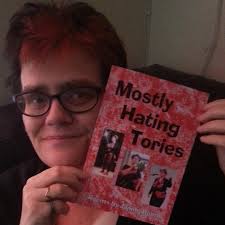
mostly hatingTherefore, to cheer you up, I give you the wonderful Janine Booth with her wonderful “Mostly Hating Tories”. By the way, she has a whole oeuvre of Tory hating poetry. Check them out here.
Janine Booth is a Marxist, trade unionist, socialist-feminist, author, poet, speaker, tutor, former RMT Executive member, supporter of Workers’ Liberty, aspie, bi, Peterborough United fan!


Mostly Hating Tories

What shall I do on this fine day?
There’s so much on my list
A mix of work and rest and play
I’m sure you get my gist
And maybe I’ll compose a rhyme –
But my unwritten law is
That every day I’ll spend my time
Mostly hating Tories.

I’ll go to work, some bills I’ll pay
That’s if I’m feeling rash,
To see her through to payment day
I’ll lend my friend some cash,
I’ll probably make my kids some tea
And read them bedtime stories
Of homeless piggies one, two, three
And why they hate the Tories.

I’ll hate them for the bedroom tax
I’ll hate them for the cuts,
For living off the workers’ backs
I’ll hate their very guts,
Look, see the depths to which they’ll sink,
They don’t know where the floor is,
That’s why I’ll spend my day, I think,
Mostly hating Tories.

What’s that you say? That hate’s not nice?
Please love thine enemy?
Well yeah, I tried that once or twice
It doesn’t work for me,
And if you think that’s not fair play
Remember this, you must:
The Tories, they will spend their day
Mostly hating us.

A history of evil done
Will justify my hate,
I still detest the Tory scum
For Section Twenty Eight,
Nye Bevan built the NHS
So he knows what the score is:
And he said vermin come out best
Compared with bloody Tories.

I’m sure I’ll find time to revile
That UKIP and its drivel
And I’ll locate a little while
To loathe a lonesome Liberal,
I’ll maybe pause to show regret
For Labour’s missing glories
But save the fiercest fury yet
For mostly hating Tories.

For generations and hereon
Our class and those before us
Grew up to know which side we’re on:
The side that’s not the Tories,
So when I die, do this for me –
Inscribe and sing in chorus
Here lies Janine, her life spent she
Mostly hating Tories.


time comes counting / one two zero by reuben woolley

BalanceOfPower_(cropped)In talking with my wife the other day, we wondered which countries are doing well in the world today. Of course, ‘well’ is an abstraction and it was more easily answered in looking at those doing badly, or not so well. The world is unfurling, especially if we account for the use and impact of social media, exposing great instability. The whole European project is in question, not only in relation to Brexit, but also in terms of resolving proxy wars, as is the case in the Ukraine. Africa is on the whole improving in terms of headline indicators such as child mortality, although it is still high; however, within the individual countries, particularly those who are influential – South Africa, Nigeria, Kenya, Egypt, not to mention the fluid situation in Zimbabwe – there is instability. India quietly treads water, Pakistan is embroiled in the war in Afghanistan, as well with India through the proxy war in Kashmir. Brazil is also in a state of uncertainty over high level corruption charges. Both Russia and China are becoming increasingly authoritarian and emboldened by the lack of any countervailing powers, both internally, and with Trump, internationally. Pockets of hope come when looking at Scandinavian countries, with examples of Finland’s trial of universal basic income, maybe Canada will have some influence, and Australia has been immune to the international economic crisis – but the latter two examples feel like outposts beyond their geographic location.
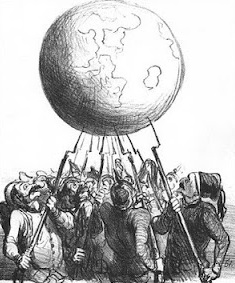
Then we have the United States, which is not going quietly into the night. From this side of the Atlantic, it seems the country’s identity is riven with divisions that hark back to the civil war. And the biggest irony in all Trump’s hubris of making the United States isolationist again, is he loves playing draughts/checkers (he’s not clever enough for the chess metaphor) with international relations. In the case of those with North Korea he is being played by China, and to some extent Russia (although they are playing another game with the election interference). So today, we are in a situation where it’s like two children in the playground but both have nuclear weapons. Trump in questioning why Kim Jong Un would call him ‘old’ says, by not saying, that the North Korean despot is ‘short and fat’, to which he, the US president (I still find it hard to comprehend that he is) has been sentenced to death.

me-at-newcastle-stanzaIt is almost beyond cliché to say we have not learned the lessons of history; I say beyond, because of the hopelessness in feeling it could make any difference. But we have to; even if we feel we are repeating ourselves, because after all we are hoping not to repeat history. We see this need in poems such as Reuben Woolley’s ‘time comes counting / one two zero’, which is dedicated to the Coventry poet Antony Owen, who has written and campaigned for nuclear disarmament, in particular his work with the CND education programme and ties with Japan. In Reuben’s usual beautiful brevity and minimalist form, he captures the tragedy of nuclear war in Japan and the impact it still has for subsequent generations; certainly, a history lesson for us all.
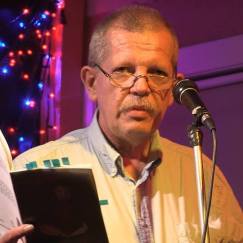
Reuben Woolley has been published in Tears in the Fence, The Lighthouse Literary Journal, The Interpreter’s House, Domestic Cherry, Ink Sweat and Tears, The Stare’s Nest, And Other Poems, The Poetry Shed, The BeZine and Goose among others. He has a collection, the king is dead, 2014, Oneiros Books; a chapbook, dying notes, 2015, Erbacce Press; a short collection on the refugee crisis, skins, 2016, Hesterglock Press and a new collection, broken stories, just published by 20/20 Vision Media, 2017. Runner-up: Overton Poetry Pamphlet competition and the Erbacce Prize, both in 2015. He edits the online poetry magazines, I am not a silent poet and The Curly Mind.

time comes counting / one two zero
(for Antony Owen)

when the rain comes
in shadows

                    she said

i’ll see the worlds
turn
like pages

                    the skins
they left
on walls / on
pavements

                    my
Nagasaki
heroes / my
hiroshima angels

they’ll not see
                    she said
not yet / not ever

& the cherry trees still flower
tears for generations

Poetry on the Picket Line, news of upcoming fundraiser & poem by Grim Chip

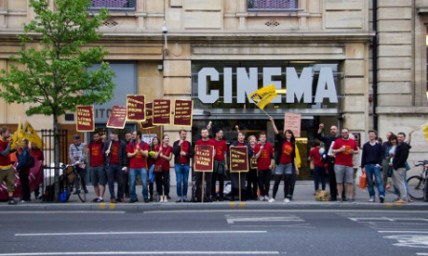
hackneyritzyprotest460Poetry on the Picket Line (PotPL) grew out of the solidarity work carried out by the poets involved with supporting PCS members in the National Gallery dispute. Understanding the challenges of keeping spirits high on picket lines first hand, they saw an opportunity to punctuate the speeches and slogans with poetry to both entertain and agitate. The dispute was successful, as was the poetry, so with word getting round, PotPL poets have gone on to support strikers at the National Museum of Wales, Junior Doctors, Cleaners at the LSE and, most recently, the Picturehouse Cinema workers fighting for a living wage. They have performed poetry alongside Owen Jones and John McDonnell including sharing a platform at the May Day demonstration this year.

PotPL have always believed in putting their money where their mouths are and use the power of poetry to move people to build funds to support workers in struggle. For this reason, Poetry on the Picket Line are holding their first fundraiser “Cellarful of Solidarity” on Sat Nov 18th at The Betsey Trotwood in Farringdon, London. They will present some of the many poets who have supported or performed as a part of Poetry on the Picket Line including: Janine Booth, Tim Wells and Grim Chip, as well as Matt Abbott, Sophie Cameron, Dan Cockrill and Peter Raynard, with others to be announced. Solidarity messages and poems from Billy Bragg, Phill Jupitus, Tim Turnbull, Joolz Denby, and many more will be read and raffled on the night, which will end with a special Rocksteady DJ set from Tim Wells and live music from singer/songwriter Maddy Carty.

chip picket lineToday’s poem is by Grim Chip who has featured on the PP before. Grim is a poet and trade union activist, a founder member of Poetry on the Picket line.

Bulletin

The Prime Minister is being kept informed,
It is very much business as usual,
We can prove the doom-mongers wrong,
In the event of an incident,
There is no reason to panic,
Casualties are inevitable,
The Prime Minister is being kept informed,
Casualties are inevitable,
There is no reason to panic,
In the event of an incident,
We can prove the doom-mongers wrong,
It is very much business as usual,
The Prime Minister is being kept informed.


Myth Men and Lone Man Stories by Sarah Sibley

he's hiding somethingOne of my many favourite Tom Waits’ songs is ‘What’s He Building in There?’, about a very ‘private’ man, someone who keeps to himself. ‘He has subscriptions to those magazines. He never waves when he goes by. He’s hiding something from the rest of us He’s all to himself I think I know why.’ Waits says the song is the ‘rat theory’; as there are more and more of us, we turn on each other, with a kind of malevolent curiosity, especially if someone is ‘different’ to what we perceive is the norm. The song is very prescient given it was written in 1999, before the Internet took off.

Back home, we had a ‘strange’ man who lived on the corner. He was a recluse and lived in a big dark house with an overgrown garden that had a pond in it – the handed-down story was that he buried his wife underneath the pond. He was known as Wet Foot, because he once painted his front door and wrote Wet Paint on the glass, that he never took off and it faded away until it looked like the words ‘Wet Foot’. Lots of kids would ‘rat-a-tat ginger’ his door and run away, but sometimes he would come out and chase them. He was an archetype of Waits’ song with all the rumours of what people heard or saw, almost all of which are not true: ‘Now what’s that sound from under the door? He’s pounding nails into a hardwood floor and I swear to god I heard someone moaning low.’

20170716_201556_resizedToday’s dark poems ‘Myth Men’ and ‘Lone Man Stories’ by Sarah Sibley, are similar childhood tales of rumours, with fleeting sights and sounds of scary men. “Have you been down the cellar at The Dog?/ Seen the drayman covered in cobwebs,/ fading in and out of sight/ with the flickering light bulb;’ Such stories are drawn from the ‘outsiders’ of village life where Sarah grew up, which excited the imagination of children in an area full of country shadows. “Up at High Winds farm by the slurry pit/ we’d hide and seek in a thicket/ ripped every night by storms -/ the kind we don’t get in these parts anymore.’ And there always has to be a dark side in order for the stories to hold our curiosity. ‘For a time, stories of a lone man/ wiped us out from the copse.’ And it is always a glimpse, it can never be a clear sighting: ‘Shrimp’s sister saw him once in her rear-view mirror, disappearing down Baby Lane,/ feeling hunted again.’ Happy Samhain everyone – welcome to the darkness.


Sarah Sibley was born in 1985 and grew up in the Suffolk countryside where she currently lives and works. Her pamphlet The Withering Room was published in 2015 by Green Bottle Press and was the London Review Bookshop’s pamphlet of the year. Her work has featured in Agenda, Orbis, Iota, Obsessed with Pipework, Ink, Sweat & Tears, and And Other Poems. She is currently working on a first full collection.


Myth Men

Have you been down the cellar at The Dog?
Seen the drayman covered in cobwebs,
fading in and out of sight
with the flickering light bulb;
seen the man whose head
is as big as a car steering wheel,
driving fast out of Stowmarket.
Or the man whose hand is a pig’s trotter;
Shrimp’s sister saw him once in her rear-view mirror,
disappearing down Baby Lane,
feeling hunted again.

Lone Man Stories

Up at High Winds farm by the slurry pit
we’d hide and seek in a thicket
ripped every night by storms –
the kind we don’t get in these parts anymore.
For a time, stories of a lone man
wiped us out from the copse.
Rik Loader said he’d crossed back in,
showed us his souvenir – a knife,
its blade the width of my thigh.
At night I dreamt of the thicket;
in my hiding place a dead fox,
the lone man lost in a cloud of gnats.
Other times the startled pigs
and spooked horses tipped his mind
and he went staggering into the pit;
at the farm a single light kept vigil –
no stir from the brush,
a campfire burned to dust.