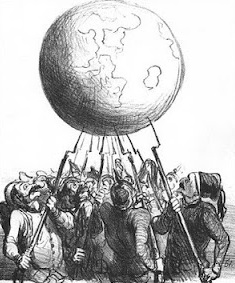
 In talking with my wife the other day, we wondered which countries are doing well in the world today. Of course, ‘well’ is an abstraction and it was more easily answered in looking at those doing badly, or not so well. The world is unfurling, especially if we account for the use and impact of social media, exposing great instability. The whole European project is in question, not only in relation to Brexit, but also in terms of resolving proxy wars, as is the case in the Ukraine. Africa is on the whole improving in terms of headline indicators such as child mortality, although it is still high; however, within the individual countries, particularly those who are influential – South Africa, Nigeria, Kenya, Egypt, not to mention the fluid situation in Zimbabwe – there is instability. India quietly treads water, Pakistan is embroiled in the war in Afghanistan, as well with India through the proxy war in Kashmir. Brazil is also in a state of uncertainty over high level corruption charges. Both Russia and China are becoming increasingly authoritarian and emboldened by the lack of any countervailing powers, both internally, and with Trump, internationally. Pockets of hope come when looking at Scandinavian countries, with examples of Finland’s trial of universal basic income, maybe Canada will have some influence, and Australia has been immune to the international economic crisis – but the latter two examples feel like outposts beyond their geographic location.
Then we have the United States, which is not going quietly into the night. From this side of the Atlantic, it seems the country’s identity is riven with divisions that hark back to the civil war. And the biggest irony in all Trump’s hubris of making the United States isolationist again, is he loves playing draughts/checkers (he’s not clever enough for the chess metaphor) with international relations. In the case of those with North Korea he is being played by China, and to some extent Russia (although they are playing another game with the election interference). So today, we are in a situation where it’s like two children in the playground but both have nuclear weapons. Trump in questioning why Kim Jong Un would call him ‘old’ says, by not saying, that the North Korean despot is ‘short and fat’, to which he, the US president (I still find it hard to comprehend that he is) has been sentenced to death.
 It is almost beyond cliché to say we have not learned the lessons of history; I say beyond, because of the hopelessness in feeling it could make any difference. But we have to; even if we feel we are repeating ourselves, because after all we are hoping not to repeat history. We see this need in poems such as Reuben Woolley’s ‘time comes counting / one two zero’, which is dedicated to the Coventry poet Antony Owen, who has written and campaigned for nuclear disarmament, in particular his work with the CND education programme and ties with Japan. In Reuben’s usual beautiful brevity and minimalist form, he captures the tragedy of nuclear war in Japan and the impact it still has for subsequent generations; certainly, a history lesson for us all.
Reuben Woolley has been published in Tears in the Fence, The Lighthouse Literary Journal, The Interpreter’s House, Domestic Cherry, Ink Sweat and Tears, The Stare’s Nest, And Other Poems, The Poetry Shed, The BeZine and Goose among others. He has a collection, the king is dead, 2014, Oneiros Books; a chapbook, dying notes, 2015, Erbacce Press; a short collection on the refugee crisis, skins, 2016, Hesterglock Press and a new collection, broken stories, just published by 20/20 Vision Media, 2017. Runner-up: Overton Poetry Pamphlet competition and the Erbacce Prize, both in 2015. He edits the online poetry magazines, I am not a silent poet and The Curly Mind.
time comes counting / one two zero
(for Antony Owen)
when the rain comes
in shadows
she said
i’ll see the worlds
turn
like pages
the skins
they left
on walls / on
pavements
my
Nagasaki
heroes / my
hiroshima angels
they’ll not see
she said
not yet / not ever
& the cherry trees still flower
tears for generations
 Today’s poem is by
  One of my many favourite Tom Waits’ songs is ‘
 Today’s dark poems ‘Myth Men’ and ‘Lone Man Stories’ by Sarah Sibley, are similar childhood tales of rumours, with fleeting sights and sounds of scary men. “Have you been down the cellar at The Dog?/ Seen the drayman covered in cobwebs,/ fading in and out of sight/ with the flickering light bulb;’ Such stories are drawn from the ‘outsiders’ of village life where Sarah grew up, which excited the imagination of children in an area full of country shadows. “Up at High Winds farm by the slurry pit/ we’d hide and seek in a thicket/ ripped every night by storms -/ the kind we don’t get in these parts anymore.’ And there always has to be a dark side in order for the stories to hold our curiosity. ‘For a time, stories of a lone man/ wiped us out from the copse.’ And it is always a glimpse, it can never be a clear sighting: ‘Shrimp’s sister saw him once in her rear-view mirror, disappearing down Baby Lane,/ feeling hunted again.’
  When it comes to making a decision, we all like to think that we have rational minds of our own; we are open to listening to both sides of an argument, then we put our tick or cross in the box, give our opinion in the pub, at work, or Speaker’s Corner. But the truth is, we are all a guilty of bias. However, I don’t necessarily think that’s a bad thing; for example, if Boris Johnson or Alan Sugar say something I’m pretty sure I will disagree with them; so the nihilistic part of me says, why bother listening? Most politicians with wealth (often inherited), are all eyes on maintaining their privileged lineage, thus couch their arguments in a thinly veiled rationale, which usually equates to bullshit and hypocrisy.
 ‘Fracking, North Dakota’ and ‘Prophet and Loss, a plague foretold’, expose the effects fracking and rabid capitalism have on the lives of people directly impacted by them. From the beginning of such processes: ‘Columns of stainless steel stab the earth./ Waste gas flares from a pipe;/ orange flames corrupt the blameless sky.’ To their catastrophic end: ‘Through every field and farm will swarm/ conforming fools consuming all,// returning naught of worth.’ The case for and against a biased attitude is a straightforward one; your opinion is either biased toward ensuring you make huge profits whatever the consequence, or it is skewed toward ensuring you have a livelihood; a job, a home, enough food, access to health services, to education. Of course, if we weren’t so biased we’d use the terms objective/subjective so that everyone would really know which side we were on.
 Is there enough anger in mainstream poetry today; in the journals/magazines and collections? In the US from
  Fran Lock, who has appeared on this site a number of times, is, along with Melissa Lee Houghton, one of those electrifying poets both on the page and the stage. Since
 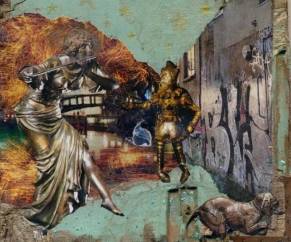 The second part of the collection is a wonderful grotesque imagining of a place called Rag Town and the girls who inhabit it, in particular the ubiquitous La La. In her notes on this section Fran says: “We have the right, and we deserve the space in which to be angry. I started writing the Rag Town sequence with this one thought looping endlessly in my head.” This was driven by Fran’s disillusion with what International Women’s Day has become; originally called International Working Women’s Day, the dropping of the ‘Working’ de-classed the day, so that in Fran’s words it has become divisive to raise issues of class as they relate to women’s oppression. “It’s divisive, for example, to say that white, settled, middle-class women “escape” from unlovable and undervalued domestic labour at the expense of working-class women, immigrant women, women in poverty.”
 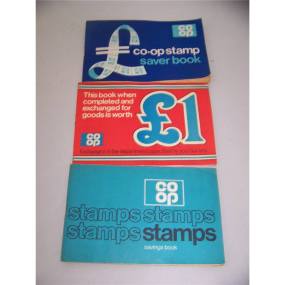 When I was young, my mum used to collect stamps. We had a Co-op on the corner. I remember she would come home with the shopping and blue stamps, letting me stick them in to slowly fill the pages until you had enough for a dividend (
 of pennies/ in a small leather purse and counting them when no one was looking,/ the card left face down on the kitchen table, in anticipation of a stamp.” These schemes were/are targeted at those who may not have bank accounts, or a way in which they have enough extra money at the beginning of December. This was the case for the grandmother in this poem, “I did not see the strange woman/ who woke in the dark and went digging through her pockets,/ knowing she would find nothing more than ghosts and prayers.” The schemes are now fairly widespread, the latest being
  Fluoxetine and psychiatry didn’t help; it wasn’t until he was free of daily commitments, went on mirtazapine and saw a therapist fortnightly, that he slowly came back to us. He is now just at the beginning of withdrawing from the medication as it makes him very tired and sluggish. We will see how it goes. The reason I mention this, is that this year’s theme for
  The poet, Emily Harrison, in her brilliant collection, ‘
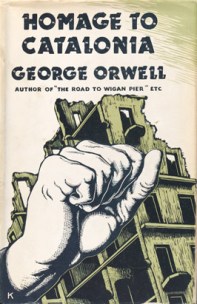 It is seventy years since George Orwell’s Homage to Catalonia was published; his personal account of the Spanish Civil War. Now, the papers’ headlines carry the same title, as the people of Catalonia once again go against the Madrid government in a so-called ‘illegal’ referendum on independence. Irrespective of one’s views about the subject of the vote, the state response of violence against all and sundry was abhorrent. Scenes across the region, but in particular Barcelona where much of the media was concentrated, and lest we forget where a terrorist atrocity was carried out along the famous Las Ramblas, showed an elderly woman with blood pouring from her head, another with a woman’s fingers being broken, and many other such beatings.
 Matt Duggan’s poem, The Spaces Left Bare, reflects on such a protest during a stay in Barcelona; one that can be seen as a wider indicator of heightened capitalism and its effect on peoples’ ability to afford housing in major cities and conurbations throughout the world; something that echoes developments from San Francisco to
 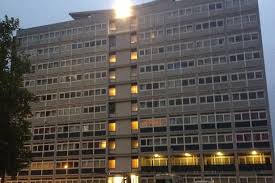 In 1980, the tower blocks of Hillfields that overlook Coventry city centre were mainly occupied by the working classes of West Indian and British origin. My friend had a flat on the eighth floor of Douglas House, a maisonette he shared with his girlfriend. We used to go round regularly, spending much of the night smoking weed and listening to reggae. One time, he wasn’t in so we knocked his neighbour and went through her flat, climbed over the balcony, shuffled along at one hundred feet up, and got in via his balcony. I still can’t comprehend the stupidity of that act now; just so we could find somewhere to hole up and get charged listening to Red by Black Uhuru.
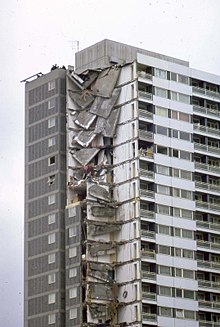 working class homes during the 1960s have a lot to answer for. Such housing was quickly seen as going against the way in which humans should live together. One early example was the
 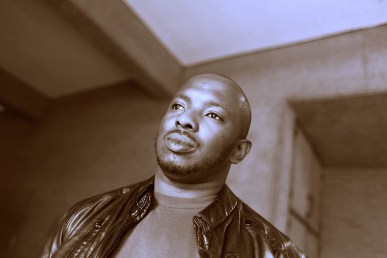 Although not an Asian, the poet Nick Makoha and his mother also left the country due to the coup, becoming part of the Ugandan diaspora. In his haunting poem ‘At Gunpoint’ (and throughout his brilliant collection ‘Kingdom of Gravity’), he describes the terror of a country under military rule. “The Times will report of people/ being forced to volunteer to avoid/ being a body hiding in the toilet/ or a corpse folded on a table.” Beyond the terror of trying to survive, questions of what you should do in such a situation arise, that challenge your own identity. “A man can’t but look into his own imagination/ to solve the conflict of himself. Should I have been/ the doctor, or the poacher in the clearing, a mad man,/ or shepherd boys minding their business?” Like many of the diaspora,
  Proletarian Poetry