 I have just received a great little publication by my friend and comrade in poetry, Rishi Dastidar; ‘95 Reminders’ is designed like an extra-large packet of cigarette papers, with front, back and insides adorned with epigram-type directions. The idea is based on Martin Luther’s 95 theses; some 500 years old, they were ‘arguments against what he viewed as corrupt practices of the Catholic Church, and now considered the start of the Protestant Reformation’. Rishi’s 95 reminders are a wonderful mix of wry powerful statements, from the personal (a reminder that your kids are not as interesting as your thought they were), to the global (a reminder that the world will always be on fire, whether we are here or not), to the political (a reminder that bearing witness can also be an act of resistance).
In light of today’s poem, and my interest in power, I particularly like ones such as his pop-picking Number 1 – ‘A reminder that no one – OK, very few people – ever gives up power willingly’. But the one that really rings in my ear, is probably one of the most simply put – ‘A reminder that solidarity is not a swear word’. Yes! If you look back to the miner’s strike of ’84 for example, Thatcher stopped workers from other parts of the country, going to support the likes of the Yorkshire miners. It was a brazen obstruction of solidarity.
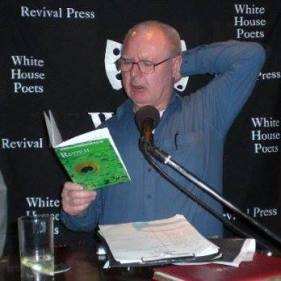 Mike Gallagher’s poem ‘Different Perspectives’ juxtaposes two examples of oppression; the first ‘Morant Bay, Jamaica, Seventeen Fifties,/ in close order a line of black women/ file up a ship’s gangway, overladen/ panniers of coal balanced on their heads.’ There is some comparison here with Mike’s own heritage, as the Irish were the first to be exiled to Jamaica by the British, and today still make up a large minority in the country. The second ‘perspective’ is ‘West Hartlepool, Nineteen Sixties, on a hard/ winter day, a line of unemployed men scratch/ the shoreline for nuggets of coal, shipbuilding/ gone, steelworks moved on to cheaper climes.’ Although some fifty years past, this feels so contemporaneous. And as Mike says of the two, ‘Different? Hardly! Just different perspectives.’ It is this type of solidarity of thought, experience, of action, that Thatcher knew to rail against when saying: ‘Morality is personal. There is no such thing as collective conscience, collective kindness, collective gentleness, collective freedom.’ I think the opposite to be true – it is immorality that is personal, and the aim and success of the collective, is solidarity, which she made into a swear word.
Mike Gallagher, writer, poet and editor, was born on Achill Island and worked in London for forty years before retiring to Kerry. His prose, poetry, haiku and songs have been published in Ireland and throughout Europe, America, Australia, Nepal, India, Thailand, Japan and Canada. His writing has been translated into Croatian, Japanese, Dutch, German, Italian and Chinese. He won the Michael Hartnett Viva Voce competition in 2010 and 2016, was shortlisted for the Hennessy Award in 2011 and won the Desmond O’Grady International Poetry Contest in 2012. His poetry collection Stick on Stone was published by Revival Press in 2013.
Different Perspectives
Different pictures in my Sunday paper:
Morant Bay, Jamaica, Seventeen Fifties,
in close order a line of black women
file up a ship’s gangway, overladen
panniers of coal balanced on their heads.
From an upper deck, a white overseer
looks down on the scene; no doubt, he fumes
when the woman slips, spills her load
onto the floor below; no doubt, he takes
appropriate action just as I would in Achill
all those years later when the donkey got
stuck in the bog, lashing out with whip and clog
at my own clumsy beast of burden.
West Hartlepool, Nineteen Sixties, on a hard
winter day, a line of unemployed men scratch
the shoreline for nuggets of coal, shipbuilding
gone, steelworks moved on to cheaper climes.
Balanced on the bars of Rudge or Raleigh bikes,
jute bags hold half-crown promises; Woodbines
dangle from bottom lips; half hidden under the
peaks of cloth caps, cowering despair scowls
its irresistible, irredeemable fate.
Different? Hardly! Just different perspectives
on nationhood, on history, on gender on race,
snares set by an unscrupulous elite to divide us,
to persuade us to hate, to slaughter each other
while they, the bankers, the masters of war,
the ministers, the moguls, the rapacious
minority, rob our Earth of its resources; by choice,
will starve to death eleven million children
in this one year alone; through their predator instincts,
their manic obsession with profits, will lead us into wars,
into famines, maybe annihilation, lure us, slavishly.
to the insatiable trough of commerce, make us
even more unequal. Greed makes us all the poorer.
 In almost every country, in particular those where guns are prevalent, the murder rate is overwhelmingly
  Zeina Hashem Beck’s poem, ‘Message from my Aunt on her son’s death anniversary’, beautifully tells of the narrator’s relationship with her aunt who lost her son ‘to a shooting on the street’. This is done through the seemingly blunt tool of texting and emoticons, but what is told is poignant, sad, and also uplifting, about a love between an aunt and niece – two women grieving over the loss of another man to gun violence.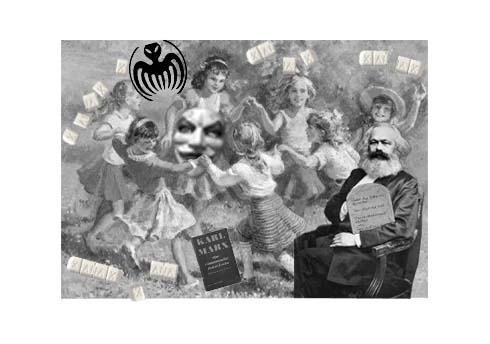
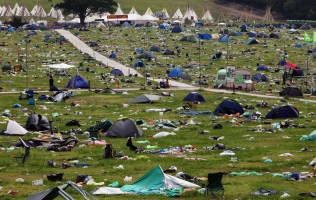 At the end of the Reading Festival when all of the punters have gone home, the site is a wreckage; a teenage detritus of (un)broken tents, sick-strewn sleeping bags, cans, cardboard, and many other unmentionables. What is left is gathered up by volunteers, some of it is donated to charities (one year, tents were given to refugees in Calais), the rest recycled and landfilled. I think of this as a metaphor for how capitalism leaves places when it’s done. A factory or a pit closes and all that is left is a rusting construction and a community having to rebuild itself from nothing. For it is not only the workers, but all those who relied on their income; suppliers, local shops, local clubs and pubs.
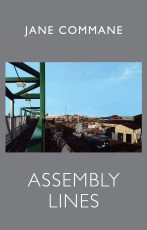 Jane Commane’s poem The Shop-floor Gospel, from her debut collection
  company’s responsibility goes well beyond its shareholders, its directors, even its employers. They should have responsibility for clearing up the mess they left behind, because just like the volunteers at the end of the Reading Festival, people aren’t paid to pick up their own pieces.
 Anyhow, these workers were doing a job previously undertaken by workers from other EU countries. You can guess what happens; they find the work really hard and although do the job required of them, say they wouldn’t do it for a living. The farmer says that he is struggling now to find workers; Polish and Lithuanian workers have gone home because of the exchange rate, and the Bulgarian and Romanian workers who remain, are too few to take up the slack. And all this, when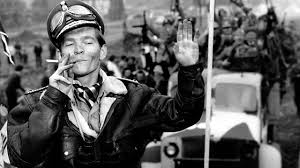
 I fear for them therefore, because the
 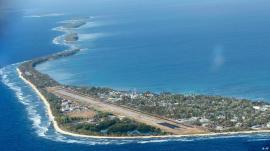 The warming of the sea is a waking beast; and so, the main effects of climate change are being felt by small islands and those on the coast, particularly in developing countries. I am currently reading
  What is a working class Christmas? It is two hundred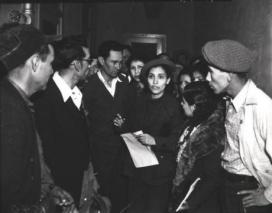
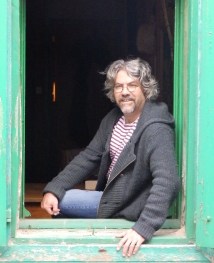 of stories two women in Mexico and Texas, is so impressive in connecting the personal with the more general sweep of history, and makes for a great read.
 Proletarian Poetry