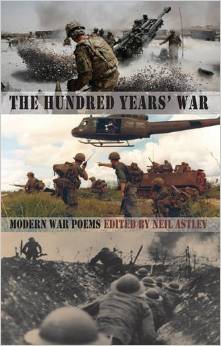
Book Review: The Hundred Years’ War: Modern War Poems edited by Neil Astley

modern war poems‘There is nothing one man will not do to another.’ (The Visitor, Carolyn Forché)

On 7th January 1915 the war in Europe was at a stalemate. Soldiers were still dying for an unknown cause but the papers in the UK at least, were headlined with floods that covered much of the country. On the following day, the future UK Prime Minister David Lloyd George, in response to the war not ‘being over by Christmas’, said that half a million new volunteers should not be ‘thrown away in futile enterprises’ and by ‘this intermittent flinging …. against impregnable positions’.

‘Tumbling over hills, likes waves of the sea/Staggering on, attracted magnetically by Death.’ (At the Beginning of the War, Peter Baum, 1915) (more…)

In Praise of the Poetry Cafe and other poetry places

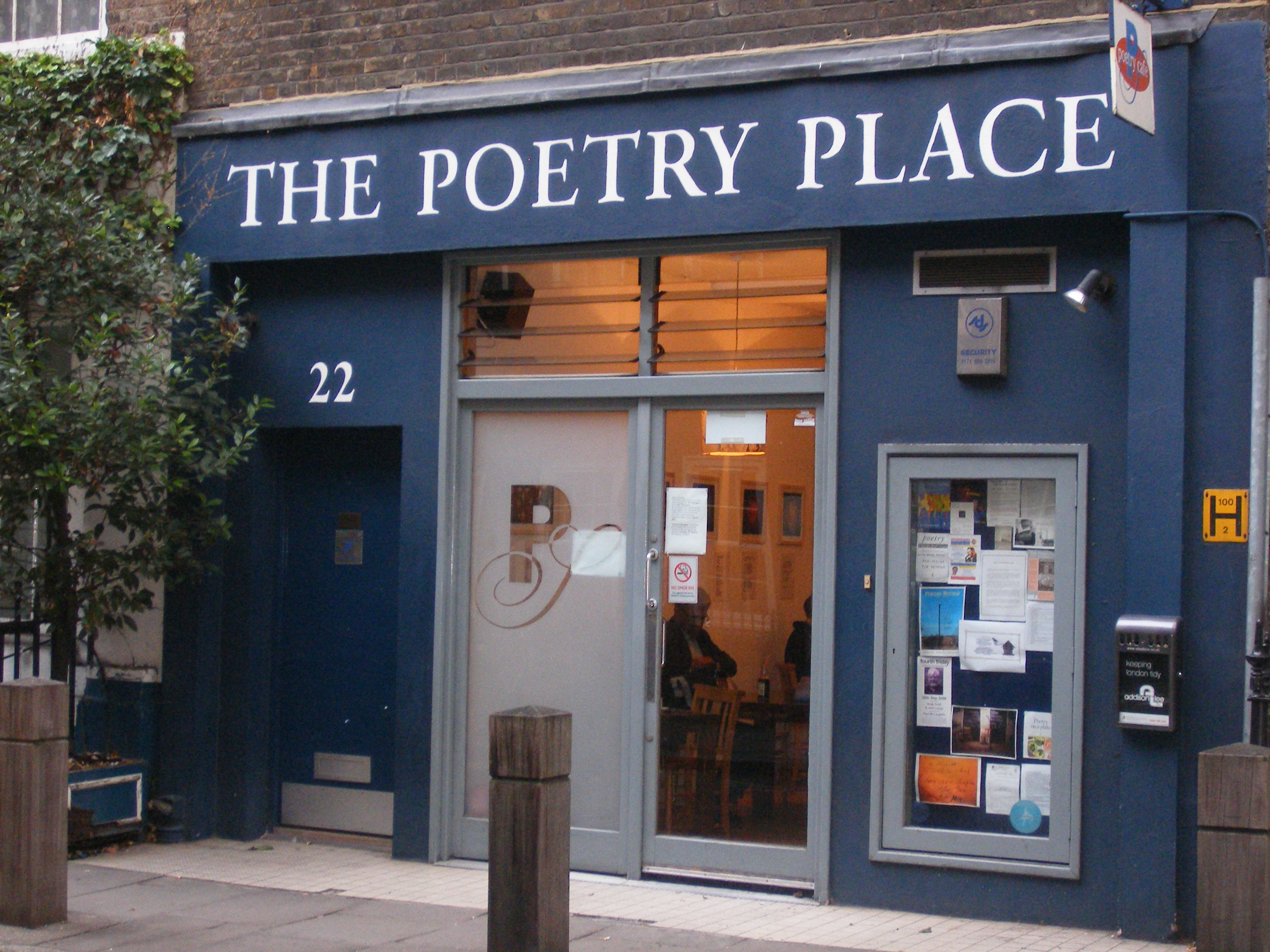
poetry cafe frontLast night I intended going to the Poetry Cafe but life got in the way. It was the second London event of Telltale Press, a poetry collective (this site likes collectives) set up by ‘poetgal’ Robin Houghton. There were some great poets on the card and besides wanting to meet Robin for the first time, I was looking forward to hearing Catherine Smith reading from her new collection, The New Cockaigne. Instead, after doing many other things, my thoughts veered towards that dark, featureless street in the heart of Covent Garden. (more…)

Midlands Kids by Jane Commane

IMG_2830Like Jane Commane I was born in Coventry; my parents came to the city in the late 1950s from Glasgow and Gateshead as part of one of the biggest internal migrations of the post war era.

So I count myself as being one of Jane’s Midland’s Kids, who ‘grew up on the back seats of the long-gone marques of British manufacturing‘. Our first car was a second hand Wolseley, which was so big its backside stuck out of the garage. Not one for patriotism, we nonetheless bought Midland made cars thereafter – the ones ‘slightly crap even new‘. Coventry was a car park, like lots of Midlands cities, and there was many a child left on back seats, particularly in pub car parks, brought out pop and crisps, whilst Daddy had a few jars for the road. (more…)

December Review and Happy New Year

Well, the three months since starting Proletarian Poetry certainly went quickly. December was a bit of a quieter month in terms of number of posts but there were great poems, some of which spread across continents and covered such themes as gender, family, friendship, poverty, and pacts with the Devil.

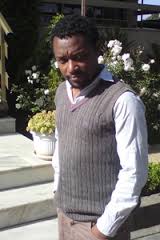
bewketu seyoumFirst up in December were three short poems from Ethiopian poet, Bewketu Seyoum‘s “In Search of Fat”. I was introduced to Bewketu’s translator, Chris Beckett at The Shuffle, which is the last Saturday of the month in the Poetry Cafe. Seyoum’s poems, trace the history of Ethiopia and the struggle of its people to find freedom and peace. (more…)

Lament for the Assassination of Comrade Walter Rodney by Malika Booker

malika bookerBack in the late 70s and early 80s, two genres of political music came together – punk and reggae. Starting out with punk in ’77, I was introduced to what I believe was the high tide of reggae through the likes of Don Letts, The Clash, Mikey Dread, John Lydon. At that time there was an overt racism in the UK; when seeing The Stranglers, the support act was the Birmingham reggae band Steel Pulse. When they took to the stage large groups of the crowd began singing, ‘Gimme a Banana’.

But despite this, artists such as Burning Spear, Culture, Gregory Isaacs, Black Uhuru, Prince Far I, Big Youth, raised the consciousness of many punks about black history. Linton Kwesi Johnson in particular spoke about the discrimination faced by black people in the UK and wrote a poem about Walter Rodney. (more…)

Fairytale by Kate Wise

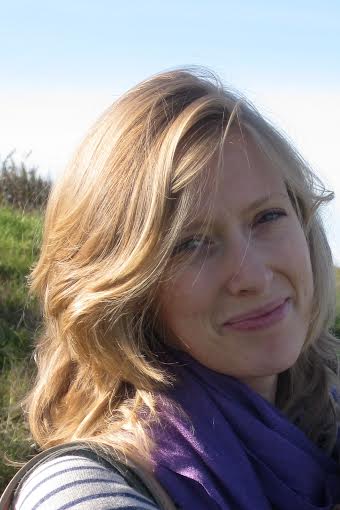
kwiseAt the beginning of Proletarian Poetry, I didn’t have a clear idea of what themes might emerge; I didn’t want to focus on the usual perceptions of working class lives being all about hardship, discrimination, etc.. But I did want to take the tradition of good poetry, that is ‘to tell all the truth but tell it slant‘; to seek out poems that picked something you wouldn’t imagine, such as This Zinc Roof by Kei Miller, and show how it has an impact on peoples’ lives.

Kate Wise’s poem, Fairytale does just that. Takes an idea of the past but tells it through an unusual example; of a young woman, her great Aunt Alma, whose first job is as a Fairy on top of a Christmas Tree. Is this a fairytale? On first reading you might think so. However, this poem takes another theme of PP, that of strong minded grandparents. Here we have a grandmother, who like Angela France’s Nana’s Luck knows what it is right and what is wrong with the world, and says it in a matter-of-fact way, although also with wit, that has no concern for any consequence. (more…)

Photograph, Art Student, Female, Working Class by Liz Lochhead

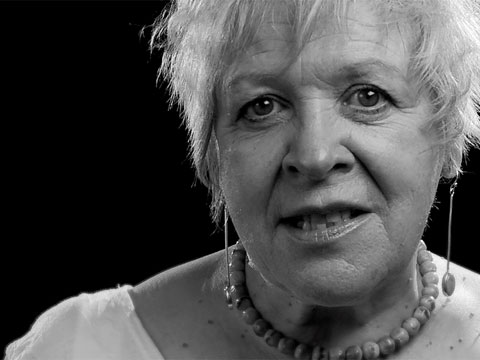
liz lochheadThere are not enough portrayals of working class females in literature. What there are, often tend to be of escape from a repressive class or one of discrimination when trying to be part of another. I was therefore struck by the title of Liz Lochhead’s poem, “Photograph, Art Student, Female, Working Class“. It is both intriguing and to the point, which I think always makes for a good title for a poem.

I don’t think the poem is wholly based upon the model, Twiggy (she was 17 in 1966, not 18, was dubbed the ‘face of 66’, but didn’t go to art school), but in some ways that doesn’t matter; the young woman in question represents many from her background at the dawn of women’s liberation in the 1960s. The poem was written for Carol Ann Duffy‘s Jubilee Lines anthology. where 60 poets wrote a poem for each year of the Queen’s Diamond Jubilee; Liz’s year, whether chosen by her or not, was 1966. (more…)

Pensioned by Alison Brackenbury

alison brackenburyAlison Brackenbury‘s poem ‘Pensioned’ takes us back more than a hundred years to tell the story of an unlikely friendship between her grandfather, Frank, a gamekeeper on a large estate in England, and a local traveller Hezekiah Brown. Alison gives us some background to the story below but I liked this poem because of the sweep of history it covers and how little details tell a great deal; ‘a gamekeeper/who would have shot him for a hare‘ and ‘safe beneath/his Council roof‘.

It then moves on half a century to a village scene where Hezekiah rides ‘his skewbald mare/hauling small scrap on a loose rein‘; here you get a sense of how after the Second World War, things were more free with little traffic and ‘wind-blown fuschias, raspberries‘ and there was a real optimism about the future even though this was a time of austerity. And then, fifty years more, we are shown that whilst things are so very different, with rising sea temperatures and crowded streets, we still send ‘others’ sons to distant wars‘ and we are again in a time of austerity so that ‘now we poor’. But I also think the title, makes us think about what politicians have pensioned off to give us a false sense of prosperity: council houses, national utilities, North Sea oil, our taxes to save the Bankers, etc.. (more…)
The Devil in Cardiff by Patience Agbabi

agbabi_pDo you know a Robbo? That lovable rogue or thieving toerag (depending on your point of contact with him) who lives down the road but has a second home at Her Majesty’s Pleasure. I once knew a ‘Robbo’ who was so prisoned-up he set out his toothbrush, shaving brush, and face cloth like he was setting a place at a dinner table. Given the wonderful account of Robbo in The Devil in Cardiff, I know Patience Agbabi must have met a few such characters in her time.

Here, our Robert Owen (Robber Owing, one of many funny play-on-words throughout the poem, as you can tell from its title) meets what turns out to be the Devil Incarnate in a pub (where else!). Thinking, ‘He’ll teach him the tricks of the trade,‘ his trajectory down into that fiery hell, is sealed when taking the Devil with him out on the job. (more…)

Landays by Afghan Women

afghanpoetry_pulitzer_seamusmurphy001_0

Mirman Baheer, the Ladies’ Literary Society, in Kabul. Image by Seamus Murphy

The Landay is a twenty-two syllable two line poem – in Pashto, Landai means ‘short, poisonous snake’ and these short bursts of poetry certain reflect the definition. Academic, Nada Rajan explains, “Afghan women poetry occupies a unique place in literature. It is one of the strongest forces of Afghan culture. The major themes dwelt in it are displacement, healing, and rebuilding. Consequently the poetry is fragmented. Pashtun poetry, a variant of Afghan poetry has long been a form of rebellion for Afghan women, belying the notion that they are submissive or defeated.” (more…)