 I know that saying children are remarkable, is not a particularly remarkable thing to say. Nonetheless, I see it with my own sons; how they shrug off an argument they may have had, or in my older son’s case, how he recovered from severe depression. And I was reminded of this when seeing young boys smiling as they jumped into a water filled bomb crater, a splash pool of war, in Aleppo.
War is indiscriminate. In the past you could have said children were unintended casualties. But in modern warfare they are often the intended targets; “to kill the big rats, you have to kill the little rats”, was the message on the eve of the Rwandan genocide. Even with the  advancement in technology and so called smart bombs, civilian casualties are always much greater in the type of modern warfare we see in Syria. Over 11,000 children were killed in the country between 2011, when the conflict started, and 2013; some of them being summarily executed. But tragically, even images such as that of the young boy covered in dust and rubble in a hospital in Aleppo (his sister was also with him but was kept out of the shot), don’t seem to make a difference on the ground.
It appears that Russia is heading for a finishing line adorned by young deaths and a uninhabitable country. In the final week of September it is estimated that over one hundred children were killed in Aleppo. The other powers, especially the US, wallow in impotency; more interested in leaving the baton on the ground whilst they decide who should be their next President.
 Reuben Woolley’s poem ‘all fall down’ poignantly captures the tragedy of war, “where/children sang in cinders”. As Michael Rosen did previously in his poem, ‘Don’t Mention the Children’ about the situation in Gaza, Reuben has taken to highlighting their universal plight of being exploited and killed by those in power, leaving untold ‘invisible trauma’, “bring them to us now/we’ll have their eyes.” Yes, children have a great resilience, as demonstrated by the boys making play out of a bomb crater, as children did in London and elsewhere during the Blitz. But one can only imagine the terror they feel as they try to sleep, not knowing what the powers that be have in store for them during the darkness of night.
Here is Reuben talking about the poem and his site, “I am not a silent poet.”
“In November, 2014, I got fed up of the sickening reports everywhere in the media, bth the traditional media and the social media, of the human abuse of other humans and of the planet. Some of my poetry was written very much in protest against this abuse but I felt that something else needed doing. I was sure that I wasn’t the only poet affected by this so I set up the online magazine, I am not a silent poet, and its associated Facebook group page, as a site for bringing together poems about/against any type of abuse anywhere in the world. I invited a few friends and also begged people for poems to get things started. I must admit that I thought it might last for a few months before petering out. I was wrong. It has grown enormously from those small beginnings, but it still tries to provide a space for people’s voices and give a voice to those who haven’t one. It also tries to give a very rapid response so that the work is just as relevant when it is published as when it was written. Like most of the poems on the magazine written about Syria, my poem looks closely at those who suffer most in the conflict: the children.”
Reuben Woolley has been published in various magazines including Tears in the Fence, The Lighthouse Literary Journal, The Interpreter’s House, Domestic Cherry, The Stare’s Nest and Ink Sweat and Tears. His collection, the king is dead was published in 2014 with Oneiros Books, and a chapbook, dying notes, in 2015 with Erbacce Press Runner-up: Overton Poetry Pamphlet competition and the Erbacce Prize in 2015. Editor of the online magazines: I am not a silent poet and The Curly Mind. A new collection on the refugee crisis, skins, has been published by Hesterglock Press, 2016.
all fall down
& all the story
in
between
where
children sang in cinders
we saw them
clothed in tired skin
& dying
daily
not meat enough
nor grain
there’ll be no
joyous
noise
a game
a ring of posies
& blackened flesh
bring them to us now
we’ll have their eyes
& string
a dull
pendant
to show a rusty path. i’ll grind
a bone
an arrow head
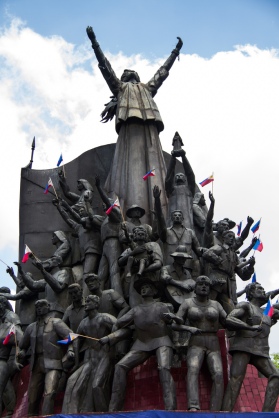 Power is ubiquitous and multi-layered. Just look at the range of power lists; from political figures, to those in the media,
  As individuals, it is quite easy for us to feel powerless and Hilda Sheehan’s poem The Speaker forcefully captures this sense through the metaphor of noise. “The Speaker//is an electric vulture//….It is/a god of dropped insects/from a carriage clock/or wasp holder/left to go on-off, on-off/riddling the town’s ears/from where it came.” This barrage of messages – part of this idea of influence, of soft power – is now at a ‘volume’ we cannot control. “Inside a speaker is Hell -/a radio of church-like/persuasion/from four walls a prison/of persecutors of/television visions/crackling away in the gutters.” It is not that easy to turn things off. But this powerless feeling of not being listened to is what brings people together; we see it with Black Lives Matter, with the Occupy movement, and the Arab Spring protests. There is both a soft and hard power that individuals can exert. One that is more than just a nudge to those in power. One that is a shout so loud it cannot be ignored.
  Like Father, like son. Well, when your father is Donald Trump, those footsteps should not be ones that you follow. But when nurture combines with nature, Junior treads where he has been fomented. DT Junior,
 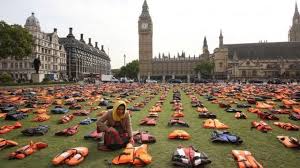 Those who came from another land, whether back in the day, or last week, are the currency of conversation and policy debate and inaction, at the present time. They are used in debates about Brexit, the war in Syria, lone terror attacks in the US, co-ordinated ones in Paris and Brussels. They are said to be the reason for Angela Merkel’s weak results in last week’s election in Germany,
 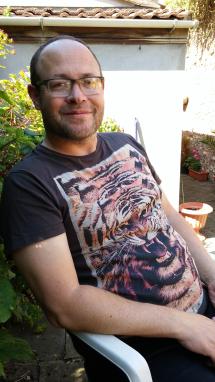 Matt Duggan’s poem “Voices from the Charcoal”, captures these fluid, turbulent and fateful times; “fishing boats once floating saviours for the persecuted/now we build walls from those we’ve liberated; /Cutting off our own ears /awakening a poisonous serpent for oil.” The powerful extract economically from other countries, through war for oil, then leave a mess that goes beyond the borders they originally set post-WW1. Matt reflects this marrying of history, “Those dusting jackboots are stomping/on the gravestones of our ancestors,/though we’d fill a whole lake with blood oil /we’d starve our own children leaving them to die on its banks.”
 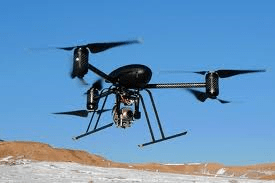 Hungry? No problem, look to the skies. Well, at the moment only if you’re a student at
  Poets have been aware of this, exposing the darker side of such developments.
 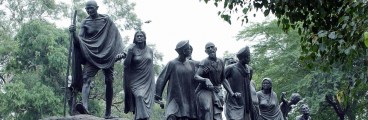 However, there are times when there needs to be protest even when the possibility of positive change has passed. A voice, or a mass of voices, coming together show the powerful in question that although they may have got away with it this time, a battle does not win a war. One of the most powerful forms of activism is marching. Marching comes in many guises outside of protest; from the obvious formation of armies going to battle, through to pipe bands. But as a form of protest the sight of hundreds of thousands of people, a great swathe of banners and heads pictured from above is a powerful image with a powerful message. Notable marches include
  The UK has a long tradition of such marches, most notably the Jarrow March in 1936, in protest at unemployment and poverty in the North East. Previous to that was the mass trespass onto Kinder Scout in the Peak District, which is portrayed by the poet Peter Riley in his ‘
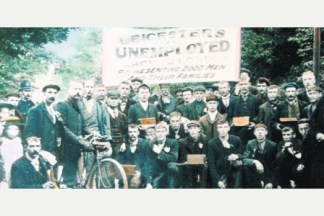 Leicester city.” But nonetheless they were successful in laying down a marker (in one case a physical one with the artwork of seven windows at Leicester’s St Mark’s Church, called
 The supermarket giant Tesco did a funny thing recently.
 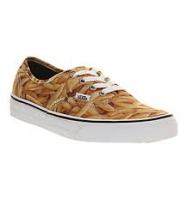 One of the contradictions of capitalism, or should I say one of its cons, is the issue of choice. On the ugly face of it, your choice of purchase, whether it be an earring or a car, is endless. You can get a seeming boundless range of designs; for example, when researching chip vans for this feature, I came across the popular shoe brand Vans, and yes, you’ve guessed it (unless you haven’t) was an image of a pair of shoes covered in chips – you can also get a pair with pepperoni pizza design. But the contradiction in all of this, is that as consumers we tend not to go outside our comfort zones. We wear remarkably similar clothes, eat a small range of foods. Hence trends emerge, promoted by social media, the most recent of which sees half the western world running around playing
  Small family run businesses and trades have been squeezed from such practices for many years. But I think one of the businesses that hasn’t been corporatised in this way, is your fish and chip shop (with the exception of Harry Ramsden’s in the UK, which is now a series of franchises). Lorraine Carey’s nostalgic poem, “The Chip Van,” takes us back to a time when such food outlets were more ubiquitous.
  Yomi Sode’s poem ‘The Rainbow Club’ highlights the end point of this type of child sexual exploitation. As Yomi explains:
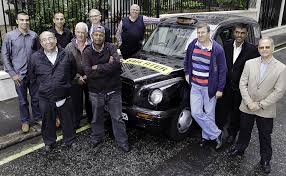 When I used to wait for my sons to come out of school, I was one of only a few men in the playground amongst the mothers and other female carers. There would be the ‘odd’ stay-at-home father like me, a granddad or two (usually with the wife), but the other men were mainly Bengali taxi drivers, whose shifts gave them the flexibility (or burden) to pick up their children. A
  Poets have often taken an interest, as they do with most things, in taxi drivers.
 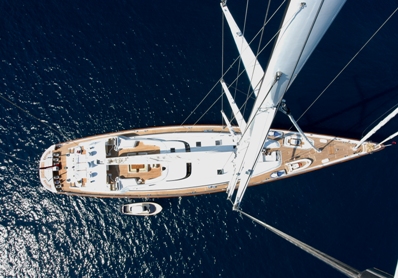 and we don’t know, he/says, why it is so tall. Just because it can be.” He then goes on to speak with pride about his son who’s in the army and is responsible for driving a General. This allows our passenger to imagine a link to the yacht and a relationship of power. “I imagine, as we go, the son, inside Mirabella’s/mast, leading his General by the hand.” This is a fascinating short poem because it leaves a lot to the imagination, allowing us to drift with our thoughts the same way a taxi driver must do when waiting on their next fare.
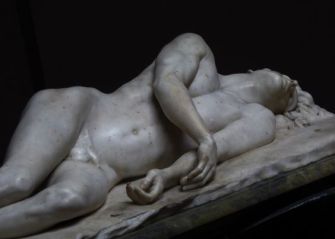 I can’t imagine there to be a poet who so enraged those in authority, that long after his death, his naked statue would have its testicles removed. Yet this was the lot of Percy Bysshe Shelley. As the late Paul Foot explains in his classic book,
 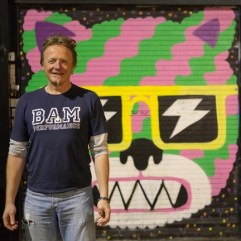 with his poem here, Stabberjocky, holding power to account in the most surreal and satirical way. This reworking of Lewis Carroll’s
  Proletarian Poetry