Poem

Postman in the Smoke, and Inferno by Antony Owen

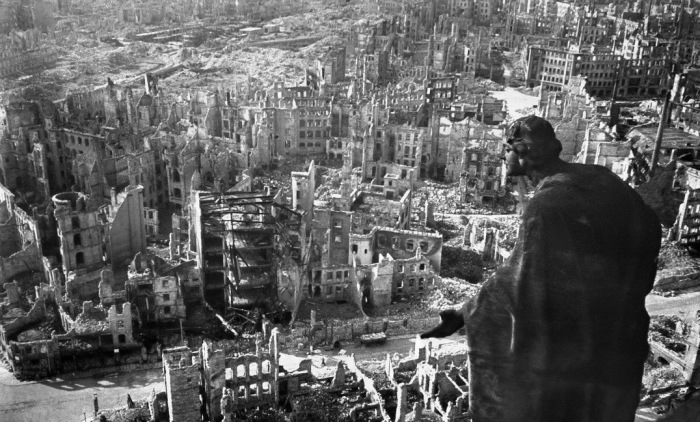
rathaustrumWhen you look at the iconic picture taken of the German city of Dresden in 1945, it is as though the statue of the Rathausturm, known as ‘Die Gute’ (the Goodness – a personification of kindness), is pointing in disbelief at the utter devastation wrought by the British, where an estimated 25,000 people (many of them civilians) were killed. Almost five years previously in November 1940, my home town of Coventry, was heavily bombed by the Germans because of its industry and munitions factory. Although the death toll (estimated c560+) was far less than in Dresden, it was still massively devastating in terms of the damage done to the city, which took years to rebuild.

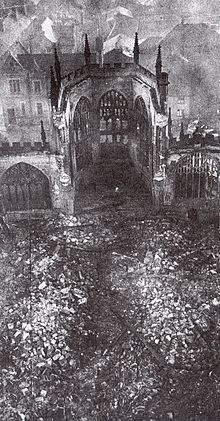
Coventry_Cathedral_after_the_air_raid_in_1940The greatest symbol of that destruction is the ruins of the old Coventry Cathedral. I still go up its tower, St Michael’s, and two things stay with me when I look at the view; the first is imagining being up there on the night of the bombings, seeing planes overhead encircling the city. The second is, if you look south across the city, to the west you see the green of the more affluent parts of Coventry, including the War Memorial Park, whereas to the east you see the grey concrete-dominated developments of the less wealthy.

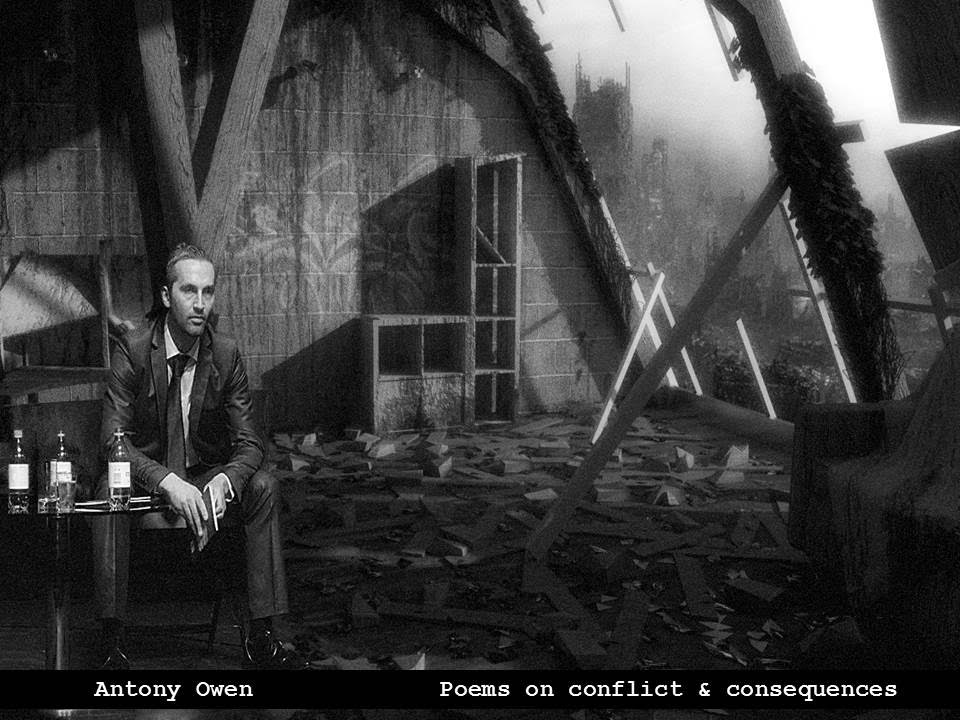
Dresden and Coventry are now twinned. In fact, Coventry was the first to twin with another city (Stalingrad in 1944) and has become foremost in symbolising peace and reconciliation through antony owenwars; its theatre is called The Belgrade Theatre, after the then Yugoslav city donated timber for its rebuilding. Antony Owen’s two poems here, Postman in the Smoke and Inferno, poignantly reflect the impact bombing had on the people of the two cities. In Coventry, “A postman stands in the flame grey postcode/staring at doorways with chimneys around them,/moaning as they open to charred occupants.” Then in Dresden: “These pails of dead firemen filled/with initialled rings weigh heavy.” But it is the men of power, (more…)

O Pioneers! (after Willa Cather) by Sarah Barnsley

Back home, our area of Coventry was originally named in the Doomsday book, and in the 19th century when still largely unpopulated, was a place for wealthy tradesmen. However, the city spread to this outlying area in the early 20th century and housing estates began to encroach on the land. My parents bought a two bed terrace there for about £1,500 and all around us, mainly families from Ireland bought up their own. In a way, they were the new pioneers, to borrow from Sarah’s borrowed phrase.

But this was a divided area: between those who owned their houses and those who lived in the identikit council alternative; of course it was only divided by banter. We were no sociologists, but we took on stratification when taking the piss out of those who weren’t allowed to paint their own house, where the streets had the same fence, where dogs roamed wild in hand me down clothes, and there was a pervading smell of poverty. None of the latter was true of course, but it was good fun at the time, and we were all mates (well mostly).

However, such divisions in the working class are often used by politicians to demonise and divide; so they no longer use class as a term, it is all about hard working families, not those on benefits such as the disabled (a third of disabled adults live in a low-income household). It also iniquitously hides the fact that many hard working low income families are on or below the poverty line.

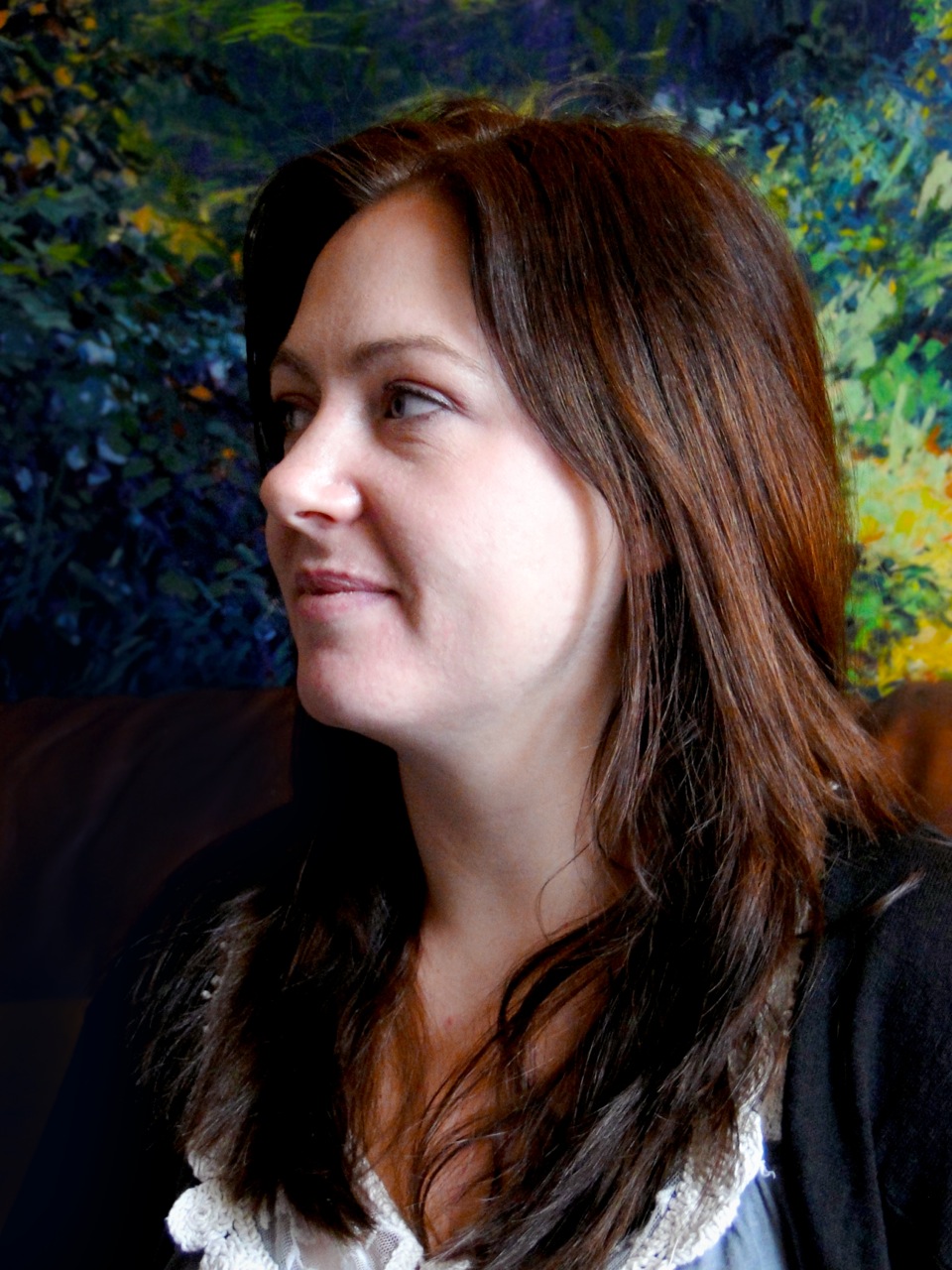
Sarah BarnsleyNonetheless, it doesn’t mean we can’t take the piss out of our own; snobbery is not only for the middle and upper classes. Sarah Barnsley’s poignantly funny poem, O Pioneers! highlights such snobbery in a warm hearted way, when describing the family move; “We travelled to the wild West/Midlands, chugging through/cooling tower canyons in the/turquoise Ford Triumph that/Dad had bought for fifty quid.” But there is tension between parent and child in terms of identity, with the mother wanting to maintain a sense of being of a higher class than where “the cuffies lived,/with brown settees, half cladding/like unfinished Scrabble, and kids/who ran around with their arses/hanging out.” The child wants to belong, doesn’t want to be told to fuck off by the local kids no more, so when tasked with making a clay model of their home at school, “I quiffed the roof/into a triangle, pressed pennies/against the windows, attached/Scrabble pieces up one side/like a climbing ivy of squares,/and moved our cuffy arses into/the frontier, where we belonged.” Brilliant! (more…)

At the Border, 1979 by Choman Hardi

In 1990 I took a one way flight to Istanbul with three friends. We were going to return to England by train. This was just after the fall of communism and was my first experience of crossing borders in Eastern Europe, and is something I reflect on regularly but of course with recent events, the memories surface once again. As British citizens, the only time we had trouble at a border was arriving in Istanbul with no return ticket. The immigration officials were perplexed; they had little experience of people coming to Turkey without a return, and we confused them further when saying we were leaving to travel through Bulgaria, Romania, Hungary, and Czechoslovakia (as it was still then).
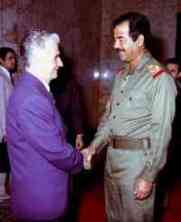
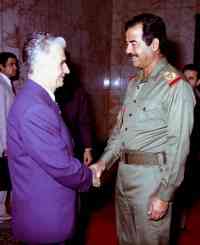
hussein ceausescuThe most notable event of our trip by far was Romania. We reached the border at midnight. When the train stopped, two men entered our carriage and sat down. They turned out to be Iraqi Kurds. Two Romanian guards came in soon after to check our passports. They had only a cursory interest in us as their appetite was for grilling the two men. The four of them looked at each other in silence for a moment, then one guard looked at their passports. He looked up and simply said, “Saddam Hussein,” then laughed at them. The Kurds took it on the chin, and one of them jabbed back, “Ceausescu,” and laughed himself. We were beyond nervous. The four men went silent again, until the guard handed back their passports, said “Saddam Hussein,” once more then left. There is no surprise that the two tyrants met a number of times, and apparently Ceausescu’s Romania supplied uniforms to the Iraqi army in a deal brokered by the Americans.

Choman Hardi’s classic poem, At the Border, 1979 reflects her personal experience as a five year old girl, crossing a border with her family into their ‘homeland’ of Kurdistan; ‘It is your last check-in point in this country!’/We grabbed a drink -/soon everything would taste different.’ But she shows us how borders are a construct, lines drawn by colonists and dictators. So there is irony in this ‘everything would taste different’. “The autumn soil continued on the other side/with the same colour, the same texture./It rained on both sides of the chain.” The persecution of Kurds continued in Iraq and eventually Choman’s family had to move once again fourteen years later, this time to the UK. I really like the fact that for all of the history of conflict and migration she experienced, Choman says that she first started writing poetry when she fell in love; “her early poems are much more ‘flowery’ because she ‘belonged to the Kurdish tradition and engaged with [her] poems in an intensely emotional way.’ Learning to write poems in English, she says, has given her a measure of detachment “which is essential when writing about painful, personal and sensitive subjects.”

The Kurdish people, spread across a number of countries, continue to be shunned by powers in the region; they are one of the most poignant examples of how borders separate people, of how lines on paper divide lives on the ground. We see it also with the Palestinians in Jordan, Lebanon, and imprisoned in their own ‘designated’ areas within Israeli borders. All of this lies at the heart of what we see today with the refugee crisis; a crisis made explicit to us by the European situation but is far worse in countries such as Lebanon, Jordan and Turkey.

Hardi_Choman (1)Born in Kurdistan in 1974 and raised in Iraq and Iran, Choman Hardi came to the UK in 1993 and studied at Queen’s College Oxford, University College London and the University of Kent in Canterbury. A poet, writer and academic researcher, she has published three collections of poetry in Kurdish and her first English collection, Life for Us, was published by Bloodaxe Books in 2004. Her eagerly awaited new collection by Bloodaxe, Considering the Women, is published on October 22nd, and Choman will be appearing at the Aldeburgh Poetry Festival in November, where there will be a series of readings on Poetry and Freedom. (more…)
And the Dead Shall Rise by Des Mannay

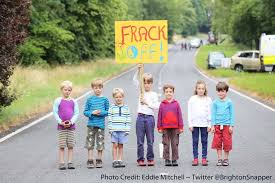
frackingThe 1984 miners’ strike here in the UK, had a huge social and political impact, and was indicative of a wider global shift towards the protection of big business to the detriment of working class people. I knew therefore a number of poems would cover this important moment in history as well as that of mining more generally. However, I have been surprised at the different angles poets have taken.

There was Paul Summer’s satirical North, “we are more than sharply contrasting photographs/of massive ships and staithes for coal, more than/crackling films where grimy faced workers are/dwarfed by shadows or omitted by chimneys.” Jo Bell’s Mute of brass bands: “A ringing out, a clocking on, a moan/of disappointment sure as klezmer;/pit music, factory music, punching out precisely,” and Jane Burns Gala Day, Durham Miners, with “ The Dearne Valley villages – always the backdrop/of pit-heads, men in donkey jackets, orange panels bright among/allotment leeks.” Both looked at the social side of the miners’ lives and their communities. In Seams, Kay Buckley juxtaposed dress making with mining, “those seams that/he picketed and you sewed,” and Paul Batchelor in To a Halver, took a more symbolic angle, “O half brick: your battened-down/century of faithful service in a pit village terrace/forgotten now you’ve broken loose.” Finally, Richard Skinner’s Dark Nook took us further back in time to the working conditions of the lead mines of the Isle of Man, “It takes two hours to descend the ladders,/our tallow candles round our necks/like white asparagus.”

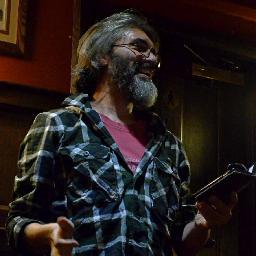
Des MannayThe harshness and anger this gives you when reading these poems, like the mine, lies under the surface. But in Des Mannay’s “And the Dead Shall Rise,” there is no such holding back, when talking about such disasters as Gresford, “And what price did you pay for the silence?/The ultimate price: 266 men sent to the grave… the damps, the gases, suffocated you/You were betrayed – murdered – by your bosses.” These men are no longer able to rest in peace as there is a new threat, with a new search for energy in the ground in which they lie. “They want to desecrate your graves boys/They want to rip the poison gas from your lungs for profit.” This is Fracking and is now being rolled out across a number of countries, especially in the United States where they hope it will reduce their dependence on foreign oil. (more…)

Accident, and Hangings by Melissa Lee-Houghton

wspdToday’s post is not about class. It is given over to World Suicide Prevention Day.

Three days before his GCSE exams, a boy in my sons’ school committed suicide. It was ‘out of the blue’, as was that of the well-known human rights barrister Michael Mansfield’s daughter. It is something we are all close to; one it twenty think about suicide, in the UK thirteen men a day kill themselves. WHO figures estimate that around 800,000 people commit suicide each day across the world. It is an epidemic we should not ignore.

The poet Abegail Morley has been posting poems in the run-up to the day by a number of poets, including today’s featured poet Melissa Lee-Houghton (you can read here). Melissa sent me a number of poems for Proletarian Poetry, which I was privileged to read, and will be included in her forthcoming collection. They are amazing, shocking, and moving poems. But I have to admit finding it difficult to write the feature according to the PP premise; to take the class angle I felt it took away some of the power of the poems.

Melissa 1As with many people, suicide has been an issue I have been touched by and written about in the past and felt important to highlight here with two of Melissa’s poems; Accident, and Hangings. After reading them, please take time to check out the WSPD site. Thank you.

Melissa Lee-Houghton is a Next Generation Poet 2014. Her second collection, ‘Beautiful Girls’ is published by Penned in the Margins and was a Poetry Book Society Recommendation. Her work has appeared in the Guardian Review, The Quietus, Prac Crit and many others. A third collection, ‘Sunshine’ is forthcoming in September 2016. (more…)

Gala Day, Durham Miners by Jane Burn

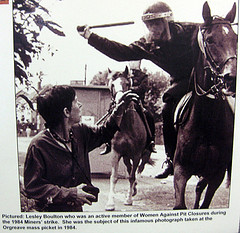
In 1984 I was twenty-two and having a nervous breakdown. I had taken an English A Level (which I failed) and I remember the question of whether Hamlet was mad or not really fucking me up. Turns out the madness rubbed off 5921322055_790552265b_mon me for a time. Hospitalised with short-term psychosis (thankfully) the faces in newspapers would be staring at me; there were men in the corner watching me; the doctors seemed extra-terrestrial. One day, when supposedly in recovery, I sat in the TV room trying to catch some kind of normality but happened upon the news and the heightened social realism of men standing in a dusty field being charged at by the riot police. I started hyper-ventilating, feeling like I was going to pass out, then the belief that something worse was about to happen. The fighting continued but no-one would turn the TV off. Finally, a nurse entered the room (which was in fact empty), made the fighting go away and helped me back to bed. The miners’ strike, in this instance the Battle of Orgreave, had induced a panic attack.

Such battles are what remain of the history of the miners’ strike, and in the case of Orgreave, justice has still not been done. However, the lives of people affected by the strike, not just the miners, has taken some time to be told.

10981953_1637363813181663_3445432139024251520_nJane Burn’s beautifully detailed poem, Gala Day, Durham Miners, depicts a day in the near past. “At eight-fifteen, the band stands up in regimented lines. /July, before the schools break – the morning lull broken /by the stray parp of tuning notes, loud and sudden /through nets ghosting open windows.” This is a day of excitement, of defiance; a day of celebration even for the community, to let bygones be bygones. “Dorothy – bitched about me once, with them at thirty-one,/but if I cannot forgive her that, what use as a person am I?/Her Arthur, taken by cancer in less than a year.” (more…)

#Irony by Susan Evans

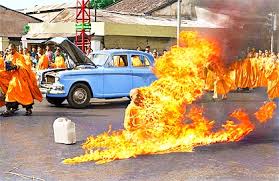
burning monk1In 1963 the persecution of Buddhists in South Vietnam under the rule of staunch anti-communist Ngo Dinh Dien, had reached crisis point. On June 11th three monks walked to a crossroads in Saigon. One placed a cushion on the road upon which sat Thich Quang Duc, a highly revered Buddhist monk; the third man then proceeded to pour petrol over Quang Duc. The picture of the monk’s self-immolation went worldwide and is one of the most iconic forms of activism; the ultimate sacrifice for a cause, which has been undertaken in many notable cases, most recently Mohamed Bouazizi that sparked the Arab Spring.

Activism is an art form and comes in many shapes and disguises. It can be holding a placard, throwing a Molotov, standing in front of a tank, where you choose to sit on a bus, occupying a financial district, or as in the case of Pussy Riot, dancing in a church. In Egypt, much of the activism during their Arab Spring, came from young women, who were not allowed to protest at Tahrir Square for fear of violence against them. So they took the internet and became cyber-activists, sharing messages, feeding news to other protestors across the Arab world. Activism can also be the simple act of writing a poem as with Ai Weiwei.

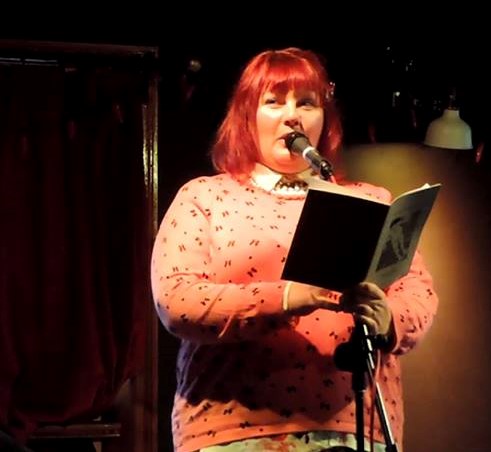
Susan Evans Performance Poet - Photo by Helen PinnerSusan Evans’ poem # Irony, covers some of these approaches to protest and the perceptions that arise. Marching online she joins/the virtual protest ‒/bloke in armchair calls her/an `armchair activist’“ But you can also sign petitions “she shares petition after petition ‒/38 degrees”, or watch events unfold “‘The People’s Poets’ upload pics,/pleased as punch; bunched outside/Westminster,” driven by examples of friends who, as mothers are greatly affected by austerity measures as they “fiercely fret over/the going rate of the Tooth Fairy.” (more…)

Inside Out by Zeina Hashem Beck

The late great Liverpool football manager Bill Shankly had many famous sayings that are repeated to this day. The one that struck me growing up was, “Some people believe football is a matter of life and death, I am very disappointed with that attitude. I can assure you it is much, much more important than that.” Although I have followed football all my life, I have rarely, if ever Palestine-Logo-Bigworn my team’s shirt. For one, I didn’t want to get beaten up by any wayward away fans; and two, I have never liked the tribal allegiance element of the game nor the violence that lies behind it.

Football is also not devoid of influencing national politics to the point of igniting armed conflict as was the case in 1969 between Honduras and El Salvador. The political map influences where teams will play; most notable being that the Israeli national team and its clubs compete in Europe. The Palestinian team was only recognised by FIFA in 1998, but has great potential despite the political and social conditions that surround it. I bought the Palestinian football shirt, as a small act of support when at the large protest march against the war in Gaza last year.

Zeina's PhotoOf course, football is a passion among many people in Gaza and the West Bank, and Zeina Hashem Beck puts that into stark perspective in her heart-breaking poem Inside Out, where she paints a scene of Gaza under attack during the World Cup in Brazil in 2014. “my friend’s mom in Gaza is cheering/for Brazil and Holland/all that orange/burning almost/a sunrise all that/smoke”. Zeina goes back and forth from the football to the terrible scene unfolding, “there’s an old woman/who dies holding/her spoon waiting/for iftar/which comes but so do/the rockets/and the news/Brazil loses to Germany 7-1”. The poem continues without punctuation reflecting the relentless nature of the Israeli bombardment, until the end of the tournament when, “a player kisses a trophy/his wife his son/a mother/kisses a dead child/grief inside out/is resistance” Like Laila Sumpton’s poem ‘Morning Prayers’, Zeina juxtaposes the everyday events we take for granted, such as watching a football match with the tragic situation in which Palestinian people live, in a wholly different type of everyday event. (more…)

Monochrome by Angela Topping

Family in front of TV 1

Image by Paul Townsend*

When I was about five or six, towards the end of the 1960s, my parents and I visited my gran in Gateshead. My gran had lived a tough life; she had seven children, and her husband died two years after her last child, my mother, was born. The same week she was born, her twelve year old brother died and another sibling didn’t live beyond five. These were the 1930s and much like that conveyed in Angela’s Ashes. My father’s family were similar; ten born, only five surviving to school age.

When we went into her high rise flat, she was sat in the small living room, where there was a TV in each corner. I was so impressed that she had two TVs, but puzzled as to why they were in the same room. When I asked, “Why’ve you got two tellies gran,” she said in her usual matter-of-fact way, “One’s for BBC, and one’s for ITV.” Somehow or other, she had found two broken TVs that served her purpose. She wasn’t bothered about BBC Two. You still didn’t take TV for granted in the 1960s, and there were great events to marvel at, most notably the moon landing in 1969, when Neil Armstrong stepped out onto that studio set in Hollywood and said those famous words.

OLYMPUS DIGITAL CAMERA

Angela Topping gives us a snapshot of this magical, black and white time in her poem Monochrome. “A candid photograph, a moment caught/in black and white, nineteen fifty nine,/a council house estate interior.” We have a picture within a picture, of a father with his camera, who is watching his daughter and her friend in front of a new television, “in rapture where they lie,/on bellies, heads propped up by hands, enthralled,” You can see that he embraces new technology, and bringing the TV home, “feels some pride in its unveiling day.” There is both a sadness and great sense of love conveyed in Angela’s touching poem; this was a time when the rebuilding after the Second World War and the austerity of the 1950s crossed into a new era, more positive, liberal, and where the screens that are so prevalent today, were just beginning to be turned on. (more…)

Work by Anthony Costello

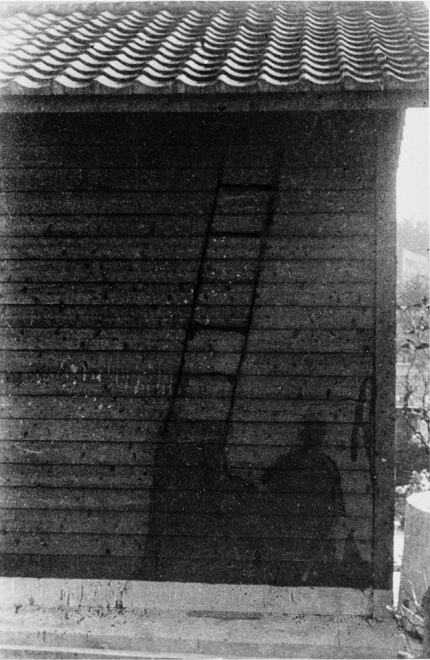
shadow of a soldierHow can you have a shadow without the subject? The picture (right) is the shadow of a Japanese guard taken by Matsumoto Eichii only a few weeks after the bombing of Nagasaki. The image is the burned-in imprint of the man with his ladder and sword at his side. We have just marked the 70th anniversary of the bombing of Hiroshima and Nagasaki in August 1945, and it is images such as these that remind us of such horrors.

The photograph of the soldier was part of an amazing exhibition, Conflict, Time, Photography at the Tate Modern in London last year. I was fortunate enough to be on a poetry course run by Pascale Petit at the gallery that used the images from the exhibition, to write poems. Many great poets have drawn on classic paintings for their poetry; Pascale herself drew on the life and work of Frida Kahlo in her TS Eliot shortlisted collection, What the Water Gave Me.

IMG_20150607_203342-2Anthony Costello has taken this approach in his poem Work, which is inspired by Ford Maddox Brown’s painting. The pre-Raphaelite Brown was fascinated by the social make up of Victorian London, with the noble ‘navvies’ (“like my labouring Irish ancestors/amongst the soil, shovels and lime”), the orphaned children and poorest (“flophouse inmates, bouncers, ragamuffin children”), and upper classes (“the gentlemen-flaneurs,/the yellow waistcoats and red bonnet Gentry”). In a single painting, a single poem, we have the Victorian system of work and hierarchy – ‘a place for everyone, and everyone in their place’. (more…)