If we think about the classes according to their mobility, we see the working class far more ‘on the move’ to find work and a place to live. Whereas with the middle classes, mobility is more one of professional development. Essentially, one driver of mobility is necessity/ survival, whilst the other is much more positive, with higher status, wages, etc..
We have addressed this issue before on Proletarian Poetry, for example most poignantly with Micheal Gallagher’s ‘Paraic and Jack and John from 2016,
Goodbyes to
the mothers, always the mothers,
the father-mother-farmer mothers,
the savers of hay,
the spreaders of turf;
brought into heat once, maybe twice,
a year, migrant’s return, marital duties,
children’s allowances, God’s word –
stuff like that.
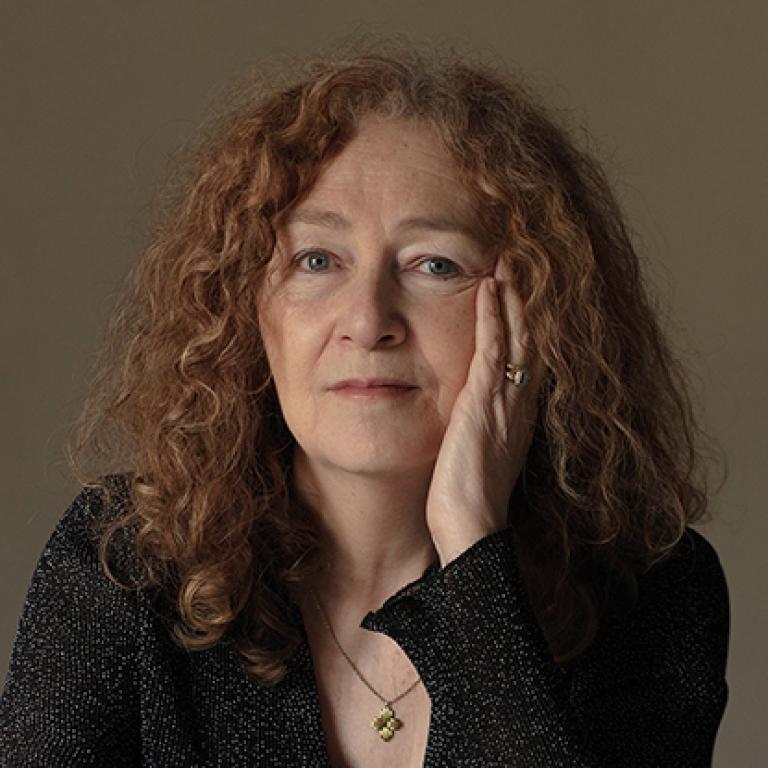

In Cathy Galvin’s brilliant debut collection Ethnology: A Love Song for Connemara published by Bloodaxe Books, she portrays the impact of migrancy, both inward and outward. From Coventry like myself, her Irish roots are in the far west of Ireland in Connemara. In my own area of Coventry, a large Irish community settled in Coundon from the 1950s – so many that it became dubbed County Coundon; though there are a number of other areas where Irish families settled in the city. I have friends whose parents came from Donegal, Cork, Mayo, Galway. They came to rebuild Coventry from the Blitz but also to work in the car factories.
But things have changed a lot in the last twenty six years. Helped by its own success then boosted by the UK leaving the EU, Ireland is now a place people migrate to, or return to. More people have returned to Ireland now than left, with the population rising from 4 million in 2000 to 5.4 million in 2025
Cathy has written a beautiful paean to her Irish roots in Connemara and Coventry. She notes this change of inward migration in the featured poem ‘An Ghaeltacht’ which refers to recognised regions of Ireland where Irish is the predominant language. Cathy is a poet, journalist and literary entrepreneur being Founder and Director of The Word Factory,
You can buy a copy of Ethnology here
An Ghaeltacht
Paul – Pól – bought himself a boat
and a house. Took land on the island,
drove through mountains on a motorbike.
But these people with the same name as him,
the same DNA, drinking in the same bar,
kept themselves to themselves.
Gave him no work. And in Galway –
Well you might as well be back in Croydon, he said
All those East Europeans, no one speaking English.
He keeps his curtains drawn, gate padlocked.
I’m told he’s packing his bags. Taking
his estuary English over to Durham
where houses are also cheap. In time, it’s possible
they tell me, he might even pick up the language.
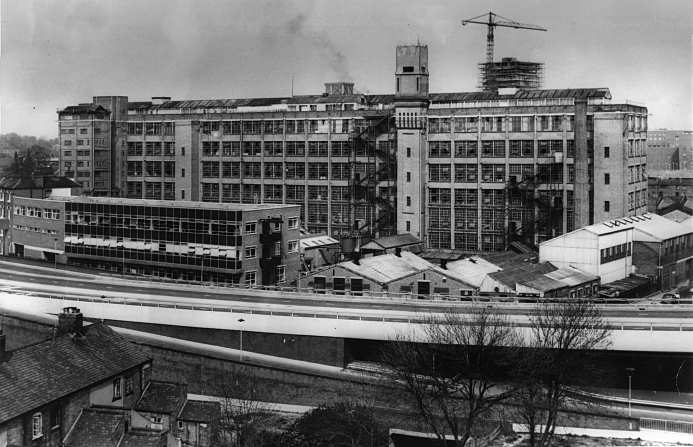 Aged sixteen, in my first (and only) year, as an apprentice at the General Electric Company, I went round the factory and sat with various workers for half a day each, to get to know what they did. One woman’s job involved, picking up a piece of component, putting it on small press, then pulling a lever to fit it. It took her less than two seconds to do one. When she had done about five, she said to me, “that’s it, love. That’s what I do.” This left ten seconds less than four hours to spend together, in which we had a good natter, and I learned a lot that had nothing to do with her job. Of course, it is only in looking back that I realised it was my first encounter in how society is diced and sliced in terms of gender and work, with the women as the army corps and the men as corporals (charge hands), sergeants (foreman), captains (manager), etc..
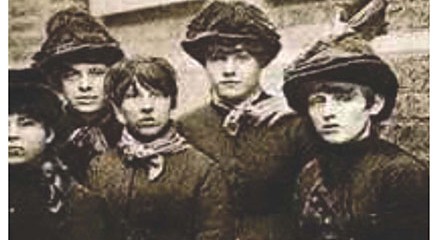 industrial febrile temperature rising across the country at that time (the poet Anna Robinson previously wrote about an aspect of this on the site, in her poems
  Lemn Sissay’s poem, “Spark Catchers”, is a tribute to the Matchwomen and is a physical landmark at the Olympic Park where the factory was located. The poem is also an inspiration for an upcoming musical piece composed by Hannah Kendall and performed by the UK’s first black and ethnic minority orchestra, Chineke, at the
 The poem,
  At the birth of my first son, after a somewhat traumatic first week of his life, my father said to me, in his dry wit, “You’ve a lifetime of worry ahead of you. When you’re 80 and he’s 50, you’ll still feel the same.” Now my father is in his 80s, for me the worry works both ways, to my teenage sons as well as my parents. The greatest parental experience I have had is becoming a stay-at-home/househusband/underling of my two sons some eight years ago. I was brought front stage on the gender divide of parenting; evidenced at first hand the plates mothers are juggling, as many of my new plates smashed on the floor.
 My father was one of them, and so was David Cooke’s, whose father opted for retirement in his very early fifties, and is the subject of his poem, “Work”. His father was “a ‘man’s man’ my mother said, who needed/a joke to keep him going, and something to get him up in the morning besides/a late stroll to place his bets at Coral.” As a young son or daughter, the roles of your parents are defined by their actions; of what they do, and in them days it was the father who was out all day at work. So when he is made redundant, he is lost. “I’d learn that no one’s indispensable./So after he’d botched a shed, dug the pond/and built a rockery, the time was ripe/for change.” They had worked all their lives and didn’t want to lay fallow on the dole. My own father went on to do different jobs, as did David’s who “With a clapped-out van and a mate,/he started again on small extensions.”

 Proletarian Poetry