My son is now eighteen, has a full-time job and is happy. He is ‘functioning’. This comes after almost three years of depression which at its worst involved self-harm and suicidal ideation. He left school in Year 10, couldn’t cope with another school, nor a part-time one. All schools found it difficult to support him, besides giving him extra time to do tasks, which was not what he needed. In fairness to them, although we didn’t realise it at the time, he simply needed to be withdrawn completely. So for him, no qualifications, no ‘normal’ pathway that as parents you just assume they will take (but boy, can he play guitar and knows his way round a recording studio).
 Fluoxetine and psychiatry didn’t help; it wasn’t until he was free of daily commitments, went on mirtazapine and saw a therapist fortnightly, that he slowly came back to us. He is now just at the beginning of withdrawing from the medication as it makes him very tired and sluggish. We will see how it goes. The reason I mention this, is that this year’s theme for World Mental Health Day (WMHD) is what’s termed, ‘wellbeing in the workplace’. For the coming weeks therefore, I will be seeking out advice and monitoring how he gets on at work as he begins the withdrawal process.
 The poet, Emily Harrison, in her brilliant collection, ‘I can’t sleep ‘cause my bed’s on fire’ chronicles her journey through the teenage years and into her twenties of dealing with psychiatric institutions. She often does this with humour, as in the poem ‘Stockholm Syndrome’, and importantly on the theme of love, which has its own challenges. There are some beautiful and stark poems, and as I say some are very funny. But a poem that stuck out for me in light of WMHD is ‘For Display Purposes Only’, as it describes what goes on behind the closed doors of hospitals; where the prospect of work isn’t even a distant mirage. “Far from my window,/ I can see across the courtyard/ into the maximum security ward./ I watch violent outbursts/ I watch forced sedation/ I watch men of my father’s generation/ lose every way of expressing themselves/ because talking therapy never suited them.” Like Dan Duggan’s Luxury of the Dispossessed, this is a first-hand account of mental health crises and challenges (as well as other musings as in ‘Swindon makes me feel like a Russian Bride’), which don’t necessarily end because the person is now seen to be ‘functioning’ in the workplace.
Emily Harrison performs regularly in London and across the UK. She was awarded Best Spoken Word Performer 2016 at The Saboteur Awards. Emily has performed at Latitude, WOMAD and Glastonbury festival. “Astute and at times painfully humorous”, her first full-length collection ‘I Can’t Sleep ’cause My Bed’s On Fire’ was released with Burning Eye Books last year. She is currently working on a second collection. You can find Emily in East London. She’ll probably fall in love with you on the tube.
For Display Purposes Only
Jacqui leaves old orange peel and banana skin on my radiator,
says it smells just like potpourri.
To me it’s week-old bin liner on a hot day
but I don’t have the heart to tell her that.
When a nurse asks,
I don’t want to drop Jacqui in it.
I adopt her backward thinking reluctantly,
explain word for word
until the word potpourri loses all meaning.
He nods himself through it like I did.
It’s not that he doesn’t have the heart to tell me,
he doesn’t have the time.
There isn’t a box for that on the form
and he’s only allowed one Biro.
The last time I dobbed Jacqui in
they took her artwork away.
She got 7.5mg and couldn’t talk without dribbling.
From my window
I can see across the courtyard
into the maximum security ward.
I watch violent outbursts.
I watch forced sedation.
I watch men of my father’s generation
lose every way of expressing themselves
because talking therapy never suited them.
And now they sit in armchairs –
the ‘if you’re sat on it you can’t throw it’ theory.
They watch paint climb the walls –
the ‘stare at it long enough and it disappears’ therapy.
They wait for nothing to happen
twice.
Over this side we know to let things slide.
I’m staring hard at everything, hoping it all just disappears.
Everything,
except the smell of burning orange peel
and the word potpourri.
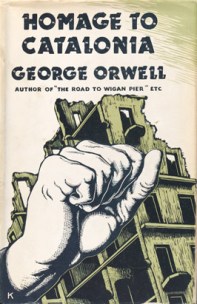 It is seventy years since George Orwell’s Homage to Catalonia was published; his personal account of the Spanish Civil War. Now, the papers’ headlines carry the same title, as the people of Catalonia once again go against the Madrid government in a so-called ‘illegal’ referendum on independence. Irrespective of one’s views about the subject of the vote, the state response of violence against all and sundry was abhorrent. Scenes across the region, but in particular Barcelona where much of the media was concentrated, and lest we forget where a terrorist atrocity was carried out along the famous Las Ramblas, showed an elderly woman with blood pouring from her head, another with a woman’s fingers being broken, and many other such beatings.
 Matt Duggan’s poem, The Spaces Left Bare, reflects on such a protest during a stay in Barcelona; one that can be seen as a wider indicator of heightened capitalism and its effect on peoples’ ability to afford housing in major cities and conurbations throughout the world; something that echoes developments from San Francisco to
 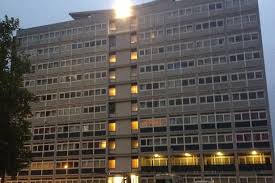 In 1980, the tower blocks of Hillfields that overlook Coventry city centre were mainly occupied by the working classes of West Indian and British origin. My friend had a flat on the eighth floor of Douglas House, a maisonette he shared with his girlfriend. We used to go round regularly, spending much of the night smoking weed and listening to reggae. One time, he wasn’t in so we knocked his neighbour and went through her flat, climbed over the balcony, shuffled along at one hundred feet up, and got in via his balcony. I still can’t comprehend the stupidity of that act now; just so we could find somewhere to hole up and get charged listening to Red by Black Uhuru.
 working class homes during the 1960s have a lot to answer for. Such housing was quickly seen as going against the way in which humans should live together. One early example was the
  Although not an Asian, the poet Nick Makoha and his mother also left the country due to the coup, becoming part of the Ugandan diaspora. In his haunting poem ‘At Gunpoint’ (and throughout his brilliant collection ‘Kingdom of Gravity’), he describes the terror of a country under military rule. “The Times will report of people/ being forced to volunteer to avoid/ being a body hiding in the toilet/ or a corpse folded on a table.” Beyond the terror of trying to survive, questions of what you should do in such a situation arise, that challenge your own identity. “A man can’t but look into his own imagination/ to solve the conflict of himself. Should I have been/ the doctor, or the poacher in the clearing, a mad man,/ or shepherd boys minding their business?” Like many of the diaspora,
  One of the darker but also more playful songs by Tom Waits is “
 But I also think that people are amazing in the projects they engage in. My son watches endless YouTube videos of everyday inventors – people who try to
  Anna Saunders’ beautiful poem “Befriending the Butcher’, tells the story of a working class life that furthers this idea that you never know what a person might be. “He spent his days dressing flesh/ preparing Primal Cuts and his nights – carving wood,/ reading brick-heavy biographies of Larkin or Keats.” And what you start will carry you into later life, “There we sat, …./ on chairs as dark and immense as the Wagner/ which poured into the room,” So think again when you’re at the checkout, at the bar, chatting with the postman or the butcher, for you never know what they may be building when they get back home and hide themselves away in the attic or the shed.
  My first taste of independence came when I had authority over the amount of ketchup I spread over my tea. It wasn’t like drizzling icing over a cake because this was the days of the bottle, where if you weren’t careful, huge globules would flood your ham, egg and chips; with the introduction of the
  But I have veered into the serious, which I’m trying not to do for once. This feature was prompted by the poet,
  There is already a wall along the US/Mexican border, and in many parts there are works of art protesting against what it stands for. One exhibit has a series of day-of-the-dead like mannequins, hanging from the wall. It is a powerful image. Across the world, where walls have divided people, protest art has inverted the purpose of the canvas. From the Berlin Wall, to the Israeli Wall, and the Peace Wall in Northern Ireland, there are beautiful but at the same time heart-rending images to remind people, either of the reason they are there and/or the damage that they do, e.g. in cutting off families, or families from their land, etc..
  This was the launch of the anthology of “
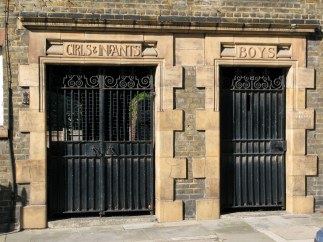 Back home in one of the bars in my local, there was no women’s toilet (this was the mid-80s). The few women who did frequent the smoke room, had to go outside, in all kinds of weather, to the single female toilet in the other bar. At the same time an old school down the road still had signs showing the separate boys’ and girls’ entrances. Society remains divided in many ways, not only in gender. One of the most obvious, yet at the same time, nefarious, regards consumer preference.
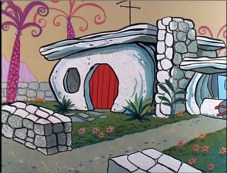 What do you think of when you think of home? Is it the history of wallpaper that reflects the changing times? The leather three-piece suite you bought off some bloke in the pub and had to drive down long country lanes to a hidden away warehouse – but was assured it was all totally legit? (I know someone who actually bought his house from someone in the pub). Was it the smell of chip fat in the kitchen as it cools back to white, a cracked window that was never fixed, the gradual wearing away of the staircase carpet?
 Lorraine Carey’s beautifully evocative poem, From Doll House Windows, is about a childhood home and the memories it still holds. “An aubergine bucket served as a toilet,/in a two foot space. Mother cursed all winter/from doll house windows where we watched/somersaulting snowflakes.” And like the poem, many of us had a pet (mine was a succession of goldfish from the fair, that usually died after two weeks), “My father brought back a storm petrel/from a trawler trip. /I homed him in a remnant of rolled up carpet -/ that matched his plumage.” But in the chaos of a young family’s house, something dark goes beyond the everyday in Lorraine’s poem; a memory of home, which will never be forgotten.
 Proletarian Poetry