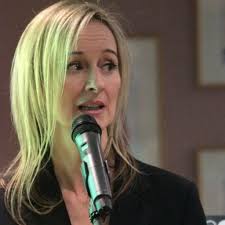
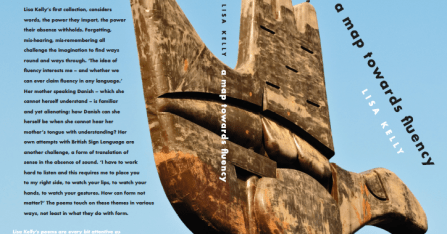
Today we have a special treat, as Lisa Kelly has kindly given us a crown of sonnets ‘Corona/Cuts’ (after John Donne). Here she writes about the sequence and the persistent problem of knife crime. It comes from Lisa’s collection A Map Towards Fluency (published by Carcanet). It is a wonderful book about a life lived, as well as a great lesson in variety of form and tone. I highly recommend it. You can buy a copy here.
********************
 “Think back to 2017, another time, another crisis. The London Bridge terrorist vehicle-ramming and stabbing, alongside daily updates about knife crime and teenage boys – young victims of the virus of violence. Visiting any public building in London, I was frequently searched, opening up my bag to scrutiny, feeling somehow momentarily guilty of something, somehow accused.
A small insight into how it must feel to be routinely, stopped and searched. Anxiety, anger at the government’s absence of strategy for tackling knife crime, failure to acknowledge that poverty and lack of opportunity fuels gang recruitment, all of this and the fact I have a teenage son, was behind the need to write ‘Corona/Cuts’.
 Like many poets, I write to try and make sense of what cannot be made sense of by logic or argument alone. Aside from the unintended foreshadowing in the poem’s title of the current unfolding horror story, there are connections of powerlessness. Holding a pen in your hand, or having computer keys do their bidding under your fingers, is an outlet for some processing of inadequacy in the face of something you would like to solve but basically can’t. Form is one way of marshalling what you want to say, to help shape chaos into a creative act.
I chose to write a crown of sonnets because it gave me the scope and permission to pursue different but interlinked emotions and experiences as well as reportage on a societal level – the way the last line of each sonnet kickstarts the subsequent sonnet creates an uninterrupted energy, while allowing for sharp changes of direction.
 The stamp of John Donne is evident throughout, with lines taken from various poems. His metaphysical poetry, with discoveries from life and science, married to violence and passion in a bid to explore difficulties in his relationship with a lover or God, has an intensity that shaped some of the thinking. No doubt, there is a collage effect, but just as there is no single answer to any one crisis, the poem tries to reflect the fact the sequence is not a political response, but a personal response subject to shifting moods that inevitably raises political questions.
 Some of the sonnets are more indirect explorations of moods – others have a more sustained and obvious focus. Knife Angel pays tribute to the sculpture created by Alfie Bradley with knives donated by police forces around the country at the British Ironworks Centre at Oswestry, Shropshire. The sonnet with reasons for carrying a knife is from interviews in various articles researched on the BBC and Guardian sites. The listing of the parts of the knife and the abecedarian in the final sonnet was a way of trying to control my response to the idea of the knife, a kind of play between signifier and signified. When you say knife, we all have our own picture conjured, but all the names for it in other languages as well as the slang reveals a collective tragic mythology.”
Lisa Kelly’s first collection, A Map Towards Fluency, was published by Carcanet in 2019. Her poems have appeared in Stairs and Whispers: D/deaf and Disabled Poets Write Back (Nine Arches Press). Her pamphlets are Philip Levine’s Good Ear (Stonewood Press) and Bloodhound (Hearing Eye). She has single-sided deafness and is also half Danish. She co-edited the Deaf Issue of Magma Poetry which was awarded Arts Council England funding; and the Conversation Issue. She is Chair of Magma Poetry,
Corona/Cuts
after John Donne
They search my bag like an abandoned flat,
raking for answers to unformed questions,
fumbling with tissues and bits of old tat,
unable to grasp haptic impressions.
What do I know of my son’s compass point?
Why did this prick try to hide in the seams?
Have they not heard we all have a fixed foot,
how the other hearkens after, and leans?
My circle is just. My son is secure.
Absence expansion in a foreign land.
Sharp reminders and tokens underscore
each search a charade, til steel is in hand.
Let us close this bag and let me go through.
This flat is unoccupied, the rent due.
This flat is unoccupied, the rent due.
We salvage the mattress from Spain’s dark street.
Erect steel bars for a four-poster view,
lie on the bloodstain covered by a sheet.
From here, we hear the bells of Aranjuez,
sad chimes from Rodrigo’s Concierto.
Since thou and I sigh one another’s breath,
engrave, Antes muerto que mudado.
Our sons will not dare into Walthamstow,
Battersea, Harlesden, Oakwood, Marylebone.
They will not venture into Enfield, Bow,
Wandsworth, Peckham Rye, Uxbridge, Mile End, home.
Let us close this flat. Rodrigo is owed.
Sooner dead than changed, but seeds must be sowed.
Sooner dead than changed, but seeds must be sowed.
Who can stop him winding down the wrong path?
At the round earth’s imagin’d corners blow
nose, wipe streaming eyes, repair your torn half.
He strayed outside his postcode, and was lost.
The subway where he might play his last scene.
No time even to be idle. The cost
of the cut through, alley, underpass, green.
All whom war, death, age, agues, tyrannies,
despair, law, chance, being in the wrong ends hath slain,
to your scatter’d bodies go. Authorities,
politicians search solutions in vain;
can’t contain measure. The globes four corners
a dream. Sons walk the next street, foreigners.
A dream, sons walk the next street, foreigners
share conversation, customs, cares, break bread,
An Europe, Afric, and an Asia blurs
into one round ball. Dream that no-one bled.
Dream the difference between butterfly
and butter as descriptions for a knife.
Dream the stand-off, after-math pass you by,
dream you applied pressure to save a life.
His dream of diverse shores is a nightmare,
our sons reject the Seven Sleepers’ den.
One little room is not an everywhere,
a dream of safety, his wool-lined pen.
Not thy sheep, thine image, servant. Thy son.
Wake, and batter your heart, What have I done?
Wake, and batter your heart, What have I done?
He stole a knife from the cutlery drawer.
What reason? In their own words, here are some:
To protect myself against my father.
My dad was stabbed to death when I was three.
I will stab them first. It’s for protection.
They would have beaten the shit out of me.
It is a tool for intimidation.
It does not matter how tough the laws are.
The risk that someone will pull one on you.
I would, if anyone took things too far.
People are always tooled up; it’s not new.
Thank God. Chopped, had I not had it with me.
Angels affect us oft, and worshipp’d be.
Angels affect us oft, and wordshipp’d be.
Knife Angel is hoisted by cranes to sky.
Society looks up and strains to see.
Here is a glint that is not in the eye,
not in a voice, not in a shapeless flame –
one hundred thousand confiscated blades,
messages engraved on wings, victims’ names.
This monument, an iron-monger’s trade.
As yet but knock, breathe, shine, and seek to mend.
Your force to break, blow, burn, and make me new.
Mettle tested so we can comprehend
weight of wasted lives, hope forged anew.
Stamp your mark. Stamp out this epidemic.
Each loss named, a wound. Each cut, systemic.
Each loss named, a wound. Each cut, systemic.
Handle, point, edge, grind, blade, spine, fuller, guard,
escutcheon, bevel, gut-hook, choil, crock stick
ricasso, bolster, hilt, tang, butt, lanyard.
Athame, Balisong, Cane, Deba bōchō,
Ear, Facón, Gravity, Hunting, Izar,
Janbiya, Kukri, Laguiole, Mandau,
Navaja, Opinel, Pata, Qama,
Rondel, Shiv, Trench, Urumi, Voulge, Wedung
X-Acto, Yoroi-dōshi, Zombie Knives.
Mother, Father, Sister, Brother, Daughter, Son.
Friend, Lover, Neighbour, Society, Lives.
Stab, shank, chib, zoor, jook, slice, wet steel. For what?
They search my bag like an abandoned flat.
(You can buy a copy of Lisa’s book here. Thank you)
 “Engaging with the general lockdown reaction on social media has shown me how different groups of people have taken it – there are those that are, rightfully panicking, tearing their hair out, thrashing, screaming at the sky, denouncing their gods; and those, like myself, who climatized well due to having experienced some form of lockdown in their life.
 had.
had. Did you ever think that there were a lot of invisible people living in lockdown before this pandemic? There are people everywhere living sad lives, and then they die quietly. I’m left with the lingering frustration that things only become an issue when they affect people en masse, or affect those with a voice.
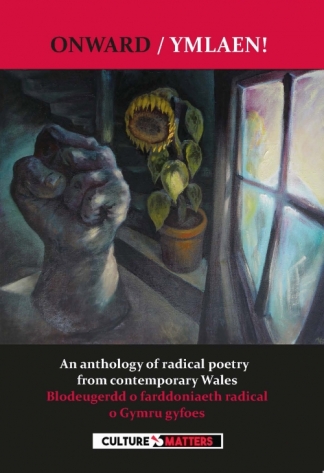
 “The anthology ‘Onward/ Ymlaen!’ published by Culture Matters comprises left-wing poems from Cymru rather than ‘Wales’. Why do I stress this? As the
  As co-editor of ‘
 Jones’s own journey from Labour supporter to embracing the emerging Indy movement is one which truly reflects our politically fluid times.

 I try to watch the news once a day; more than that and it is really depressing. Alternatively it is infuriating, why do we need to see Royalty clapping in an obviously posed way with their children outside their front door which does not appear to be in a street where anyone else lives. When have they ever used the NHS?
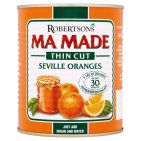 Yesterday I made marmalade, from one of those tins of prepared Seville oranges; I knew they were good because my mother used them, rather secretly as she saw it as cheating. When I was quite small I remember going, in our fathers cab, to pick blackberries in
 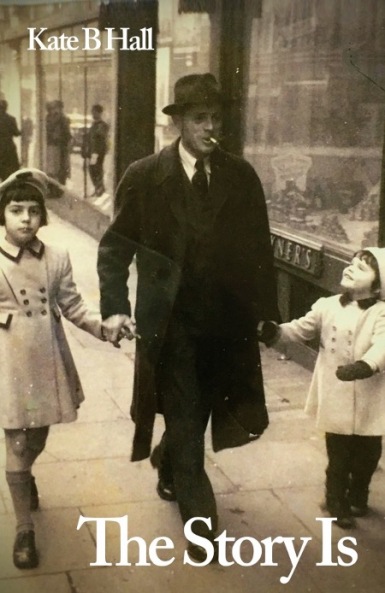 My partner and I are both of an age where a store cupboard is normal. Our parents lived through the war so there were always a few tins and packets kept for emergencies. We order our shopping delivery fortnightly and have a kind of general store. We are trying not hoard and so far have managed to get roughly what we need. When our delivery arrives it gets washed, dried and put away. Sometimes the way we talk about what is happening reminds me of my childhood when food was still rationed and my parents were not very well off. My mother was a genius at making things stretch not just food but clothes too.
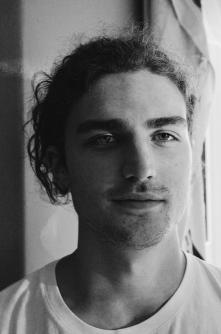 “For much of my life, I struggled with a range of symptoms which seemed to bare no correlation to one another. Chronic fatigue, an increasingly constant nausea level, violent aching without reason.
 My poem, ‘young man,’ was really one of my first explorations of this tension between distance and closeness. It felt like an act of empowerment, as I initially struggled to find work, to admit defeat. To acknowledge flaws, and to ironise them. As it turns out, to be vulnerable in life makes it far easier to be vulnerable on the page, and soon a body of work began to form around the experience of living within my own body.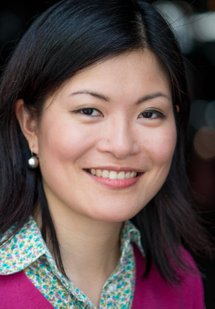
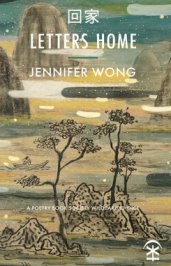 And as I looked for ways to complete my father’s portrait, I noticed how proud I am of him, how his work ideals and diligence have come to define him. Coming from a more working class background and without a university education, he wanted a different future for me, a future alien to him and his class, where more doors would be open with the promise of a good education.
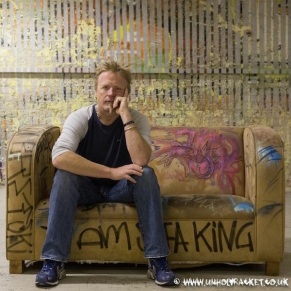 “When we rang in the New Year, I don’t expect any of us thought our 2020 would include supermarket queues, panic buying, empty motorways, or an invisible Prime Minister, but here we are. The world is a quieter place, where we keep our distance from each other, do our weekly shop, and – in my case at least – spend far too much time online, seeking some kind of social interaction. For better or worse, our worlds have shrunk to our immediate neighbourhood, the few streets round us, the distance we can walk or cycle in an hour.
 Many of the poems in my new book ‘
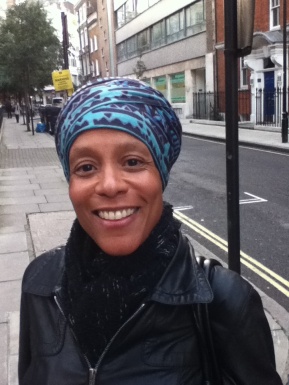 “The title poem for my debut collection, Her Lost Language, feels a bit like a ‘cuckoo’ in that I usually write about the legacies of British transatlantic enslavement, with direct reference to Jamaica. This seems to be where I find my voice, and can cover subjects from the maternal, food, past, present and future.
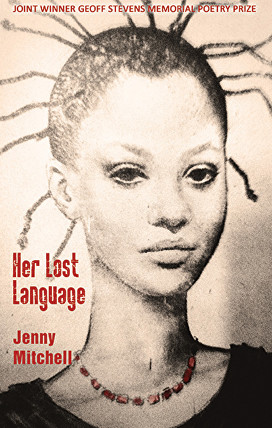 It feels clear on re-reading the poem that the environment I describe is not just ‘hostile’ for the character but for everyone who has to live in it. The phrase, ‘A lift shaped by urine is’, to me, about real suffering – for those that have to endure it and those that cause the offence in the first place. How alienated do you have to be, to literally piss where you live?
 “Cardiff has one of the oldest BAME populations in the UK. However, it wasn’t a slave town like Bristol. The majority of the Black population were merchant seamen – who settled in Cardiff’s docks area, or Tiger Bay as it was known back then. My grandfather came to Cardiff via a familiar route in the 1890’s.
 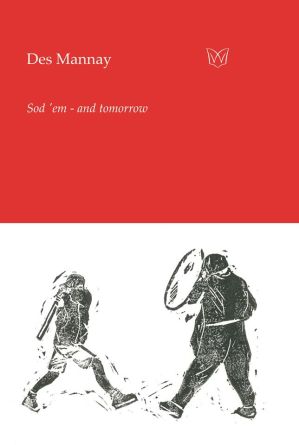 Gradually people migrated to other parts of Cardiff, My grandparents moved out in the 1940’s. Unfortunately my grandfather was on a ship which was torpedoed during World War 2 – so we never met. I grew up in what I jokingly referred to later as a Black & White family with a ‘coloured’ telly…. It’s funny when you’re a child, you don’t think of yourself as a colour…. I discovered I was black accidentally. We would always watch the news at teatime. It was sometime around 1972, and the newsreader barked “and the Blacks are rioting in…”. It was somewhere in London. I said, ‘Dad – who are the blacks?’. My dad looked at me quizzically and said ‘We are son…’. It was a light-bulb moment. “Aaaah – that’s why people call me funny names at school”, I thought. They were strange times – ‘
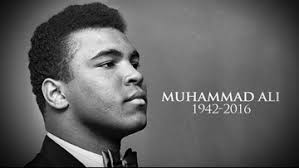 The poem I have chosen from my collection, has to be ‘On the death of Muhammad Ali’. A) Originally, it was one of my poems that Eric Ngalle Charles chose for his ‘
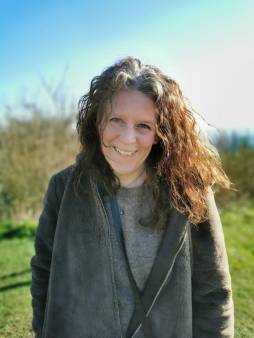 “It seems to me, that this global pandemic leaves me unable to write a thing except maybe clichés; tired phrases. I can’t write about it but writing about anything else seems unthinkable. I’m aware that for some poets I know, the opposite is true and poems are pouring out of them. One way or another we are all affected and not just in regards writing; some people find themselves unable to do anything productive whilst others throw themselves into activity – we find our own ways of dealing with the anxiety. There is a definition of trauma that makes a correlation between the perceived level of threat and the perceived level of helplessness we feel in response to it; essentially when an event overwhelms our ability to cope. The reverberations of this collective trauma will be around long after the lockdown ends.
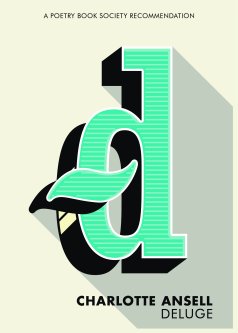 I remember the helplessness I felt then too and how painting led me to writing this poem, ‘Drowning’. I wanted to send something cheerful and uplifting for this guest post but of the few more cheerful poems I’ve written nothing seemed right. I read a Facebook post a friend shared recently by someone who said the last time they were in lockdown was during the
  Proletarian Poetry