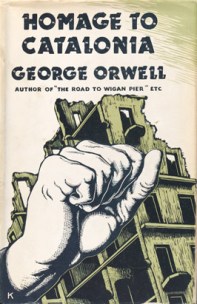
 It is seventy years since George Orwell’s Homage to Catalonia was published; his personal account of the Spanish Civil War. Now, the papers’ headlines carry the same title, as the people of Catalonia once again go against the Madrid government in a so-called ‘illegal’ referendum on independence. Irrespective of one’s views about the subject of the vote, the state response of violence against all and sundry was abhorrent. Scenes across the region, but in particular Barcelona where much of the media was concentrated, and lest we forget where a terrorist atrocity was carried out along the famous Las Ramblas, showed an elderly woman with blood pouring from her head, another with a woman’s fingers being broken, and many other such beatings.
But this is not the only concern the people of Barcelona have had to fight against. In August of this year there was a demonstration on the streets and beach of the city against the continued building of tourist apartments, which is having a negative effect on local peoples’ access to housing. The head of the local federation of neighbourhood associations (the FAVB), Camilo Ramos who supported the protest, said it ‘demands that Barcelona reconquers spaces that were previously … in citizens’ control, such as la Rambla…; there are increasing problems in the city, such as expulsion of lower income people due to the increase in prices of rents and shopping halls, as well as a growth of flats altered into tourist houses.’
 Matt Duggan’s poem, The Spaces Left Bare, reflects on such a protest during a stay in Barcelona; one that can be seen as a wider indicator of heightened capitalism and its effect on peoples’ ability to afford housing in major cities and conurbations throughout the world; something that echoes developments from San Francisco to Delhi and no doubt beyond. And like in London leaves many places uninhabited, ‘at night the room lights up for no one/ then fades as dusk wakes the clock; / where guests will never reserve or stay.’ In the future, will they say this is a homage to capitalism? Is the Spanish government’s actions a homage to democracy? I think not.
Matt Duggan’s poems have appeared in Osiris, The Journal, Ink, Sweat, and Tears, Into the Void, Black Light Engine Room, Prole, The Dawntreader, Algebra of Owls. In 2015 Matt won the Erbacce Prize for Poetry with his first full collection Dystopia 38.10 http://erbacce-press.webeden.co.uk/#/matt-duggan/4590351997. In 2016 he won the Into the Void Poetry Prize with his poem Elegy for Magdalene. In 2017 Matt did his first reading in Boston in the U.S. and has been invited back to be headline poet at the prestigious Poetry Reading Series held at Cambridge Public Library in April 2018 where he will also be doing his first readings in New York with beat poet George Wallace. Matt is working on a new collection Look What We’ve Become.
The Spaces Left Bare
The only human figures to pass on these walls
are the shadows in opposing rooms
those reflections
during the summer months
bounce from the ceiling like ghosts dressed in black suits.
Air is stale and needs recycling
windows gleam with no visible fingerprints,
immaculate laminated tiles
underfloor heating
the spaces are left bare. ……
…
Where beneath the plush gothic balcony
a homeless man sleeps in the open air
at night the room lights up for no one
then fades as dusk wakes the clock;
where guests will never reserve or stay.
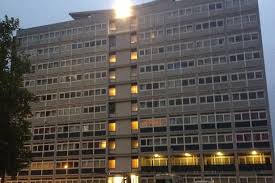 In 1980, the tower blocks of Hillfields that overlook Coventry city centre were mainly occupied by the working classes of West Indian and British origin. My friend had a flat on the eighth floor of Douglas House, a maisonette he shared with his girlfriend. We used to go round regularly, spending much of the night smoking weed and listening to reggae. One time, he wasn’t in so we knocked his neighbour and went through her flat, climbed over the balcony, shuffled along at one hundred feet up, and got in via his balcony. I still can’t comprehend the stupidity of that act now; just so we could find somewhere to hole up and get charged listening to Red by Black Uhuru.
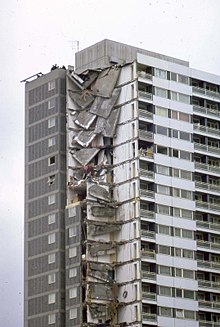 working class homes during the 1960s have a lot to answer for. Such housing was quickly seen as going against the way in which humans should live together. One early example was the
 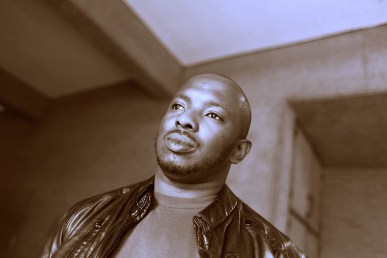 Although not an Asian, the poet Nick Makoha and his mother also left the country due to the coup, becoming part of the Ugandan diaspora. In his haunting poem ‘At Gunpoint’ (and throughout his brilliant collection ‘Kingdom of Gravity’), he describes the terror of a country under military rule. “The Times will report of people/ being forced to volunteer to avoid/ being a body hiding in the toilet/ or a corpse folded on a table.” Beyond the terror of trying to survive, questions of what you should do in such a situation arise, that challenge your own identity. “A man can’t but look into his own imagination/ to solve the conflict of himself. Should I have been/ the doctor, or the poacher in the clearing, a mad man,/ or shepherd boys minding their business?” Like many of the diaspora,
  One of the darker but also more playful songs by Tom Waits is “
 But I also think that people are amazing in the projects they engage in. My son watches endless YouTube videos of everyday inventors – people who try to
 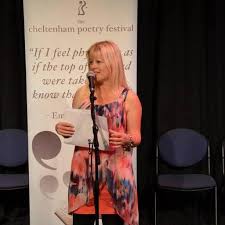 Anna Saunders’ beautiful poem “Befriending the Butcher’, tells the story of a working class life that furthers this idea that you never know what a person might be. “He spent his days dressing flesh/ preparing Primal Cuts and his nights – carving wood,/ reading brick-heavy biographies of Larkin or Keats.” And what you start will carry you into later life, “There we sat, …./ on chairs as dark and immense as the Wagner/ which poured into the room,” So think again when you’re at the checkout, at the bar, chatting with the postman or the butcher, for you never know what they may be building when they get back home and hide themselves away in the attic or the shed.
  My first taste of independence came when I had authority over the amount of ketchup I spread over my tea. It wasn’t like drizzling icing over a cake because this was the days of the bottle, where if you weren’t careful, huge globules would flood your ham, egg and chips; with the introduction of the
  But I have veered into the serious, which I’m trying not to do for once. This feature was prompted by the poet,
 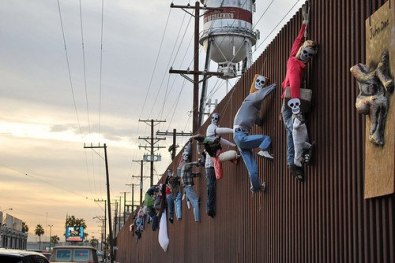 There is already a wall along the US/Mexican border, and in many parts there are works of art protesting against what it stands for. One exhibit has a series of day-of-the-dead like mannequins, hanging from the wall. It is a powerful image. Across the world, where walls have divided people, protest art has inverted the purpose of the canvas. From the Berlin Wall, to the Israeli Wall, and the Peace Wall in Northern Ireland, there are beautiful but at the same time heart-rending images to remind people, either of the reason they are there and/or the damage that they do, e.g. in cutting off families, or families from their land, etc..
 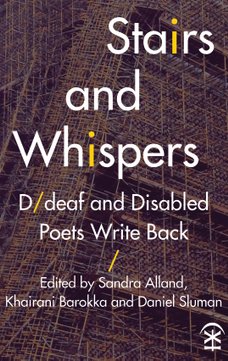 This was the launch of the anthology of “
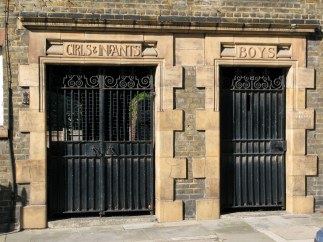 Back home in one of the bars in my local, there was no women’s toilet (this was the mid-80s). The few women who did frequent the smoke room, had to go outside, in all kinds of weather, to the single female toilet in the other bar. At the same time an old school down the road still had signs showing the separate boys’ and girls’ entrances. Society remains divided in many ways, not only in gender. One of the most obvious, yet at the same time, nefarious, regards consumer preference.
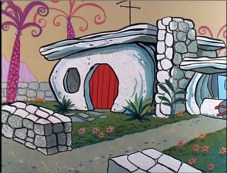 What do you think of when you think of home? Is it the history of wallpaper that reflects the changing times? The leather three-piece suite you bought off some bloke in the pub and had to drive down long country lanes to a hidden away warehouse – but was assured it was all totally legit? (I know someone who actually bought his house from someone in the pub). Was it the smell of chip fat in the kitchen as it cools back to white, a cracked window that was never fixed, the gradual wearing away of the staircase carpet?
 Lorraine Carey’s beautifully evocative poem, From Doll House Windows, is about a childhood home and the memories it still holds. “An aubergine bucket served as a toilet,/in a two foot space. Mother cursed all winter/from doll house windows where we watched/somersaulting snowflakes.” And like the poem, many of us had a pet (mine was a succession of goldfish from the fair, that usually died after two weeks), “My father brought back a storm petrel/from a trawler trip. /I homed him in a remnant of rolled up carpet -/ that matched his plumage.” But in the chaos of a young family’s house, something dark goes beyond the everyday in Lorraine’s poem; a memory of home, which will never be forgotten.
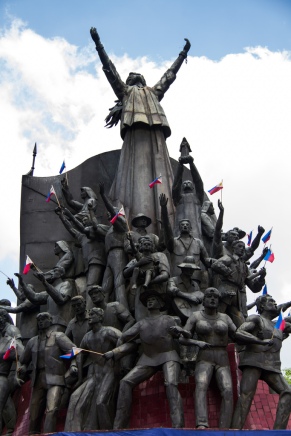 Just a short post to let you know that I have now compiled an alphabetical index of the poets (with their poems) who have appeared since the site began in September 2014. There are over 120 poems, from the great and the good of poetry, to the great and the good of poetry. I will be updating it to include a couple of lines from each poem, as well of course adding to it, as and when.
 Proletarian Poetry