 Is there enough anger in mainstream poetry today; in the journals/magazines and collections? In the US from Audre Lorde to Claudine Rankine, Terrance Hayes to Danez Smith, there is great anger in poems about the discriminations upon which that country is founded and governed. They make it into the pages of POETRY, and sell many books. Here in the UK, I’m not so sure. We may not have the scale of discrimination as felt by the US, but black men are still killed by police here, women are discriminated, abused, and killed by men, and let us not get started on the implications of Brexit and the hatred it has stoked.
This is not meant to be a comprehensive survey of anger in UK poetry, but off the top of my shiny head, there were the Liverpool poets, the original ranters of the 1980s who came out of punk; some still going strong like Tim Wells who chronicles those times in his site Stand Up and Spit. There are others in performance poetry and spoken word (as it is known); Anthony Anaxagorou’s Outspoken Press in London, which includes a number of BAME poets, such as Sabrina Mahfouz and Raymond Antrobus. There are other BAME poets, such as Kei Miller, Malika Booker, Roger Robinson, Nick Makoha (the latter published by the wonderful Peepal Press) who have great subtlety to the anger in their poems. Tony Walsh and Salena Godden from Burning Eye Books (to name only two from that stable) who have been treading the boards with their distinct brand of anger that is often done with humour. Smokestack Books, has consistently published radical, global voices, such as Amir Darwish and Steve Ely, for many years now.
Penned in the Margins publishes the aforementioned Tim Wells, and one of my favourite poets, Melissa Lee Houghton (who recently published Cumshot in D Minor, by Offord Road Press), whose poems of sexual abuse and misogyny burn. Of course, there are other publishers whose catalogue will include poets or poems of anger, e.g. Bloodaxe and Nine Arches Press, two of my favourite publishers, as well as some of Kim Moore’s past and present poems published by Seren. Then there are the online publications, with an overt social and political stance, which include Reuben Woolley’s ‘i am not a silent poet’ and Jody Porter’s ‘Well Versed’. (apologies for any glaring omissions I’m sure I’ve made, please feel free to add to the list in the comments below). However, I do feel these are on the margins.
 Fran Lock, who has appeared on this site a number of times, is, along with Melissa Lee Houghton, one of those electrifying poets both on the page and the stage. Since Flatrock in 2011, to the wonderful The Mystic and the Pig Thief (Salt – which no longer publishes poetry), through to Dogtooth (Outspoken Press), and our feature collection Muses and Bruises (published by Manifesto Press) Fran has consistently shouted down those who discriminate against the working class, women in particular. As she says in her introduction to the collection: “I was told once that my writing was inauthentic because working-class women don’t think or speak that way. Bollocks. I am a working- class woman, and I do write and think and speak this way. There is no one homogeneous working-class voice, any more than there is a single monolithic working-class culture. No one has any right to set limits on the way we sound or the words we use.” The collection is complemented beautifully with collages by Steev Burgess, which “bring this to the fore,[with] a mixture of decadence and squalor; grind and grime with a lick of glitter.”
The collection is in two parts; the first is a set of poems based on the muses of the arts from Greek mythology. Here is Clio, muse of history: “My mother was a Goddess, she could charm/ bees and her cheekbones were stunning./ Her silence gathered dust like an heirloom. //I am an unquiet child./ I see things and I must tell: //That man, grinning out from under/ the redacted oblong of his eyes, crawled/ from the comic opera of the past, dragging his period costume;” Similarly in the poem, Erato (muse of love poetry), there is the question of female identity from a patriarchal expectation: “And to top it all off, I’m expected to ride on
a float, my face scraped on in a strong wind, all
tits and teeth, rigid as any a hood ornament: winged Victory, pigtailed and pinioned. Bow to the crowd
like Jackie O, glamming it up at an airport.” Fran is imagining Erato as a Connemara beauty queen who is not allowed to be seen as having any other ‘attribute’ than her physical beauty, and thus like the Greek muse, is imprisoned by it.
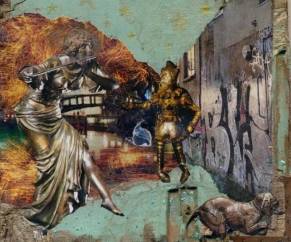 The second part of the collection is a wonderful grotesque imagining of a place called Rag Town and the girls who inhabit it, in particular the ubiquitous La La. In her notes on this section Fran says: “We have the right, and we deserve the space in which to be angry. I started writing the Rag Town sequence with this one thought looping endlessly in my head.” This was driven by Fran’s disillusion with what International Women’s Day has become; originally called International Working Women’s Day, the dropping of the ‘Working’ de-classed the day, so that in Fran’s words it has become divisive to raise issues of class as they relate to women’s oppression. “It’s divisive, for example, to say that white, settled, middle-class women “escape” from unlovable and undervalued domestic labour at the expense of working-class women, immigrant women, women in poverty.”
Towards the end of the collection, in the poem ‘Rag Town Girls see God’, there is almost an inverted elegy in its telling of the end of man as represented by the deity. “There he is, eyes half closed, doing the math of a difficult miracle, wrist-wearied, leaning into his swig, his pull of smoke. We assume he is God. He reminds us of a man we once knew: slender and insulted by life, mixing his blessings like strong drink, suicidally agile, tying a nimble noose the minute your back was turned.” The final poem in the collection has undoubtedly the longest and angriest title, aimed at the mainstream poetry world that ignores the ‘likes of us’: “Rag Town Girls Don’t Want to be in your Shitty Fucking Magazine/Anthology/Stable of Wanky, Middle-class Poets Anyhow.” These following lines from the poem end what is a brilliant collection masterfully complemented by the collages of Steev Burgess.
“How to fake it? How to keep it in, that jittery, impassable grief? Don’t scratch yourselves, girls. Bathe. Point your toes. Glowing in a backward light cast by everything you flee from. You like proper edges, incline a tin ear to the shrug and flutter of our debateable music. If we could only sing like you, a proficient, accredited language. But we can’t, so we won’t. La-la lit a fire instead. It ate a hole in everything.”
You can listen to Fran read two of the poems here and here. You can buy the collection published by Culture Matters/Manifesto Press here.
Fran Lock is a sometime itinerant dog whisperer and author of three poetry collections, ‘Flatrock’ (Little Episodes, 2011), ‘The Mystic and the Pig Thief’ (Salt, 2014), and ‘Dogtooth’ (Out Spoken Press, 2017). Her work has appeared in various places, most recently Communist Review, The Morning Star, POETRY, Poetry Review, and in Best British Poetry 2015. She is the winner of various competitions including the 2014 Ambit Poetry Competition, the 2015 Out Spoken Poetry Prize, and the 2016 Yeats Poetry Prize and was shortlisted for the 2017 Bread and Roses Poetry Award.
Steev Burgess has juggled his career with an interest in music and art, releasing records and holding his debut art exhibition of collage art in “Red Bologna” with the help of the Circolo Ricreativo Aurora ARCI. Taking a break from music, he concentrated his efforts on making better art and extending his writing skills by “writing proper poetry” and founding the Y Tuesday poetry club at the Three Kings in Clerkenwell. His work caught the attention of the Libertine’s John Hassall. Steev and John now have a song writing partnership with his new band John Hassall and the April Rainers, whose debut album “Wheels to Idyll” has recently been released.
(images by Steev Burgess)
 Monday nights in pubs was games night. My father was in the dominoes’ team (5s & 3s) at his local at the bottom of the street, and I was in the pool team at my local at the top of the street. This was a strictly male affair, at least in the way traditions don’t change. We played pool across the city; it was the one time you could go to the roughest pubs and not fear a beating – sometimes the locals left that to taking chunks out of each other. The main fear however, was when the opposing team had a female member, sometimes even two, out of the eight. In that male repressed world of banter, if you drew the ‘bird’, you were in a no-win situation – you get the picture.
 Society has been set up for men; whether in their increasingly outdated role of breadwinner, although this is still the predominant form of gender relations, or in social activities – pubs, sports events and team sports. Participation rates in sport between the genders has been massively skewed. In the US for example, 40% of boys played basketball compared with 25% for girls, and that’s one of the better examples. Walk around your local park on a Saturday or Sunday morning and you will see it populated by boys and men, from six to their mid-fifties, playing football. Things are however, improving; women’s football is becoming more prominent, and other sports such as swimming and cycling are being given a certain level of equal coverage.
 Katherine Owen’s evocative poem, “Winner Stays On,” depicts a night when a woman takes on the men at pool in their habitat, similar to my own experience back in the 80s. “It’s winner stays on at The Brown Jack./ But after our game, Graham and I slip back/ to the shadows./ Not good enough to play the regulars.” On hearing this poem at the Swindon Poetry Festival, Katherine explained how she had been recovering from ill-health, and simply being able to stand at a pool table was a personal advance. “The balls go down in a slow, consistent way./ Now all eyes are on the table:/ the only woman in the pub shoots pool./ Inwardly, I laugh./Even to walk is something new.” I won’t give the game away (sic) by saying how it turns out, but as with any good poem, there is a lot more going on than appears on the surface; much the same as happens in a game of pool, of football, or more generally when looking at the gender make-up and politics of sport.
 Next Summer the English fans, for it is only they after the near misses of Scotland, Wales, and both Irish teams, will be heading to Russia for the World Cup. The media are already licking their lips at the prospect of trouble. A BBC
  It is therefore nice to have a poem such as Mike Jenkins’ humorous “Alternative CCFC CV”, (his CCFC is Cardiff, not Cov) that marries the comedy of football fans with their penchant for a little bit of aggro. “I’ve stood on the North Bank, Vetch Field,/ supporting the wrong team/ (lucky we never scored!).// I’ve carried on striding/ straight into a marauding Chelsea firm/ saying ‘I’ve lived in Belfast’ to a fleeing friend.” It reminds me a little of the loveable rogue Robbo in Patience Agbabi’s poem, “
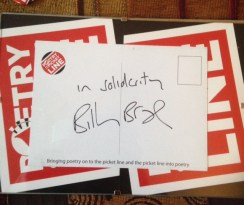 I have been heartened by a number of things in poetry recently. As previously featured,
 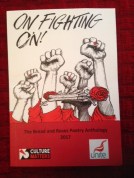 Last week, I received my contributor’s copy of
 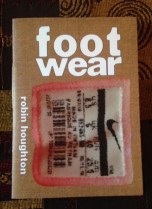 In keeping with the punk ethic of working class poetry and do-it-yourself, I got a fantastic pamphlet by the poet
 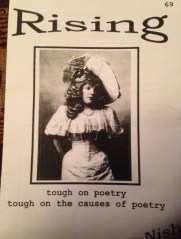 Finally, on that note, I want to give mention to
 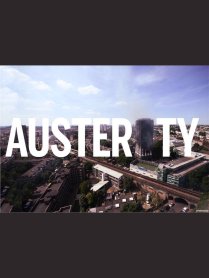 Then, since the setting up of the Welfare State by the Atlee government, they have continually tried to dismantle it, not only from their small state ideology, but in order to spend as little on people who are most in need by lowering the taxes of the most well off So, we knew it all along, but now it’s official; the Tories kill poor and disabled people. It may not be murder, nor manslaughter, if only in the eyes of the beholder of laws they invented themselves. The new austerity age of the past seven years or more, has seen many people die as a direct result of Tory policies on welfare. In a
 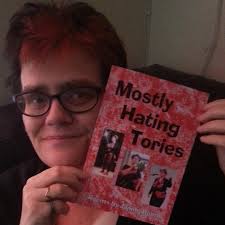 Therefore, to cheer you up, I give you the wonderful Janine Booth with her wonderful “Mostly Hating Tories”. By the way, she has a whole oeuvre of Tory hating poetry. Check them out
 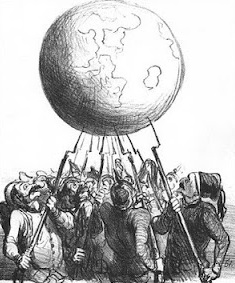 In talking with my wife the other day, we wondered which countries are doing well in the world today. Of course, ‘well’ is an abstraction and it was more easily answered in looking at those doing badly, or not so well. The world is unfurling, especially if we account for the use and impact of social media, exposing great instability. The whole European project is in question, not only in relation to Brexit, but also in terms of resolving proxy wars, as is the case in the Ukraine. Africa is on the whole improving in terms of headline indicators such as
  It is almost beyond cliché to say we have not learned the lessons of history; I say beyond, because of the hopelessness in feeling it could make any difference. But we have to; even if we feel we are repeating ourselves, because after all we are hoping not to repeat history. We see this need in poems such as Reuben Woolley’s ‘time comes counting / one two zero’, which is dedicated to the Coventry poet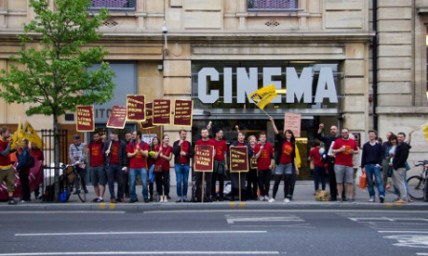
 Today’s poem is by
  One of my many favourite Tom Waits’ songs is ‘
 Today’s dark poems ‘Myth Men’ and ‘Lone Man Stories’ by Sarah Sibley, are similar childhood tales of rumours, with fleeting sights and sounds of scary men. “Have you been down the cellar at The Dog?/ Seen the drayman covered in cobwebs,/ fading in and out of sight/ with the flickering light bulb;’ Such stories are drawn from the ‘outsiders’ of village life where Sarah grew up, which excited the imagination of children in an area full of country shadows. “Up at High Winds farm by the slurry pit/ we’d hide and seek in a thicket/ ripped every night by storms -/ the kind we don’t get in these parts anymore.’ And there always has to be a dark side in order for the stories to hold our curiosity. ‘For a time, stories of a lone man/ wiped us out from the copse.’ And it is always a glimpse, it can never be a clear sighting: ‘Shrimp’s sister saw him once in her rear-view mirror, disappearing down Baby Lane,/ feeling hunted again.’
  When it comes to making a decision, we all like to think that we have rational minds of our own; we are open to listening to both sides of an argument, then we put our tick or cross in the box, give our opinion in the pub, at work, or Speaker’s Corner. But the truth is, we are all a guilty of bias. However, I don’t necessarily think that’s a bad thing; for example, if Boris Johnson or Alan Sugar say something I’m pretty sure I will disagree with them; so the nihilistic part of me says, why bother listening? Most politicians with wealth (often inherited), are all eyes on maintaining their privileged lineage, thus couch their arguments in a thinly veiled rationale, which usually equates to bullshit and hypocrisy.
 ‘Fracking, North Dakota’ and ‘Prophet and Loss, a plague foretold’, expose the effects fracking and rabid capitalism have on the lives of people directly impacted by them. From the beginning of such processes: ‘Columns of stainless steel stab the earth./ Waste gas flares from a pipe;/ orange flames corrupt the blameless sky.’ To their catastrophic end: ‘Through every field and farm will swarm/ conforming fools consuming all,// returning naught of worth.’ The case for and against a biased attitude is a straightforward one; your opinion is either biased toward ensuring you make huge profits whatever the consequence, or it is skewed toward ensuring you have a livelihood; a job, a home, enough food, access to health services, to education. Of course, if we weren’t so biased we’d use the terms objective/subjective so that everyone would really know which side we were on.
 When I was young, my mum used to collect stamps. We had a Co-op on the corner. I remember she would come home with the shopping and blue stamps, letting me stick them in to slowly fill the pages until you had enough for a dividend (
 of pennies/ in a small leather purse and counting them when no one was looking,/ the card left face down on the kitchen table, in anticipation of a stamp.” These schemes were/are targeted at those who may not have bank accounts, or a way in which they have enough extra money at the beginning of December. This was the case for the grandmother in this poem, “I did not see the strange woman/ who woke in the dark and went digging through her pockets,/ knowing she would find nothing more than ghosts and prayers.” The schemes are now fairly widespread, the latest being
  Proletarian Poetry