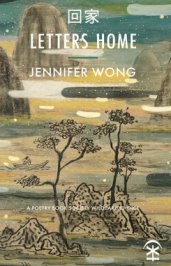
Jennifer Wong’s collection ‘Letters Home’ was recently published by Nine Arches Press. The book “unravels the complexities of being between nations, languages and cultures. Travelling across multiple borders of history and place, these poems examine what it means to be returning home, whether to a location, a country, or to a shared dream or language.” You can buy a copy of the book here: Over to Jennifer,
*************************
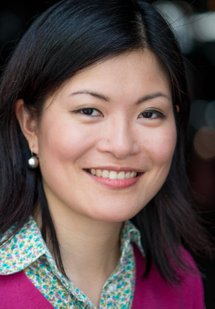
credit: Tai Ngai Lung_Fotor
“In writing this collection, I reflected on my upbringing at a much deeper level than I would normally allow myself to; an unsettling experience in many ways. In writing ‘To my father, who taught me how to fold serviette penguins’, I seek to understand who my father really is. For many years, he worked very long hours, initially as a waiter, and was eventually promoted to be the food and beverage manager in a five-star hotel. On weekends, my mom used to bring me and my brother to the Tsim Sha Tsui promenade in Hong Kong, where the waterfront is always packed with tourists. There, on the pedestrian footbridge fronting the harbour, we would be able to catch a glimpse of dad at work inside the hotel restaurant—with its magnificent, floor-to-ceiling windows—and wave at him.
Because he would spend all day talking to customers and colleagues, dad tended to be very quiet when at home. I felt quite ambivalent about this. I was also jealous of my other classmates who enjoyed family outings during the weekends. In the poem, my ambivalence or incongruous feelings made their way through the snippets of family knowledge and the sharp edges of the slashes. And I chose to highlight the word 嘥錢, a Cantonese slang meaning ‘wasting money’, a preoccupation for working class families, particularly in a consumerist society such as Hong Kong.
 And as I looked for ways to complete my father’s portrait, I noticed how proud I am of him, how his work ideals and diligence have come to define him. Coming from a more working class background and without a university education, he wanted a different future for me, a future alien to him and his class, where more doors would be open with the promise of a good education.
There are also other poems in the collection that question the value of money (or wealth), poems that explore working class lives, and the intersections with racial and gender identities. Are you able to spot them?”
Jennifer Wong was born and grew up in Hong Kong. She is the author of two earlier poetry collections including Goldfish (Chameleon Press 2013). She studied English at Oxford, received an MA in creative writing at the University of East Anglia and earned a PhD from Oxford Brookes University. Her work, including poems, reviews and translations, have appeared in various journals including The Rialto, Poetry London, Poetry Review and Wasafiri, amongst others. She was runner- at the Bi’an Writers Awards and long-listed in pamphlet competitions, and the National Poetry Competition.
My father, who taught me how to fold serviette penguins
I was eight or nine when I saw you practise / folding serviette penguins. For a long time, / Christmas was a matter of watching fireworks on television / mother trying / not to let her feelings show. / And those evenings you came home / too tired to speak / your voice already spent with the customers. / Thirteen hours of pacing around dining rooms / impeccable cutlery well-ironed table linen other families’ / happiness under the chandeliers / that’s what work is, has been, for you / since you turned eighteen / and for all the fathers in the golden eighties / it’s been a hard day’s night / a husband must provide /as long as he is alive. I try to think about / who you really were, a schoolboy before duty / your father who never offered your mother / a kind word, a kiss / but he kept a white shiny statue of Mao / long after the cult was over. / You never finished high school / because your father said / he couldn’t tolerate the idea of excessive schooling, a sign of / moral corruption or 嘥錢. / The day I was accepted for the school / on 1 Jordan Road, where the school drive glittered with Mercedes, we knew / we were moving beyond our league. / And yet, and yet, it suddenly seemed / as if something was brightening again in you /something that has nothing to do with table napkins
 “When we rang in the New Year, I don’t expect any of us thought our 2020 would include supermarket queues, panic buying, empty motorways, or an invisible Prime Minister, but here we are. The world is a quieter place, where we keep our distance from each other, do our weekly shop, and – in my case at least – spend far too much time online, seeking some kind of social interaction. For better or worse, our worlds have shrunk to our immediate neighbourhood, the few streets round us, the distance we can walk or cycle in an hour.
 Many of the poems in my new book ‘
 “The title poem for my debut collection, Her Lost Language, feels a bit like a ‘cuckoo’ in that I usually write about the legacies of British transatlantic enslavement, with direct reference to Jamaica. This seems to be where I find my voice, and can cover subjects from the maternal, food, past, present and future.
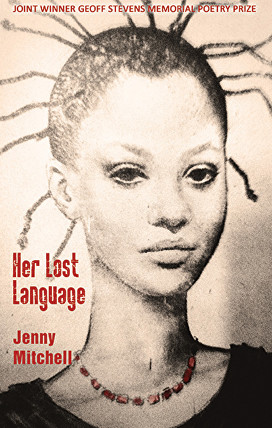 It feels clear on re-reading the poem that the environment I describe is not just ‘hostile’ for the character but for everyone who has to live in it. The phrase, ‘A lift shaped by urine is’, to me, about real suffering – for those that have to endure it and those that cause the offence in the first place. How alienated do you have to be, to literally piss where you live?
 “Cardiff has one of the oldest BAME populations in the UK. However, it wasn’t a slave town like Bristol. The majority of the Black population were merchant seamen – who settled in Cardiff’s docks area, or Tiger Bay as it was known back then. My grandfather came to Cardiff via a familiar route in the 1890’s.
  Gradually people migrated to other parts of Cardiff, My grandparents moved out in the 1940’s. Unfortunately my grandfather was on a ship which was torpedoed during World War 2 – so we never met. I grew up in what I jokingly referred to later as a Black & White family with a ‘coloured’ telly…. It’s funny when you’re a child, you don’t think of yourself as a colour…. I discovered I was black accidentally. We would always watch the news at teatime. It was sometime around 1972, and the newsreader barked “and the Blacks are rioting in…”. It was somewhere in London. I said, ‘Dad – who are the blacks?’. My dad looked at me quizzically and said ‘We are son…’. It was a light-bulb moment. “Aaaah – that’s why people call me funny names at school”, I thought. They were strange times – ‘
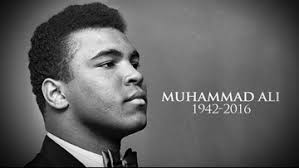 The poem I have chosen from my collection, has to be ‘On the death of Muhammad Ali’. A) Originally, it was one of my poems that Eric Ngalle Charles chose for his ‘
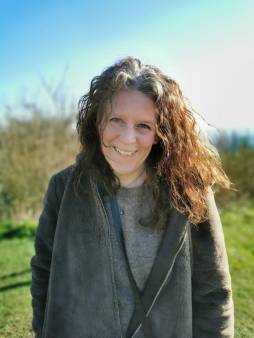 “It seems to me, that this global pandemic leaves me unable to write a thing except maybe clichés; tired phrases. I can’t write about it but writing about anything else seems unthinkable. I’m aware that for some poets I know, the opposite is true and poems are pouring out of them. One way or another we are all affected and not just in regards writing; some people find themselves unable to do anything productive whilst others throw themselves into activity – we find our own ways of dealing with the anxiety. There is a definition of trauma that makes a correlation between the perceived level of threat and the perceived level of helplessness we feel in response to it; essentially when an event overwhelms our ability to cope. The reverberations of this collective trauma will be around long after the lockdown ends.
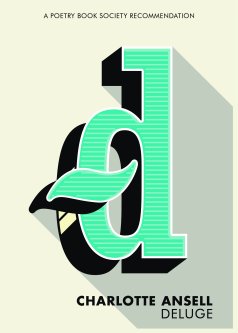 I remember the helplessness I felt then too and how painting led me to writing this poem, ‘Drowning’. I wanted to send something cheerful and uplifting for this guest post but of the few more cheerful poems I’ve written nothing seemed right. I read a Facebook post a friend shared recently by someone who said the last time they were in lockdown was during the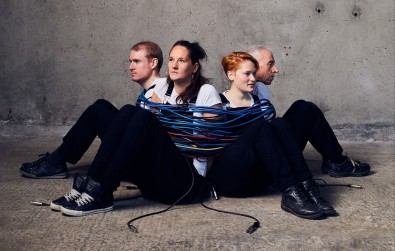
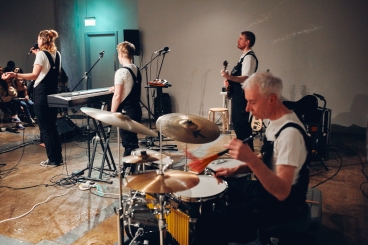 internationally touring DJs and members of an all-female band of adults with learning difficulties. My aim wasn’t to get famous names but to talk to women who lived and breathed music in their everyday life, either professionally or at an amateur level.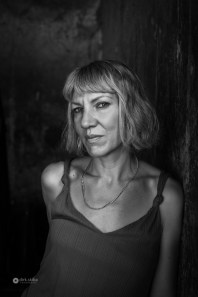
 But for all of this, this little area houses many people, or perhaps a better word, it homes them. Above the shopping centre are two residential complexes, Paige Heights and Sky City – architecturally unique when they were built – like neighbourhoods in the sky. You wouldn’t know they were there, looking up from the street. And on one side of the high street lies the vast Noel Park estate, street and after street of Victorian cottage style houses, originally built to home artisan labourers.
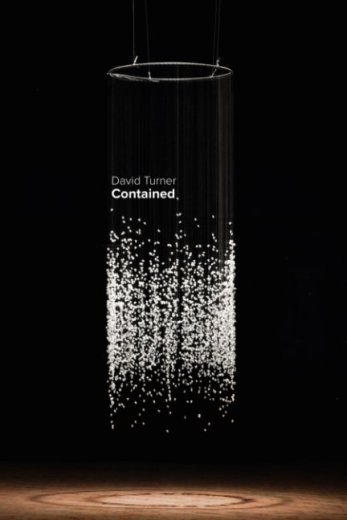
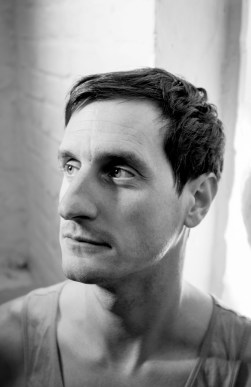 “I am very grateful to Peter for inviting me to submit a blog post and poem for this great website. It’s always nice when someone you respect shows an interest in your work and places you amongst a growing collection of talented artists… especially since I’ve been a little down on my debut ‘poetry’ book, Contained recently. It’s like staring at your own face in the mirror for too long – my features have lost all relevance and no longer make up what I remember. Perhaps, worse still, they make up exactly what I remember.
 I don’t know anything about film theory – except a short (but excellent) YouTube series narrated by a feature film producer, preoccupied by the ‘oner’ – but I’m sure every character in these dramas is supposed to have an ‘arc’. But all I see is JT standing there barrel-chested, mush-faced, wide-lapelled and NOT BEING JOHN TRAVOLTA. The whole thing is very distracting. And, of course, maybe he just looks like that now.
 “Three years ago,
 First up is my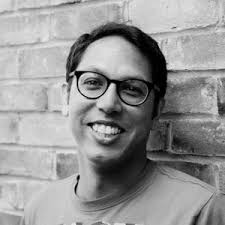
 Proletarian Poetry